

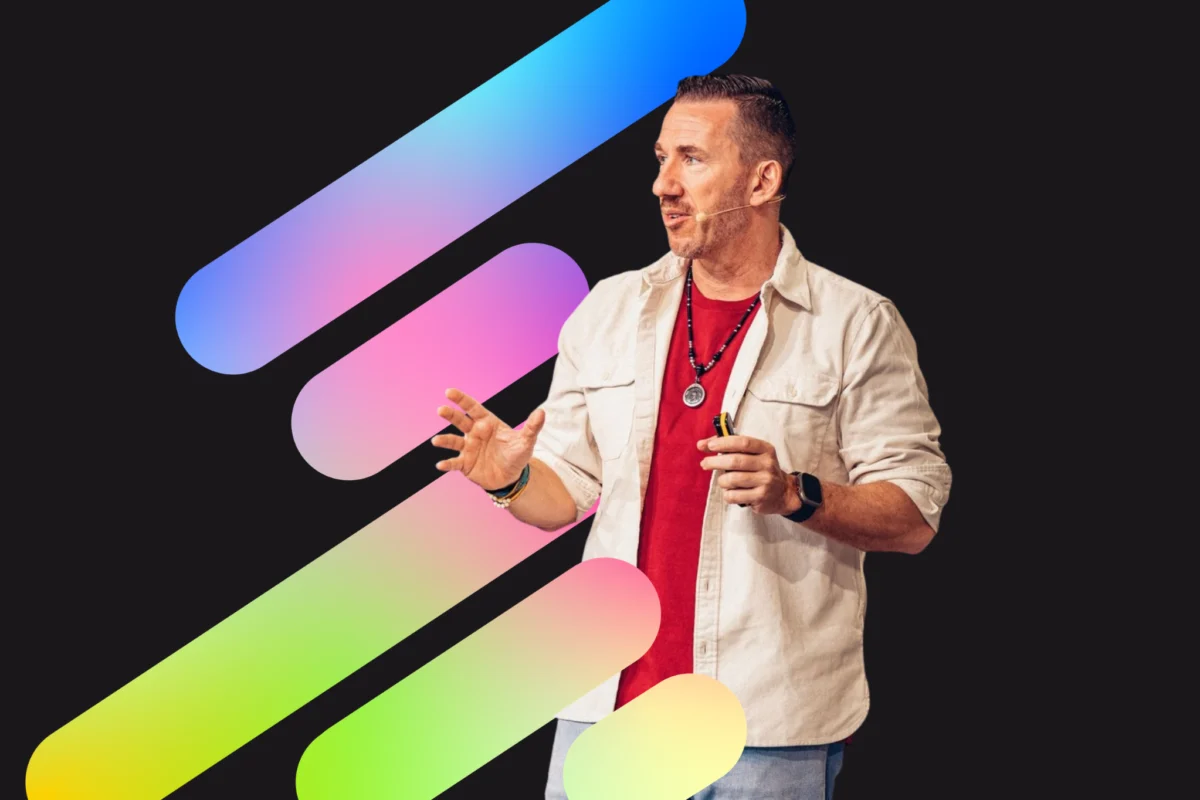
The landscape of digital media production is undergoing a fundamental transformation as generative artificial intelligence moves from experimental novelty to a core component of professional creative processes. At the upcoming LEAT Con 26, scheduled to take place in October, industry expert Calvin Hollywood will present a comprehensive session titled "Generative AI in Modern Content Workflows," detailing the practical integration of these technologies into contemporary social media and marketing strategies. The presentation, set for October 6, 2026, from 13:30 to 14:00 on the Live Stage, arrives at a critical juncture for the creative industry as it grapples with the speed of technological adoption and the necessity for efficiency in a high-demand digital economy.
LEAT Con, recognized as a premier European trade fair for the live entertainment and technology sectors, has increasingly focused on the intersection of hardware, software, and creative strategy. The 2026 edition continues this trend by positioning AI not as a peripheral tool, but as a central theme of the event’s programming. Hollywood’s session is expected to serve as a bridge between theoretical AI capabilities and the practical, day-to-day requirements of content creators, marketing professionals, and media producers who face escalating pressure to produce high-quality assets at an accelerated pace.
The Shift Toward AI-Driven Content Workflows
The integration of generative AI into creative workflows represents the most significant shift in media production since the transition from analog to digital. In the early 2020s, AI tools were primarily used for basic automation or stylistic filters. By 2026, however, the industry has reached a state of "multi-modal integration," where text, image, and video generation are synthesized into a single, cohesive pipeline. Calvin Hollywood’s presentation will focus on this lifecycle, demonstrating how AI tools now support the entire trajectory of a project—from the initial ideation and brainstorming phase to final production and platform-specific distribution.
The "workflow" approach is essential because it addresses the fragmentation that often plagues digital creators. Rather than viewing AI as a series of disconnected apps, Hollywood advocates for a holistic system where AI acts as a "creative co-pilot." This methodology allows for the rapid prototyping of visual concepts, the generation of targeted copy for diverse demographics, and the automated resizing and reformatting of content for various social media platforms, including evolving versions of Instagram, TikTok, and emerging spatial computing environments.
Session Chronology and Specifics
The scheduled session on October 6 is designed to be a high-impact, 30-minute deep dive into actionable strategies. According to the event organizers, the session will follow a logical progression:
- The Ideation Phase: Utilizing Large Language Models (LLMs) to analyze current trends and generate content pillars that resonate with specific audience segments.
- The Creative Execution: Demonstrating the use of image and video generation tools to produce high-fidelity assets that formerly required extensive studio time and post-production resources.
- The Optimization Phase: Using AI to refine messaging, perform A/B testing on visual elements, and ensure that content is technically optimized for the algorithms of major distribution channels.
- The Distribution Phase: Implementing automated scheduling and engagement tools that leverage AI to determine peak visibility times and audience interaction patterns.
By anchoring the session in "concrete practice examples," Hollywood aims to demystify the technology for those who may feel overwhelmed by the rapid pace of development. The focus remains on "how" to implement these tools without sacrificing the brand voice or creative integrity that remains the hallmark of professional production.
Contextual Background: LEAT Con and the Creative Industry
LEAT Con has evolved significantly over the past decade, mirroring the changes in the media technology sector. Originally focused heavily on lighting, audio, and stage technology (as reflected in its name, which stems from "Live Entertainment and Technology"), the convention has expanded to include the digital tools that drive modern audience engagement. In 2026, the event serves as a meeting point for traditional AV technicians and a new generation of digital content strategists.
The inclusion of speakers like Calvin Hollywood reflects a strategic decision by the organizers to address the convergence of live events and digital content. Hollywood, a well-known figure in the digital art and photography community, has spent years educating professionals on Photoshop, retouching, and more recently, the ethical and practical use of AI. His transition into AI advocacy mirrors the broader industry trend where technical mastery of software is being superseded by the ability to manage complex, AI-assisted systems.
Supporting Data: The Economic Impact of AI in Media
The necessity of the strategies Hollywood will discuss is underscored by recent economic data regarding the media and entertainment sectors. According to industry reports released in early 2026, companies that have integrated generative AI into their creative workflows have reported an average increase in production volume of 40% while simultaneously reducing the time-to-market for digital campaigns by nearly 50%.
Furthermore, a study by the Global Media Technology Association (GMTA) indicates that by the end of 2026, over 75% of all social media content will have some form of AI involvement, whether in the generation of the visual assets, the drafting of the copy, or the algorithmic targeting of the post. This widespread adoption has created a "competency gap" in the labor market. Professionals who can effectively prompt and manage AI systems are seeing a 25% premium on their services compared to those relying solely on traditional manual methods.
Inferred Industry Reactions and Ethical Considerations
The announcement of Hollywood’s session has generated significant interest among LEAT Con attendees, though the response reflects the broader industry’s duality regarding AI. On one hand, production houses and freelance creators are eager to adopt tools that promise to alleviate the "blank page" syndrome and handle the tedious aspects of content resizing and tagging. On the other hand, there remains a persistent dialogue regarding the ethical implications of AI-generated content, specifically concerning copyright and the authenticity of digital media.

While Hollywood’s presentation focuses on the "how-to" of efficiency, industry observers expect that the Q&A portion of the session will touch upon the "should-we" aspects of the technology. The creative community is currently navigating a complex legal environment where the ownership of AI-generated assets is still being debated in various international jurisdictions. By showcasing professional workflows, Hollywood indirectly addresses these concerns by emphasizing that the human creator remains the ultimate curator and decision-maker, using AI as a tool rather than a replacement.
Analysis of Broader Implications
The shift highlighted at LEAT Con 26 suggests that the role of the "content creator" is being redefined as a "creative director." In this new paradigm, the value of a professional is no longer found in the manual execution of a task—such as the technical ability to cut a video or mask an image—but in the ability to conceptualize, direct, and refine AI-driven outputs.
This transformation has profound implications for the future of creative education and professional development. As AI handles the "mechanical" aspects of creativity, the demand for skills in storytelling, brand strategy, and ethical oversight is expected to rise. Hollywood’s session at LEAT Con is a microcosm of this larger shift, providing a roadmap for how professionals can remain relevant in an increasingly automated landscape.
Moreover, the democratization of high-end production tools means that smaller agencies and individual creators can now compete with larger firms that historically held a monopoly on high-budget visual effects and complex content strategies. This leveling of the playing field is expected to lead to a surge in creative diversity, as the barriers to entry for producing "professional-grade" content continue to fall.
Conclusion and Outlook
As LEAT Con 26 approaches, the session by Calvin Hollywood stands as a pivotal event for professionals looking to future-proof their careers. The transition to generative AI workflows is no longer a choice but a requirement for those operating in the fast-paced world of social media and digital marketing. By focusing on the practical application of these tools, the presentation provides a necessary service to an industry in the midst of a radical evolution.
The insights gained from the Live Stage on October 6 will likely influence content strategies well into 2027 and beyond. As generative AI continues to mature, the focus will inevitably shift from the novelty of the technology to the sophistication of its application. In this context, the workflows developed today will form the foundation for the next generation of digital storytelling, where the only limit is the creative vision of the human operator. Attendees of LEAT Con 26 can expect to leave the session not only with a better understanding of the current technological landscape but with a tangible set of tools to navigate the future of content production.
