

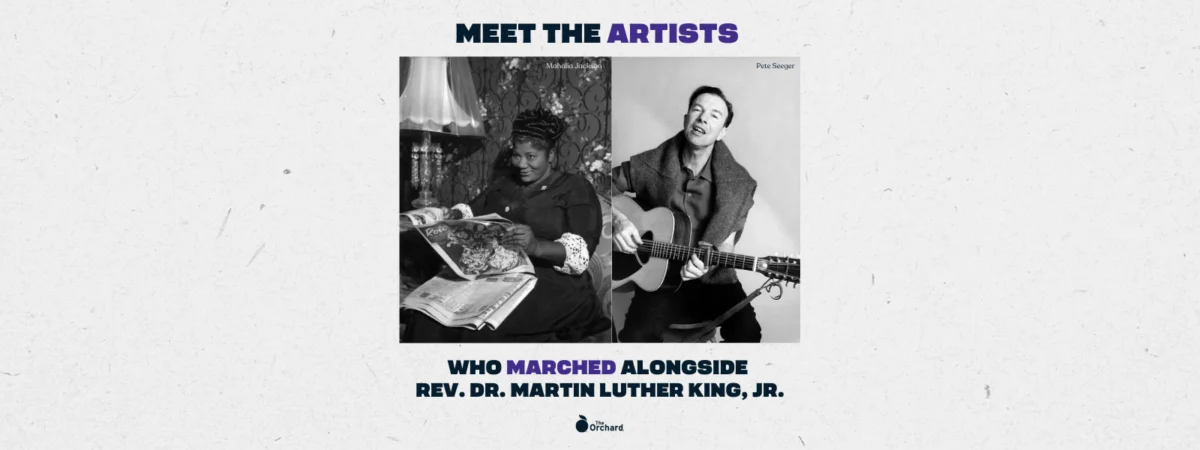
On this Rev. Dr. Martin Luther King, Jr. Day of Service, observed annually on the third Monday of January, a moment of profound reflection is cast upon the indelible artistic contributions that fueled the Civil Rights Movement. Beyond the powerful oratory and strategic planning, the resonant melodies and heartfelt lyrics of artists like Mahalia Jackson and Pete Seeger served as a spiritual and motivational bedrock for the struggle for racial equality in the United States. Their voices, amplified through public performances, private gatherings, and recordings, became anthems of hope, resilience, and unwavering determination, inspiring millions to action and providing solace amidst immense adversity.
The significance of art and music in social movements is well-documented. Historically, music has been a potent tool for communication, community building, and emotional expression, especially for marginalized communities. During the Civil Rights Movement, songs of freedom and justice served multiple critical functions. They unified participants, fostering a sense of collective identity and shared purpose. They served as a form of non-violent protest, conveying messages of defiance and hope in a way that was both powerful and accessible. Furthermore, these musical expressions provided psychological strength and emotional sustenance to individuals facing daily threats of violence, discrimination, and systemic oppression. The music of the era was not merely entertainment; it was an integral part of the movement’s infrastructure, a constant reminder of the values being fought for and the ultimate goal of a more just and equitable society.
Mahalia Jackson: The Queen of Gospel and a Voice of the Movement
Mahalia Jackson, revered as the "Queen of Gospel," was more than a celebrated singer; she was a close confidante and instrumental supporter of Rev. Dr. Martin Luther King, Jr. Her deep spiritual conviction and powerful vocal delivery made her a natural beacon of hope. Jackson’s performances often preceded Dr. King’s sermons, setting a spiritual tone and galvanizing audiences. Her involvement extended to crucial fundraising efforts for the Southern Christian Leadership Conference (SCLC), the organization co-founded by Dr. King and a primary engine of the Civil Rights Movement.
Jackson’s most iconic contribution to the movement, however, occurred on August 28, 1963, during the historic March on Washington for Jobs and Freedom. As Dr. King delivered his seminal "I Have a Dream" speech on the steps of the Lincoln Memorial, it was Mahalia Jackson, standing behind him on the dais, who, moved by the power of his words and the palpable spirit of the crowd, called out, "Tell them about the dream, Martin!" This spontaneous interjection is widely credited with prompting Dr. King to deviate from his prepared text and launch into the improvised, deeply resonant passage that would become etched in American history. This moment exemplifies the symbiotic relationship between the artists and the leaders of the movement, where artistic expression directly influenced and amplified the core message.
The impact of Mahalia Jackson’s music on the Civil Rights Movement cannot be overstated. Her spirituals and gospel hymns, infused with a profound sense of faith and resilience, resonated deeply with African Americans, offering comfort and strength in their struggle. Songs like "Move On Up a Little Higher" and "Didn’t It Rain" became anthems of perseverance, reminding listeners of the divine power that guided their journey towards freedom. Her ability to connect with audiences on an emotional and spiritual level made her a vital force in mobilizing support and sustaining morale. The Orchard, a leading music distribution company, through its partner Smithsonian Folkways, has been instrumental in preserving and disseminating the music of such freedom fighters, ensuring that their legacies continue to inspire. Smithsonian Folkways, a record label of the Smithsonian Institution, has a long-standing commitment to documenting and sharing American folk music, including the pivotal role it played in social justice movements. Their extensive catalog offers a rich resource for understanding the musical landscape of the Civil Rights Era.
Pete Seeger: The Bard of Social Justice
Pete Seeger, an American folk singer, songwriter, and dedicated social activist, was another towering figure whose musical talents were inextricably linked to the Civil Rights Movement and a constellation of other progressive causes. From the 1960s onwards, Seeger consciously aligned his artistry with the interlocking struggles for civil rights, workers’ rights, and environmental protection. His commitment was not merely performative; he actively participated in demonstrations, lent his voice to picket lines, and used his platform to educate and mobilize.
Seeger’s repertoire included anthems that became synonymous with social justice. His iconic labor songs, such as "Solidarity Forever" and "Which Side Are You On?", resonated with the working class and highlighted the shared struggles for fair treatment and dignity. His co-written protest song with Lee Hays, "If I Had a Hammer," became a universal call for peace and justice, its hopeful message transcending specific movements.
Perhaps Seeger’s most profound musical contribution to the Civil Rights Movement was his role in popularizing "We Shall Overcome." While the song’s origins are complex, tracing back to earlier spirituals, it was Seeger’s adaptation and enthusiastic performance of it that propelled it to become the unofficial anthem of the movement. Dr. King’s first encounter with the song was through Seeger, and its profound impact on him is evident. He quoted the song in his final speech, delivered in Memphis on March 18, 1968, just days before his assassination, underscoring its enduring power and significance. Three years earlier, in 1965, Seeger accepted Dr. King’s invitation to perform at the historic Selma to Montgomery March, a pivotal event in the fight for voting rights. Seeger’s presence and music at such a critical juncture further solidified his role as a vital ally and a voice for the movement. His legacy as a musician deeply connected to the people and their struggles continues to inspire generations of activists and artists.
The distribution of Seeger’s music through entities like The Orchard and the preservation of his work by institutions like Smithsonian Folkways ensures that his powerful messages of justice and equality remain accessible. These platforms are crucial for maintaining historical memory and providing educational resources for contemporary understanding.
The Power of Music: Data and Context
The impact of music during the Civil Rights Movement can be better understood through historical data and context. Surveys conducted during the era consistently showed that singing was a common activity at rallies, marches, and meetings. For instance, research on the movement’s participants often highlighted the role of songs in fostering solidarity and reducing fear. A study by the Institute for Social Research in the early 1960s, for example, noted that singing was a primary method for participants to express their commitment and to gain courage in the face of potential violence.
The economic impact of this music, though difficult to quantify precisely, was significant. Record sales of gospel and folk music associated with the movement provided financial support to artists and contributed to the broader cultural landscape. The rise of independent record labels and distribution networks, like those that eventually became part of The Orchard’s network, played a crucial role in disseminating this music to a wider audience, both within and outside the African American community.
A Legacy of Service and Inspiration
The Rev. Dr. Martin Luther King, Jr. Day of Service is an opportunity to not only remember Dr. King’s legacy but also to acknowledge the multifaceted contributions of those who stood with him. Mahalia Jackson and Pete Seeger represent a powerful archetype: artists who leveraged their talents for social change. Their music served as a soundtrack to a pivotal moment in American history, offering hope, fostering unity, and inspiring action.
The "freedom songs" of the Civil Rights Movement, as they came to be known, were not mere accompaniments; they were potent instruments of change. They provided a shared language of resistance and aspiration, a means of psychological fortification against the daily injustices faced by African Americans. The call and response format, common in gospel and folk music, mirrored the collective action and communal spirit of the movement itself.
Broader Impact and Implications
The influence of artists like Jackson and Seeger extends far beyond the immediate context of the Civil Rights Movement. Their dedication to using their art for social good set a precedent for subsequent generations of musicians and artists who have engaged with issues of social justice. The tradition of protest music, from the anti-war movement of the 1960s to contemporary movements for equality and environmental protection, owes a significant debt to the groundwork laid by these pioneers.
The preservation and accessibility of their music through modern distribution channels and archival initiatives are vital. Smithsonian Folkways, for example, continues to be a critical steward of this cultural heritage, offering educational resources and making these powerful songs available to new audiences. This ensures that the lessons of the Civil Rights Movement, embodied in its music, are not forgotten.
Furthermore, the concept of a "Day of Service" itself is deeply rooted in the philosophy of Dr. King and the broader ethos of the Civil Rights Movement. It encourages active participation in community betterment and social progress. By highlighting the artistic contributions to this struggle, the day serves as a reminder that change is often driven by a combination of strategic action, eloquent leadership, and the deeply human power of art and culture.
Connecting to Contemporary Action
The call to action inherent in the Day of Service encourages individuals to find ways to contribute to their communities. Resources like YourCause Connect offer platforms for individuals to discover volunteer opportunities and support organizations working towards social good. Following and amplifying the voices of social justice advocates on social media also plays a crucial role in raising awareness and mobilizing support for important causes.
The music of Mahalia Jackson and Pete Seeger, still accessible through digital platforms and curated archives, remains a powerful source of inspiration. Listening to their songs is not just an act of historical appreciation; it is an engagement with the enduring spirit of the fight for justice. As we commemorate Rev. Dr. Martin Luther King, Jr. Day, reflecting on the artists who marched alongside him provides a deeper understanding of the multifaceted nature of the Civil Rights Movement and the enduring power of art to shape hearts, minds, and societies. Their melodies, imbued with courage and hope, continue to echo, reminding us of the ongoing work required to achieve the dream of equality for all.
