

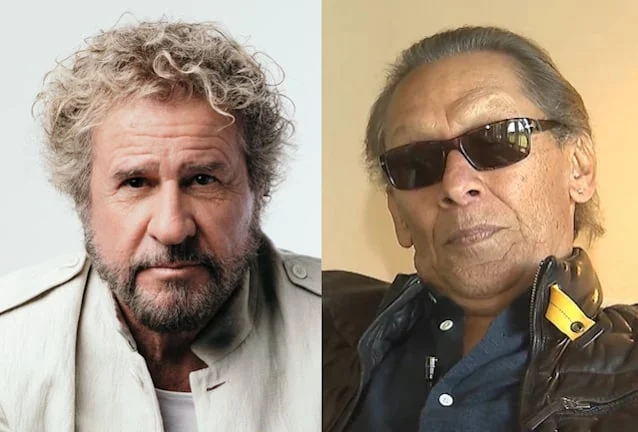
The long-simmering tensions between Sammy Hagar and Alex Van Halen have once again surfaced, with the veteran drummer of the legendary rock band Van Halen labeling the former frontman a "complete idiot." Hagar, 73, has now issued a measured response to Van Halen’s pointed remarks, which emerged earlier this year during an interview with Brazilian music journalist Marcelo Vieira. Vieira, responsible for translating Van Halen’s memoir, "Brothers," into Portuguese, shared the drummer’s candid assessment in an interview published in the esteemed Brazilian magazine Roadie Crew.
Alex Van Halen’s comments arose in the context of a discussion about books penned by or about members of Van Halen. While he offered a surprisingly nuanced and even complimentary review of David Lee Roth’s 1997 autobiography, "Crazy From The Heat," describing it as "quite fun and accurately reflects [David’s] sense of humor," his opinion of Hagar’s 2011 memoir, "Red: My Uncensored Life In Rock," was starkly different. Van Halen stated unequivocally that he had no interest in reading Hagar’s book and declared, "In my opinion, Sammy Hagar is a complete idiot."
This provocative statement, initially reported by Rock Celebrities via an Instagram post on September 5th, prompted a direct reply from Hagar in the comments section of the social media platform. His response, "This comment and post is so unnecessary at this time in our lives, but I guess the truth hurts sometimes. Peace already," suggests a weariness with the ongoing public discourse and a desire for resolution, while simultaneously hinting at underlying truths that he believes Van Halen finds difficult to accept.
The History of Van Halen’s Internal Dynamics
The friction between Alex Van Halen and Sammy Hagar is deeply rooted in the complex and often tumultuous history of Van Halen. Hagar replaced the band’s original vocalist, David Lee Roth, in 1985, embarking on a highly successful period that produced four U.S. chart-topping studio albums: "5150," "OU812," "For Unlawful Carnal Knowledge," and "Balance." This era, often referred to as the "Van Hagar" period, saw the band achieve massive commercial success and redefine their sound.
However, this creative partnership was not without its challenges. Hagar’s 2011 memoir, "Red: My Uncensored Life In Rock," reportedly detailed his experiences with the band, including candid, and at times critical, observations about guitarist Eddie Van Halen. In the book, Hagar described Eddie as unkempt, frighteningly thin, and struggling with substance abuse, including drinking wine directly from the bottle. He also alluded to Eddie’s partial tongue removal following a cancer scare and missing teeth. Hagar later expressed regret for exposing Eddie’s "dark side," particularly after the guitarist’s untimely death in October 2020. In a June 2021 interview with Brazil’s "Inside With Paulo Baron," Hagar stated, "More than anything, because of the untimely and tragic death of Eddie Van Halen, I apologize from the bottom of my heart for exposing his dark side to where I don’t think anyone wants to hear that now, and, unfortunately, it’s in the book. And it’s true… If I wrote the book today, I would only put the good of Eddie Van Halen, because he was such a brilliant, genius guitar player and such a great friend and a great partner."
These revelations sparked debate, with some, like journalist Regis Tadeu, arguing for the importance of exposing difficult truths as a reflection of reality. Hagar, however, maintained that while the accounts were true, the context had changed with Eddie’s passing. He further elaborated on Eddie’s struggles, noting that his erratic behavior, which sometimes perplexed fans on stage, was even more pronounced backstage. "If we’d have known he was sick then, then I would have understood and I would have been a little more, ‘Hey, Ed, come on,’ try to reel him in. But he was impossible. He was on a track of just wild. It was tough." Hagar fondly recalled Eddie’s initial humility upon their first meeting, contrasting it with the explosive intensity that later defined his public persona and musical prowess.
The reunion of Hagar with Eddie, Alex, and bassist Michael Anthony in 2004 for a U.S. summer tour was reportedly fraught with tension. Hagar later described the experience as "some of the most miserable, back-stabbing dark crap I’ve ever been involved with my whole life." Eddie Van Halen himself questioned portions of Hagar’s memoir in a 2015 interview with Rolling Stone, characterizing a depiction of him as a "very angry drunk" during the 2004 reunion tour as "embellished."
Alex Van Halen’s Perspective and the "Brothers" Memoir
Alex Van Halen’s recent comments and his decision to omit the Hagar era entirely from his memoir, "Brothers," underscore a persistent division within the band’s legacy. The book concludes in 1984, coinciding with David Lee Roth’s initial departure. Van Halen has consistently articulated a vision of Van Halen that centers on the original lineup and the band’s formative years. In a December 2024 interview with Bringing It Back To The Beatles, he explained this narrative choice: "Because the original band was the band that was the driving force. That was the connection between the disparate parts of the musical world, if you will. And we were young. The first record going platinum – it’s incredible. That’s something you can really never expect to happen again."

He further elaborated on the "true rock and roll" spirit of those early days, characterized by a sense of exploration, uncertainty, and a willingness to take risks. "After that, that’s why the book ends in 1984, because that was true rock and roll. After that, it became much more – I don’t know; I can’t explain it. But it’s not to say that it was not any good. We always did our best at whatever we were doing, but it wasn’t the same." He drew a parallel to Eddie’s sentiment that the band was happier playing in clubs than in arenas, citing the freedom from expectation and the intimate connection with the audience.
In an earlier interview with USA Today, Alex reiterated this sentiment, stating, "For me, the spirit of the band ended in 1984. We did good work after that, but the primary spiritual aspect, the magic, the potential, the looking to the future together, all of that stuff, our mutually strange backgrounds – that’s what made Van Halen. Ed and I were outsiders. Dave was an outsider. Those kinds of intangible things make the fabric of how we were tied together." This perspective deliberately excludes Hagar’s tenure, as well as that of subsequent vocalist Gary Cherone, and even the later reunion with Roth.
Alex’s refusal to participate in the "The Best Of All Worlds" tour, which features Hagar and Michael Anthony performing Van Halen classics alongside Joe Satriani and Kenny Aronoff, further solidifies his stance. He has expressed his view that the tour does not adequately represent the band, stating in a Billboard interview, "I’m not interested. They’re not doing the band justice. They can do what they want to do. That’s not my business." This refusal stems from his belief that the "heart and the soul and the creativity and the magic was Dave, Ed, Mike and me." His memoir’s sole acknowledgment of the "Van Hagar" era reportedly comes in the understated line, "We had a lot of other singers over the years."
Underlying Disagreements and Potential Motivations
Beyond the differing perspectives on the band’s history, Hagar has also speculated on other potential sources of Alex Van Halen’s resentment. In an April 2025 interview with Rolling Stone, Hagar discussed his long-standing estrangement from Alex, noting they hadn’t spoken in 25 years. He suggested that a possible reason for Alex’s anger might stem from their shared involvement in Hagar’s Cabo Wabo Cantina.
"Cabo Wabo. At one time, Van Halen, when you built it, you guys were all partners in that," Hagar recounted, quoting perceived explanations for Alex’s ire. "And then they didn’t want it anymore when it was losing money, and they gave it to you, and you turned it around and made hundreds of millions of dollars on it. And they’re angry. Alex is angry about that." Hagar countered this by emphasizing that the band members had walked away from the venture, leaving him to salvage it, and that he had been required to indemnify them against any potential lawsuits. "And I’m going, ‘I hope it’s not that.’"
Hagar also posited that Alex’s frustration might stem from his inability to continue performing at the same level as Hagar and Anthony. "I think Al’s angry because I’m out doing it, and Mike and I are out doing it, and he can’t," Hagar stated. "He’s not a singer. He’s not a guitar player. He is not really a band leader. And he seems like he doesn’t want to play drums or can’t play drums anymore, and he can’t go write a new record. Alex wasn’t the songwriter in the band. He was the drummer. Eddie and I wrote the songs. Dave and Eddie wrote the songs, and so we can go out and do them. And I think that really bothers him that Mike and I are still out there doing it. I would feel bad. If I put myself in his shoes, I would feel terrible if I couldn’t do it anymore. But I’m the happiest guy out of all of them. That pisses people off in itself. Being too happy, people don’t like that."
The Lingering Impact of Past Conflicts
Sammy Hagar’s reconciliation with Eddie Van Halen in the months preceding the guitarist’s death offered a glimmer of hope for healing within the Van Halen family. However, Alex’s persistent criticisms suggest that the wounds from past conflicts, particularly those surrounding Hagar’s tenure and his candid portrayal of Eddie in his memoir, remain unhealed. Hagar’s response, "Peace already," suggests a desire to move forward, but Alex’s continued public pronouncements indicate that the narrative of Van Halen, and the roles played by its various members, remains a contentious and emotionally charged subject.
The implications of this ongoing friction extend beyond personal animosity. For fans, it highlights the enduring complexities of band dynamics and the subjective nature of legacy. While Alex Van Halen champions the purity of the original lineup, Sammy Hagar represents a significant and commercially successful chapter in the band’s history. The continued public discourse, fueled by statements like Alex’s "complete idiot" remark and Hagar’s measured replies, ensures that the legacy of Van Halen remains a subject of intense discussion and debate, reflecting the indelible mark the band has left on the rock music landscape. The differing interpretations of their shared past continue to shape how the band’s story is told, underscoring the profound impact of personal relationships on artistic creation and enduring fame.
