

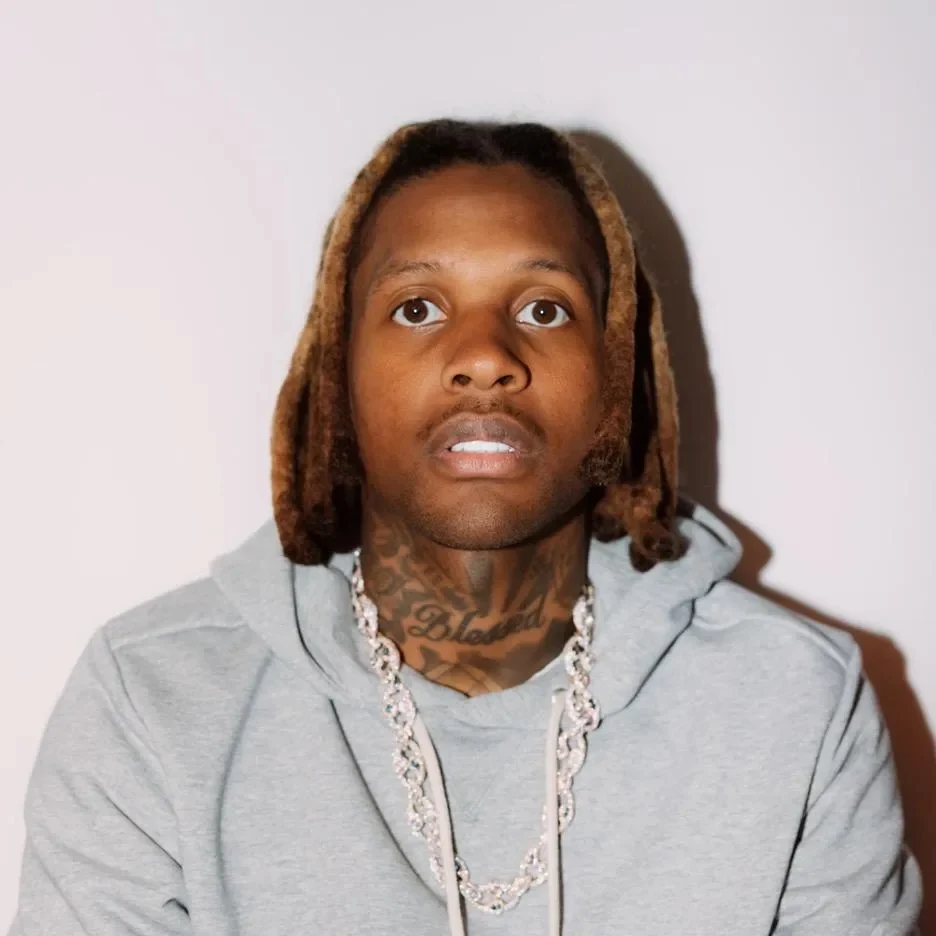
Chicago rapper Lil Durk, born Durk Banks, was acquitted on all charges related to an alleged murder-for-hire plot targeting rival artist Quando Rondo, a verdict delivered on Friday, September 11, 2025, following a complex and highly publicized trial. Despite this significant legal victory, Banks’ immediate freedom remains elusive, as he will remain in custody to face a separate, equally serious, second trial on a racketeering charge, scheduled to commence on October 5, 2025. This dramatic turn of events marks a pivotal moment in a protracted legal saga that has captivated the music world and shed a harsh light on the intertwining of street rivalries, rap culture, and the justice system.
The core of the recently concluded trial revolved around accusations that Lil Durk orchestrated and financed a plot to kill Quando Rondo, whose real name is Tyquian Bowman. Prosecutors alleged that this elaborate scheme was an act of retaliation following the fatal shooting of Durk’s close associate and fellow rapper King Von in Atlanta in November 2020. The alleged retaliatory plot culminated in a violent incident in 2022 near the upscale Beverly Center in Los Angeles, where Quando Rondo was the intended target. While Rondo escaped physical harm in that particular attack, the gunfire tragically claimed the life of his 24-year-old cousin, Saviay’a Robinson, an innocent bystander caught in the crossfire.
The Core Allegations: A Vicious Cycle of Retribution
The prosecution’s case against Lil Durk painted a grim picture of escalating street violence spilling into the lives of prominent musicians, driven by a thirst for vengeance. They contended that Durk, a prominent figure in the drill music scene and leader of the Only The Family (OTF) collective, leveraged his influence and resources to seek retribution for King Von’s death. King Von, born Dayvon Bennett, was a rapidly rising star from Chicago’s O’Block neighborhood, deeply connected to Durk both personally and professionally. His untimely demise at the age of 26 outside an Atlanta nightclub ignited a fierce and public rivalry between Durk’s camp and Quando Rondo’s crew, particularly after it emerged that a member of Rondo’s entourage, Lul Tim (Timothy Leeks), was allegedly responsible for Von’s shooting.
According to court documents and prosecutorial arguments, the murder-for-hire plot was meticulously planned, involving multiple individuals and layers of coordination. The prosecution sought to demonstrate that Durk provided the financial backing and directive for the hit on Rondo, aiming to eliminate a perceived threat and send a powerful message within the intricate web of rap and street allegiances. The 2022 Beverly Center shooting served as the focal point of these allegations, with investigators working to connect Durk directly to the individuals who carried out the assault. The tragic death of Saviay’a Robinson underscored the devastating real-world consequences of these alleged rivalries, transforming a targeted attack into a broader tragedy for an unsuspecting family.
A Deep Dive into the Rivalry: King Von, Quando Rondo, and the Genesis of Conflict
The genesis of the conflict traces back to November 6, 2020, outside the Monaco Hookah Lounge in Atlanta. An altercation erupted between King Von’s group and Quando Rondo’s entourage, escalating rapidly into gunfire. King Von sustained multiple gunshot wounds and later succumbed to his injuries. Lul Tim was subsequently arrested and charged with King Von’s murder, though he was later released on bond. The incident sent shockwaves through the hip-hop community, mourning the loss of a prolific talent and reigniting concerns about violence within the genre.
King Von’s death deeply affected Lil Durk, who had collaborated extensively with Von and considered him a brother. Durk frequently paid tribute to Von in his music and public appearances, solidifying the narrative of a profound bond. This emotional connection formed the bedrock of the prosecution’s theory that Durk was motivated to seek revenge. The 2022 shooting near the Beverly Center, a bustling commercial district in Los Angeles, was then presented as the alleged culmination of this vengeful plot. The fact that the target, Quando Rondo, was unharmed but his cousin, Saviay’a Robinson, lost her life, added another layer of complexity and sorrow to the case, drawing national attention to the escalating nature of these feuds. Robinson, a young woman with no known involvement in the rap world or street conflicts, became a stark reminder of the collateral damage often associated with such disputes. Her family’ has consistently called for justice for her death, hoping that the legal proceedings would bring clarity and accountability.
The cultural backdrop of drill music, a subgenre of hip-hop characterized by its gritty, often violent lyrics reflecting life in urban environments, frequently plays a role in these narratives. While artists often assert that their music is a reflection of their reality and a form of storytelling, prosecutors sometimes attempt to use lyrics and public personas as evidence of intent or association in criminal proceedings, a practice that remains highly contentious within the legal and music communities.
The Legal Marathon: Charges, Defense, and Verdicts
Lil Durk’s legal troubles intensified with his arrest in late 2024, when he was taken into custody in connection with the murder-for-hire allegations. The initial arrest was followed by additional felony counts as prosecutors built their case, meticulously gathering evidence to support the intricate charges. The specific charges against Durk included murder for hire, conspiracy to commit murder for hire, and potentially other related felonies such as aggravated assault and weapons offenses, all stemming from the 2022 Beverly Center incident.
The trial itself was a protracted affair, involving extensive testimony, forensic evidence, and legal arguments from both sides. Two other individuals, Deandre "OTF Dede" Wilson and David "Browneyez" Lindsey, were tried alongside Durk. Prosecutors sought to establish their roles as direct participants in the alleged plot. However, the jury’s verdicts differentiated between the co-defendants. Wilson and Lindsey were convicted of stalking and stalking conspiracy charges, suggesting the jury believed they were involved in tracking or harassing Quando Rondo, but found insufficient evidence to link them directly to the murder-for-hire aspect of the plot. Crucially, they were also acquitted of the murder-for-hire charges, mirroring the outcome for Durk.
Durk Banks’ attorneys mounted a vigorous defense, adamantly maintaining that their client had no involvement in the alleged plot. Central to their defense was the assertion that it was Banks’ former personal assistant, Kavon "OTF Vonnie" Grant, who had independently planned the intended killing of Quando Rondo. The defense argued that Grant acted on his own initiative, driven by a misguided desire to impress his boss and demonstrate loyalty, without any directive or knowledge from Lil Durk. This strategy aimed to sever the direct link between Durk and the alleged criminal enterprise, shifting the blame to an individual who, according to the defense, acted unilaterally. The jury’s decision to acquit Durk on all murder-for-hire charges indicates that the defense successfully introduced reasonable doubt regarding his direct involvement or leadership in the alleged plot, or that the prosecution failed to meet the high burden of proof required for such grave accusations.
Chronology of Key Events
The legal proceedings and underlying events span several years, forming a complex timeline:
- November 6, 2020: Rapper King Von (Dayvon Bennett), a close associate of Lil Durk, is fatally shot outside the Monaco Hookah Lounge in Atlanta, Georgia, following an altercation involving members of Quando Rondo’s entourage. Lul Tim (Timothy Leeks) is later charged in connection with Von’s death.
- 2022: An alleged retaliatory shooting occurs near the Beverly Center in Los Angeles, California. Quando Rondo is the intended target, but the gunfire misses him and tragically kills his cousin, 24-year-old Saviay’a Robinson. Prosecutors later allege this incident is part of the murder-for-hire plot orchestrated by Lil Durk.
- Late 2024: Lil Durk (Durk Banks) is arrested by law enforcement over a murder-for-hire plot targeting Quando Rondo. The arrest draws significant media attention due to his prominence in the music industry.
- Late 2024 / Early 2025 (inferred): Following the initial arrest, Lil Durk is hit with additional felony counts as the investigation deepens and prosecutors formally build their case, expanding the scope of the charges.
- Friday, September 11, 2025 (inferred): After a multi-week trial, a jury finds Lil Durk not guilty on all charges related to the murder-for-hire plot. Co-defendants Deandre "OTF Dede" Wilson and David "Browneyez" Lindsey are convicted of stalking and stalking conspiracy but acquitted of murder-for-hire.
- October 5, 2025 (inferred): Lil Durk is scheduled to appear in court for a second, separate trial on a racketeering charge, which includes allegations of murder and firearms offenses. He remains in custody until this trial.
Reactions and Official Statements
The verdict on the murder-for-hire charges elicited strong reactions from various parties. First Assistant U.S. Attorney Bill Essayli, representing the prosecution, expressed clear disappointment with the jury’s decision regarding Durk Banks. In a statement following the acquittal, Essayli affirmed the prosecution’s resolve, stating, "While we are disappointed with the jury’s decision regarding Durk Banks, AKA Lil Durk, we look forward to presenting our evidence at his second trial, scheduled for 5 October, when he will face racketeering murder and firearms charges." This statement highlights the prosecution’s belief in the overall criminal enterprise allegations and their determination to pursue the remaining charges.
From the defense’s perspective, while specific statements were not immediately released, the acquittal on the murder-for-hire charges would undoubtedly be viewed as a significant triumph. The defense team likely expressed satisfaction with the jury’s careful consideration of the evidence and their client’s vindication on these particular, grave accusations. This outcome would be interpreted as an affirmation of Durk’s innocence concerning the alleged plot to kill Quando Rondo, a narrative they worked tirelessly to establish throughout the trial.
The broader public and the music industry reacted with a mix of relief and continued concern. Lil Durk’s dedicated fanbase celebrated the acquittal as a partial victory, seeing it as a step towards his eventual freedom. However, the shadow of the impending racketeering trial looms large, tempering any widespread jubilation. Industry insiders are closely watching the developments, understanding that such high-profile legal battles can significantly impact an artist’s career trajectory, public image, and financial standing. The ongoing saga contributes to a broader conversation about the challenges faced by artists from backgrounds frequently scrutinized by law enforcement, and the complex relationship between artistic expression and real-world legal entanglements.
Broader Implications: Legal Precedents, Industry Scrutiny, and Future Trajectories
The acquittal of Lil Durk on murder-for-hire charges carries several significant implications, both legal and cultural. Legally, it underscores the formidable challenge prosecutors face in proving intent and direct involvement in complex criminal conspiracies, especially when dealing with multiple layers of alleged participants and the absence of direct, incontrovertible evidence. The defense’s strategy, particularly the introduction of Kavon Grant as a potential lone actor, likely created sufficient reasonable doubt for the jury to decline a conviction on these specific charges. This outcome also highlights the distinction juries often make between different types of charges, as evidenced by the co-defendants’ convictions for stalking but not murder-for-hire.
For the music industry, the ongoing legal battles involving prominent artists like Lil Durk amplify the scrutiny on rap music, particularly the drill subgenre, and its perceived ties to street violence. While artists often argue their lyrics are artistic expressions reflecting lived experiences, law enforcement and critics sometimes point to these narratives as evidence of criminal associations. Durk’s case, regardless of the ultimate outcome, contributes to the persistent debate about artistic freedom versus public responsibility and the impact of music on real-world events. The prolonged legal entanglements can disrupt an artist’s creative flow, touring schedules, and album releases, potentially impacting their financial stability and global reach.
The immediate future for Lil Durk hinges entirely on the upcoming racketeering trial. Racketeering charges, often brought under the RICO (Racketeer Influenced and Corrupt Organizations) Act, are notoriously severe and are typically used to dismantle organized criminal enterprises. The inclusion of "racketeering murder and firearms charges" suggests prosecutors are attempting to link Durk to a broader pattern of criminal activity, potentially involving violence and weapons, extending beyond the specific murder-for-hire allegations. A conviction on these charges could carry a lengthy prison sentence, potentially impacting Durk’s career for decades. The standard of proof for RICO cases is complex, often relying on establishing a pattern of criminal activity by an organization rather than a single act.
Ultimately, this case serves as a poignant reminder of the tragic human cost involved in these conflicts. The deaths of King Von and Saviay’a Robinson are stark examples of lives cut short, leaving families and communities in mourning. While the legal process aims to deliver justice, the underlying issues of systemic violence, poverty, and inter-group rivalries that often fuel these tragedies remain deeply entrenched and demand broader societal attention. As Lil Durk prepares for his next legal battle, the world watches, not just for the fate of a popular musician, but for the continuing narrative of how the justice system navigates the complex and often violent intersections of culture, fame, and crime.
