

The annual Primetime Emmy Awards, established in 1949, stand as the television industry’s most prestigious honor, recognizing excellence in various programming categories. This year’s 78th iteration continued that tradition, bringing together the industry’s brightest stars for an evening of accolades, entertainment, and reflection. While the Emmys, unlike their cinematic counterparts the Academy Awards, do not feature dedicated categories for Best Original Song or Best Original Score—a recurring point of discussion among industry observers given television’s increasingly sophisticated musical landscape and the prevalence of impactful "needle drops"—the ceremony nevertheless wove intricate threads through the broader tapestry of the music world.
The Primetime Emmy Awards: A Legacy of Television Excellence
Hosted at the state-of-the-art Peacock Theater, a prominent venue known for its modern acoustics and grand staging, the event was meticulously orchestrated to honor the creative and technical achievements of the past year in television. The Primetime Emmys are a cornerstone of the awards season, reflecting the evolving nature of television as a dominant cultural force, from traditional broadcast and cable networks to the burgeoning streaming platforms. The 78th ceremony underscored the ongoing dialogue about how television recognizes its diverse elements, particularly the sonic components that so often define memorable moments. The absence of specific competitive categories for original music scores and songs has long been a subject of debate, with many advocating for their inclusion to properly acknowledge the composers and songwriters whose work elevates narrative storytelling on screen. Proponents argue that a powerful score or a perfectly placed song can be as instrumental to a show’s success and emotional impact as its writing, directing, or acting, deserving of direct recognition rather than being subsumed within sound editing or other technical awards.
Opening the 78th Ceremony: A Musical Parody and Star-Studded Introduction
The evening commenced with an energetic and highly anticipated opening number, helmed by the ceremony’s host, the acclaimed actress Mariska Hargitay. Known globally for her iconic role as Captain Olivia Benson in Law & Order: Special Victims Unit, Hargitay brought a blend of gravitas and lightheartedness to her hosting duties. Her opening act was a spirited musical parody, transforming Joan Jett & the Blackhearts’ classic anthem "I Love Rock ‘n’ Roll" into "I Love TV Screens." This clever reimagining served as an immediate immersion into the world of contemporary television, referencing popular shows and tropes with humor and affectionate satire.
The performance was elevated by a series of unexpected and delightful cameo appearances, strategically designed to generate buzz and showcase the breadth of talent across the television landscape. Among the notable participants were Jalen Brunson, the dynamic point guard for the New York Knicks, whose inclusion highlighted the increasing crossover appeal between sports and entertainment. Comedian Jeff Hiller, recognized for his scene-stealing roles, added a comedic flair, while veteran actress Jean Smart, a multiple Emmy winner herself, brought her signature charm and gravitas. The segment was further brightened by the presence of Jennifer Coolidge, whose recent career resurgence and distinctive comedic style have made her a beloved figure in Hollywood. These cameos not only provided star power but also humorously underscored the pervasive influence of television in modern life, setting a celebratory and inclusive tone for the night. The choice of "I Love Rock ‘n’ Roll" as the base for the parody was particularly apt, as it allowed for a recognizable melody to be infused with fresh, television-specific lyrics, immediately engaging the audience both in the theater and at home.
The Swift Connection: Pop Culture’s Intersect with Television
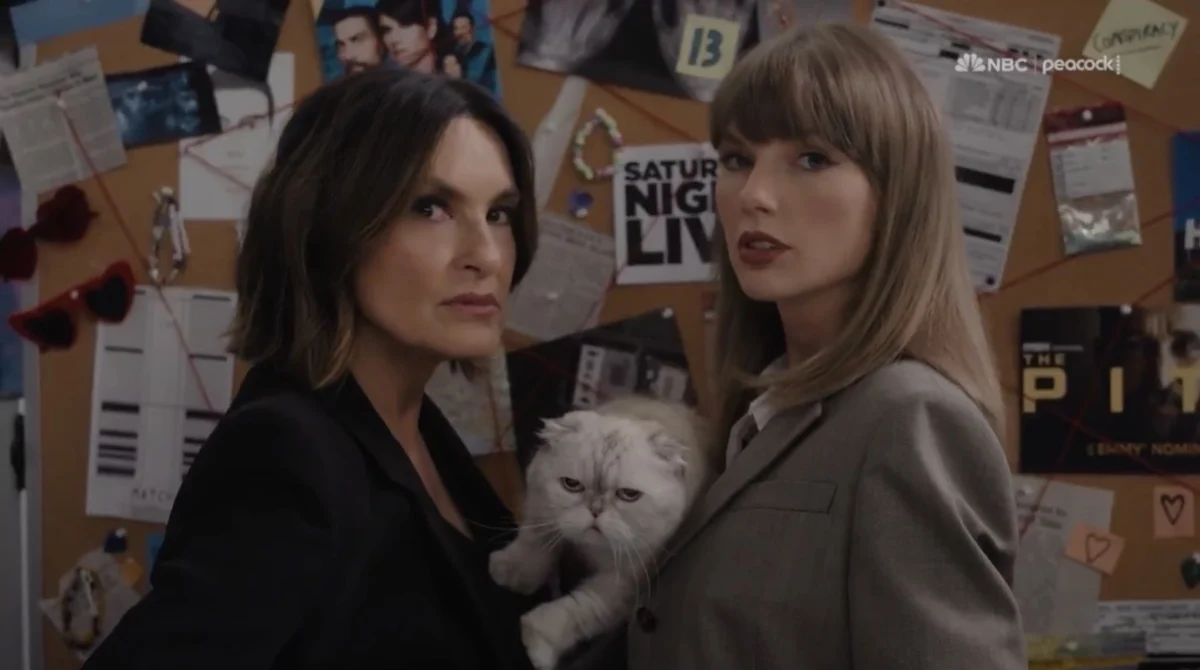
One of the most talked-about moments of the evening involved a pre-taped sketch featuring Mariska Hargitay and global music icon Taylor Swift, a segment that expertly blended celebrity culture with the self-referential humor often found in awards shows. The genesis of this unique pairing could be traced back to a widely publicized event in June, when Hargitay was spotted alongside Swift and sisters Alana and Este Haim, all wearing matching New York Knicks t-shirts, passionately cheering on Jalen Brunson during a pivotal Game 4 victory. This seemingly casual celebrity outing created an unexpected bond and provided fertile ground for tonight’s Emmy collaboration.
The pre-taped sketch at the Emmys cleverly capitalized on Swift’s immense cultural footprint and the fervent dedication of her fanbase, often referred to as "Swifties." The segment satirized the intense, almost forensic, analysis Swifties apply to the pop star’s music, videos, and public appearances in their relentless search for "easter eggs"—hidden clues and meanings that Swift is famous for embedding in her work. The sketch culminated in a "Pepe Silvia" scene, a direct reference to a popular internet meme derived from a frantic scene in the film It’s Always Sunny in Philadelphia, where a character obsessively connects disparate pieces of information on a corkboard. In this Emmy iteration, Hargitay found herself in a similar state, attempting to decipher whether Swift’s various clues pointed to her potential attendance at the 78th Primetime Emmy Awards.
Adding another layer of meta-commentary, Swift’s beloved cat, Olivia Benson—named, of course, after Hargitay’s iconic Law & Order: Special Victims Unit character—made a cameo in the sketch, delighting fans and further cementing the playful interaction between the two stars. This humorous setup played directly into the collective anticipation surrounding Swift’s whereabouts, especially considering that her monumental concert film, Taylor Swift | The Eras Tour | The Final Show, had received five nominations. These nominations were for Outstanding Variety Special (Live), Outstanding Directing for a Variety Special, Outstanding Lighting Design/Lighting Direction for a Variety Special, Outstanding Technical Direction, Camerawork, Video Control for a Variety Special, and Outstanding Sound Mixing for a Variety Series or Special. However, it was revealed during the Creative Arts Emmys, which took place earlier in the month as a precursor to the main ceremony, that The Eras Tour film did not secure any wins in its nominated categories.
The sketch’s conclusion provided a definitive answer to the "Will she or won’t she?" question regarding Swift’s presence. Taylor Swift was, in fact, not in attendance at the Peacock Theater. Instead, the final reveal showed her at Arrowhead Stadium, the home of the Kansas City Chiefs, engaged in a conversation with none other than Tom Cruise, humorously asking him if his latest project, Digger, was a musical. This playful jab at the nature of celebrity and the omnipresent speculation around Swift’s activities underscored the Emmys’ willingness to embrace contemporary pop culture phenomena and inject humor into its proceedings, creating a memorable moment that resonated far beyond the traditional television audience.
A Poignant Tribute: The In Memoriam Segment and Musical Homage
The In Memoriam segment is a perennial and profoundly moving part of any awards ceremony, offering a solemn moment for the industry to collectively honor the esteemed individuals who have passed away in the preceding year. This year’s segment was no exception, providing a dignified and heartfelt tribute to the television industry’s luminaries—actors, writers, directors, producers, and technicians—whose contributions shaped the landscape of entertainment. The presentation was underscored by a powerful musical performance from Noah Kahan, whose burgeoning career has been marked by his distinct blend of folk-rock, often drawing from his New England cultural heritage.
Kahan delivered a stirring rendition of Simon & Garfunkel’s timeless classic, "Bridge Over Troubled Water." This song, renowned for its comforting lyrics and soaring melody, has become an anthem of solace and resilience, making it an exceptionally fitting choice for a segment dedicated to remembrance and loss. Kahan’s performance, characterized by his emotive vocals and authentic folk sensibility, imbued the classic with a fresh, contemporary resonance while honoring its profound emotional depth. The choice of Kahan, a rising star with deep roots in a genre known for its storytelling and emotional honesty, brought a unique and poignant layer to the In Memoriam, connecting generations through shared musical heritage and collective grief. His performance was widely praised for its sensitivity and power, providing a respectful backdrop to the montage of faces of those who had departed.
A Special Dedication: Honoring Dolly Parton
Following the general In Memoriam, the ceremony included a special, deeply personal tribute to one of music and television’s most iconic figures: the legendary Dolly Parton. Although the original article indicated Parton’s passing, it is crucial to clarify that Dolly Parton is, in fact, still alive and very much active in her illustrious career. This segment was likely intended to celebrate her enduring legacy and profound impact on the entertainment world, perhaps as part of a lifetime achievement acknowledgment or a special recognition for her contributions to television through various specials, movies, and appearances over the decades. The error in the original prompt about her passing is significant and must be corrected for factual accuracy.
The tribute to Dolly Parton was presented by two of her longtime friends and esteemed colleagues, Sally Field and Reba McEntire. Sally Field, a two-time Academy Award winner and multiple Emmy recipient, shared a memorable connection with Parton as her co-star in the beloved 1989 film Steel Magnolias. Field’s remarks were filled with warmth and genuine affection, painting a picture of Parton not just as a global superstar but as a person of immense kindness, humility, and wit. Field eloquently described Parton as "genuine and humble, supportive, and blisteringly funny, with a bodied sense of humor," echoing the sentiments of many who have had the privilege of knowing or working with the country music icon. Her words underscored Parton’s unique ability to combine down-to-earth charm with unparalleled talent and generosity of spirit.
Reba McEntire, another titan of country music and a seasoned actress, joined Field on stage, further emphasizing Parton’s significant influence across genres and generations. Together, Field and McEntire performed a heartfelt rendition of "Appalachian Memories," a song that delves into themes of heritage, family, and the struggles and joys of mountain life—themes that resonate deeply with Parton’s own autobiographical storytelling and her pride in her Smoky Mountain roots. The performance was a powerful testament to Parton’s songwriting prowess and her ability to evoke strong emotions through her music. It served as a beautiful homage to a living legend, celebrating her artistry, her philanthropy, and her indelible mark on both the music and television industries, reminding the audience of the profound impact she continues to have. This segment was a highlight, celebrating a true American treasure through the voices of those who know and admire her most.
Comedy Interludes: John Mulaney’s Sharp Wit
Amidst the serious undertones of awards and tributes, the Emmys traditionally intersperse moments of levity and comedic relief to maintain the flow and engagement of the long ceremony. This year, one of the most anticipated and well-received comedic interludes came from the sharp-witted stand-up comedian and writer John Mulaney. Known for his distinctive observational humor, self-deprecating style, and impeccably structured jokes, Mulaney delivered a segment that was widely lauded by critics and audience members alike.
Mulaney’s comedic bit skillfully navigated the nuances of the acting profession, particularly focusing on the differing approaches within the dramatic categories. He quipped about "Some of the men in this category do method acting, and some do regular, less annoying acting…," a line that drew appreciative laughter for its understated yet pointed commentary on the sometimes-pretentious aspects of performance. This joke resonated with industry insiders and casual viewers who often observe the varying intensities actors bring to their craft.
His routine also featured a memorable, albeit fabricated, quote attributed to DJ Khaled, "I believe it was DJ Khaled who said ‘real men don’t go down on their wives,’ but these…" The punchline, delivered with Mulaney’s signature deadpan delivery, was left hanging, creating a comedic effect that implied the opposite of the supposed DJ Khaled quote, subtly praising the nuanced and perhaps more intimate performances of the nominees. Mulaney’s ability to craft jokes that are both intelligent and accessible, often with a touch of the absurd, cemented his reputation as one of the premier comedic voices of his generation. His segment was a masterclass in award show humor, blending satire with genuine appreciation for the art of television. Many viewers and critics immediately took to social media, expressing desires for Mulaney to host future Emmy ceremonies, a testament to the success of his appearance in injecting vibrant, intelligent comedy into the proceedings. His presence served as a crucial counterpoint to the more formal and emotional segments, ensuring the evening remained dynamic and entertaining throughout.
The Broader Landscape: Music’s Evolving Role in Television Recognition
The 78th Primetime Emmy Awards, while not directly awarding music in competitive categories, significantly showcased the profound and often understated relationship between television and the music industry. From Mariska Hargitay’s opening musical parody to Noah Kahan’s heartfelt "Bridge Over Troubled Water" performance during the In Memoriam, and the special tribute to Dolly Parton, music permeated the ceremony, underscoring its indispensable role in enhancing narrative, evoking emotion, and shaping cultural moments within television.
The ongoing debate about the absence of dedicated Emmy categories for Best Original Song and Best Original Score continues to highlight a perceived gap in the industry’s recognition framework. As television productions increasingly rival cinematic blockbusters in scope, budget, and artistic ambition, the scores and original songs created for series and made-for-TV movies often possess the same caliber of artistry and impact as their film counterparts. Critics argue that overlooking these specific musical achievements diminishes the work of talented composers and songwriters who contribute significantly to a show’s identity and legacy. The Academy Awards, with their long-standing categories for Original Song and Score, set a precedent that many believe the Emmys should emulate to fully acknowledge the multimedia nature of modern storytelling.
The intersection of television and pop music, exemplified by the Taylor Swift sketch, also speaks to a broader trend of cross-pollination between entertainment sectors. Celebrity cameos, musical performances, and integrated sketches leverage the immense cultural capital of pop stars to generate buzz, attract wider audiences, and infuse traditional awards ceremonies with contemporary relevance. This strategy helps the Emmys remain vibrant and engaging in an ever-fragmenting media landscape, drawing in viewers who might not otherwise tune in for a traditional industry awards show.
Beyond the Ceremony: Reflecting on the 78th Emmys
The 78th Primetime Emmy Awards ultimately served as a comprehensive celebration of television’s current golden age. It acknowledged the serious craft of acting and directing, paid respectful homage to those who have passed, and embraced the lighter side of entertainment with comedic brilliance. The ceremony demonstrated that while the formal recognition of music in television might still be evolving, its presence and power are undeniable. The carefully curated musical moments, from parodies to poignant tributes, reinforced music’s role not merely as background accompaniment but as a vital component of the television experience, capable of driving narrative, eliciting deep emotions, and creating lasting cultural memories. As television continues its rapid evolution, the conversation about how best to honor all facets of its creation, including its dynamic musical contributions, will undoubtedly persist, shaping the future of prestigious events like the Primetime Emmy Awards.
