

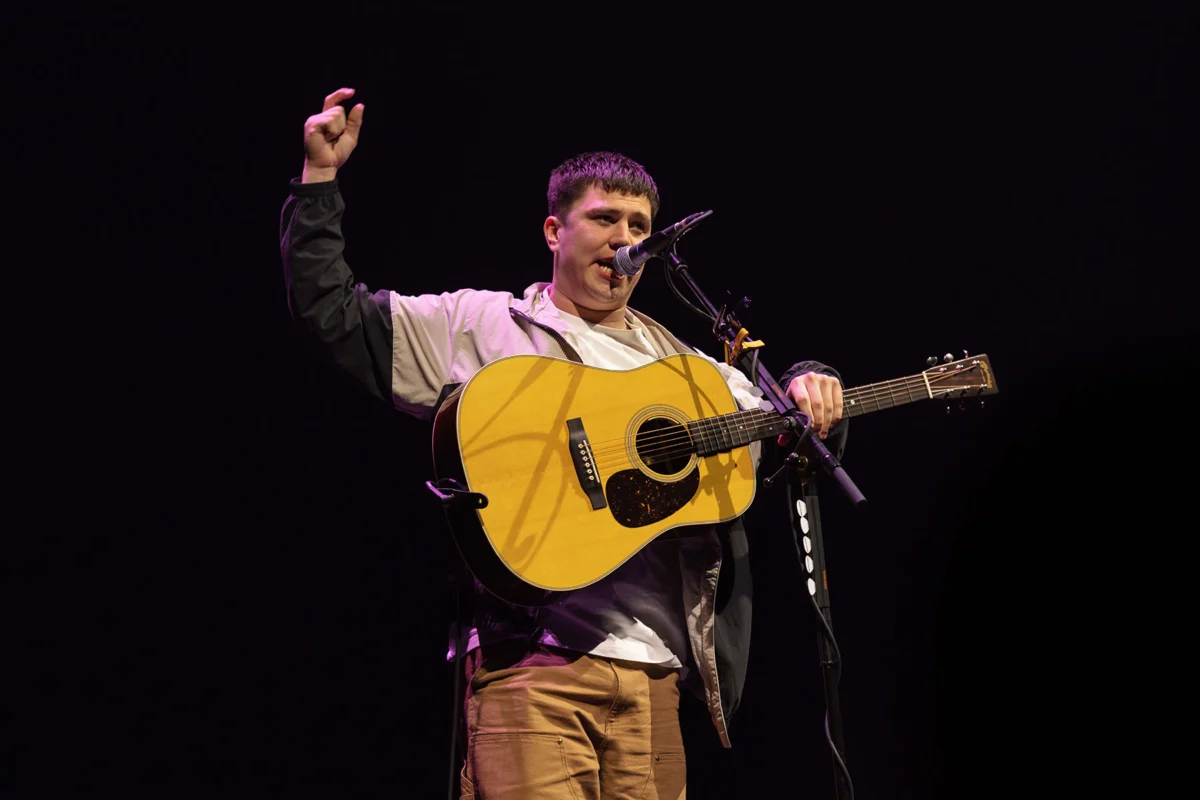
Aaron Rowe, one of the artists who withdrew from Ed Sheeran’s "Loop Tour" following the controversial removal of Macklemore, has publicly defended Sheeran, redirecting the intense scrutiny towards powerful corporate entities, specifically Robert Kraft. Rowe’s comments come amidst a widening debate over artistic freedom, corporate influence in entertainment, and the implications for major touring acts in a politically charged environment. The incident, stemming from Macklemore’s pro-Palestinian statements and performance of his 2024 protest song "Hind’s Hall," has ignited a significant discussion within the music industry and among fans, leading to a cascade of artist withdrawals and renewed focus on the power dynamics at play.
The Unfolding Controversy: A Detailed Timeline
The controversy began to escalate in early September 2025 during Ed Sheeran’s highly anticipated "Loop Tour." Macklemore, known for his socially conscious lyrics and activism, was serving as a supporting act.
Macklemore’s Initial Performances and "Hind’s Hall"
On September 4 and 5, 2025, Macklemore performed at MetLife Stadium in New Jersey, a significant stop on Sheeran’s North American leg. During these performances, Macklemore openly expressed pro-Palestinian sentiments, aligning himself with a growing movement advocating for Palestinian rights. Crucially, he performed "Hind’s Hall," his 2024 protest song that gained widespread attention for its direct criticism of the geopolitical conflict and its solidarity with student protests, particularly those seen at Columbia University. The song, named after Hind Rajab, a six-year-old Palestinian girl killed in Gaza, became an anthem for many seeking to raise awareness about the humanitarian situation. Macklemore’s decision to perform such a politically charged song on a mainstream tour stage, particularly one associated with an artist like Ed Sheeran, immediately drew both fervent praise and sharp criticism, setting the stage for the ensuing fallout.
The Swift Removal and Allegations
Shortly after the MetLife Stadium performances, Macklemore was abruptly removed from eight of his scheduled appearances on the "Loop Tour." This decision sent shockwaves through the music community. Macklemore quickly alleged that Robert Kraft, owner of the Kraft Group and the New England Patriots, was instrumental in his removal. Kraft’s company owns Gillette Stadium in Foxborough, Massachusetts, where Macklemore had been slated to perform with Sheeran on September 25 and 26. Macklemore’s accusation pointed directly to the immense influence powerful figures with significant venue ownership can exert over artistic programming.
Promoters and Sheeran Weigh In
Following Macklemore’s allegations, Messina Touring Group, the tour’s promoter, issued a statement clarifying the circumstances of the removal. They asserted that venues across the tour had warned that upcoming concerts would not proceed if Macklemore remained on the bill. This suggested a widespread concern among venue operators regarding potential disruptions, protests, or even withdrawal of services, rather than a singular decision by the promoter or headliner.
Ed Sheeran himself addressed the situation, attempting to distance himself from the decision-making process while acknowledging the gravity of the situation. Sheeran stated that the decision to remove Macklemore was made by the tour’s promoter, not by him personally. He also conveyed that he had engaged in discussions with various parties, including venues, promoters, and activists, in an effort to find an alternative resolution, but ultimately found himself unable to overrule the decision. His comments underscored the complex web of contractual obligations and financial pressures that can dictate tour logistics, often placing the headlining artist in a difficult position when political controversies arise.
Aaron Rowe’s Stance: Shifting the Focus
Amidst the intensifying public debate and the flurry of statements from various stakeholders, Aaron Rowe, one of the scheduled opening acts for Sheeran, emerged with a distinct perspective. His remarks, delivered in an Instagram video posted on Friday, September 18, sought to reframe the narrative, challenging the prevailing public criticism directed at Ed Sheeran.
Rowe’s Public Defense of Sheeran
Rowe acknowledged that Sheeran’s immediate handling of the situation "could have been a lot better," suggesting there might have been avenues for a more decisive or supportive response from the headliner. However, he quickly pivoted to defend Sheeran’s intentions, stating, "I haven’t had a chance to talk to Ed too much, but I fully believe he knows that was a mistake." This statement implies that, despite any perceived missteps in the moment, Sheeran understands the broader implications of Macklemore’s removal and potentially regrets the outcome. Rowe attributed the initial decision to "panic within the singer’s team," suggesting a reactive response to external pressures rather than a deliberate attempt by Sheeran to silence another artist. This interpretation positions Sheeran as a victim of circumstances, caught between the demands of powerful external forces and his own artistic integrity.
Directing Criticism Towards Robert Kraft
The crux of Rowe’s defense of Sheeran lay in his deliberate redirection of public anger. "All I keep hearing is Ed Sheeran this, Ed Sheeran that — when you really should be focusing on the likes of Robert Kraft," Rowe asserted in his video. This direct accusation against Kraft marked a significant turn in the public discourse, bringing the conversation from artist-to-artist dynamics to the broader issue of corporate influence in the entertainment industry. By singling out Kraft, Rowe highlighted the financial and ownership structures that underpin large-scale tours, suggesting that the power to censor or remove artists ultimately resides with those who control the venues and the financial leverage. His statement implied that fans and critics were misplacing their outrage by focusing solely on Sheeran, rather than the deeper systemic issues of corporate control over artistic expression.
The Role of Panic and Perceived Mistakes
Rowe’s analysis of "panic" within Sheeran’s team offers a psychological dimension to the controversy. In the high-stakes world of arena tours, where millions of dollars are invested and complex logistics are at play, any perceived threat to the smooth operation of the tour can trigger immediate, risk-averse reactions. The performance of a politically charged song, especially one touching upon a highly sensitive geopolitical conflict, could be seen by tour management, promoters, and venue operators as a significant liability. Such concerns might include potential protests, boycotts, security issues, or negative media attention that could jeopardize future dates or sponsorships. Rowe’s belief that Sheeran now recognizes the "mistake" suggests a post-facto realization of the ethical and reputational costs associated with yielding to such pressures, even if those pressures were immense at the time.
The Corporate Dimension: Robert Kraft and Venue Pressures
The allegations leveled by Macklemore and subsequently echoed by Aaron Rowe against Robert Kraft bring to the forefront the powerful role of corporate entities and venue owners in shaping the landscape of live entertainment.
Kraft Group’s Influence and Business Holdings
Robert Kraft is a prominent figure in American business and sports, best known as the owner of the New England Patriots NFL team. His company, the Kraft Group, is a diversified holding company with interests spanning paper and packaging, real estate development, private equity, and sports and entertainment. Critically, the Kraft Group owns Gillette Stadium, a major sports and concert venue where Macklemore had been scheduled to perform. This direct ownership provides Kraft with significant leverage over programming decisions made at his venue. The implication is that a venue owner, through their control over the physical space and the associated operational infrastructure, can exert considerable pressure on promoters regarding which artists are deemed acceptable to perform.
Philanthropic Endeavors and Political Stance
Beyond his business empire, Robert Kraft is also a noted philanthropist with strong ties to various causes. Notably, he established the Foundation to Combat Antisemitism (FCAS), an organization dedicated to fighting antisemitism and promoting understanding. Given the FCAS’s mission and Kraft’s public stance, comments or performances perceived as critical of Israel, or those that might be interpreted as inflammatory in the context of the Israeli-Palestinian conflict, could directly conflict with his stated philanthropic and personal values. This background provides a plausible motivation for Kraft to potentially intervene in or express strong concerns about Macklemore’s performances, particularly "Hind’s Hall," which explicitly takes a pro-Palestinian stance. The intersection of his business interests (Gillette Stadium), his philanthropic endeavors, and his personal beliefs creates a powerful nexus of influence.
Messina Touring Group’s Position
Messina Touring Group, as the promoter for Ed Sheeran’s "Loop Tour," found itself caught between the demands of artists, the expectations of the headliner, and the directives from venue owners. Their statement, indicating that "venues had warned that upcoming concerts would not proceed while Macklemore remained on the bill," reveals the hierarchical power structure within the touring industry. Promoters, while responsible for organizing and executing tours, are ultimately dependent on securing venues. If multiple venues threaten to withdraw their facilities or impose severe penalties, a promoter faces an existential threat to the tour itself. This scenario places immense pressure on promoters to comply with venue demands, even if it means compromising artistic lineups or freedom of expression. The financial ramifications of a tour being canceled or significantly disrupted would be catastrophic, forcing promoters into difficult decisions that prioritize logistical stability over artistic solidarity.

Artists Respond: Withdrawals and Solidarity
The removal of Macklemore ignited a wave of solidarity among several other artists who were scheduled to support Ed Sheeran on his "Loop Tour." Their subsequent withdrawals underscored the deep-seated concerns within the artistic community regarding censorship and the protection of free expression.
Rowe’s Initial Withdrawal Statement
Aaron Rowe was among the first to announce his departure from the remaining tour dates. His statement, made earlier in the week prior to his Instagram video defending Sheeran, explicitly articulated his reasons. Rowe stated that he could not "stand by and allow billionaires to use their position of power to silence" artists speaking about Palestinians. This powerful declaration framed his withdrawal as a principled stand against corporate overreach and a defense of artistic integrity. It highlighted a growing sentiment among artists that their platforms should not be compromised by financial pressures or the political agendas of powerful individuals. Rowe’s actions, therefore, were not just a personal decision but a public challenge to the perceived attempts at silencing dissenting voices within the music industry.
Lukas Graham, FINNEAS, and Beoga Join the Protest
Rowe was not alone in his decision. Danish band Lukas Graham and American singer-songwriter and producer FINNEAS (Finneas O’Connell), both scheduled to perform as support acts, also announced their withdrawal from their respective appearances. Their decisions echoed Rowe’s sentiments, indicating a collective discomfort with the circumstances surrounding Macklemore’s removal. Furthermore, the Irish band Beoga, which had been performing as part of Ed Sheeran’s touring band, also pulled out. The withdrawal of a band directly integrated into Sheeran’s live performance setup was particularly notable, suggesting that the controversy had permeated even the inner circle of the tour. These collective withdrawals sent a strong message: a significant segment of the artistic community views the ability to express political opinions without fear of professional reprisal as a fundamental right, and they are willing to take financial and professional risks to uphold that principle.
The Principle of Unsilenced Voices
The coordinated withdrawals underscored a broader ethical debate within the music industry: where does the line between artistic expression and commercial viability lie? For these artists, the principle of not allowing powerful figures to silence voices speaking on humanitarian issues superseded their contractual obligations or the significant exposure that touring with a global superstar like Ed Sheeran offered. Their actions serve as a powerful testament to the belief that artists have a responsibility to use their platforms for social commentary, even when such commentary is controversial. This collective stand highlights the increasing politicization of entertainment and the pressure on artists to align themselves with ethical positions, particularly on globally significant issues like the Israeli-Palestinian conflict. The incident effectively forced artists to choose between their career opportunities and their convictions, with several choosing the latter.
Financial Commitments and Public Relations
In the wake of the controversy, both Macklemore and Robert Kraft announced significant financial commitments to organizations supporting Palestinians, actions that intertwined philanthropy with public relations and crisis management.
Macklemore’s $1 Million Pledge
Following his removal from the tour, Macklemore publicly pledged to donate $1 million in net earnings from the "Loop Tour" to organizations supporting Palestinians. This move served multiple purposes: it reaffirmed his commitment to the cause that led to his removal, demonstrated a tangible dedication to humanitarian aid, and challenged the narrative that his activism was merely performative. By pledging a substantial sum, Macklemore reinforced his authenticity and provided a concrete response to the professional setback he experienced. This pledge also served as a direct challenge to the powerful figures he accused of censoring him, effectively turning a professional loss into an opportunity for greater advocacy and financial support for his chosen cause.
Robert Kraft’s $2 Million Match: A Response to Pressure?
In a subsequent development, Robert Kraft announced a $2 million commitment to humanitarian efforts. While the initial report did not specify the exact recipients, the timing and context strongly suggested it was a response to the public pressure generated by Macklemore’s pledge and the wider controversy. Kraft’s statement indicated that his commitment followed a "similar request from Sheeran," implying that Ed Sheeran himself had played a role in facilitating or encouraging this philanthropic gesture. This detail introduces a layer of complexity, suggesting a behind-the-scenes effort to mitigate the negative publicity and perhaps to find a form of reconciliation or constructive outcome from the contentious situation. Kraft’s $2 million commitment, double Macklemore’s pledge, could be interpreted as an attempt to assert a strong philanthropic presence, potentially to counter the negative perceptions arising from the allegations of censorship and to align his public image with humanitarian support, even as his company’s actions faced scrutiny.
Broader Implications for the Music Industry
The Ed Sheeran "Loop Tour" controversy extends far beyond the immediate individuals involved, carrying significant implications for the broader music industry, particularly concerning artistic freedom, corporate influence, and the evolving landscape of live entertainment.
Freedom of Speech vs. Commercial Interests
At the heart of this incident lies the perennial tension between an artist’s right to freedom of speech and the commercial interests of tours, venues, and sponsors. Macklemore’s removal starkly illustrates how politically charged statements, especially on sensitive geopolitical issues, can be deemed commercially risky by powerful stakeholders. This raises critical questions about the boundaries of artistic expression on major platforms: are artists expected to self-censor when performing on large tours? To what extent should political commentary be tolerated or even encouraged in mainstream entertainment? The incident serves as a stark reminder that while artists may possess creative freedom, their ability to exercise it publicly can be constrained by the financial and logistical realities of the industry.
The Power Dynamics of Venues and Promoters
The controversy powerfully illuminated the immense power wielded by venue owners and tour promoters. Messina Touring Group’s statement about "venue warnings" underscored that even a global superstar like Ed Sheeran, and his promoter, can be beholden to the demands of venue operators. These entities, often controlled by large corporations or wealthy individuals like Robert Kraft, have the ultimate say over who performs in their spaces. This power dynamic suggests that decisions impacting artistic lineups are not always made based on artistic merit or audience demand, but can be influenced by political sensitivities, corporate agendas, or even the personal views of owners. The incident highlights a potential chilling effect, where promoters and artists might become more cautious about booking acts known for strong political stances, fearing repercussions from powerful venue owners.
Reputational Fallout and Fan Engagement
The controversy undoubtedly had a significant reputational impact on all parties involved. For Macklemore, his removal, while a professional setback, arguably solidified his image as an artist of principle and conviction, willing to sacrifice career opportunities for his beliefs. For Ed Sheeran, despite Rowe’s defense, the incident placed him in a difficult position, forcing him to navigate public perception regarding his role in the decision and his stance on artistic freedom. The withdrawals of multiple artists, including those within his touring band, also cast a shadow over the "Loop Tour." For Robert Kraft and the Kraft Group, the allegations of censorship sparked negative publicity and drew attention to the potential for corporate influence to stifle artistic expression. Fan reactions were highly polarized, with some applauding Macklemore’s stance and criticizing Sheeran and Kraft, while others defended the tour’s decision to maintain a politically neutral environment. This division among fans reflects the broader societal polarization and poses challenges for artists and promoters seeking to appeal to a diverse audience.
Precedent for Future Tours and Artist Activism
This incident sets a significant precedent for future tours and artist activism. It forces artists, their management, and promoters to re-evaluate the risks associated with political expression on stage. Will artists be more reluctant to voice strong opinions, or will this incident galvanize greater solidarity and a stronger demand for contractual protections for artistic freedom? The financial commitments made by Macklemore and Kraft also raise questions about how such controversies might be managed or resolved in the future, blending philanthropy with public relations. The event underscores that the entertainment industry is not immune to geopolitical currents and that artists increasingly see their roles as extending beyond mere performance to social commentary and advocacy.
Looking Ahead: The Resumption of the Loop Tour
As the Ed Sheeran "Loop Tour" prepared to resume, the immediate impact of the controversy was evident in the altered lineup and the lingering questions about the tour’s future direction.
Uncertainty Regarding Opening Acts
The tour was scheduled to resume on Saturday night at Lincoln Financial Field in Philadelphia. However, no opening acts were officially listed for the concert. This absence highlighted the practical challenges created by the sudden withdrawals of Aaron Rowe, Lukas Graham, FINNEAS, and the band Beoga. Finding suitable replacements on short notice for a tour of this magnitude is a logistical nightmare, especially given the high profile nature of the controversy. The lack of announced openers could affect audience expectations and potentially shift the dynamic of the remaining shows, with Sheeran performing an extended set or alternative, less politically engaged artists being brought in.
The Lingering Shadow of Controversy
Even as the tour progresses, the shadow of the Macklemore controversy is likely to linger. The incident has injected a political dimension into a tour that was ostensibly focused on music and entertainment. Audiences and media alike will likely pay closer attention to any subtle messaging from Sheeran or any new support acts. The debate over artistic freedom, corporate power, and the role of artists in social discourse will continue to resonate, influencing future decisions by artists, promoters, and venue owners across the industry. The "Loop Tour" will not only be remembered for Sheeran’s musical performances but also as a flashpoint in the ongoing conversation about the intersection of art, commerce, and politics in the 21st century.
