

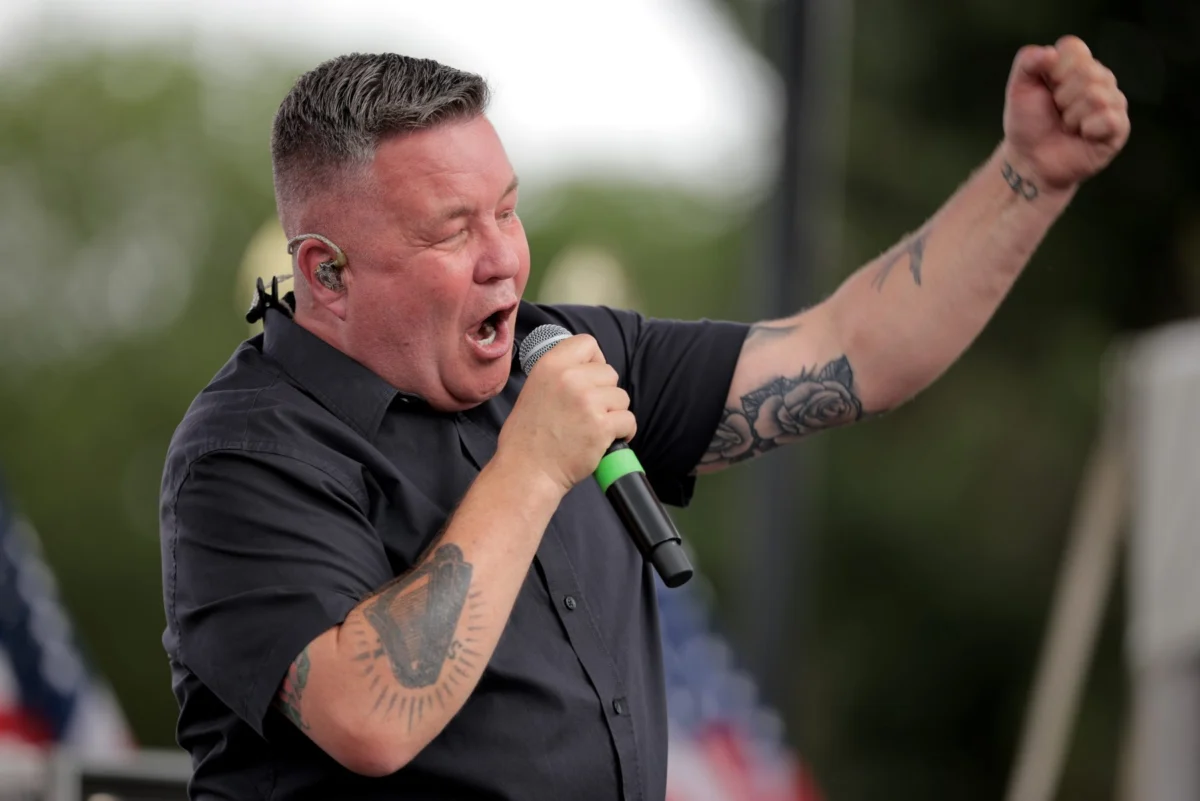
Boston, MA – Ken Casey, the outspoken frontman and songwriter for the iconic Celtic punk band Dropkick Murphys, has publicly criticized global pop superstar Ed Sheeran following the abrupt departure of rapper Macklemore from Sheeran’s high-profile Loop Tour. The controversy stems from Macklemore’s onstage comments expressing solidarity with Palestinians and critiquing Israel’s military actions in Gaza, leading to his removal after just two performances. Casey’s remarks, made during an interview with Boston Public Radio on Wednesday, September 16, highlighted a fundamental principle of artistic camaraderie and independence within the touring music industry, reigniting a broader debate about freedom of speech and political expression on stage.
A Stance on Solidarity: Casey’s Scathing Critique
Casey did not mince words when discussing the incident, framing it as a betrayal of a core tenet of touring musicianship. "You live or die with the people you bring on the road," Casey stated emphatically. "They’re your people." This sentiment underscores a deeply ingrained cultural value among many artists, particularly within the punk and rock communities, where touring is often seen as a communal endeavor built on mutual support and shared experiences. Casey elaborated on this ethos, explaining that in his three decades of touring with Dropkick Murphys, the selection of opening acts has always been a deliberate choice, fostering a sense of "brotherhood, sisterhood, that’s family."
His disappointment with Sheeran’s perceived inaction was palpable. "And the fact that Ed Sheeran took the knee, no matter what the cause is, and not stood with his fellow tour partner, just doesn’t, you know, sit right with me," Casey asserted. The phrase "took the knee" here implies a concession or capitulation to external pressure, rather than a defiant stand. He further contrasted this with his own band’s operational philosophy: "And that’s not how Dropkick Murphys would operate." For Casey, the integrity of an artist’s beliefs and their willingness to stand by those they tour with are paramount, a principle he believes was compromised in this situation.
The Genesis of the Controversy: Macklemore’s Onstage Statements
The events leading to Casey’s criticism unfolded rapidly. Macklemore, known for his socially conscious lyrics and activism on issues ranging from LGBTQ+ rights to addiction, joined Ed Sheeran’s Loop Tour as a supporting act. During his performances, he seized the opportunity to address the ongoing humanitarian crisis in Gaza. His remarks, which included wearing a keffiyeh – a traditional Palestinian scarf that has become a symbol of Palestinian nationalism – and vocalizing support for Palestinians while condemning Israel’s military campaign, quickly garnered significant attention, both positive and negative.
The specific content of Macklemore’s statements, while not fully detailed in the original report, was understood to be critical of Israeli government policies and actions in Gaza, echoing sentiments that have become increasingly common in global discourse surrounding the conflict. These comments resonated deeply with a segment of his audience but also drew swift condemnation from others, particularly pro-Israel groups and individuals who viewed them as inflammatory or one-sided. The immediate backlash created a difficult situation for the tour organizers and, by extension, Ed Sheeran himself.
A Swift Departure: Macklemore Dropped From the Loop Tour
Following just two scheduled appearances, Macklemore was officially dropped from the Loop Tour. The announcement came from the tour’s U.S. promoter, Messina Touring Group, on September 14. This decision was reportedly made amidst escalating public pressure and growing calls for his removal. The controversy had quickly moved beyond social media discussions, with reports indicating that Sheeran and his team were also facing pressure from various stakeholders, including owners of the stadiums hosting the tour. One prominent figure cited was Robert Kraft, owner of Gillette Stadium, a key venue on the tour schedule.
The involvement of stadium owners like Kraft introduces a significant dimension to the controversy. Stadiums are not merely concert venues; they are often major commercial enterprises with diverse business interests and affiliations. The owners, particularly those with strong public profiles and established philanthropic endeavors, can exert considerable influence over the events held on their properties. The implication that such pressure contributed to Macklemore’s removal raises questions about the extent to which commercial interests and political sensitivities can impact artistic freedom, especially when artists use their platform to address contentious global issues.
The Promoter’s Role and Artistic Autonomy
Casey also touched upon the delicate balance between promoters’ interests and artists’ autonomy, drawing on Dropkick Murphys’ own experiences. He firmly stated his belief that promoters should not dictate what artists say on stage. He recounted an incident at the 2025 Rocklahoma Festival in Oklahoma where the band made statements critical of the Trump administration. "We said what we have to say onstage every night, and probably about 50 percent of the audience walked away," Casey recalled. The immediate consequence was a stern warning: "And I was told immediately afterwards that angered the owner of the site, and I’m sure we won’t get invited back."
This anecdote serves as a practical example of the real-world repercussions artists can face for expressing political views that diverge from the financial or ideological interests of venue owners and promoters. While Dropkick Murphys accepted the potential consequence of not being invited back, Casey’s point was that the choice to speak, and the subsequent standing by that choice, is fundamental to artistic integrity. The implication is that Sheeran, in allowing Macklemore’s removal, did not uphold this principle for his tour partner.

The Broader Implications for Artistic Integrity
For Ken Casey, the core of the issue extends beyond this particular incident to the very essence of artistic worth. "All the artists I loved as a kid, no matter what, it was that they stand by what they sing about," he reflected. "Once you let that go, then you don’t have any worth in your music if you ask me." This statement highlights a generational perspective, where authenticity and consistency between an artist’s public persona, their lyrics, and their actions are highly valued. In Casey’s view, an artist who compromises their convictions under pressure risks losing credibility and the deeper connection with their audience that defines meaningful art.
This stance resonates with a long history of musicians using their platforms for social and political commentary, from folk singers of the civil rights era to punk bands of the 1980s and hip-hop artists of today. The expectation that artists should be more than just entertainers, but also commentators on the human condition and advocates for change, is deeply embedded in various musical traditions. When this expectation is challenged by commercial pressures, it sparks significant debate within the industry and among fans.
A Chain Reaction: Other Artists Follow Suit
Macklemore’s removal from the Loop Tour triggered a significant ripple effect among other scheduled opening acts, demonstrating a palpable sense of solidarity within the artistic community. Aaron Rowe was the first to announce his withdrawal, quickly followed by Finneas and Lukas Graham. Their decisions to step away from a high-profile tour with a global superstar like Ed Sheeran suggest a collective discomfort with the circumstances surrounding Macklemore’s departure. These artists, by choosing to forgo the substantial exposure and financial benefits of such a tour, made a powerful statement about their own values and their support for artistic freedom.
This series of withdrawals transformed the situation from a single incident into a broader industry conversation. It signaled that the concerns raised by Casey were shared by other musicians, who seemingly prioritized principles of solidarity and free expression over commercial gain. The collective action underscored the potential for artists to influence tour dynamics and challenge the perceived power imbalances between headliners, opening acts, promoters, and venue owners.
Macklemore’s Philanthropic Response and Kraft’s Counter-Challenge
In a powerful move following his removal, Macklemore announced that he would donate his entire $1 million earnings from the two Loop Tour performances to humanitarian organizations providing aid to Palestinians. This action not only underscored the sincerity of his pro-Palestinian stance but also transformed a contentious commercial dispute into a philanthropic initiative. By publicly committing his earnings, Macklemore reframed his involvement, shifting the narrative from a forced exit to a proactive contribution to the cause he championed.
He then issued a direct challenge to Robert Kraft, the owner of Gillette Stadium, to match his donation. Kraft, a prominent businessman and philanthropist with a history of significant charitable giving, particularly to causes supporting Israel and combating antisemitism, responded to Macklemore’s challenge. He stated that Ed Sheeran had previously asked him to "commit" $2 million to humanitarian efforts, implying that his philanthropic contributions were already aligned with humanitarian aid, though not specifically tied to Macklemore’s challenge or the Palestinian cause. Kraft’s response highlighted the complexities of philanthropy in politically charged contexts, where motivations and beneficiaries can be subject to intense scrutiny and debate.
The Broader Landscape: Freedom of Expression in the Music Industry
The entire episode serves as a potent case study in the ongoing tension between artistic freedom of expression, commercial interests, and political sensitivities within the contemporary music industry. Major tours are massive undertakings, involving intricate logistical planning, significant financial investments, and a multitude of stakeholders, including artists, promoters, agents, venue owners, sponsors, and media partners. When an artist introduces a highly politicized topic into this complex ecosystem, it inevitably creates friction.
The digital age further amplifies these challenges. Social media platforms ensure that any controversial statement or action by a public figure is immediately disseminated globally, often polarizing audiences and triggering rapid-fire campaigns of support or condemnation. This instant feedback loop can exert immense pressure on all parties involved, potentially leading to decisions made under duress, as was arguably the case with Macklemore’s removal.
This incident also brings to the forefront the responsibilities of headlining artists. Ed Sheeran, as the tour’s main draw, was in a position of immense influence. His perceived decision to allow Macklemore’s removal, whether directly or by not intervening, has been interpreted by some, including Ken Casey, as a failure to protect a fellow artist’s right to speak. While Sheeran’s perspective or direct comments on the matter were not provided in the original report, the implications of his actions, or lack thereof, are central to the debate.
Ultimately, the controversy surrounding Macklemore’s exit from the Loop Tour and Ken Casey’s subsequent critique underscores a critical and evolving dialogue within the music industry. It highlights the high stakes involved when artists leverage their platforms for political commentary, the powerful influence of commercial entities like promoters and venue owners, and the enduring importance of solidarity and artistic integrity for many musicians. As global events continue to shape public discourse, the music industry will undoubtedly continue to grapple with these complex questions of expression, responsibility, and freedom.
