

The relentless pursuit of recognition within the music industry often hinges on the ability to cut through the pervasive digital noise. As the Recording Academy gears up for the nomination process of the 69th Annual GRAMMY Awards, the strategic deployment of "For Your Consideration" (FYC) advertising emerges as a critical tool for artists and their teams to elevate visibility among eligible voting members. While standard release marketing campaigns are designed to resonate with a broad fan base, FYC efforts are meticulously crafted to speak directly to the discerning ears of Recording Academy voters, aiming to secure nominations that can significantly impact an artist’s career trajectory. This comprehensive guide delves into the optimal timing, permissible content, and strategic nuances of FYC advertising, providing essential insights for navigating the competitive landscape of GRAMMY season.
The Crucial Timing: Two Windows of Opportunity
Success in FYC campaigns is intrinsically linked to precise timing. The Recording Academy outlines specific periods for promotional activities, creating distinct opportunities to influence voter perception. Understanding these phases is paramount for maximizing impact.

Window One: Pre-Nomination Engagement (August 10, 2026 – October 22, 2026)
The initial and arguably most crucial phase for FYC marketing commences well before the official nomination ballot opens. From August 10, 2026, through October 22, 2026, Recording Academy voting members will be actively deliberating and casting their votes for the nominees for the 69th Annual GRAMMY Awards. This period is characterized by first-round voting, which runs from October 12 to October 22, 2026. It is during this timeframe that music companies, labels, and artist representatives strategically launch their FYC advertising initiatives. The objective is to introduce or re-familiarize voters with the eligible works, ensuring artists are top-of-mind as they make their selections. Campaigns during this phase often utilize a blend of digital platforms and select print publications frequented by music industry professionals and Recording Academy members. The goal is to plant seeds of consideration, encouraging voters to actively seek out and listen to the submitted works before casting their initial ballots.
Window Two: Post-Nomination Advocacy (November 16, 2026 – January 7, 2027)
The second critical window for FYC marketing opens following the official announcement of nominations. On November 16, 2026, the Recording Academy will unveil the contenders for the 69th Annual GRAMMY Awards. For artists who have achieved a nomination, this marks a significant shift in strategy. The focus now moves from securing a nomination to winning the award. The final round of voting, which determines the ultimate winners, takes place from December 10, 2026, to January 7, 2027. FYC campaigns during this phase can intensify, aiming to reinforce the merits of the nominated works and encourage voters to select them as winners. This period is often characterized by a more focused and celebratory tone, highlighting the achievement of a nomination while still advocating for the win. The GRAMMY Awards ceremony itself is scheduled for February 7, 2027, providing a clear endpoint for the entire awards cycle.
Adhering to the Rules: The Recording Academy’s FYC Guidelines
Navigating the GRAMMYs necessitates a strict adherence to the Recording Academy’s established guidelines for FYC advertising. These rules are meticulously designed to ensure fairness and prevent undue influence. Understanding what is permissible and what is strictly prohibited is fundamental to executing a compliant and effective campaign. The Recording Academy provides detailed documentation on voting and solicitation guidelines, which serve as the authoritative source for all FYC activities.
Permissible Content in FYC Communications:
The Recording Academy permits a range of content designed to inform voters about an artist’s eligible work. These communications are intended to be informative and persuasive, highlighting the artistic merit and achievements of the submitted material.
- Official Recording Academy Seals and Logos: The use of official GRAMMY logos and seals is permitted, provided they are used in accordance with the Recording Academy’s brand usage guidelines. This lends an air of official endorsement and recognition.
- Artist and Album Artwork: High-resolution images of artist portraits and album cover art are standard inclusions, allowing voters to visually connect with the product.
- Awards and Nominations Received: Highlighting previous awards and nominations, whether from the Recording Academy or other recognized bodies, can serve as a testament to an artist’s critical acclaim and industry recognition.
- Critical Acclaim and Reviews: Snippets from positive reviews from reputable music publications and critics can bolster an artist’s standing and provide external validation.
- Release Dates and Formats: Essential factual information such as the release date of the album or single and the available formats (digital, physical) is crucial for voters to access the music.
- Streaming Links and QR Codes: Providing direct access to the music through streaming links or QR codes simplifies the listening process for voters, making it easier for them to engage with the submitted work.
- Short, Factual Statements about the Work: Brief, objective descriptions of the music, its themes, or its creative process can offer insight without resorting to hyperbole.
- The Phrase "For Your Consideration": This phrase is the cornerstone of the campaign and must be prominently displayed.
- The Year of Release: Clearly stating the year the music was released ensures eligibility.
- The Category for Which the Work is Being Considered: Indicating the specific GRAMMY category the artist is seeking consideration for helps voters categorize the submission.
Prohibited Content in FYC Communications:
Conversely, the Recording Academy strictly prohibits certain types of content that could be perceived as manipulative, misleading, or unfair. Violations of these rules can lead to disqualification.
- "Vote for Me" or Direct Appeals: Any language that directly solicits votes, such as "Vote for us" or "Please vote for [Artist Name]," is forbidden. The campaign should persuade through merit, not direct entreaty.
- Misleading or Exaggerated Claims: Statements that are factually inaccurate, boastful, or create an inflated sense of achievement are not permitted. This includes unsubstantiated claims of popularity or impact.
- References to Competitors: FYC campaigns must focus solely on the artist’s own work and cannot make comparisons to or disparage other artists or their submissions.
- References to Specific GRAMMY Voting Numbers: Information about past voting percentages or specific vote counts from previous years is confidential and cannot be used.
- Solicitations for Paid Endorsements or Sponsorships: FYC advertising is distinct from commercial advertising and cannot be used to solicit paid endorsements or sponsorships from entities outside the artist’s direct team.
- Use of Voting Member Information: Any attempt to obtain or use personal information of Recording Academy voting members for direct solicitation is strictly forbidden.
- "GRAMMY Winner" or "GRAMMY Nominee" for works not yet awarded or nominated: This is a critical rule. An artist can only claim "GRAMMY Winner" or "GRAMMY Nominee" status for achievements that have already been officially conferred by the Recording Academy. Promoting a work as such before the official announcement or award ceremony is a direct violation.
Strategic Deployment: Insights from Past Campaigns
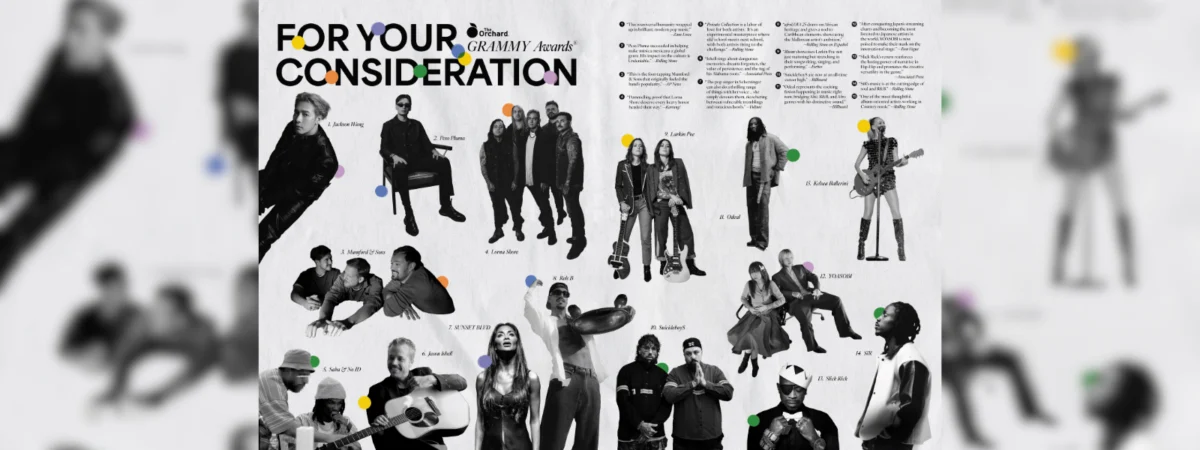
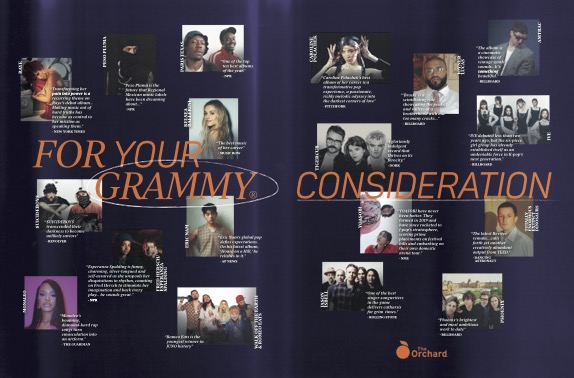
The success of FYC campaigns is often a testament to creative execution within the established guidelines. Examining examples from established industry players, such as The Orchard, can provide valuable insights into effective strategies. While specific examples from previous years are illustrative, the underlying principles remain consistent: clarity, compliance, and strategic positioning.

Past FYC advertisements, often showcased in industry trade publications and targeted digital platforms, typically feature striking album artwork, essential biographical information, and key critical accolades. They prominently display the "For Your Consideration" designation alongside the specific category being targeted. The visual design is often clean and impactful, designed to capture attention quickly within a busy media landscape. The inclusion of quotes from respected music critics or publications serves as powerful social proof, validating the artistic quality of the submission. For instance, an advertisement might feature a powerful artist portrait, the album title, the phrase "For Your Consideration in [Category Name]," and a compelling snippet like, "A masterful blend of [genre descriptors] that pushes the boundaries of modern music" attributed to a well-known music journal.
The strategic placement of these advertisements is also key. Targeting publications and digital spaces that are widely read by Recording Academy members ensures maximum reach. This could include specialized music industry news outlets, trade magazines, and online platforms that cater to music professionals. The goal is to ensure that when voters are making their decisions, the nominated artist’s work is readily accessible and has been presented in a compelling, yet compliant, manner.
Data-Driven Decisions and Broader Implications
The landscape of music awards, including the GRAMMYs, is a complex ecosystem where artistic merit, industry influence, and strategic marketing converge. The effectiveness of FYC campaigns can be indirectly gauged by tracking an artist’s presence in industry discussions, their engagement with eligible voters, and ultimately, their nomination and winning potential. While specific data on the ROI of individual FYC campaigns is proprietary and rarely disclosed, the consistent investment in these efforts by major labels and independent distributors underscores their perceived value.

The GRAMMY Awards, as one of the most prestigious accolades in the music industry, hold significant weight. A nomination can lead to increased album sales, enhanced touring opportunities, greater media attention, and a boost in an artist’s overall career valuation. For emerging artists, a GRAMMY nomination can be a career-defining moment, providing the validation and exposure needed to break through to a wider audience. For established artists, it can signify a continued relevance and artistic evolution, solidifying their legacy.
The data surrounding music consumption and awards engagement is constantly evolving. With the rise of streaming, metrics such as playlist additions, listener engagement on streaming platforms, and social media buzz can, to some extent, be correlated with an artist’s visibility during awards season. While these are not direct measures of FYC campaign success, they contribute to the overall narrative surrounding an artist’s potential appeal to voters.
Conclusion: A Calculated Approach to Recognition
In the highly competitive arena of music awards, "For Your Consideration" campaigns are not merely advertisements; they are meticulously planned strategic initiatives. By understanding and adhering to the Recording Academy’s guidelines, timing their efforts precisely, and focusing on clear, factual, and persuasive content, artists and their teams can significantly enhance their chances of gaining recognition. The 69th Annual GRAMMY Awards season presents another critical opportunity for artists to leverage FYC marketing as a vital component of their awards strategy, aiming to capture the attention of Recording Academy voters and ultimately, achieve the coveted GRAMMY recognition. The journey from creation to nomination and potential win is a testament to both artistic excellence and the strategic prowess employed to bring that excellence to the forefront of industry consideration.
