

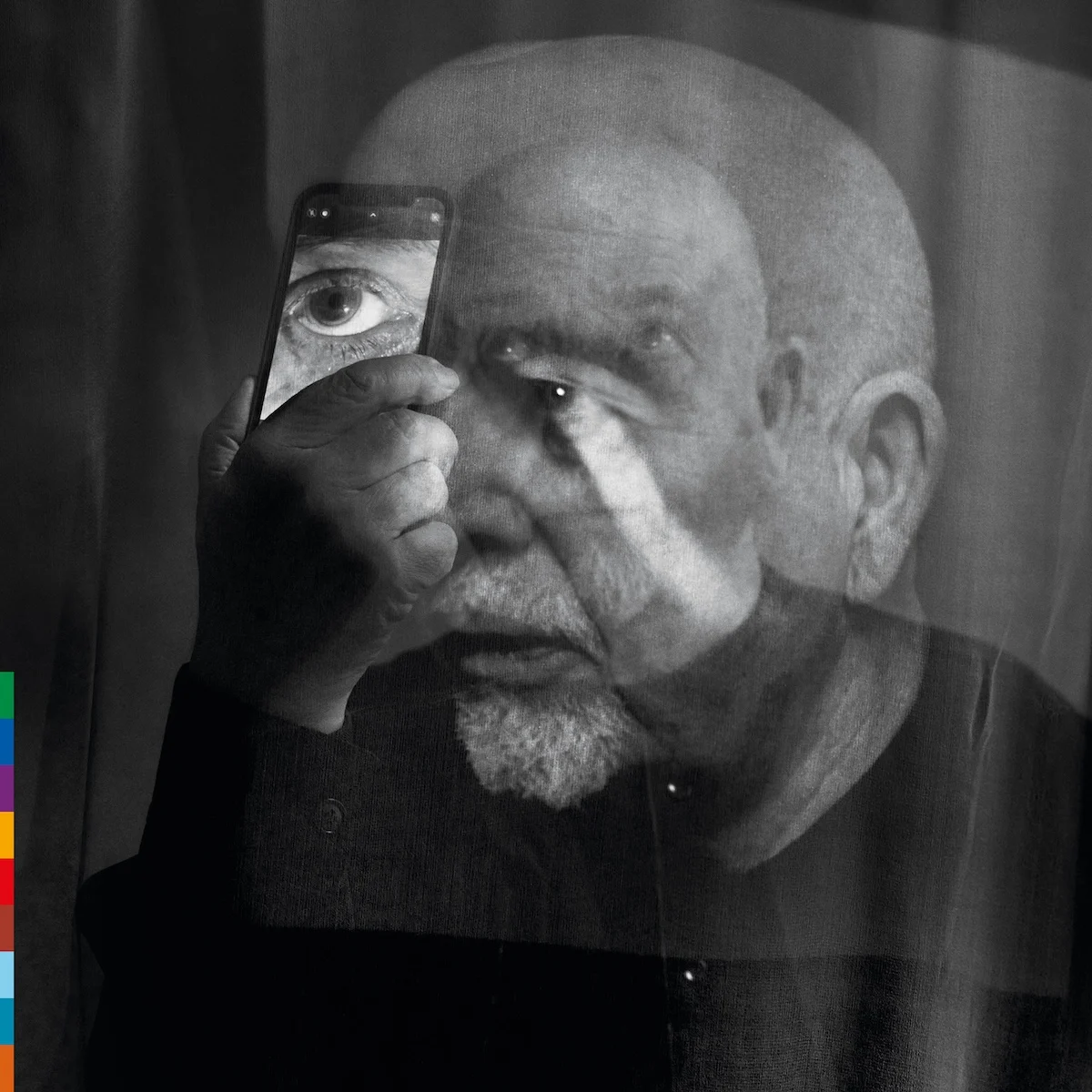
Legendary singer-songwriter Peter Gabriel has captivated the music world with the imminent release of his new album, i/o, set to arrive on November 27th. This highly anticipated record marks Gabriel’s first album of original material in over two decades, following 2002’s Up, and has been unveiled through an unconventional and meticulously crafted rollout. Eschewing traditional album cycles, Gabriel embarked on a unique journey at the beginning of the year, releasing a single track with every full moon, a strategy that has kept fans engaged and speculating for months. Each of these lunar releases has been presented with dual sonic interpretations – a "Bright-Side" mix by Mark ‘Spike’ Stent and a "Dark-Side" mix by Tchad Blake – alongside a specially commissioned piece of visual art, transforming the listening experience into a multi-sensory event.
The Unconventional Rollout: A Lunar Cycle of Music and Art
The decision to release i/o track-by-track, synchronized with the lunar cycle, is a testament to Peter Gabriel’s enduring commitment to artistic innovation. This method not only builds anticipation but also allows each song to be savored individually, fostering a deeper connection between the listener, the music, and the accompanying visual art. The strategy commenced early in the year, with the unveiling of "Been Undone," and has steadily progressed through ten distinct tracks so far, including "Put The Bucket Down," "What Lies Ahead," "Till Your Mind Is Shining," "Won’t Stand Down," "A Hard Lesson," "I Belong To The Sky," "One By One," "Looking For The Happy," and "Face The Wall." This methodical drip-feed approach stands in stark contrast to the industry standard of simultaneous album drops, underscoring Gabriel’s independence and his desire to control the narrative and pace of his artistic output.
The Dual Sonic Landscapes: Bright-Side and Dark-Side
A cornerstone of i/o‘s distinctive release model is the presentation of each track with two distinct mixes: the "Bright-Side" and the "Dark-Side." This approach offers listeners a unique opportunity to explore the nuances of sound engineering and artistic interpretation. The "Bright-Side" mixes are handled by Mark ‘Spike’ Stent, a celebrated British mixing engineer renowned for his work with a diverse array of artists including Madonna, Björk, Oasis, and Lady Gaga. Stent’s reputation for crafting polished, commercially resonant, and often expansive soundscapes suggests that his mixes for i/o aim for clarity, vibrancy, and perhaps a more immediate sonic appeal.
Conversely, the "Dark-Side" mixes are the brainchild of Tchad Blake, an American audio engineer and producer known for his unconventional and often experimental approach to sound. Blake’s credits include collaborations with artists like The Black Keys, Pearl Jam, and Elvis Costello, and he is celebrated for his ability to create raw, textured, and sometimes distorted sonic environments that emphasize atmosphere and depth. The juxtaposition of Stent’s and Blake’s interpretations provides a fascinating insight into how different mixing philosophies can profoundly alter the character and emotional impact of a song, encouraging listeners to engage critically with the production process itself. This dual-mix strategy elevates the listening experience beyond mere consumption, inviting an exploration of sonic artistry.
Visual Dialogue: Art Accompanying Each Track
Further enriching the i/o experience, each single release has been paired with a specially commissioned piece of visual art. This integration of music and visual art harks back to Gabriel’s pioneering efforts in music videos and multimedia presentations throughout his career. For i/o, he has invited a diverse roster of internationally acclaimed visual artists to contribute, ensuring a rich tapestry of perspectives. This list includes names such as Janaina Mello Landini, Tomá;s Saraceno, Judy Chicago, Tatsuo Miyajima, Shirin Neshat, Juan Genovés, Roelof Louw, David Altmejd, Francis Alÿs, Tadashi Kawamata, Berndnaut Smilde, Tishan Hsu, and Michal Rovner.
The selection of these artists, each with their distinct styles and thematic concerns, suggests a deliberate effort to create a visual dialogue that resonates with the lyrical and musical content of i/o. For instance, artists like Tomá;s Saraceno are known for their intricate, often scientific explorations of nature and interconnectedness, while Judy Chicago is a foundational figure in feminist art, known for her powerful, symbolic works. This curated visual component transforms each track into a multimedia statement, offering an additional layer of interpretation and enhancing the overall immersive quality of the album. The album’s cover artwork, a striking visual in its own right, is by the acclaimed photographer Nadav Kander, known for his compelling portraiture and landscape photography.
A Return After Two Decades: Peter Gabriel’s Legacy and Anticipation
The release of i/o carries significant weight, marking Peter Gabriel’s first album of entirely new material since Up in 2002. This hiatus from studio albums of original songs has only intensified the anticipation among his global fanbase and within the music industry. Gabriel’s career, spanning over five decades, has been defined by relentless innovation, artistic integrity, and a willingness to push boundaries. From his groundbreaking work with Genesis in the early 1970s, where he pioneered theatrical rock performances, to his remarkably successful and critically acclaimed solo career, Gabriel has consistently challenged conventions.
His solo discography is punctuated by iconic albums like So (1986), which achieved massive commercial success and critical acclaim with hits like "Sledgehammer" and "In Your Eyes," and Us (1992), known for its introspective themes. Beyond his own music, Gabriel has been a champion of world music through his Real World Records label and the WOMAD festival, demonstrating a lifelong commitment to cross-cultural artistic exchange. His forays into multimedia, interactive experiences, and technological experimentation, such as the Xplora CD-ROM in the 1990s, further underscore his forward-thinking approach. The long wait for i/o means that this album is not just another release; it is a major artistic statement from a musician whose influence on progressive rock, world music, and electronic music remains profound.
Philosophical Underpinnings: Humanity, Technology, and Nature
Peter Gabriel’s statement regarding the themes of i/o offers a profound insight into the album’s intellectual and emotional core. "The songs are a mix of thoughts and feelings," Gabriel explains. "I have been thinking about the future and how we might respond to it. We are sliding into a period of transition like no other, most likely triggered in three waves; AI, quantum computing and the brain computer interface. Artists have a role to look into the mists and, when they catch sight of something, to hold up a mirror." This perspective positions i/o not merely as a collection of songs, but as a deep meditation on the human condition in an era of unprecedented technological advancement.
Navigating the Future: AI, Quantum Computing, and Brain-Computer Interfaces
Gabriel’s focus on artificial intelligence (AI), quantum computing, and brain-computer interfaces (BCIs) reflects a growing societal discourse surrounding the rapid evolution of technology and its potential impact on humanity. AI, with its capacity for complex problem-solving and autonomous decision-making, is already reshaping industries and daily life, raising questions about ethics, employment, and the very definition of intelligence. Quantum computing, still in its nascent stages, promises to revolutionize fields from medicine to cryptography, with processing power far exceeding current classical computers. Brain-computer interfaces, which allow direct communication between the brain and external devices, hold the potential for profound changes in healthcare, communication, and even human augmentation.
Gabriel’s observation that "artists have a role to look into the mists and, when they catch sight of something, to hold up a mirror" highlights the crucial function of art in interpreting and contextualizing these complex technological shifts. Through his music, Gabriel likely explores the hopes, fears, and ethical dilemmas associated with these advancements, prompting listeners to consider their implications for individual identity, societal structures, and our collective future. This thematic depth is consistent with Gabriel’s history of addressing significant social and political issues throughout his career, from apartheid in "Biko" to environmental concerns.
Reclaiming Our Place: A Connection to Nature
Beyond the technological frontier, Gabriel’s reflections delve into a more fundamental philosophical shift regarding humanity’s place in the world. He asserts, "We are not, and have never been, the exclusively self-determining, independent beings that we imagine we are. We have had a sense of entitlement that everything exists for our benefit – that we’ve been given the run of the world to exploit as we see fit." This critique of anthropocentric hubris resonates deeply with contemporary environmental concerns and calls for a re-evaluation of humanity’s relationship with the natural world.
Gabriel continues, offering a path forward: "We are something else, a part of nature, a part of everything and when we feel that connection, shake our booty and give and receive a little love, it can help us find our proper place – and put a big smile on our faces." This sentiment suggests a move towards ecological consciousness and interconnectedness, emphasizing empathy and a holistic understanding of existence. The album’s title, i/o, which Gabriel explains as "the inside has a new way out and oi: the outside has a new way in," perfectly encapsulates this philosophical duality – the constant exchange between our inner selves and the external world, between technology and nature, between human perception and universal truth. It implies a permeable boundary, a recognition that internal states are shaped by external forces, and vice-versa, fostering a more integrated worldview.
The Creative Nexus: Production, Collaborators, and Studios
i/o was written and produced by Peter Gabriel himself, a testament to his singular artistic vision and meticulous attention to detail. The recording primarily took place at Real World Studios, Gabriel’s state-of-the-art facility near Bath, England, and at his home studio. Real World Studios, established by Gabriel in 1987, is renowned globally for its unique acoustic spaces and its role in fostering cross-cultural musical collaborations. Its natural setting and cutting-edge equipment provide an ideal environment for artistic exploration, which has undoubtedly influenced the sound and atmosphere of i/o.
The Core Band and Long-Standing Collaborations
A significant aspect of i/o‘s musical fabric is the involvement of Gabriel’s long-standing and highly respected band members. Guitarist David Rhodes, bassist Tony Levin, and drummer Manu Katché form a rhythm section that has contributed significantly to Gabriel’s distinctive sound for decades. Tony Levin, in particular, is celebrated for his unique bass and Chapman Stick playing, which has become an integral part of Gabriel’s sonic identity since the late 1970s. Manu Katché’s precise yet emotive drumming, and David Rhodes’s textured guitar work, complete a core ensemble that understands Gabriel’s musical language implicitly, allowing for a seamless blend of improvisation and structured composition.
In addition to this core trio, other members of the i/o touring band, such as Richard Evans, Josh Shpak, and Don E, have contributed their talents. The involvement of Real World staffers Faye Dolle and Katie May further emphasizes the collaborative and integrated nature of the project, drawing upon the creative ecosystem Gabriel has cultivated at his studios.
Expanded Ensemble: Orchestras, Choirs, and Guest Artists
Gabriel’s commitment to rich sonic textures and expansive arrangements is evident in the diverse array of additional musicians and vocalists featured on i/o. The album incorporates the majestic sound of the New Blood Orchestra, a testament to Gabriel’s continued interest in orchestral arrangements, previously explored on his Scratch My Back and New Blood projects. The inclusion of the Soweto Gospel Choir adds a powerful, spiritual, and culturally rich vocal dimension, echoing Gabriel’s deep engagement with world music traditions. Furthermore, the Swedish all-male choir Oprhei Drängar contributes another layer of vocal artistry, hinting at diverse sonic palettes across the album.
The list of other notable contributors reads like a who’s who of contemporary and experimental music. Brian Eno, a legendary figure in ambient music and a frequent collaborator with Gabriel (most notably on The Lamb Lies Down on Broadway and Security), brings his distinctive touch, likely in the realm of soundscapes and atmospheric textures. Mike Elizondo, who co-produced the track "A Hard Lesson," is a versatile producer and bassist known for his work across hip-hop, rock, and pop, suggesting a contemporary edge to some of the album’s tracks. Guitarists Leo Nocentelli (of The Meters fame) and Tony Berg, drummer and percussionist Abe Rounds, pianist Tom Cawley, trumpeter Paolo Fresu, cellist Linnea Olsson, and multi-instrumentalist Evan Smith further broaden the album’s instrumental palette. Gabriel’s daughter, Melanie, also provides vocal support, continuing a familial tradition of collaboration.
The Full Tracklist
The complete tracklist for i/o has been confirmed, offering a comprehensive look at the album’s narrative arc:
01 "Been Undone"
02 "Put The Bucket Down"
03 "What Lies Ahead"
04 "Till Your Mind Is Shining"
05 "Won’t Stand Down"
06 "Who Are We Talking To?"
07 "Yes, It Will Go"
08 "One By One"
09 "A Hard Lesson"
10 "Face The Wall"
11 "I Belong To The Sky"
12 "Looking for the Happy"
13 "Sacrament"
The order of these tracks suggests a carefully constructed sequence, likely guiding listeners through the philosophical explorations and emotional landscapes that Gabriel has outlined. Tracks like "Sacrament" at the album’s close hint at profound, perhaps spiritual, conclusions to the journey.
Implications for the Music Industry and Beyond
Peter Gabriel’s i/o is more than just a new album; it is a significant cultural event with potential implications for the music industry and artistic practice at large. The innovative "full moon" release strategy, combined with the dual mixes and integrated visual art, offers a compelling model for engaging audiences in an era saturated with content. It demonstrates that artists with established legacies can continue to experiment with distribution and presentation, providing a blueprint for how to create sustained interest without relying on traditional marketing cycles.
The album’s deep dive into themes of AI, quantum computing, and brain-computer interfaces, alongside a call for humanity to reconnect with nature, positions i/o as a timely and relevant artistic commentary on the most pressing issues of our age. It underscores the vital role of artists in interpreting complex societal shifts and fostering critical reflection. By blending cutting-edge technology (in its thematic content and possibly production) with organic, collaborative artistry, Gabriel continues to solidify his reputation as a visionary who consistently pushes the boundaries of what popular music can achieve, both sonically and intellectually.
i/o is slated for release on November 27th via Gabriel’s own Real World label, reinforcing his commitment to independent artistic control. This release is poised to be a landmark moment, not only for Peter Gabriel’s illustrious career but for the broader discourse on art, technology, and humanity’s place in an ever-evolving world.
