

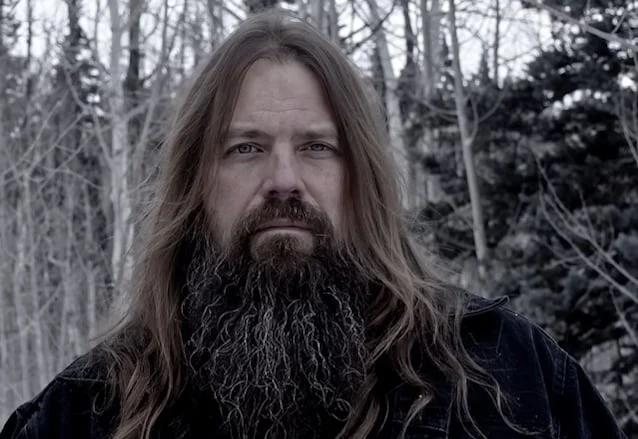
In a recent candid interview with Australia’s Heavy magazine, Lamb of God guitarist Mark Morton delved into his observation that, despite the band’s significant impact on the heavy music landscape, newer bands have not overtly replicated their distinctive sound and songwriting approach. Morton expressed a sense of curiosity regarding this phenomenon, contrasting it with the clear influence of other prominent acts in the genre. This reflection comes in the wake of Lamb of God’s critically acclaimed latest album, "Into Oblivion," released in March 2026, which has reaffirmed their status as titans of the New Wave of American Heavy Metal.
Morton’s initial comment, made in a previous interview, posited that it was "weird" that no contemporary bands had "flat-out ripped" Lamb of God’s signature style. Elaborating on this point with Heavy, he stated, "Yeah, I don’t know. It’d be interesting to know. I wish I had a clever answer for you. I don’t really know. I stand by that. I feel like it’s surprising. You see bands like Killswitch Engage, who had such success, and then you saw 20 bands come out that sounded like Killswitch Engage. And I don’t see that with us. Even Gojira, who are so great, and you hear Gojira references in all kinds of new bands. And that’s not a dig; it’s not a criticism. If anything, I find it curious that I don’t hear at least a successful rendition of the Lamb of God kind of character in newer bands. But I know that we have influenced a lot of younger bands, ’cause they tell me that. I hear bits and pieces."
The guitarist clarified that his observation was not a complaint or a desire for imitation, but rather a genuine contemplation of how a band’s unique sonic identity translates, or doesn’t translate, into subsequent generations of artists. "I think in that BangerTV interview… I think what I was trying to say is no bands that came out that were just, like, straight-up Lamb of God rip-off. And I find that curious. It’s just an observation. I’m not certainly not let down by that or hoping that someone will. It’s just kind of an observation I’ve made."
This introspection into Lamb of God’s artistic legacy is particularly relevant given the reception of "Into Oblivion." The album, released in March 2026, garnered widespread critical praise, solidifying the band’s enduring relevance. Publications like Metal Hammer and Kerrang! featured Lamb of God on their covers leading up to the release, with critics lauding the album’s potent intensity and contemporary edge. The Associated Press highlighted the album in their weekly roundups, describing it as "10 tracks of ferocity," while Brooklyn Vegan emphatically stated, "the band spends these 10 songs reminding the world that their reign as New Wave Of American Heavy Metal giants is far from over." SPIN magazine echoed this sentiment, noting that the band was "channeling America’s unraveling into a ferocious new album."
The discussion around the lack of direct sonic emulation also ties into Morton’s previous remarks about the band’s creative process for "Into Oblivion." He had stated that Lamb of God did not feel compelled to "keep up with any trend or expectation" while crafting the album. Expanding on this, Morton emphasized that this lack of pressure is a natural evolution rather than a conscious effort to defy trends.
"I don’t know. I think it’s more natural than it is something that we sort of have to make an effort to avoid… As much as I think these bands are great, and it’s exciting to see young bands, moving the genre forward, I don’t feel compelled to try and emulate what Knocked Loose is doing or what Spiritbox is doing. [Those are] phenomenal bands, but I think there have, at times, and from different corners of the industry, been suggestions that to keep up with, to stay symmetrical with what’s streaming or what’s performing well or whatever, this is the sound, or this is the format, or this is the that or the other thing, and it’s just, like, ‘No.’ Bro, I’m 53 years old. We’ve been doing this for almost 30 years. So it’s not a matter of thumbing my nose at it. I’m a fan of what those bands are doing. I think it’s phenomenal. I enjoy watching a new generation of bands take this thing that we kind of helped carry the stick for for a little while, and take it somewhere else and make it their own. And that’s really exciting to observe, as a fan of music and as a member of this heavy metal community. But to try and emulate that or to try and incorporate that into what we do wouldn’t feel natural to me or to our band."
This commitment to an authentic creative voice has been a hallmark of Lamb of God’s nearly three-decade career. Formed in 1994, the band, originally known as Burn the Priest, quickly established a reputation for their aggressive, groove-laden sound, blending elements of thrash metal, hardcore, and groove metal. Their breakthrough came with the 2004 album "Ashes of the Wake," which garnered significant commercial and critical success, charting on the Billboard 200 and earning a Grammy nomination. This period is often cited as a pivotal moment for the resurgence of American heavy metal, with Lamb of God emerging as one of its leading proponents.
The "New Wave of American Heavy Metal," a term that gained prominence in the early 2000s, saw bands like Lamb of God, Killswitch Engage, and God Forbid redefine the genre’s sonic landscape. These bands often incorporated melodic sensibilities, breakdowns, and a more accessible, albeit still heavy, sound compared to earlier eras of metal. Morton’s observation that Killswitch Engage’s influence is more readily apparent in newer bands, while Lamb of God’s is more elusive, suggests a subtle but significant distinction in their respective artistic footprints.
One possible interpretation for the less overt emulation of Lamb of God’s sound could be the intricate layering and specific rhythmic sensibilities that define their music. While many bands might adopt a certain level of aggression or vocal style, the precise interplay between Morton’s guitar work, John Campbell’s bass lines, and Chris Adler’s (or his successor’s) drumming, coupled with Randy Blythe’s distinctive vocal delivery, creates a complex tapestry that is difficult to replicate without sounding derivative or hollow. The band’s consistent evolution, while maintaining a core identity, also contributes to this. Each album, while distinctly Lamb of God, has explored different nuances and thematic explorations, making a singular "sound" to copy even more challenging.
Furthermore, the band’s consistent refusal to chase fleeting trends, as highlighted by Morton’s comments regarding "Into Oblivion," can be seen as a testament to their artistic integrity. In an industry that often pressures artists to adapt to evolving digital consumption habits and popular subgenres, Lamb of God’s unwavering focus on crafting impactful, authentic heavy music resonates with a dedicated fanbase and garners respect from critics. This approach fosters a deeper, more enduring connection with their audience, who appreciate the band’s commitment to their craft.
The production and recording process for "Into Oblivion" further underscore this commitment to authenticity. Produced and mixed by longtime studio collaborator Josh Wilbur, the album’s recording sessions were strategically spread across locations deeply connected to the band’s identity. Drums were tracked in Richmond, Virginia, the city where the band’s roots are firmly planted. Guitars and bass were recorded at Morton’s home studio, providing a personal and controlled environment. Crucially, singer Randy Blythe laid down his vocals at the legendary Total Access studio in Redondo Beach, California. This studio holds a significant place in punk and hardcore history, having been the birthplace of seminal records by iconic bands such as Black Flag, Hüsker Dü, and Descendents. This choice of location imbues the album with a sense of historical resonance and a connection to the raw, unvarnished energy that has always been a core component of Lamb of God’s sound.
The album’s availability across multiple formats, including various vinyl variants and a special CD edition featuring a limited-edition companion zine with album art sketches, handwritten lyrics, and unseen studio photos, caters to a diverse fanbase and highlights the band’s appreciation for physical media and collectible items. This approach acknowledges the multifaceted ways fans engage with music in the modern era, balancing digital accessibility with tangible artistic expression.
The continued success and critical acclaim of "Into Oblivion" suggest that Lamb of God’s strategy of focusing on artistic integrity and organic evolution remains a potent formula. While Morton’s observation about the lack of direct sonic imitators is intriguing, it ultimately speaks to the band’s unique ability to forge a sound that is both influential and inherently difficult to copy. Their legacy, built on nearly three decades of relentless touring and consistently powerful recordings, is not defined by easily replicable sonic tropes, but by a deep-seated authenticity and a refusal to compromise their artistic vision. As the heavy music landscape continues to evolve, Lamb of God stands as a testament to the enduring power of originality and unwavering dedication to the art of heavy metal. Their impact is felt not through mere stylistic replication, but through the inspiration they provide for musicians to forge their own distinct paths within the genre.
