

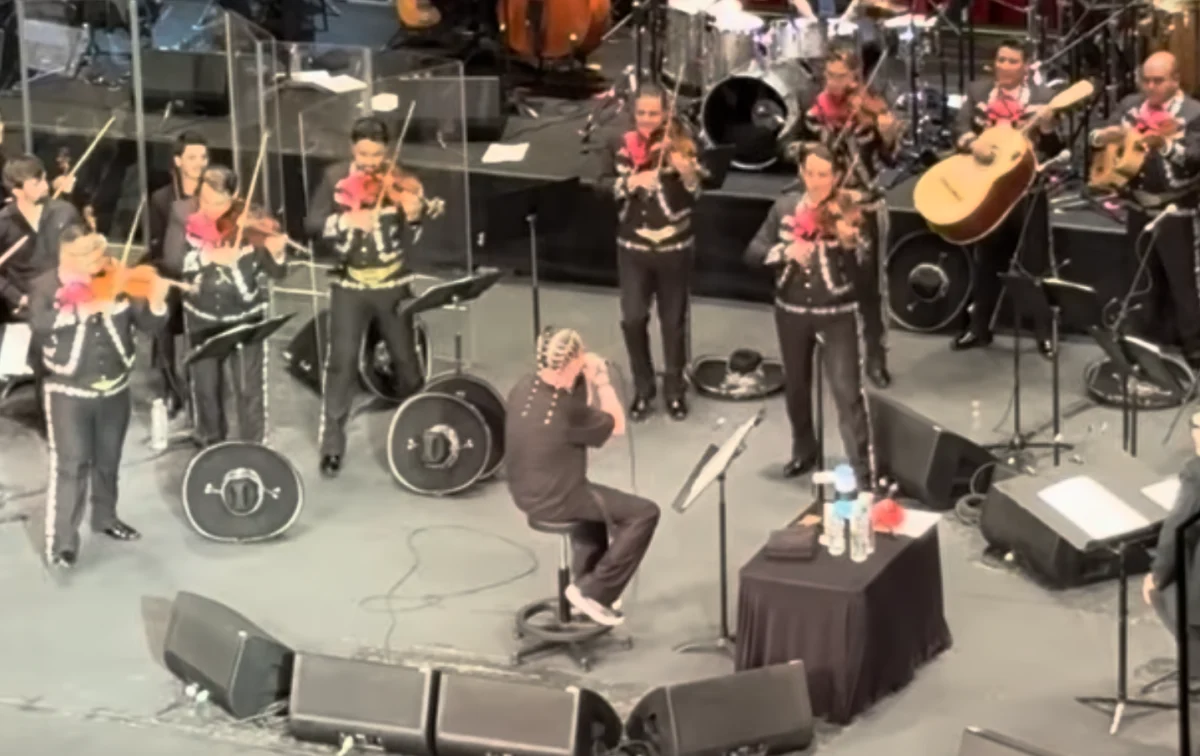
The iconic American vocalist Mike Patton, renowned for his genre-defying career spanning Faith No More, Mr. Bungle, and countless experimental projects, brought his acclaimed Mondo Cane project to Mexico for the first time on Thursday, October 1. The performance, held at the venerable Palacio de Bellas Artes in Mexico City, was a landmark event, seamlessly blending Patton’s reinterpretation of classic Italian pop from the 1950s and 1960s with an unexpected and profoundly moving homage to Mexican musical heritage. The evening culminated in a spectacular fusion of cultures, leaving an indelible mark on both the audience and the broader landscape of international musical exchange.
The Genesis of Mondo Cane: A Departure from the Norm
Mondo Cane, Italian for "A Dog’s World" and a reference to the controversial 1962 Italian documentary film, represents one of Mike Patton’s most ambitious and meticulously crafted artistic endeavors. Launched in 2007, the project sees Patton stepping away from the aggressive, avant-garde rock and metal for which he is most famous, to delve into the lush, romantic, and often dramatic soundscapes of mid-20th-century Italian pop music. Accompanied by a full orchestra, a choir, and a meticulously arranged band, Mondo Cane breathes new life into a repertoire of songs popularized by Italian legends such as Luigi Tenco, Gino Paoli, Fred Buscaglione, and Domenico Modugno. The project demands a different vocal approach from Patton, showcasing his extraordinary range and interpretive skills, delivering the lyrics in fluent Italian with an authenticity that belies his American origins. The decision to bring this particular project to Mexico, a nation with its own rich and storied musical traditions, set the stage for a unique cultural dialogue.
A Historic Venue: Palacio de Bellas Artes
The choice of the Palacio de Bellas Artes for Mondo Cane’s Mexican debut was in itself a statement of artistic intent and cultural respect. Widely regarded as the most important cultural center in Mexico, and one of the most stunning architectural marvels in Latin America, the Palacio de Bellas Artes is a national monument. Its Art Nouveau and Art Deco design, adorned with murals by Diego Rivera and José Clemente Orozco, has hosted the world’s most prestigious artists, opera singers, ballet companies, and orchestras since its inauguration in 1934. To perform within its hallowed halls is to participate in a continuum of Mexican and international artistic excellence. For a project as specific and grand as Mondo Cane, the acoustics and grandeur of the Bellas Artes provided an unparalleled setting, elevating the performance beyond a mere concert to a significant cultural event. The venue’s history of hosting legendary figures also provided a poignant backdrop for the later tributes, particularly to Juan Gabriel, who famously graced its stage.
The Performance: An Evening of Italian Elegance and Mexican Soul
The initial segments of the concert saw Patton, accompanied by a local orchestra and choir, meticulously recreating the sophisticated arrangements of Mondo Cane’s Italian repertoire. Songs such as "Deep Down," "Senza Fine," and "Urlo Negro" captivated the audience, showcasing Patton’s remarkable vocal control and the project’s intricate orchestral textures. The atmosphere was one of profound appreciation for the meticulously crafted soundscapes and Patton’s unwavering dedication to the genre. The precision and passion with which he delivered each Italian lyric demonstrated not only his linguistic prowess but also a deep understanding and reverence for the source material, a characteristic that defines his diverse artistic output.
As the main set concluded and the anticipation for an encore built, Patton surprised the audience with an extraordinary pivot. Eschewing further Italian selections, he embarked on a heartfelt tribute to Mexican music, singing entirely in Spanish. This unexpected shift transformed the evening from a celebrated international performance into an intimate cultural exchange, resonating deeply with the Mexican audience.
The Mexican Encore: A Triumphant Cultural Homage
The encore began with "La Llorona," a traditional Mexican folk song deeply embedded in the nation’s cultural psyche. The song, a haunting lament associated with the legendary weeping woman of Mexican folklore, has been interpreted by countless artists, most famously by the iconic Chavela Vargas. Vargas, a Costa Rican-born Mexican singer, became a symbol of raw emotion and authenticity in ranchera music, her distinctive, gravelly voice and dramatic interpretations leaving an indelible mark. Patton’s rendition, delivered with a profound respect for its emotional weight and historical context, immediately captivated the audience, bridging his unique artistic sensibility with the soul of Mexican tradition.
Next was "Luz de Luna," a classic bolero composed by the legendary Álvaro Carrillo. Carrillo, a prolific and influential Mexican songwriter, penned hundreds of romantic melodies that have become cornerstones of Latin American music. "Luz de Luna" gained widespread popularity through the interpretation of Javier Solís, one of Mexico’s most beloved bolero and ranchera singers, known as "El Rey del Bolero Ranchero." Patton’s performance of this song, imbued with the romantic melancholy characteristic of the bolero, further demonstrated his versatility and his commitment to authentic interpretation, a significant departure from his more aggressive musical personas.
The grand finale of this Mexican segment was Juan Gabriel’s "Hasta Que Te Conocí." This selection was particularly charged with historical and emotional significance. Juan Gabriel, affectionately known as "El Divo de Juárez," was one of Mexico’s most prolific and beloved singer-songwriters, a national icon whose music transcended genres and generations. His 1990 series of concerts at the Palacio de Bellas Artes were legendary, marking a pivotal moment where popular music was embraced by the traditionally classical and elite institution, forever changing the cultural landscape of Mexico. Patton’s choice to perform this song, in this very venue, was a profound nod to Mexican musical history and a powerful gesture of respect for the late maestro.
The Mariachi Collaboration: A Symphony of Fusion
The most electrifying moment of the evening arrived during a surprising rendition of "Retrovertigo," a song from Patton’s seminal experimental band, Mr. Bungle. Midway through the track, the renowned Mariachi Gama 1000 unexpectedly joined Patton onstage. The sudden appearance of the mariachi ensemble, with their vibrant attire and iconic instrumentation – violins, trumpets, guitar, vihuela, and guitarrón – created an astonishing juxtaposition. The intricate, often unsettling harmonies of "Retrovertigo" were momentarily interwoven with the unmistakable sound of traditional mariachi, forging a bold, unprecedented sonic landscape. This daring blend epitomized Patton’s fearless approach to music, demonstrating his willingness to push boundaries and create unexpected collaborations.
Mariachi Gama 1000, itself a revered institution in Mexican music, has a rich history and a longstanding association with Juan Gabriel. Their collaboration with the late pop icon on numerous occasions, including his historic Bellas Artes concerts, lent an additional layer of authenticity and emotional depth to Patton’s performance of "Hasta Que Te Conocí." The mariachi remained on stage, providing a magnificent accompaniment for "Luz de Luna" and "Hasta Que Te Conocí," transforming these beloved Mexican classics into a vibrant, collective celebration. The synergy between Patton’s powerful vocals and the spirited instrumentation of Mariachi Gama 1000 created a truly unique and memorable experience, symbolizing a bridge between disparate musical worlds. The audience’s reaction was reportedly one of exhilaration and profound appreciation for this unexpected and perfectly executed cultural synthesis.
Broader Implications and Cultural Resonance
Mike Patton’s Mondo Cane performance in Mexico City transcends a mere concert; it represents a significant moment of international cultural exchange and artistic daring. By bringing his Italian-centric project to Mexico and then seamlessly incorporating deeply ingrained Mexican musical traditions, Patton demonstrated a profound respect for local culture and an adventurous spirit that defines his career. This event highlighted several key implications:
- Cultural Diplomacy Through Music: Patton’s performance served as an informal act of cultural diplomacy, fostering understanding and appreciation between Italian, American, and Mexican musical heritages. The intentional effort to learn and perform in Spanish, coupled with the collaboration with a renowned mariachi, sent a clear message of engagement and reverence.
- Redefining Genre Boundaries: Patton consistently challenges musical categorization. This concert, blending orchestral Italian pop, avant-garde rock, traditional Mexican folk, bolero, and mariachi, further solidified his reputation as a master of genre fusion, proving that authentic artistic expression knows no boundaries.
- Elevation of Traditional Music: By performing traditional Mexican songs in a prestigious venue like the Bellas Artes, and collaborating with a world-renowned artist like Patton, these musical forms received renewed international attention and validation, particularly among audiences who might not typically engage with them.
- Legacy and Homage: The thoughtful inclusion of songs associated with Chavela Vargas, Javier Solís, and especially Juan Gabriel, and the collaboration with Mariachi Gama 1000, served as a powerful homage to these Mexican legends. It reignited discussions about their enduring legacies and their profound impact on Latin American music.
- Audience Engagement and Connection: The emotional resonance of the Spanish-language songs, particularly those with deep cultural roots, created an unparalleled connection with the Mexican audience. This level of engagement goes beyond typical fan interaction, touching on shared cultural identity and pride.
Continuing the Journey: Festival Internacional Cervantino
Following its triumphant debut in Mexico City, Mondo Cane was scheduled to continue its Mexican journey with a performance in Guanajuato. This subsequent concert was a highlight of the 54th Festival Internacional Cervantino, one of the most important and prestigious cultural festivals in Latin America. Named in honor of Miguel de Cervantes, the festival annually attracts artists and audiences from around the globe, showcasing a diverse array of music, dance, theater, and visual arts. Mondo Cane’s inclusion in such a celebrated festival further underscored the significance and artistic merit of Patton’s project, allowing a wider, internationally diverse audience to experience this unique blend of musical traditions. The Cervantino platform provided an ideal setting for further cultural exchange, solidifying the impact of Mondo Cane’s first venture into Mexico.
In conclusion, Mike Patton’s Mondo Cane concert at the Palacio de Bellas Artes was far more than a musical performance; it was a testament to the unifying power of music and a masterclass in cultural synthesis. By embracing and honoring Mexican musical traditions with such authenticity and artistic integrity, Patton not only delivered an unforgettable experience but also contributed to a richer, more interconnected global cultural narrative. The fusion of Italian elegance with Mexican soul, orchestrated by one of music’s most daring innovators, will undoubtedly be remembered as a landmark event in the annals of both international and Mexican contemporary music.
