

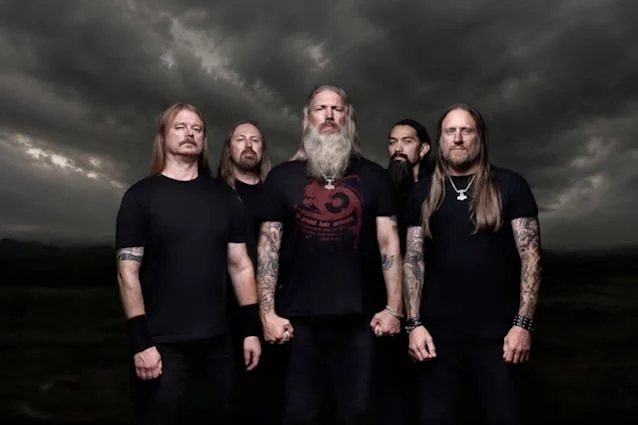
In a candid conversation with KillerTube, Ted Lundström, the steadfast bassist for the enduring Swedish death metal titans Amon Amarth, offered a profound look back at the band’s nearly thirty-five-year journey. Lundström, a foundational member of the group that formed in Tumba, Sweden, in 1992, detailed how the current realities of Amon Amarth’s success would have been utterly unimaginable in their nascent years. His reflections paint a vivid picture of a band that has navigated the evolving landscape of the music industry with a blend of unwavering dedication, strategic adaptation, and a deep-seated passion for their craft.
From Teenage Dreams to Global Phenomenon: An Impossible Trajectory
"Back then, everything we do now was completely impossible back then," Lundström stated, emphasizing the stark contrast between the band’s origins and their present-day status. He elaborated on the raw, day-by-day approach of his teenage self and his early bandmates, driven by immediate aspirations rather than long-term visions. "We had no really kind of visions more than just the next step, what do you wanna do with the band. So, what we’re doing now was hardly even a dream back then because it’s so crazy, our trip." This sentiment underscores the organic and often serendipitous nature of Amon Amarth’s ascent, a testament to their persistent growth, characterized by "slow but steady" progress and the constant setting of new objectives as each milestone was achieved.
The decision to transition from "daytime jobs" to a full-time commitment to music was a pivotal moment, signaling a profound belief in the band’s potential. Lundström described this shift not as an immediate leap to financial security, but as a calculated risk fueled by an earnest conviction. "Once, somewhere in the middle where we kind of realized this is something that’s for real, we quit our daytime jobs to focus 100% on the music. So yeah, it’s been quite the trip." This commitment, made at a time when personal responsibilities were minimal—"We had no families, we had no loans, no house, no nothing"—provided the freedom to embrace the unknown and pursue their musical ambitions with undivided attention.
Embracing Evolution: The Acoustic "No-Go"
A significant point of reflection for Lundström was the band’s inclusion of an acoustic track, "Upphaf," on their latest album, "The Great Heathen Army" (released in 2022, not "The Allfather Awakens" as stated in the original context, indicating a potential misremembering of the album title in the source material). He acknowledged that such a departure from their signature sound would have been anathema in their early days, particularly during the burgeoning extreme metal scenes of the late 1980s and early 1990s. "When you were young and metal was very true and the black metal scene was going on, and you had to be very heavy, very cool and very specific about this genre," he recalled. This historical context highlights the rigid aesthetic and stylistic boundaries that often defined metal subgenres during that era, where experimentation outside established norms could be met with strong disapproval.
However, Lundström sees this evolution as a natural consequence of personal growth and the passage of time. "So 30 years later, you’re a different person in a way, but still enjoying it as much as I did back in the early days." This adaptation, he suggests, is not about compromising artistic integrity but about embracing a broader creative spectrum. The music business itself has undergone a radical transformation over the decades, a factor that has undoubtedly influenced how bands operate and how audiences engage with music. "The music business is completely different today than it was back then, and we’re different persons, so. But, yeah, I, I think it’s a cool thing, though." This forward-looking perspective demonstrates Amon Amarth’s capacity to remain relevant by acknowledging and integrating changes in both their artistic output and the industry at large.
The "Career" Threshold: A Gradual Realization
The concept of music as a viable career was not marked by a single, defining moment for Amon Amarth. Instead, Lundström described it as a gradual dawning of realization, interspersed with key milestones. "Well, it was not like a certain point, but somewhere along the road, you release an album or somewhere you realize that this might actually work." The decision to quit their day jobs, as previously mentioned, was a significant indicator of their burgeoning belief, even in the absence of immediate financial returns. The potential they perceived was enough to warrant the leap into the unknown.
A crucial period for solidifying this belief was their increased visibility and success in the United States. Lundström pointed to a tour with Finnish melodic death metal band Children of Bodom, likely around 2005 or 2006, as a significant turning point. "I remember when we kind of started to grow bigger in U.S., for example. I think we did the Children of Bodom tour back in maybe 2005 or [200]6. That’s when we felt like maybe we can reach somewhere over here too, because different parts of the world, it takes longer time to conquer, I guess." This period marked a strategic expansion into a major international market, confirming that their musical appeal transcended geographical boundaries. This slow, deliberate expansion across various territories has been a hallmark of their career, characterized by consistent effort and a patient approach to global reach.
The Value of a Long and Winding Road
Lundström expressed a deep sense of satisfaction with Amon Amarth’s gradual ascent, actively disassociating from the idea of overnight success. "I’m super happy that we did get to experience this. I don’t wanna be a band that gets big overnight." He views the years of hard work and dedication as integral to their current standing and appreciation for their achievements. "We worked hard, and, well, we’ve been very dedicated to… Everybody in the band has this goal all the time to grow — not a specific goal, but the goal has always been to reach to the next level, next countries we could visit or bigger albums and whatnot."
He fondly recalled the less glamorous aspects of their early touring life, which now serve as cherished memories. "Looking back, I’m really happy to have experienced all that stuff — sleeping in a sleeping bag in a van or on the stage floor or whatever. And your lunch might have been a beer and a bag of crisps, and you were happy anyways because you had fun and you were with your friends." These humble beginnings, characterized by frugality and camaraderie, provided a foundational experience that Lundström believes has enriched their appreciation for their present success. This perspective contrasts sharply with the often-demanding lifestyle of bands achieving rapid, widespread fame, suggesting that a more measured growth can foster a deeper connection to the journey and its inherent struggles and triumphs.
A Legacy Forged in Fire and Steel: From Tumba to Global Stages
Since their formation in 1992 in Tumba, Sweden, Amon Amarth has meticulously cultivated a legacy that resonates deeply within the global metal community. Their lyrical themes, drawing heavily from Norse mythology, history, and Viking culture, coupled with their powerful live performances and consistently evolving musical output, have cemented their status as genre leaders. Over the past decade, the band has experienced a significant surge in their career trajectory, marked by performances alongside some of music’s most iconic acts. These include legendary appearances with such titans as Slayer, Iron Maiden, Slipknot, and Pantera. Furthermore, Amon Amarth has commanded monumental stages, including sold-out shows at Los Angeles’s iconic The Forum and the historic Red Rocks Amphitheatre in Denver, Colorado.
Their international reach is further demonstrated by their headline slots at major rock and metal festivals worldwide. A particularly notable achievement was their 2024 headlining performance at Germany’s Wacken Open Air, which drew an estimated 85,000 attendees, underscoring their immense draw and status as festival headliners. European festival circuit veterans, they have twice headlined the prestigious Bloodstock Open Air festival in the United Kingdom. Their history at Download Festival in the UK is also significant, with four appearances between 2008 and 2019. Their consistent presence at Germany’s Summer Breeze festival, with eight appearances between 2003 and 2024, six of which were as headliners, further illustrates their enduring popularity and strong connection with European audiences.
Mainstream Acclaim Without Compromise
The band’s steadily increasing album sales and touring numbers, coupled with significant pre-release anticipation for their 2026 North American tour alongside Dethklok and Castle Rat, highlight their ability to achieve mainstream recognition without sacrificing their artistic integrity. Amon Amarth has managed to maintain a sound that is both consistently evolving and undeniably heavy, appealing to a broad demographic. Their fanbase spans generations, from pre-teens to individuals in their 60s, fostering an inclusive metal experience that celebrates epic positivity and powerfully inspirational lyrical themes. This wide-ranging appeal suggests a successful bridging of traditional metal fanbases with a newer, broader audience attracted by the band’s thematic depth and energetic delivery.
The Genesis of the "Viking Row": A Cultural Phenomenon
Beyond their musical achievements, Amon Amarth has inadvertently birthed a powerful cultural phenomenon within the live music sphere: the "Viking Row." This iconic audience participation ritual is widely believed to have originated during a 2009 Amon Amarth set at the Bloodstock Open Air festival. In unison, fans would lie down on the ground and mimic rowing an invisible longship, creating a visually striking and deeply unifying experience for attendees. The band directly acknowledged and embraced this fan-driven tradition with the 2022 release of their single and accompanying music video, "Put Your Back Into The Oar." Vocalist Johan Hegg remarked at the time, "we thought it was a good idea to write a song about The Row! This one is for you, the fans, wherever you are—and may Oden guide you as you row to your destiny in uncharted seas!"
The "Viking Row" has since transcended Amon Amarth’s concerts, appearing at performances by other artists and even at global events, including documented instances at the 2026 World Cup. However, through the proliferation of video footage and fan accounts, it is widely accepted that Amon Amarth audiences were the initial catalysts for this now-iconic trend in audience engagement and collective expression. This phenomenon speaks volumes about the band’s ability to forge a deep connection with their fans, transforming a concert experience into a shared cultural moment.
Photo credit: Sylwia Makris and Christian Martin Weiss
