

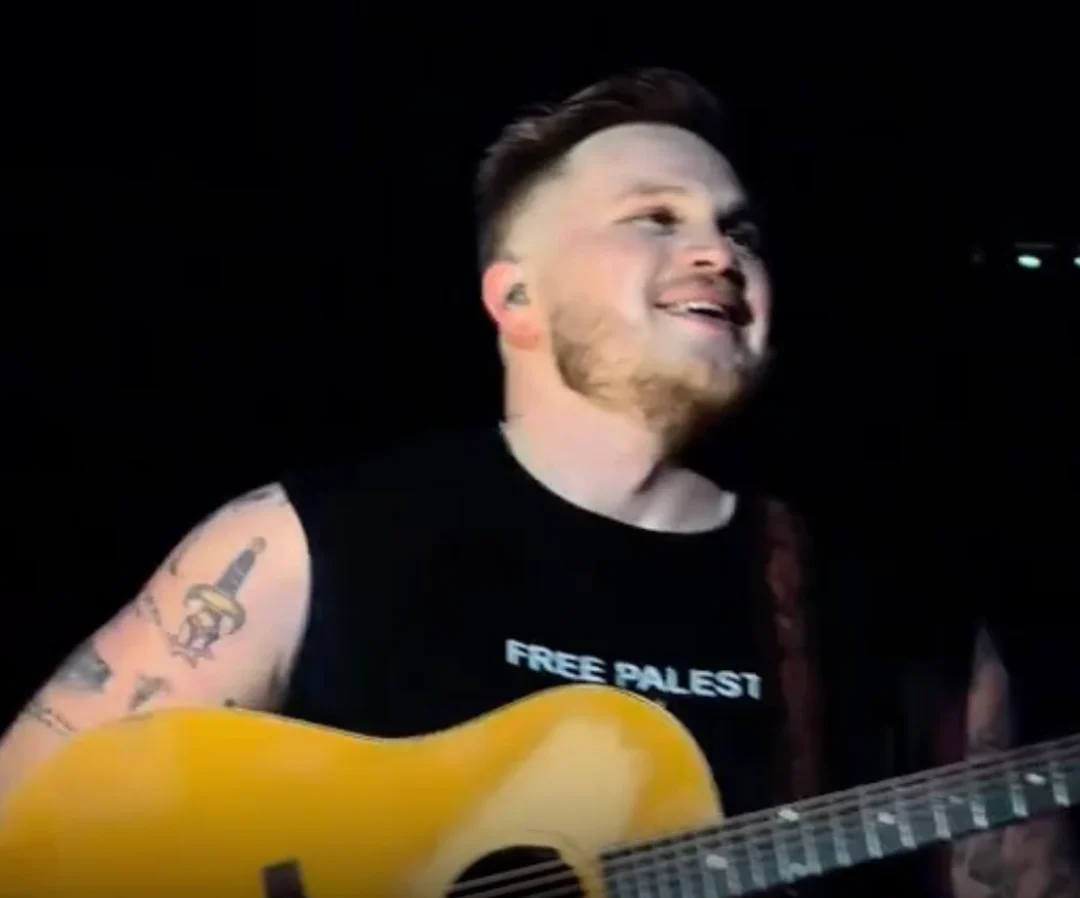
Country music sensation Zach Bryan performed at Gillette Stadium in Foxborough, Massachusetts, on Friday, October 2, wearing a "Free Palestine" t-shirt, a move that has drawn significant attention and commentary across the music industry and social media. This public display of solidarity comes just weeks after rapper Macklemore was removed from Ed Sheeran’s tour dates at the same venue, reportedly due to his pro-Palestine activism and the disapproval of Robert Kraft, owner of Gillette Stadium and the New England Patriots. Bryan’s decision to wear the shirt, emblazoned with the words "An Appeal To Heaven" and a Revolutionary War-era pine tree symbol, on a stage owned by Kraft, adds a new layer to the ongoing discussion about artists’ freedom of expression and political stances in entertainment venues.
The Genesis of Controversy: Macklemore’s Stance and Removal
The controversy began last month when Macklemore, known for his socially conscious lyrics, was removed from several dates on Ed Sheeran’s "Mathematics Tour," including those scheduled for Gillette Stadium. Reports indicated that the decision stemmed from Macklemore’s vocal support for Palestine during his performances, which included pro-Palestine comments, the performance of his song "Hind’s Hall," and the display of its accompanying video. "Hind’s Hall" is a politically charged track that explicitly addresses the conflict in Gaza, drawing parallels to historical struggles and criticizing what Macklemore perceives as a genocide. The song’s lyrics and video contain strong imagery and direct accusations, resonating deeply with supporters of the Palestinian cause while drawing criticism from others.
Robert Kraft, a prominent figure in sports and business, and a well-known philanthropist with significant ties to Jewish and Israeli causes, was reportedly "unhappy" with Macklemore’s activism. Kraft has been a vocal supporter of Israel, having established the Foundation to Combat Antisemitism (FCAS) and donating substantial sums to initiatives aimed at fostering understanding and combating prejudice, particularly against Jewish communities. Given his deep personal and philanthropic commitments, Macklemore’s overt political messaging at his venue presented a direct challenge to Kraft’s stated positions and values. The decision to remove Macklemore from the tour was widely interpreted as a direct consequence of this conflict.
Following Macklemore’s removal, Ed Sheeran, the tour’s headliner, faced considerable backlash. Critics lambasted Sheeran for what they perceived as a persistent refusal to take a definitive stance on the ongoing conflict, particularly in light of the severe humanitarian crisis in Gaza. Sheeran subsequently addressed the situation, stating that he was "not complicit" in Macklemore’s removal and implying that the decision was made by others involved in the tour’s production or venue management. However, his refusal to explicitly condemn or support Macklemore’s message or the broader political issues left many fans and commentators dissatisfied, viewing his neutrality as a form of tacit approval for the decision.
In response to his removal and the growing public discourse, Macklemore doubled down on his activism. He announced a "Free Palestine Tour," a series of performances dedicated to raising awareness and support for the Palestinian cause. The tour quickly sold out, demonstrating significant public resonance with his message and indicating a substantial segment of the audience eager to support artists who take clear political stances. This further highlighted the divide between artists willing to engage in political activism and the institutional pressures they might face.
Zach Bryan’s Statement and Its Symbolism
Against this backdrop, Zach Bryan’s appearance at Gillette Stadium on Friday, October 2, took on heightened significance. During his performance, Bryan wore a t-shirt distinctly displaying "Free Palestine." This act was not merely a casual wardrobe choice but a deliberate political statement, especially given the recent history at the very venue where he was performing.
The shirt’s design included two additional elements: the phrase "An Appeal To Heaven" and a depiction of a pine tree. These symbols carry profound historical weight, particularly in American history. "An Appeal To Heaven" was a motto adopted by American colonists during the Revolutionary War. It signifies the belief that when earthly authorities fail to protect fundamental rights, one must appeal to a higher power or moral authority for justice. The pine tree, often called the "Liberty Tree" or "Pine Tree Flag," was another prominent symbol of the American Revolution, representing resilience, growth, and the colonists’ struggle for independence against perceived tyranny. By incorporating these symbols, Bryan seemingly sought to frame the Palestinian struggle within a historical narrative of seeking freedom and justice against oppression, drawing a parallel to America’s own founding principles.
The deliberate choice of these symbols on a "Free Palestine" shirt suggests a nuanced message from Bryan, linking the contemporary humanitarian crisis to historical precedents of self-determination and resistance. It positions his stance not just as a political statement but as one rooted in broader principles of human rights and liberty, resonating with a certain segment of his audience while potentially challenging others.
Bryan’s visible support was not isolated. Several of his bandmates also showed solidarity, with guitarist Noah Le Gros and drummer Steve Clark seen wearing jerseys from "Wear The Peace," a brand known for its pro-Palestine messaging and humanitarian initiatives. Furthermore, on Saturday night, Bryan wore the "Free Palestine" shirt again for his second Gillette Stadium show, with band member Heaven Schmitt (of Grumpy) also sporting a variation of the pro-Palestine attire. This consistent display across multiple performances indicated a collective and intentional statement from Bryan and his team, reinforcing the message. During his Saturday performance, Bryan also debuted a new song, "Dog Days," adding another layer of artistic expression to his politically charged weekend.
Zach Bryan’s Evolving Political Landscape
Zach Bryan’s public political stances have historically been somewhat ambiguous, making his recent display of solidarity with Palestine particularly noteworthy. His career trajectory has seen him navigate various social and political issues with a degree of caution, or at least, a willingness to clarify his intent when challenged.
A year prior, Bryan released a song that contained lyrics critical of U.S. Immigration and Customs Enforcement (ICE). These lyrics, which were interpreted as anti-ICE, garnered significant attention and drew criticism from various quarters, including the Department of Homeland Security (DHS). The DHS’s response underscored the sensitivity of such topics and the potential for official backlash when artists delve into governmental policies. Following this criticism, Bryan issued a statement clarifying that his song’s meaning had been "misconstrued," attempting to soften the perceived political edge of his lyrics. This incident illustrated his earlier approach to political commentary: expressing views but then retreating or re-contextualizing them when faced with significant institutional opposition.
In contrast, his "Free Palestine" statement at Gillette Stadium represents a more direct and unwavering public stance. Unlike the "misconstrued" explanation for his anti-ICE lyrics, there has been no immediate retraction or softening of his pro-Palestine message. This could indicate an evolution in Bryan’s willingness to engage in overt political activism, or perhaps a greater conviction regarding the specific issue of Palestinian rights. The difference in approach could also be attributed to the nature of the issues themselves; immigration policy within the U.S. vs. an international humanitarian crisis, each carrying different weight and implications for an artist’s public image and career.
Macklemore himself acknowledged Bryan’s actions, taking to Instagram Stories to highlight the country star’s solidarity. This cross-genre recognition further amplified Bryan’s message and underscored the growing coalition of artists willing to speak out on the issue.
Implications and Broader Context
Bryan’s decision to wear the "Free Palestine" shirt at Gillette Stadium carries significant implications for the music industry, artist activism, and the broader cultural conversation surrounding the Israeli-Palestinian conflict.
Artist Activism and Venue Control: The stark contrast between Macklemore’s removal and Bryan’s unhindered performance raises questions about the specific triggers for venue owners’ actions. While Macklemore not only voiced support but also performed "Hind’s Hall" and displayed its video – a more direct and extensive artistic engagement with the conflict – Bryan’s statement was primarily through his attire. It remains unclear whether Robert Kraft or Gillette Stadium management would have taken action against Bryan had he engaged in a more elaborate artistic expression, similar to Macklemore’s. This distinction highlights the delicate balance artists must strike between expressing their views and potentially jeopardizing their access to performance venues, particularly when those venues are owned by individuals with strong political or philanthropic affiliations.
The Power of Symbolism: Bryan’s use of Revolutionary War-era symbols like "An Appeal To Heaven" and the pine tree flag adds a layer of sophisticated messaging. By aligning the Palestinian cause with American ideals of liberty and self-determination, he attempts to appeal to a broader audience, potentially softening the political edges for those who might otherwise be wary of the "Free Palestine" slogan alone. This strategic use of symbolism could be a way for artists to express solidarity while navigating the complexities of public opinion and potential backlash.
Industry Response and Public Opinion: The incident underscores the increasing pressure on public figures to take stances on global events, particularly those with significant humanitarian implications. In an era of heightened social consciousness and instant communication, silence can often be perceived as complicity. The "lots of backlash" faced by Ed Sheeran for his refusal to take a stance exemplifies this trend. Artists are increasingly expected by their fan bases and critics alike to use their platforms for advocacy, yet doing so carries inherent risks, as evidenced by Macklemore’s experience.
The Politicization of Entertainment Spaces: The events at Gillette Stadium are emblematic of a broader trend where entertainment venues are no longer neutral spaces but become sites of political expression and contention. Venue owners, artists, and audiences all bring their own political perspectives, leading to potential clashes. This dynamic forces venues and promoters to consider not just the artistic merit but also the political implications of the performances they host, adding a complex dimension to event management and artist bookings.
Financial Stakes and "Cancel Culture": For artists, taking a political stance can have significant financial implications, ranging from lost tour dates and endorsement deals to alienating segments of their fan base. Macklemore’s decision to launch a sold-out "Free Palestine Tour" demonstrates that strong conviction can also galvanize support and create new opportunities. However, the risk of "cancellation" or professional repercussions remains a powerful deterrent for many. Bryan’s actions, occurring after Macklemore’s removal, can be seen as a bold assertion of an artist’s right to speak out, potentially encouraging others to do the same, or at least to consider the implications more carefully.
In conclusion, Zach Bryan’s "Free Palestine" shirt at Gillette Stadium is more than just a fashion statement; it’s a potent symbol in a rapidly evolving cultural and political landscape. It highlights the growing tension between artistic freedom, venue ownership, and the increasingly politicized environment in which public figures operate. As the global conversation around the Israeli-Palestinian conflict continues, the music industry remains a prominent arena where these complex dynamics play out, forcing artists, venues, and audiences to confront deeply held beliefs and the responsibilities that come with a public platform. The reverberations of this event are likely to continue shaping discussions about artistic expression and social justice for the foreseeable future.
