

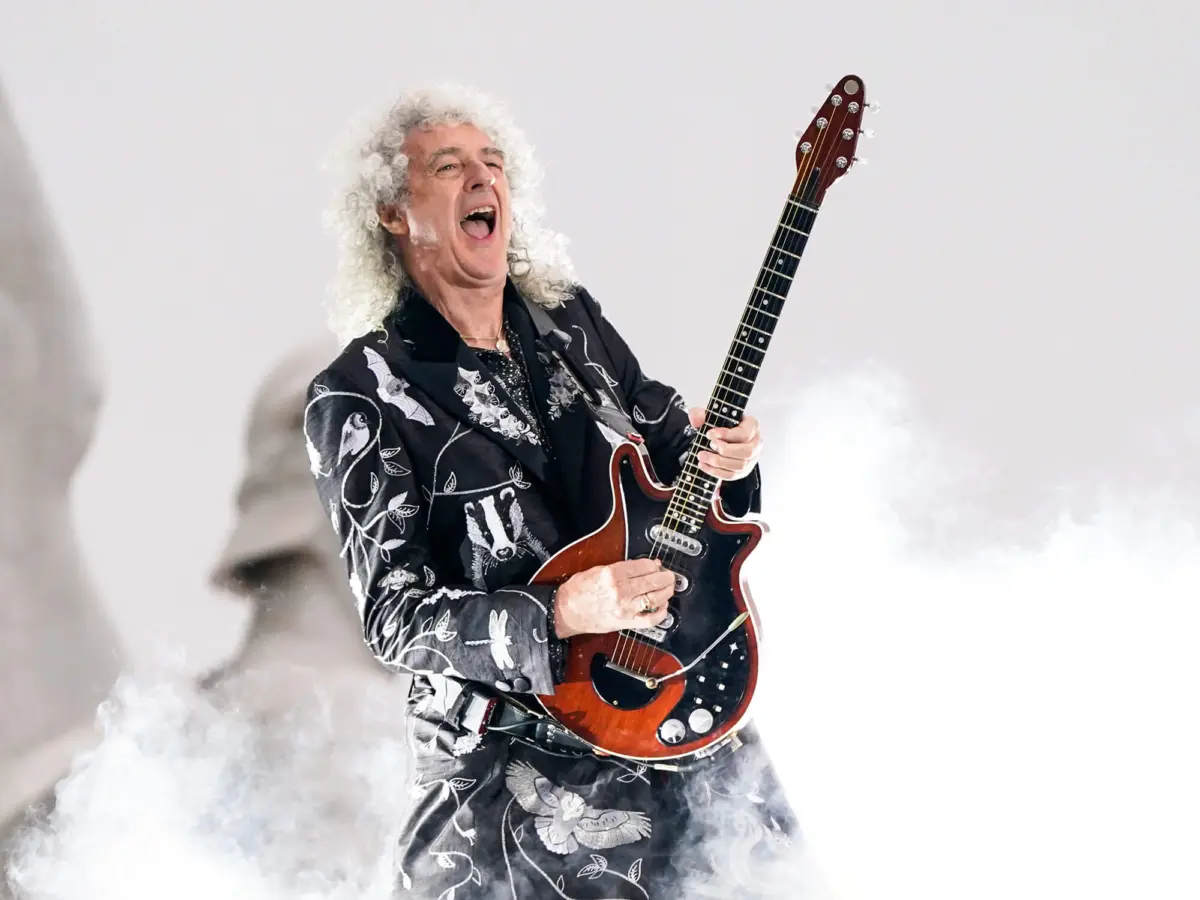
The landscape of live music is undergoing a profound transformation, with technological advancements offering unprecedented avenues for artists to engage with audiences globally, even beyond traditional touring models. While phenomena like ABBA Voyage have demonstrated the immense commercial and cultural appeal of digital concerts, contributing an estimated £322.6 million (approximately $400 million USD) to the UK economy in its first year alone and creating significant employment, and iconic bands such as KISS planning an avatar-led legacy tour in 2027 following their 2023 retirement, legendary Queen guitarist Brian May has expressed significant reservations about embracing artificial intelligence (AI) for any future Queen live experiences. His stance highlights a growing debate within the music industry regarding artistic authenticity, technological innovation, and the ethical implications of AI.
A Personal Retreat from the Road
May’s resistance to AI-driven performances comes concurrently with his personal decision to step away from the rigors of touring. Speaking to The Times, the veteran musician confirmed that he no longer wishes to undertake extensive tours, a decision he solidified approximately 18 months ago. This pivotal moment was reportedly triggered by the profound impact of a close family friend’s passing, which brought into sharp focus the sacrifices inherent in a touring lifestyle. May recounted a poignant exchange with his tour manager: "I said to my tour manager, ‘I’ll just nip home for a few days and come back’, and she looked me in the eyes and said, ‘You know you can’t do that’." This interaction underscored the fundamental conflict between his desire for personal freedom and the relentless demands of a global tour schedule. While acknowledging his deep love for performing and the excitement of travel, May ultimately concluded that the "trade-off is sacrificing your freedom," signaling a significant shift in his professional life. This sentiment resonates with many artists who, after decades on the road, seek a different balance between their creative output and personal well-being. The exhaustive nature of touring, involving constant travel, soundchecks, performances, and media obligations, can take a heavy toll physically and mentally, even for artists who thrive on stage.
Queen’s Quest for a Revolutionary Live Experience
Despite May’s retirement from touring, neither he nor drummer Roger Taylor envisions an end to Queen’s live presence. Instead, they are actively exploring alternative, innovative ways to preserve and present the band’s enduring magic to new generations of fans. Both musicians are keen to embark on "something fairly revolutionary," drawing inspiration from the groundbreaking success of ABBA Voyage, which redefined the possibilities of virtual performance. ABBA Voyage, which debuted in May 2022, features digital avatars (dubbed ‘ABBAtars’) of the band members as they appeared in 1979, performing a full concert with a live band in a purpose-built arena. This spectacle, a culmination of years of motion-capture technology and intricate stagecraft, has been lauded for its immersive quality and emotional resonance, proving that audiences are willing to embrace non-traditional live experiences.
May, however, was quick to clarify that Queen’s approach, while "along those lines," would not be a direct replication of ABBA’s model. His imagination was ignited by a visit to the Las Vegas Sphere, a state-of-the-art entertainment venue renowned for its colossal LED screen and immersive audio technology. "Last year I went to the Las Vegas Sphere. My juices started flowing and I sketched out a whole Queen show," May revealed. He envisions an "immersive experience" that could potentially "conquer time and space," offering a new dimension to Queen’s music that transcends the physical limitations of a conventional concert. The Sphere, with its 160,000 square feet of interior LED display and 18,600 capacity, represents the cutting edge of experiential entertainment, offering a canvas for artists to create truly unparalleled visual and auditory spectacles. U2’s highly successful residency at the Sphere demonstrated the venue’s potential, showcasing how music can be integrated with breathtaking digital artistry.
The AI Stumbling Block: A Matter of Principle
Despite the exciting potential for a revolutionary Queen show, May’s vision has encountered a significant obstacle: the pervasive role of artificial intelligence. "Currently you can’t make it without AI and I have serious misgivings about that," he emphasized, highlighting a profound ethical and philosophical divide. His opposition to AI extends beyond theoretical concerns, manifesting in concrete actions. The Times article brought to light an incident last month where May reportedly pulled the plug on a music video project for the Steve Cropper & The Midnight Hour track "My Angels Are Calling," on which he and ZZ Top’s Billy Gibbons were featured, after discovering that the directors had utilized AI in its creation. As a direct consequence of this firm stance, the final video for the track ended up being a simpler production, primarily shot on a green screen, rather than incorporating AI-generated elements.
May’s concerns about AI are multifaceted and deeply held. He views the technology not merely as a creative tool but as a broader societal and environmental threat. "Data centres are a massive evil and have to be fought," the guitarist declared, drawing a direct link between the computational demands of AI and its environmental footprint. This statement reflects a growing awareness of the enormous energy consumption associated with large-scale AI models and the vast data centers required to power them. Training sophisticated AI algorithms, particularly those involved in generative media, requires immense computational resources, leading to significant electricity usage and associated carbon emissions. Reports from organizations like the International Energy Agency (IEA) have highlighted the rapid growth in energy demand from data centers, emphasizing the need for greater efficiency and renewable energy integration.
Extending his critique, May issued a stark warning to political figures, specifically mentioning UK Prime Minister Andy Burnham: "My message to Andy Burnham [the UK Prime Minister] is clear: stop it now before it’s too late. It’s trashing our future. We all ‘like’ AI. It helps us write emails. It’s even saved a few lives. But the harm it is bringing to the world is immense." This statement underscores May’s belief that while AI offers undeniable benefits in certain domains, its unchecked proliferation poses significant risks to the environment and society at large. His call for immediate political intervention indicates a perception of urgency regarding AI’s development and deployment.
The Broader Context: AI in the Creative Industries and Environmental Concerns
Brian May’s stance is not an isolated one but rather part of a burgeoning conversation within the creative industries and society at large regarding the role and ethics of AI. The rapid advancements in generative AI, capable of creating music, art, and text, have sparked both excitement and alarm among artists, writers, and content creators. Concerns range from copyright infringement and intellectual property rights, as AI models are often trained on vast datasets of existing human-created works without explicit consent or compensation, to the potential for job displacement and the erosion of human creativity. Many artists argue that AI-generated content lacks the soul, intention, and lived experience that define genuine artistic expression.
The environmental argument put forth by May adds another critical layer to this debate. The global proliferation of data centers, essential infrastructure for AI, cloud computing, and the internet, consumes staggering amounts of electricity. A 2023 report by the IEA indicated that data centers globally consumed an estimated 240-340 terawatt-hours (TWh) in 2022, representing 1-1.5% of global electricity demand. With the accelerated development and adoption of AI, this consumption is projected to rise significantly, potentially doubling by 2026. The carbon footprint associated with this energy use, particularly when sourced from fossil fuels, presents a substantial challenge to global climate goals. May’s strong condemnation of "data centres as a massive evil" brings this often-overlooked environmental cost of digital advancement to the forefront of the discussion surrounding AI in entertainment.
The Future of Legacy Acts and Artistic Integrity
May’s principled opposition creates a fascinating paradox for Queen’s future live strategy. On one hand, the desire to explore "revolutionary" immersive experiences aligns with the industry’s trajectory towards technologically enhanced performances, offering a way for legacy acts to remain relevant and accessible without the strain of physical touring. On the other hand, his unwavering refusal to countenance AI as a component of this future places a significant constraint on the technological options available. This position forces Queen to seek genuinely novel solutions that do not rely on AI, potentially pushing the boundaries of what non-AI immersive technology can achieve.
The dilemma faced by Brian May and Queen reflects a broader challenge for many iconic bands of their era. How do artists with a rich history and devoted fanbase continue to connect with audiences when the original lineup is no longer fully intact or capable of extensive touring? Queen has famously navigated this challenge since the passing of Freddie Mercury, first with various guest vocalists and more recently with Adam Lambert, maintaining a vibrant touring presence for decades. Now, with May’s personal touring retirement, the question becomes how to sustain that legacy in a purely non-physical format. The tension between artistic integrity, technological possibility, and environmental responsibility will undoubtedly continue to shape the conversation around the future of music and entertainment. May’s firm stance serves as a powerful reminder that for some artists, the pursuit of innovation must always be tempered by deeply held ethical convictions.
