

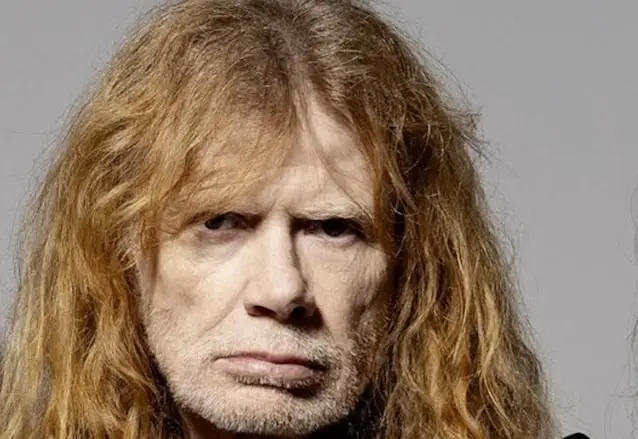
Prior to a highly anticipated performance at the Grammy Museum in Los Angeles on September 24, members of the iconic heavy metal band MEGADETH — Dave Mustaine, James LoMenzo, Dirk Verbeuren, and Teemu Mäntysaari — sat down for an in-depth conversation with former MTV VJ Matt Pinfield. The discussion, transcribed by BLABBERMOUTH.NET, offered a rare glimpse into the band’s current mindset, their latest critical and commercial triumph, and the enduring power of their music across generations. The interview served as a significant pre-cursor to their performance, highlighting the band’s continued relevance and their deep connection with their audience and the broader music industry.
A Landmark Achievement: The Self-Titled Album’s Unprecedented Success
The conversation naturally gravitated towards the band’s self-titled seventeenth studio album, released in early 2026, which achieved a monumental career milestone by topping the Billboard 200 chart in the United States. This marked MEGADETH’s first-ever album to reach the pinnacle of the prestigious chart, a feat that resonated deeply with the band members.
Bassist James LoMenzo expressed his profound satisfaction with the reception, stating, "It’s been an amazing experience ever since we released the record. We didn’t know what to expect. We had a really firm idea of what we wanted to put out as the last album. And since we started this year, we’ve noticed a lot of old fans, but a lot of young fans showed up [too], and it’s been really amazing to play to all of you… I’ve always been a fan of this band one way or another, but to see you all out there in droves, and just hanging on all the classic songs, but embracing all the new music, it’s really, it’s been moving for us. It’s been great. It’s a great vindication." LoMenzo’s words underscored the emotional impact of the album’s success, not just commercially but in its ability to connect with a broad spectrum of their fanbase. The "vindication" he mentioned likely refers to the culmination of years of dedicated artistry and resilience within the demanding metal scene.
Drummer Dirk Verbeuren echoed this sentiment, emphasizing the band’s dedication to their craft. "When you make new stuff, you never really know how it’s going to be embraced, but we set out to make the best MEGADETH album we could. That’s what we wanted to do. When we started on the album, nobody knew it was going to be the last one — I had well finished my drums, and the recording was well underway when that decision was made. So we just really went in and did the best we could, and it was a real brotherly experience. We spent a lot of time together, just exchanging ideas. Ideas were always flowing, and it was just a lot of fun. I think you can hear that fun on the record. There’s an enthusiasm and an energy there from all of us that’s really genuine." Verbeuren’s account provides crucial insight into the album’s creation process, revealing that its composition was not driven by the knowledge of it being a final offering, but rather by a collective drive for excellence. This organic approach, coupled with the band’s collaborative spirit, appears to have been a key ingredient in its success.
Guitarist Teemu Mäntysaari elaborated on the sonic direction of the album, highlighting a conscious effort to retain an authentic, guitar-driven sound. "We really did want to make the album kind of this guitar-driven thing, and we wanted to kind of want to keep it organic, so not to make it too sampled, not too polished, so you can really hear the band sound in there, because we feel like we play really tight together live, and, we kind of just wanted to put that vibe and that sound on the album." This commitment to organic production stands in contrast to some contemporary trends in music production and speaks to MEGADETH’s dedication to their core identity as a powerful live-performing entity.
The Enduring Allure: MEGADETH’s Multi-Generational Fanbase
A recurring theme in the interview was the band’s remarkable ability to attract and retain fans across multiple age demographics. LoMenzo expressed his amazement at the influx of younger fans at recent concerts, noting, "I’m amazed at how many younger [fans have attended the band’s recent concerts]. It’s not because their parents are dragging them. They’re up there singing all over the songs too… There’s something immediate about this kind of music, and it’s undeniable. When you bring people together in a room, we share this energy. I’m not surprised that people bring their kids and share this with them." This observation points to the timeless and visceral appeal of MEGADETH’s music, suggesting an inherent quality that transcends generational divides.
Verbeuren offered a historical perspective on the genre’s impact, explaining, "For the younger people too, what you’ve got to realize is that when this kind of music came along in the mid-’80s, it was like a new genre, basically. It transcended everything that existed before [and] kind of made everything more intense and faster and more technical. That still to this day [is] a very true thing, even though of course people have pushed boundaries to their extremes. That always is going to happen, but there’s still a vibe to this music and a listenable side to it… I think that’s always going to speak to young people. For me personally, when I was a teenager, everything I felt was in those old MEGADETH records. I was 14 or 15. I don’t remember exactly, but I found ‘Peace Sells’ at a flea market and I bought it because I thought the cover looked incredible and the guys looked fucking bad-ass. Everything about that record is perfect in my opinion." Verbeuren’s personal anecdote about discovering "Peace Sells… But Who’s Buying?" vividly illustrates the initial spark that can ignite a lifelong passion for the band, and how that raw power continues to resonate with new audiences. The mid-80s emergence of thrash metal, with MEGADETH at its forefront, represented a significant shift in musical intensity and technicality, elements that continue to draw listeners seeking powerful and intellectually stimulating music.
Mäntysaari’s Integration and The Creative Process
The interview also delved into guitarist Teemu Mäntysaari’s experience joining MEGADETH and contributing to their latest album. Mäntysaari, a long-time admirer of the band, spoke of the profound honor of becoming part of their legacy. "MEGADETH was definitely one of the first metal bands that got me into playing guitar. It was IRON MAIDEN, DIO and then MEGADETH. So then, of course, what an incredible honor to be able to join and be part of the legacy of the band." His inclusion marked a significant chapter in the band’s ongoing narrative.
LoMenzo highlighted Mäntysaari’s invaluable contributions, stating, "His contributions to the [new] record, they can’t be underestimated. He came in with a real understanding of what this band is really about." This praise suggests Mäntysaari not only brought technical proficiency but also an intrinsic understanding of MEGADETH’s musical DNA.
Mäntysaari further elaborated on the collaborative process, noting the strong chemistry developed during extensive touring. "We had already been touring for quite a while, so we had built this chemistry outside of the stage as well. And I think that really helped when we went to the studio. We immediately kind of clicked on songwriting as well. And of course, we had been jamming backstage and kind of tried some bits and pieces, but it was really natural to go to the studio and start working on songs." He then revealed an illuminating aspect of their songwriting preparation: "One incredible thing that we did — we went through the whole MEGADETH back catalog, 200-plus songs, listening to them together, and Dave was telling us these little stories, how he came up with the song ideas. That was, first of all, really inspiring, but it also kind of gave us a lot of ideas how to make the best MEGADETH album, knowing what is in the back catalog. It was incredible to hear all of these stories that are not all public, and about how some of the lyrics came out, and also we talked about arrangement things. We had this whole Excel sheet where we would put little notes — this idea we like from this song, and maybe this song we could consider playing live, and this song could work great for an acoustic set in the future. Although we never went back to the sheet to look at it, it kind of is in the backbone now. So I think that was really helpful and made it an easier process to go into the songwriting." This detailed account of immersing themselves in their own extensive catalog demonstrates a deep respect for their past and a strategic approach to crafting new material that honors their heritage while pushing forward. The "Excel sheet" anecdote, though seemingly mundane, illustrates a systematic and thoughtful approach to songwriting that can be inferred as a key to their sustained creative output.
LoMenzo added, "It enthused us in a very special way as far as really absorbing the whole pantheon of what MEGADETH has been. It was really helpful." This reinforces the idea that this deep dive into their discography was not just an exercise in nostalgia but a vital source of inspiration and creative direction.
Recalling the "Rust In Peace" Era: A Period of Transformation
Dave Mustaine, the band’s founder and driving force, offered a poignant reflection on the challenging yet pivotal era surrounding the creation of their landmark album, "Rust In Peace." He candidly described the period as marked by personal struggles and a lack of external belief. "Rehab… What happened was, we realized we were sitting on a really good record, and it was just getting old. We were homeless, living in a vehicle, and [had] nobody believing [in us]. The time it took to get other people to believe in us like we believed in us, it took a long time. ‘Rust In Peace’ was a very dark period for us, but we made it through it." This raw honesty underscores the immense perseverance required to bring such a critically acclaimed album to fruition under difficult circumstances.
Mustaine also spoke about the therapeutic impact of his music on listeners. "And a lot of the songs on that record have been a great help to people… People find relief in some of the stuff that I have gone through, because I don’t always bitch about something. I like to say, ‘Here’s the problem; here’s the solution.’ It’s real simple — if you have a bad moment and you hold onto that bad moment, it becomes a bad day, and a bad week, and so on. It’s just one moment, [but] it’s going to own you." This perspective highlights Mustaine’s evolution from a figure of raw aggression to one who channels his experiences into relatable narratives of overcoming adversity.
He further detailed the broader industry shift towards sobriety during that time, influenced by bands like Aerosmith and the proliferation of 12-step programs. "During the ‘Rust In Peace’ process, it was kind of, a whole entire music industry purging of alcohol and drugs. The guys in AEROSMITH were going around, like, sobriety police, and if you wanted to play with them, we had to be sober. The music industry had loads of industry 12-step meetings and stuff like that. I’m glad that’s there for people. It really helped me when I needed it. But during that process, it was kind of, put the plug in the jug, put everything I thought I know about myself on a shelf, trying to open a relationship with God and myself and see what I really am, and see what kind of guitar player I really am. That’s what ‘Rust In Peace’ was — that’s who I really am." This introspective account reveals that the creation of "Rust In Peace" was not just a musical endeavor but a profound personal journey of self-discovery and transformation, a period where Mustaine sought to redefine himself and his artistry without the crutch of substance abuse.
The MEGADETH Legacy: A Statistical and Cultural Powerhouse
The interview and the accompanying information package provided a comprehensive overview of MEGADETH’s considerable impact on the music landscape. With over 50 million albums sold worldwide, a Grammy Award, and 12 additional nominations, their commercial and critical success is undeniable. Billions of streams and 10 Top 10 entries on the Billboard 200, including their recent No. 1 album, further cement their status as a dominant force. Iconic albums such as the platinum-certified "Peace Sells… But Who’s Buying?" (ranked No. 8 on Rolling Stone’s "100 Greatest Metal Albums Of All Time"), the platinum "Rust In Peace," and the double-platinum "Countdown To Extinction" (which reached No. 2 on the Billboard 200) are cornerstones of the metal genre.
Following the success of "Dystopia" in 2016, which earned the band its first Grammy Award, and "The Sick, The Dying… And The Dead!", MEGADETH reached a new zenith with their 2026 self-titled album. Its debut at No. 1 on the Billboard 200 was lauded as one of their strongest releases, underscoring their enduring ability to evolve while remaining at the forefront of heavy music. This sustained relevance, spanning decades, is a testament to their consistent quality, adaptability, and the unwavering dedication of their fanbase.
Collaborative Tours and Future Prospects
Mustaine also touched upon the band’s recent successful tour with IRON MAIDEN, highlighting the strong camaraderie between the bands. "They’ve been really great. When it started off, it was a little rough. Most tours are like that in the very beginning, but we had the friendship between myself and Steve [Harris] and Bruce [Dickinson] and the management. Rod Smallwood, I actually asked him to manage us for a period, so we’re all really close, and the tour has been very successful." He humorously recounted how his love for football (soccer) played a role in securing additional dates in South America, demonstrating the personal relationships that underpin such large-scale collaborations. This cross-promotional effort between two titans of metal not only benefited both bands but also provided fans with a monumental touring experience.
The interview, set against the backdrop of the Grammy Museum, provided a comprehensive look at MEGADETH’s present success and their enduring legacy. The band’s ability to consistently produce high-quality music, connect with new generations of fans, and navigate the evolving music industry landscape speaks volumes about their resilience and artistic vision. The self-titled album’s chart-topping performance and the band’s candid reflections suggest that MEGADETH’s journey is far from over, with a rich history and a vibrant future ahead. The interview serves as a powerful reminder of their impact, not just as musicians, but as storytellers and survivors who continue to shape the contours of heavy music.
Photo credit: Ross Halfin
