

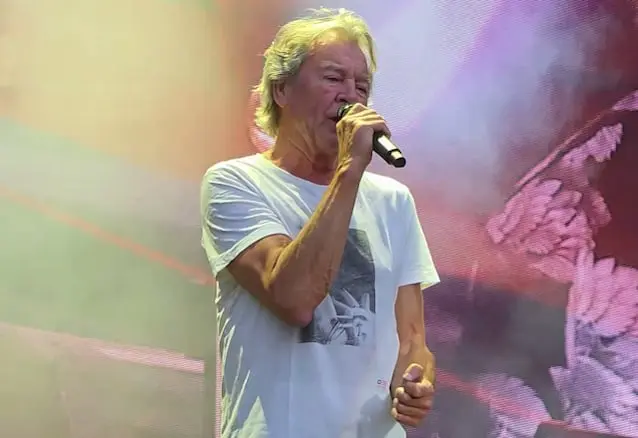
In a recent in-depth interview with The Chap, legendary Deep Purple vocalist Ian Gillan clarified his preferred genre classification for his iconic band, opting for "hard rock" over "heavy rock." Gillan articulated his reasoning by distinguishing between the evolutionary paths of these subgenres, asserting that "heavy rock" served as a direct precursor to the more defined sound of heavy metal. This distinction is crucial for understanding Deep Purple’s place within the pantheon of rock music and Gillan’s perspective on his band’s sonic identity.
"If you want to pick a genre, then I would prefer hard rock," Gillan stated. "Only because heavy rock was the next step into heavy metal." This statement underscores a conscious effort by Gillan and, by extension, Deep Purple, to delineate their sound from the more aggressive and often darker territories explored by bands that emerged later. Gillan’s careful word choice reflects a nuanced understanding of music history and the subtle yet significant differences in stylistic evolution.
Navigating the Landscape of Rock Genres
Gillan’s preference for "hard rock" is not merely an aesthetic choice; it reflects a deliberate positioning within the broader rock music spectrum. He elaborated on this by referencing his reluctance to accept awards designated for heavy metal. "I’ve turned down awards for heavy metal, even though most of my friends are in it, like Black Sabbath and the guys in Metallica," Gillan explained. "We’re good mates but that isn’t really our bag." This admission highlights a long-standing relationship and mutual respect between Deep Purple and pioneers of heavy metal, while simultaneously reinforcing the idea that their musical core remained distinct. The camaraderie with bands like Black Sabbath, a group often credited alongside Deep Purple and Led Zeppelin as a foundational pillar of hard rock and heavy metal, further emphasizes the close ties within the rock community, even as stylistic boundaries are maintained.
Roots in the Golden Age of Rock and Roll
To further contextualize Deep Purple’s sound, Gillan traced his musical lineage back to the foundational figures of rock and roll. "My rock ‘n’ roll was Elvis Presley, Little Richard, Jerry Lee Lewis, Roy Orbison, Buddy Holly, The Everly Brothers and Chuck Berry, and that’s just to start with," he recalled. This enumeration of early rock and roll titans is significant. It points to a fundamental influence rooted in the energetic, blues-infused, and often more melodic styles that defined the genre’s inception. Gillan’s observation that these artists, if transplanted into today’s fragmented music landscape, would likely be categorized into disparate genres, underscores the transformative nature of music categorization over time and the unique blend of influences that characterized the early pioneers. "And if you took any of those into today’s music scene, they’d be instantly sliced up and put into separate genres and played on different radio stations. They would not be allowed to be all of the same genre." This statement is a testament to the eclectic and pioneering spirit of those early artists and, by extension, the diverse influences that informed Deep Purple’s own sound.
The "Unholy Trinity" and Their Enduring Impact
The discussion about genre inevitably leads to the broader impact of British rock’s "unholy trinity" – Deep Purple, Black Sabbath, and Led Zeppelin. Gillan’s perspective on this influential triumvirate, particularly his time with Black Sabbath, offers valuable insight. Two years prior, in an interview with The Sun, Gillan reflected on the profound influence of these bands. "To a certain extent, Sabbath were the most important because without them there would have been no Seattle [grunge scene] or heavy metal," Gillan stated. This assertion, made with a clear understanding of musical lineage, positions Black Sabbath as a crucial catalyst for subsequent heavy music movements. He lauded Black Sabbath guitarist Tony Iommi’s early contributions: "What [Tony] Iommi was delivering in those early days was just awesome. It was so powerful."
Gillan’s tenure with Black Sabbath, though brief, was a significant chapter. He fronted the band from late 1982 until early 1984, contributing to their album "Born Again," released in August 1983. This album holds the distinction of being the only Black Sabbath studio album to feature Gillan and the last to include original drummer Bill Ward. The experience, as Gillan described it, was a unique undertaking. "The making of ‘Born Again’ was a challenge for me. It was a bit like doing [Andrew Lloyd Webber’s rock opera] ‘Jesus Christ Superstar’ or singing with [opera singer Luciano] Pavarotti; it’s just something completely different," he explained. This analogy highlights the stylistic departure from his established work with Deep Purple and the operatic demands of adapting to a different musical context. He further credited Iommi’s songwriting prowess: "But Tony is such a great writer. You know what to expect with Tony. There’s no multidirectional approach. He is the father of everything that came out of Seattle, I believe. He’s just very direct, and that’s how he evolved from the early days." This assessment reinforces Iommi’s foundational role in shaping heavy music.
The Nuances of "Smoke on the Water"
Even Deep Purple’s most ubiquitous anthem, "Smoke on the Water," reveals layers of subtle musicality that often go unnoticed amidst its iconic riff. In May, speaking with U.K.’s Planet Rock, Gillan drew attention to the deceptively simple yet masterful drumming of Ian Paice on the track. "You listen to what [Paice] plays in ‘Smoke [On The Water]’," Ian said. "Everyone thinks it’s a crash bash, it’s a heavy metal song. It’s not. You just listen to the drums in ‘Smoke’. [Metallica’s] Lars Ulrich came out and played it with me in San Francisco, and he battered the hell out of it. And I’ve worked with a lot of other drummers who’ve done it. And none of them actually realized that it’s a gentle touch." This anecdote illustrates how the perceived "heaviness" of a track can sometimes overshadow the intricate technique and nuanced performance required to achieve it. Paice’s drumming, characterized by a unique swing and a "gentle touch," is a testament to the band’s sophisticated musicianship that transcends simplistic genre labels. The fact that even accomplished drummers like Lars Ulrich initially missed this subtlety underscores the often-underappreciated artistry within rock music.
Deep Purple’s Latest Chapter: " = "
Deep Purple continues to demonstrate their enduring relevance and creative vitality with the release of their latest album, " = ", on July 3 via earMUSIC. Produced by Bob Ezrin, a seasoned producer known for his work with artists like KISS, Pink Floyd, Lou Reed, and Alice Cooper, the album has been heralded as "the heaviest Deep Purple album in many years." This description aligns with the band’s established sonic identity while suggesting a renewed exploration of their heavier capabilities.
The initial reception to " = " has been overwhelmingly positive, with both fans and critics embracing its authentic Deep Purple spirit. Publications such as Uncut have lauded the album as "distilled, high-octane Purple at its finest," while Classic Rock has praised its ability to deliver "everything that makes Deep Purple one of the greatest acts in hard rock." These accolades highlight the band’s consistent ability to capture their signature sound and resonate with audiences decades into their career. The successful release and positive critical response to " = " serve as compelling evidence of Deep Purple’s sustained artistic relevance and their continued ability to produce impactful music that honors their legacy while embracing contemporary production values. The emphasis on "heaviest" in the album’s description, coupled with critical praise for its "hard rock" credentials, further reinforces Gillan’s preference for the latter genre, suggesting a band that, while capable of pushing boundaries, remains firmly rooted in the foundational elements that defined their initial success. The album’s commercial performance and critical acclaim will undoubtedly be closely watched, serving as further indicators of Deep Purple’s enduring appeal and their significant place in the history of rock music.
