

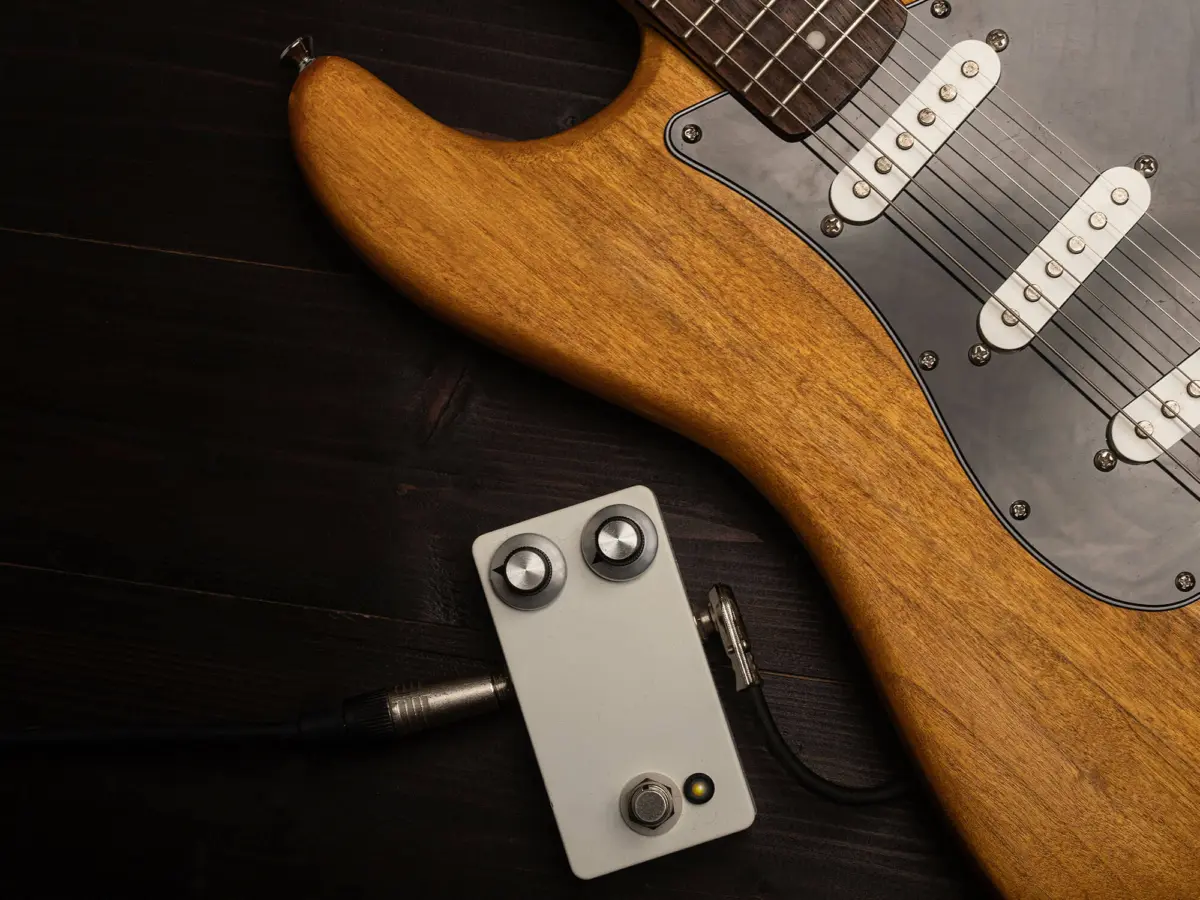
The world of guitar effects is a vast and ever-evolving landscape, yet few sonic manipulations hold the legendary status and raw appeal of the fuzz pedal. These gloriously aggressive stompboxes, capable of transforming a clean guitar signal into a rich tapestry of snarling sustain and saturated chaos, have captivated musicians for generations. From the iconic riff of The Rolling Stones’ "Satisfaction" that introduced fuzz to the mainstream, to the psychedelic explorations of Jimi Hendrix and the heavy rock foundations laid by countless others, fuzz has remained a cornerstone of electric guitar tonality. Today, a growing movement of enthusiasts is rediscovering the profound satisfaction and sonic potential of crafting these essential devices themselves, opting for the hands-on approach of DIY fuzz pedal building rather than relying solely on commercial offerings. This burgeoning trend combines the thrill of electronic construction with the pursuit of unique, personalised sound, offering a compelling alternative to the often-exorbitant prices of boutique pedals.
The Genesis of Fuzz: A Historical Perspective
The journey of the fuzz pedal began not as an intentional design but as an accidental sonic anomaly. In 1962, Nashville session guitarist Grady Martin was recording a session for Marty Robbins when a faulty preamplifier in the mixing console created a distorted, "fuzzy" guitar tone. This unintended effect, prominently featured on Robbins’ song "Don’t Worry," piqued the interest of engineers and musicians alike. Promptly recognizing the potential, Gibson’s Maestro division released the FZ-1 Fuzz-Tone in 1963, often credited as the world’s first commercially available guitar effect pedal. Its early adoption was slow, but everything changed in 1965 when Keith Richards of The Rolling Stones famously used a Maestro FZ-1 to create the unforgettable riff for "(I Can’t Get No) Satisfaction." The song’s massive global success catapulted the fuzz sound into the public consciousness, cementing its place as an indispensable tool for guitarists seeking to break new sonic ground.
Following the FZ-1’s breakthrough, other manufacturers quickly entered the fray. Sola Sound in the UK introduced the Tone Bender in 1965, gaining favour with British rock luminaries such as Jeff Beck and Pete Townshend. Simultaneously, the Dallas Arbiter Fuzz Face, with its distinctive circular enclosure, became synonymous with Jimi Hendrix’s groundbreaking, expressive playing, offering a smoother, more articulate fuzz character. Later, Electro-Harmonix launched the Big Muff Pi in 1969, renowned for its thick, sustaining, and often scooped-midrange sound, which would become a staple for countless hard rock and grunge artists. This rich lineage of early fuzz circuits laid the foundation for decades of sonic exploration and remains highly influential, with many modern boutique and DIY pedals drawing direct inspiration from these pioneering designs. The enduring relevance of fuzz stems from its ability to add aggression, sustain, and harmonic complexity, making it suitable for genres ranging from blues and rock to shoegaze and experimental music.
The Resurgence of Hands-On Creation: Why DIY?
In an era dominated by mass-produced electronics and a thriving market for high-end boutique gear, the decision to build one’s own fuzz pedal might seem counterintuitive. However, the DIY approach offers a unique blend of benefits that resonate deeply with many guitarists. Foremost among these is the profound sense of accomplishment derived from playing an instrument through a device meticulously crafted with one’s own hands. This personal connection to the gear fosters a deeper understanding of its sonic characteristics and provides an unparalleled level of satisfaction that off-the-shelf pedals, regardless of their quality, simply cannot replicate.
Beyond the emotional reward, practical considerations also drive the DIY movement. The cost-effectiveness of building a pedal from components can be significantly lower than purchasing a comparable boutique model, which often carries a premium due to brand recognition, marketing, and small-batch production overheads. A high-quality DIY fuzz, built from a kit or sourced components, can often deliver a superior or at least highly competitive sonic experience for a fraction of the price. This economic advantage democratises access to specific tones that might otherwise be financially out of reach for many musicians.
Furthermore, DIY pedal building serves as an invaluable educational experience. It demystifies the complex world of electronics, offering practical insight into how resistors, capacitors, transistors, and diodes interact to shape sound. Unlike simply plugging in a pedal, building one requires understanding the signal path, component values, and the fundamental principles of circuit design. This knowledge empowers musicians to troubleshoot their gear, perform repairs, and even embark on more ambitious customisations. The relatively simple nature of many classic fuzz circuits, often involving a low component count, makes them an ideal starting point for beginners to grasp these core concepts without being overwhelmed. This "teachable moment" transforms a passive consumer into an active participant in the creation of their musical voice.
Essential Toolkit for the Aspiring Builder
Embarking on the journey of DIY pedal building requires a modest but essential collection of tools. Investing in quality equipment from the outset can significantly improve the building experience and the reliability of the finished product.

At the heart of any electronics project is a soldering iron. For pedal building, a temperature-controlled soldering iron (typically 30-60 watts) is highly recommended. It allows for precise heat management, crucial for preventing damage to sensitive components and ensuring strong, clean solder joints. A fine-tipped iron is ideal for working with smaller components and tight spaces on circuit boards. Complementing the iron, a good quality solder (lead-free or leaded, depending on preference and regional regulations) with a rosin core is necessary for good electrical connections.
Next, a set of flush cutters is indispensable for neatly trimming component leads after soldering and for cutting wires to precise lengths. Their flat cutting edge ensures a clean cut close to the PCB, preventing short circuits and making for a tidy build. Wire strippers are equally important for cleanly removing insulation from wires without damaging the copper strands, ensuring reliable connections.
For mounting components and securing connections, a set of small wrenches (typically 10mm to 14mm for potentiometer nuts and jack nuts) is required. A screwdriver set with various Phillips and flathead sizes will also be needed for enclosure screws and internal adjustments.
An often-overlooked but incredibly valuable tool, especially for those working with stripboard or smaller PCBs, is a PCB holder or "helping hands" device. These fixtures securely clamp the circuit board, allowing for hands-free soldering and making the process of populating components significantly easier and more precise. Their investment is quickly justified by the reduction in frustration and improved build quality.
Finally, while not strictly necessary for every basic kit build, a digital multimeter is an invaluable diagnostic tool. It can be used to check component values, test for continuity, identify short circuits, and measure voltages, aiding significantly in troubleshooting should a build not work as expected. For those just starting out, acquiring these tools individually can seem daunting, but reputable suppliers like StewMac offer comprehensive pedal building toolkits that provide all the necessary equipment, alongside individual parts to replenish a growing workbench.
Demystifying the Build: Kits vs. Ground-Up Approaches
The entry point into DIY fuzz building typically falls into two main categories: pre-packaged kits and ground-up builds using raw components and generic circuit boards. Both offer distinct advantages and learning experiences.
Pedal Building Kits are arguably the most accessible starting point for beginners. These kits typically include all necessary components – the circuit board (often a custom PCB), resistors, capacitors, transistors, diodes, potentiometers, jacks, switches, and even the pre-drilled enclosure – along with detailed instructions. The primary advantage of a kit is its "one-and-done" nature: there’s no need to worry about sourcing individual parts, ensuring compatibility, or guessing at component values. Everything is provided, making the focus solely on the assembly process. This guided experience is excellent for developing fundamental soldering skills and understanding the basic layout of a pedal without the added complexity of circuit design or component selection. Suppliers like StewMac offer a range of such kits, providing a reliable and structured path for novices.
For those ready to move beyond the confines of a kit, ground-up builds offer greater flexibility and a deeper dive into circuit design. These builds often begin with a generic circuit board material, such as veroboard (also known as stripboard) or perfboard.
- Veroboard is a copper-clad phenolic or fiberglass board with parallel strips of copper tracks, usually with holes drilled at 0.1-inch intervals. Components are soldered to these strips, and connections are made by bridging or cutting traces to create the desired circuit. Veroboard is a highly versatile and cost-effective medium for prototyping and building low-volume, personal projects. It forces the builder to think about component placement and signal routing, enhancing their understanding of circuit topology. A vast community of DIY pedal builders shares "tagboard layouts" (another term for stripboard layouts) for a multitude of effects, providing detailed diagrams for replicating classic circuits. While it requires more patience and careful planning than a custom PCB, veroboard is an excellent stepping stone for learning to translate a schematic into a physical circuit.
- Custom PCBs (Printed Circuit Boards), while more complex to design and manufacture in small batches, offer the highest level of precision and reproducibility for ground-up builds. They feature etched copper traces that precisely define component connections, eliminating the need for manual wire routing or trace cutting. While beginners might not start by designing their own PCBs, many advanced DIYers move towards this for their own unique circuits or for creating more professional-looking builds.
Regardless of the chosen substrate, the act of assembling a circuit from individual components provides an unparalleled opportunity to learn about signal flow and component interactions, directly hearing the results of each step in the process.
The Sonic Alchemy: Understanding Key Components

The magic of a fuzz pedal lies in its ability to dramatically alter a guitar’s signal, pushing it into saturation and harmonic richness. This alchemy is performed by a handful of key electronic components, each playing a crucial role in shaping the final sound. Understanding these components is paramount for anyone looking to truly customise their fuzz tone.
At the "beating heart" of most fuzz circuits are the transistors. These tiny semiconductors amplify and distort the signal, and their type has a colossal impact on the pedal’s character.
- Germanium transistors were prevalent in early fuzz designs (e.g., Maestro FZ-1, Fuzz Face, Tone Bender). They are known for their warm, soft, and somewhat "squishy" clipping, excellent clean-up with guitar volume knob, and a unique sensitivity to temperature. However, germanium transistors are notoriously inconsistent, prone to noise, and difficult to source in matched pairs (especially new-old-stock or NOS components like the AC128 or NKT275). Their scarcity and variability contribute to their mystique and often higher cost. Builders often spend considerable time "h-fe matching" (measuring gain) and biasing these transistors to achieve optimal performance.
- Silicon transistors (e.g., 2N5088, BC108, BC549) became common in later designs due to their stability, consistency, and lower cost. They generally offer a brighter, more aggressive, and higher-gain fuzz with a tighter low-end response. While sometimes perceived as less "vintage" or "organic" than germanium, silicon transistors are reliable and capable of producing fantastic fuzz tones. Many modern fuzzes leverage silicon’s characteristics for their unique sound.
- Hybrid designs, combining both germanium and silicon transistors in different stages of the circuit, are also popular, aiming to harness the best qualities of both types.
Another critical element in many fuzz circuits, particularly those derived from the Big Muff, are clipping diodes. These components are deliberately used to "clip" or flatten the peaks of the audio waveform, creating distortion.
- Silicon diodes (e.g., 1N4148, 1N914) offer a relatively high forward voltage, resulting in a louder, sharper, and more aggressive clip.
- Germanium diodes (e.g., 1N34A) have a lower forward voltage, producing a softer, more compressed, and smoother clipping.
- LEDs (Light Emitting Diodes), when used as clipping elements, have an even higher forward voltage than silicon diodes, leading to a louder, more open, and less compressed distortion.
- Schottky diodes offer a very low forward voltage, resulting in a very compressed and "squishy" sound.
The choice of diode type, and whether they are arranged symmetrically (clipping both sides of the waveform equally) or asymmetrically (clipping one side more than the other), has a profound impact on the fuzz’s compression, sustain, and harmonic content. For instance, an asymmetrical combination of a germanium diode one way and a red LED the other can yield a distinctive sound that blends the squishy character of germanium with the sharper edge of LED clipping.
Capacitors and Resistors are the passive workhorses of any electronic circuit, yet their values significantly shape the fuzz’s frequency response and gain structure.
- Capacitors are crucial for filtering specific frequencies (e.g., bass or treble cut/boost) and blocking DC current while allowing AC audio signals to pass. Changing capacitor values in a tone stack can dramatically alter the pedal’s EQ profile, such as flattening the infamous mid-scoop of a Big Muff or adding more bass to a Fuzz Face.
- Resistors limit current and set voltage levels. They define the gain stages and overall saturation characteristics of the circuit. Tweaking resistor values can change the overall output volume, the amount of distortion, or the interaction between different stages.
Finally, potentiometers provide variable control over parameters like volume, tone, and gain (fuzz). Their taper (linear or audio) determines how smoothly the control responds across its range. Experimenting with different taper types can fine-tune the feel and responsiveness of the pedal’s controls.
Unlocking Unprecedented Customisation
One of the most compelling reasons to delve into DIY fuzz pedal building is the unparalleled degree of customisation it offers. Unlike off-the-shelf pedals, which are designed for broad appeal, building from scratch allows a guitarist to chase truly unique and often unobtainable tones, tailored precisely to their playing style and sonic preferences. This level of granular control is increasingly difficult to achieve with modern, surface-mount technology pedals, where components are tiny and modifications are challenging.
Consider the example of clipping diodes again. While commercial pedals offer fixed diode choices, a DIY builder can experiment endlessly. A common modification is to add a switch to select between different diode types (e.g., silicon, germanium, LED, no diodes) or even different asymmetrical arrangements. This "clipping toggle" instantly expands the tonal palette of a single fuzz pedal, transforming it from a one-trick pony into a multi-faceted tone machine.
Frequency response is another area ripe for customisation. Many classic fuzzes, like the Big Muff, have characteristic tonal profiles – the Big Muff’s pronounced mid-scoop, for instance, is iconic but not universally desired. In a DIY build, this can be easily addressed. By changing the values of just a few capacitors and resistors within the pedal’s tone stack or filtering stages, a builder can flatten the midrange, boost it, or shift the entire frequency spectrum to better suit their amplifier and guitar. This level of EQ shaping is often impossible without significant modification to a factory-built unit.
The ability to integrate additional circuit controls via switches is a hallmark of advanced DIY builds. For example, some fuzz circuits, like the Boss FZ-2, include an upper-octave effect. A DIY builder could incorporate a switch to bypass or activate this octave circuit, offering greater versatility. Similarly, switches can be used to alter transistor biasing, engage different input/output capacitors, or even add a pre-fuzz boost circuit for extra saturation and volume. This modular approach allows for the creation of truly multi-mode pedals that would be prohibitively expensive or simply unavailable commercially. The experimentation can extend to adding a clean blend circuit, allowing the player to mix in their dry signal for added clarity and note definition, a feature often found only on high-end boutique pedals.
The selection and fine-tuning of transistors also present immense customisation opportunities. Beyond the germanium vs. silicon debate, specific transistor models (e.g., various 2N types, BC series, AC series) each impart subtle yet distinct characteristics. Hand-selecting and biasing these components for optimal performance, or even experimenting with "out of spec" transistors, can yield highly individual sounds. The "hybrid approach," combining different transistor types, further expands these possibilities, allowing builders to blend the best sonic attributes of various semiconductors into a cohesive, unique fuzz. This deep dive into component-level choices transforms the builder into a true sonic sculptor, crafting a pedal that is an extension of their musical identity.

The Vibrant DIY Community: A Global Network of Tinkers
The growth and vibrancy of the DIY pedal building scene owe a great deal to the robust and generous online community that supports it. Far from being a solitary pursuit, building pedals is a highly collaborative hobby, fostered by an open-source ethos where knowledge, schematics, and experiences are freely shared.
Platforms like Reddit’s r/diypedals subreddit serve as bustling hubs for builders of all skill levels. Here, members share their latest creations, ask for troubleshooting advice, post detailed build reports, and engage in lively discussions about components, techniques, and circuit theory. It’s a place where seasoned veterans offer guidance to eager newcomers, and complex problems are often solved through collective intelligence.
Dedicated forums such as freestompboxes.org and DIY Stompboxes Forum have been instrumental in archiving a vast library of schematics, PCB layouts, and stripboard designs for hundreds of effects, both classic and original. These resources are invaluable for anyone looking to replicate vintage tones or explore new sonic territories. The detailed analyses of circuits, component breakdowns, and modification suggestions found on these sites provide an unparalleled educational resource, often surpassing what can be found in commercial textbooks.
Beyond forums, numerous blogs, YouTube channels, and online tutorials offer step-by-step guides, video demonstrations, and practical tips for every aspect of pedal building, from basic soldering to advanced circuit analysis. This global network of enthusiasts creates a supportive environment where learning is continuous, and experimentation is encouraged. The collective wisdom of this community helps demystify electronics, making it accessible to anyone with a passion for music and a desire to tinker. This collaborative spirit ensures that new builders are never truly alone in their journey, always able to find answers, inspiration, and camaraderie.
Navigating the Rabbit Hole: Considerations and the Future of Fuzz
While the allure of DIY fuzz pedal building is undeniable, it’s essential to acknowledge that, like any deeply engaging hobby, it can quickly become a "rabbit hole." The initial desire to build a simple one-knob fuzz can rapidly escalate into an obsessive quest for rare new-old-stock germanium transistors, a desk overwhelmed by half-populated PCBs, and late-night dreams about ideal bias voltages for the next audacious build. The pursuit of specific, often obscure, components can lead to countless hours scouring eBay and niche electronics suppliers, sometimes at significant cost, effectively negating the initial economic advantage of DIY. This passion can be all-consuming, transforming a casual interest into a significant investment of time, money, and mental energy.
Furthermore, while DIY offers immense customisation, it primarily focuses on existing circuit designs or variations thereof. At some point, even the most dedicated builder may find value in exploring commercially available pedals that introduce genuinely new ideas, innovative circuit architectures, or unique digital implementations that are beyond the scope of typical home builds. Boutique manufacturers and larger companies continue to push the boundaries of effect design, and their innovations can serve as a powerful source of inspiration for a DIY builder’s next project, sparking new ideas for modifications or original designs. A healthy balance between building and buying can enrich a guitarist’s sonic arsenal and broaden their understanding of the evolving effects landscape.
Ultimately, the enduring appeal of fuzz pedals, whether factory-made or lovingly handcrafted, lies in their ability to evoke raw emotion and inject character into a guitar’s voice. The DIY movement, in particular, offers a unique blend of creative expression, technical education, and personal satisfaction. It empowers musicians to not just play their instruments, but to craft the very tools that shape their sound, fostering a deeper connection to their art. In a world increasingly dominated by digital interfaces and passive consumption, the act of soldering components, troubleshooting circuits, and ultimately plugging in a pedal you built yourself is a profoundly rewarding and tangible experience. For guitarists who have always pushed boundaries and sought their own distinct voice, the call to tinker, experiment, and build their own fuzz is an irresistible one – a chance to join the ranks of countless sonic pioneers who have shaped the sound of electric music, one glorious, angry box at a time.
For those ready to embark on this electrifying journey, StewMac offers a comprehensive range of pedal-building resources, from essential toolkits to individual components and kits, available for exploration here.
