

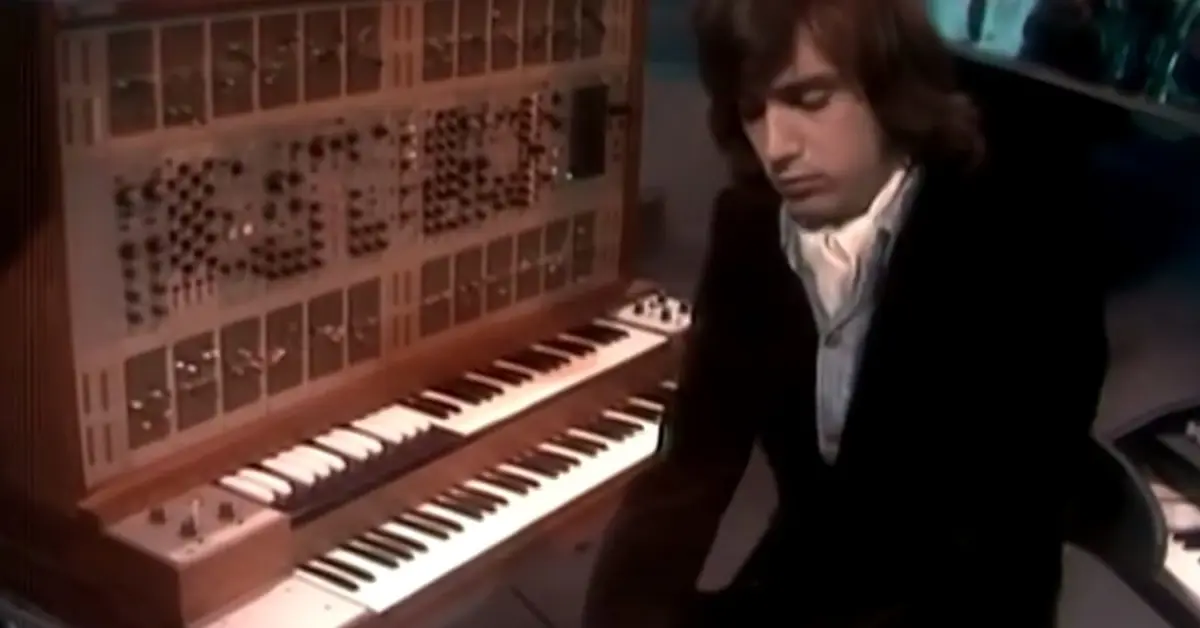
Jean-Michel Jarre, the French composer and producer widely regarded as the godfather of modern electronic music, has officially announced the upcoming release of the 50th-anniversary editions of his seminal work, Oxygene. This milestone celebration honors an album that not only redefined the parameters of instrumental music but also became the best-selling instrumental electronic record in history. Originally composed and recorded in Jarre’s makeshift home studio in Paris in 1976, Oxygene represents a pivotal moment in 20th-century music, bridging the gap between the avant-garde experiments of the early electronic pioneers and the accessible, melodic synth-pop that would dominate the following decade. The 50th-anniversary edition, scheduled for global release on November 20, 2026, features a meticulous stereo remaster sourced directly from the original 1976 master tapes and, for the first time, a full immersive mix in Dolby Atmos.
The announcement marks a half-century of influence for a record that was initially met with skepticism by the established music industry. In 1976, the concept of a purely electronic, instrumental album with no percussion, no vocals, and long-form compositions was considered a commercial impossibility. However, Jarre’s vision prevailed, eventually selling an estimated 18 million copies worldwide and cementing his place as a cultural icon. The 2026 reissue aims to honor this legacy by utilizing modern audio engineering to enhance the clarity of the original recordings without sacrificing the idiosyncratic warmth of the vintage analog synthesizers that gave the album its unique sonic identity.
The Genesis of a Masterpiece: 1976 in Paris
To understand the significance of the 50th-anniversary release, one must look back at the environment in which Oxygene was conceived. In the mid-1970s, electronic music was largely the domain of academic institutions and high-end laboratories, such as the Groupe de Recherches Musicales (GRM) where Jarre had previously studied under Pierre Schaeffer. At the time, synthesizers were massive, temperamental, and prohibitively expensive machines.
Jarre, however, sought to humanize these machines. Working in his apartment’s kitchen-turned-studio, he utilized a modest array of equipment that would become legendary. His arsenal included the ARP 2600, the EMS VCS3 (affectionately known as "The Putney"), and the Eminent 310 Unique electronic organ, which provided the lush, phasing string textures that define the "Oxygene sound." The recording process was a feat of ingenuity; Jarre used an 8-track Scully tape recorder to layer sounds, often pushing the limits of the hardware to create the ethereal, bubbling soundscapes that suggested a cosmic or environmental journey.
The choice of the title Oxygene was a deliberate nod to the burgeoning environmental movement. Jarre intended the music to reflect the state of the planet—both its beauty and its fragility. This thematic depth, combined with the album’s innovative use of white noise to simulate wind and waves, created a cinematic experience that resonated with a global audience.
Technical Restoration and Dolby Atmos Integration
The centerpiece of the 50th-anniversary edition is the commitment to sonic authenticity. Jarre has expressed that while digital technology offers endless possibilities for alteration, the goal of this remaster was preservation. By returning to the original analog tapes, engineers were able to capture the specific "depth, movement, and life" that Jarre believes characterizes the 1976 recording. The remastering process focused on eliminating the hiss and degradation inherent in half-century-old magnetic tape while maintaining the harmonic richness of the original voltage-controlled oscillators.
The inclusion of a Dolby Atmos mix represents a significant evolution for the album. Electronic music, by its nature, is spatial. In 1976, Jarre was limited by stereo panning; in 2026, the Dolby Atmos format allows the "bubbling" sequences of "Oxygene (Part II)" and the soaring leads of "Oxygene (Part IV)" to move through a three-dimensional space. This immersive experience is designed to place the listener inside Jarre’s home studio, surrounded by the textures and tones of his vintage synthesizers.
Jarre stated during the announcement that this remaster is the most faithful representation of his original 1976 vision. "When I created Oxygene, I was working directly with analogue instruments and tape," Jarre noted. "The sound had a particular depth… For this anniversary edition, we returned to the original tapes with the aim of preserving that character rather than changing it."

A Timeline of the Oxygene Legacy
The journey of Oxygene from a rejected demo to a global phenomenon is a testament to the album’s enduring appeal. The following timeline outlines the key milestones in the history of the work:
- 1976: Jarre records Oxygene over several months in his home studio. After being rejected by several major labels, it is released in France by Les Disques Motors, a label owned by Francis Dreyfus.
- 1977: The album receives an international release through Polydor. It reaches Number 2 on the UK Albums Chart and breaks into the Billboard 200 in the United States. "Oxygene (Part IV)" becomes a hit single, reaching the Top 10 in multiple countries.
- 1979: Jarre performs a massive outdoor concert at the Place de la Concorde in Paris. The event, attended by over one million people, sets a Guinness World Record and introduces the "mega-concert" format, with Oxygene serving as the musical foundation.
- 1997: To mark the 20th anniversary, Jarre releases Oxygene 7–13, a sequel that utilizes the same vintage synthesizers to expand on the original themes.
- 2007: For the 30th anniversary, Jarre records Oxygene: Live in Your Living Room, a special performance filmed in 3D using the original instruments to demonstrate how the music was created without sequencers.
- 2016: On the 40th anniversary, Jarre completes the trilogy with Oxygene 3, which was released alongside the previous two installments in a comprehensive box set.
- 2026: The 50th-anniversary edition is announced, featuring the definitive stereo remaster and the first Dolby Atmos mix.
Industry Impact and Cultural Significance
The release of Oxygene in 1976 is often cited as the moment electronic music became "pop." Unlike the rhythmic, robotic structures of Kraftwerk or the dark, brooding atmospheres of Tangerine Dream, Jarre’s work was characterized by a distinct French lyricism. He introduced melody and "space" into the genre, making it accessible to listeners who were otherwise uninterested in experimental music.
Statistically, the album’s impact is staggering. It has spent over 200 weeks on various global charts and has been certified Gold or Platinum in dozens of territories. In the United Kingdom alone, it was certified Platinum by the BPI, an extraordinary feat for a non-vocal album. Its influence extends beyond music sales; the album’s cover art, featuring a skull emerging from a peeled-back Earth (designed by Michel Granger), remains one of the most recognizable images in music history, symbolizing the ecological concerns that have only become more pressing in the decades since.
Musicologists often point to Oxygene as a precursor to ambient music, new age, and modern trance. The way Jarre utilized the Eminent 310’s Small Stone phaser to create "shifting clouds" of sound became a blueprint for countless producers. Modern electronic artists, from Air to Daft Punk, have cited Jarre’s early work as a fundamental influence on their sound design and production philosophies.
Official Responses and Market Availability
The announcement of the 50th-anniversary edition has generated significant excitement within the audiophile and synthesizer communities. Industry analysts suggest that the release will likely see high demand for physical formats, particularly high-fidelity vinyl and Blu-ray audio discs that can support the Dolby Atmos stream.
Pre-orders for the Oxygene 50th Anniversary Edition opened shortly after the announcement, with various tiers of availability. While standard digital and physical editions will be widely available through retailers like Amazon, Jarre’s official website will host limited-edition versions. These are expected to include expanded liner notes, rare photographs from the 1976 recording sessions, and potentially, technical diagrams of the signal chains used to achieve the album’s signature sounds.
Retailers have noted that "heritage" electronic releases have seen a surge in interest over the last five years, driven by a younger generation of listeners discovering the roots of the genre through streaming platforms and a renewed interest in analog hardware. The 50th anniversary of Oxygene is positioned to be a major event in the 2026 music calendar, appealing to both longtime fans and new listeners seeking the high-resolution "definitive" version of this classic.
Analysis: The Enduring Relevance of Oxygene
As the music world looks toward the November 2026 release, the question of why Oxygene remains relevant 50 years later is easily answered by its timelessness. In an era where music is often over-compressed and digitally "perfect," the slight instabilities and organic textures of Jarre’s 1976 recordings offer a sense of humanity. The album does not sound like a relic of the 70s; rather, it sounds like a vision of a future that we are still inhabiting.
The 50th-anniversary edition is more than just a commercial reissue; it is a cultural retrospective of an artist who dared to imagine a new musical language. By utilizing the original tapes and modern Atmos technology, Jean-Michel Jarre ensures that Oxygene will continue to breathe for another generation of listeners, maintaining its status as a cornerstone of the electronic music canon. The transition from the kitchen studio in Paris to the global stage—and now to the immersive spatial audio of the future—completes a 50-year arc of innovation that few artists in any genre can claim.
