

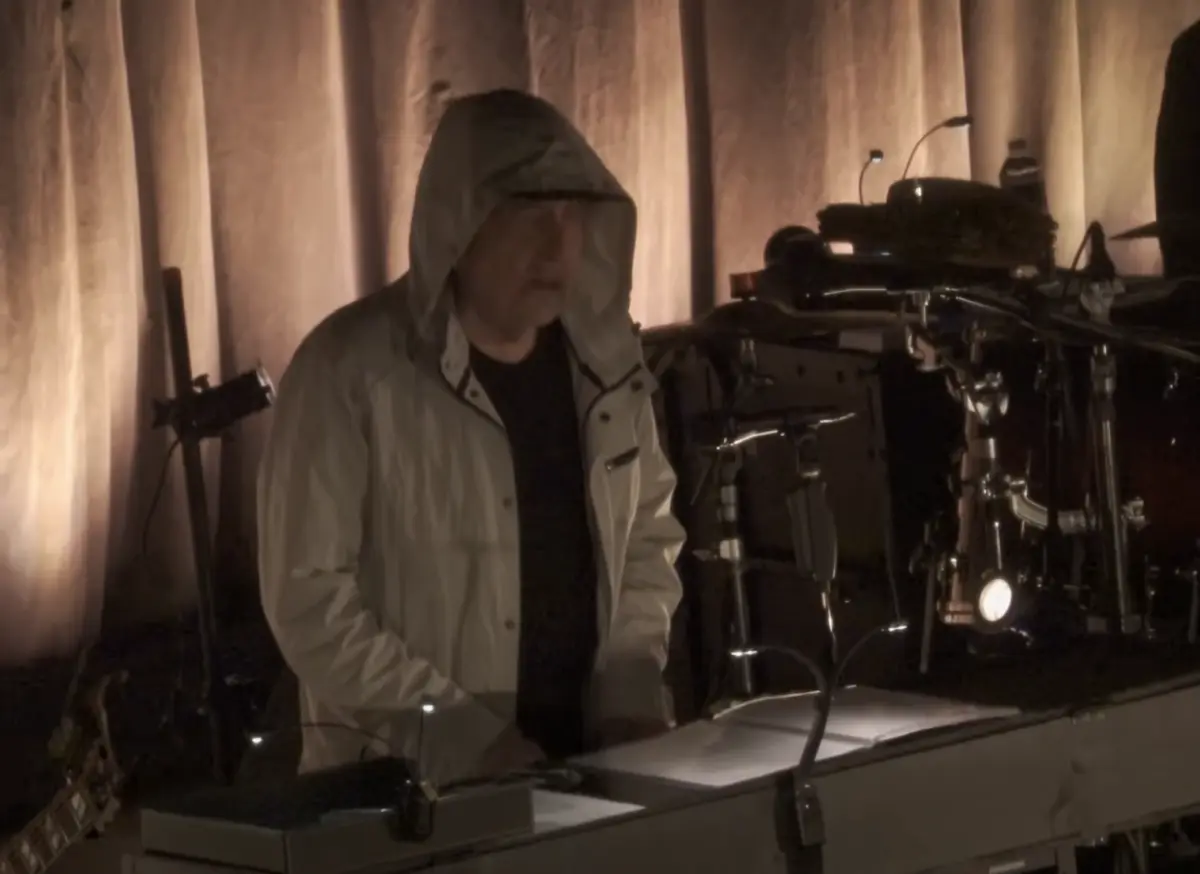
Bob Dylan inaugurated his "Lights Of Autumn" tour last night, October 17, at Oslo Spektrum in Norway, delivering a captivating 19-track set that underscored his enduring commitment to artistic evolution and reinterpretation. The performance marked the kickoff of a new leg in the legendary musician’s storied career, showcasing both familiar classics and unexpected selections, all framed by Dylan’s characteristic stage presence at the electric keyboard. The evening was particularly notable for the live debuts of two covers, a significant revival, and profound lyrical alterations to one of his most iconic compositions, "Tangled Up In Blue."
A Night of Artistic Reinterpretation: The Oslo Kickoff
The atmosphere at Oslo Spektrum, a prominent multi-purpose arena known for hosting major international acts, was charged with anticipation as Dylan took the stage. For the entirety of the 19-song performance, the Nobel laureate remained seated at the electric keyboard, a staple of his live setup for over a decade. This consistent choice highlights his deliberate shift from his earlier guitar-centric performances, allowing him to explore new textural and harmonic dimensions within his extensive catalog. The setlist itself was a carefully curated journey through his diverse oeuvre, blending fan favorites with deep cuts, but it was the specific choices and transformations that truly defined the night.
Lyrical Alchemy: A Transformed "Tangled Up In Blue"
Perhaps the most significant moment of the evening for many long-time followers was Dylan’s rendition of "Tangled Up In Blue," a cornerstone track from his seminal 1975 album, Blood on the Tracks. Not only was this the first time Dylan had performed the song since 2018, but he also unveiled entirely new lyrics, particularly in the third, fourth, fifth, and sixth verses. This practice of lyrical re-invention is not new for Dylan; "Tangled Up In Blue" itself has undergone numerous lyrical permutations over the decades, reflecting his belief that a song is a living entity, subject to continuous revision and reinterpretation. These changes often imbue familiar narratives with fresh perspectives, blurring the lines between autobiography and fiction, and inviting listeners to rediscover the emotional core of the work.
The most substantial alterations were evident in the third and fourth verses, transcribed from audience recordings:
Way up in the frozen woods
Teardrops touch the sky
The leaves are falling one by one
And the moments passing by
Sometimes I get so tired
Sometimes I’m getting away
Lucky you found another
Tomorrow’s another day
And all the while I was alone
The past was close behind
Seen a lot of people but
I never escaped her mind
She just grew
Tangled up in blueThings were gettin’ to cost too much
Love had slipped through my hand
Certain truths are dancing
I never did understand
You bury the hatchet
You put her to bed
Sometime you go for a ride
Nothing ever looks the same
After you’ve been on the other side
It turns around watch it disappear
Whatever I was looking at
He never did find it here
Neither did you
Tangled up in blue
These new verses evoke starker imagery, speaking of solitude, the inexorable passage of time, and the enduring impact of past relationships. Phrases like "frozen woods" and "teardrops touch the sky" paint a poignant picture, while lines such as "Nothing ever looks the same / After you’ve been on the other side" suggest a deeper, more existential reflection on life’s experiences and consequences. The lyrical shifts reinforce Dylan’s status as a poet constantly refining his own mythology, offering new facets to a narrative that has resonated with generations.
Unearthing Rarities: Live Debuts and Resurrections
Beyond the reimagined classic, the Oslo concert provided two highly anticipated live debuts: Randy Newman’s poignant "Louisiana 1927" and Guy Clark’s evocative "Dublin Blues." Dylan’s choice of covers is always scrutinized by fans, often revealing his current artistic fascinations or thematic leanings.
Randy Newman’s "Louisiana 1927" is a powerful narrative ballad recounting the devastating Great Mississippi Flood of 1927. Its inclusion in Dylan’s set could be interpreted as a commentary on resilience in the face of natural disaster, social injustice, or a broader reflection on historical memory and collective trauma. Newman, a master songwriter in his own right, shares with Dylan a keen observational eye and a penchant for storytelling through song.
Guy Clark’s "Dublin Blues" is a beloved track from the late Texan troubadour, celebrated for its intricate storytelling and heartfelt sincerity. Clark, a revered figure in the Americana and folk traditions, represented a strain of honest, unvarnished songwriting that Dylan has long championed. Performing "Dublin Blues" pays homage to a contemporary master and signals Dylan’s continued engagement with the rich tapestry of American roots music. Both covers demonstrate Dylan’s reverence for the craft of songwriting and his ability to inhabit and interpret the work of others with profound personal resonance.
Adding to the evening’s rarity factor was the return of "Crash On The Levee (Down In The Flood)," a track from The Basement Tapes, performed for the first time since 2005. This song, with its themes of impending disaster and urgent escape, resonates thematically with "Louisiana 1927," suggesting a potential overarching narrative or mood for the "Lights Of Autumn" tour, perhaps exploring vulnerability, upheaval, and survival. The inclusion of such a deep cut, after nearly two decades, highlights Dylan’s willingness to delve into any corner of his vast catalog, surprising even the most dedicated concertgoers.
The Ever-Evolving Ensemble: A New Face on Guitar
True to his recent touring habits, Dylan unveiled a new guitarist for the "Lights Of Autumn" tour: Mike Seal. This marks Seal as the sixth guitarist to join Dylan’s band in a relatively short period, following a series of rapid changes that have intrigued and sometimes bewildered observers. Over the past year, Dylan has enlisted a succession of talented musicians, including Doug Lancio, Bob Britt, Julian Lage, Joel Paterson, and Jad Tariq. This frequent rotation of band members, particularly in the lead guitar role, is a distinctive feature of Dylan’s current touring philosophy.
While many artists maintain a stable lineup for years, Dylan’s approach suggests a deliberate artistic choice. It allows for fresh interpretations of his material, prevents stagnation, and keeps the musical dynamic fluid and unpredictable. Each new guitarist brings a unique style and sensibility, forcing Dylan and the rest of the band to adapt, potentially leading to spontaneous moments of creativity and varied arrangements of familiar songs. This constant flux aligns with Dylan’s broader artistic ethos of never settling into a predictable pattern.
The "Never Ending Tour" Continuum
The "Lights Of Autumn" tour is the latest chapter in what has become colloquially known as Dylan’s "Never Ending Tour," a continuous string of performances that began in 1988 and, despite intermittent breaks and lineup changes, has largely persisted for over three decades. This tour concept defies traditional album-cycle touring, instead presenting Dylan as a perennial live performer, constantly engaging with his music in evolving contexts. The Oslo kickoff reaffirms his unwavering commitment to this mode of artistic expression, demonstrating that even at 82, his creative engine remains robust and unpredictable. Each show on this tour is not merely a rendition of past glories but an active re-examination and re-imagination of his life’s work.
Beyond the Stage: Dylan’s Unconventional Creative Outlets
In a further testament to his diverse and often enigmatic creative pursuits, it was noted that Dylan (or someone on his behalf) continues to post "slop fiction" on his Patreon account. This unconventional venture, separate from his musical output, offers a glimpse into another facet of his artistic mind. While the nature and reception of this written content vary, it underscores Dylan’s boundless creative energy and his willingness to experiment with different forms of expression, often outside conventional expectations. This foray into digital publishing, alongside his musical tours and other projects, paints a picture of an artist continually exploring new avenues for creative output, maintaining an element of surprise and intellectual curiosity that has characterized his entire career.
Fan and Critical Reception
The initial reactions from fans attending the Oslo concert and those following online were largely enthusiastic, with particular excitement surrounding the lyrical changes to "Tangled Up In Blue" and the unexpected covers. Dylan’s capacity to surprise and challenge his audience remains undiminished. Critics often laud his ability to keep his music fresh, preventing it from becoming a mere nostalgia act. The "Lights Of Autumn" tour, with its early indications of renewed lyrical invention and thoughtful song selection, is anticipated to be another compelling chapter in the ongoing narrative of Bob Dylan’s unparalleled artistic journey. The tour promises further insights into his evolving interpretations and perhaps more surprises as it progresses.
For those eager to experience these developments firsthand, clips from the Oslo performance are available below, offering a window into Dylan’s latest creative endeavors.
[Embed YouTube Video: Bob Dylan. Tangled Up In Blue. Lights of Autumn Tour. Oslo. October 17, 2026]
[Embed YouTube Video: Bob Dylan. Dublin Blues from last night in Oslo. Song by Guy Clark. Lights of Autumn Tour]
