

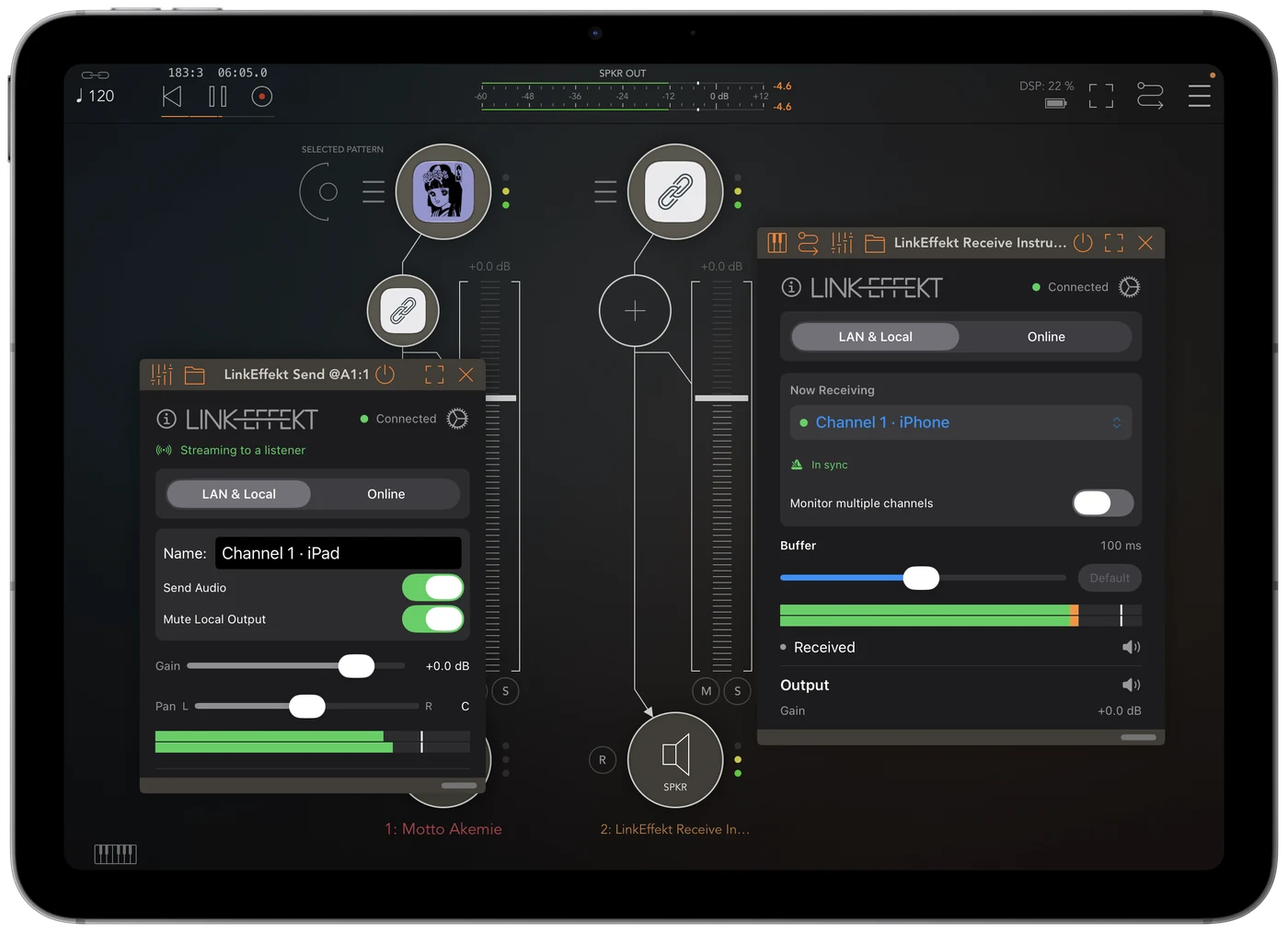
The release of LinkEffekt version 2.1 marks a significant milestone in the evolution of cross-platform music production utilities, as developer Alexander Joannou introduces comprehensive MIDI controller sharing to an already robust audio routing framework. This update facilitates a seamless bridge between iOS, iPadOS, and macOS, allowing musicians and sound engineers to treat disparate devices as a single, unified production environment. By extending the application’s core functionality beyond audio streaming to include bi-directional MIDI data, LinkEffekt 2.1 addresses a long-standing bottleneck in mobile-centric workflows: the difficulty of synchronizing control surfaces and sequencing data across multiple hardware units without the need for complex external hardware interfaces.
Core Functionality and Technical Architecture
At its foundation, LinkEffekt is designed to operate as an AUv3 (Audio Unit version 3) plugin suite, a choice that ensures deep integration within modern digital audio workstations (DAWs) and host applications such as AUM, Loopy Pro, Logic Pro, and Cubasis. Unlike traditional routing solutions that often require a standalone background application to manage connections—frequently leading to increased CPU overhead and potential stability issues—LinkEffekt functions directly within the host’s signal chain.
The system utilizes three primary plugin components to manage the flow of data. The "Send" plugin is inserted onto a specific track or bus within a host application, where it captures audio or MIDI data and prepares it for transmission. Conversely, the "Receive" and "Receive Instrument" plugins are used on the destination device or application to ingest the incoming stream. This modular approach allows for highly granular control; a producer can, for instance, stream individual drum tracks from an iPad into a Mac-based Logic Pro session for final mixing, while simultaneously sending MIDI clock and control data back to the iPad to trigger hardware-modeled synthesizers.
The introduction of MIDI controller sharing in version 2.1 specifically targets the "Receive Instrument" and "Receive" modules, enabling users to map physical hardware connected to one device to parameters on another. This effectively transforms an iPhone or iPad into a remote processing unit or an expansion of a desktop studio’s DSP (Digital Signal Processing) capabilities.
Historical Context and Development Timeline
To understand the impact of LinkEffekt 2.1, one must look at the trajectory of mobile music production over the last decade. Historically, the iOS platform was hindered by the "sandbox" nature of its operating system, which prevented applications from communicating with one another. The introduction of Inter-App Audio (IAA) and Audiobus in the early 2010s provided the first glimpses of a connected ecosystem, but these technologies were often plagued by synchronization drift and limited multi-channel support.
The transition to the AUv3 standard represented a paradigm shift, allowing multiple instances of an app to run within a host, much like VST or AU plugins on a desktop. However, even with AUv3, the challenge remained: how to move high-quality, low-latency audio between different physical devices without relying on traditional analog cables and expensive audio interfaces for every connection.
Alexander Joannou’s development of LinkEffekt was a response to this specific gap in the market. The initial versions focused on the "Link" aspect—leveraging Ableton’s Link protocol to ensure that tempo and phase remained synchronized across devices. The progression to version 2.1 reflects a move toward "total integration," where the distinction between a mobile app and a desktop plugin becomes increasingly blurred.
Connectivity Modes and Synchronization Protocols
LinkEffekt 2.1 offers three distinct modes of connectivity, each optimized for different production scenarios. The primary method is local network streaming via Wi-Fi or a hardwired Ethernet/USB connection. For studio environments, a wired connection is generally recommended to minimize "jitter"—the variance in time between data packets—which can degrade audio quality or cause timing errors in MIDI sequences.
For mobile producers, the "Inter-App" mode allows LinkEffekt to route audio between different applications residing on the same device. While some DAWs have built-in routing, LinkEffekt provides a standardized interface that remains consistent regardless of the host being used.
Perhaps the most ambitious feature is the "Online Mode." This allows for the streaming of audio and MIDI over the internet, enabling real-time collaboration between artists in different geographical locations. While latency is an inherent factor in over-the-internet transmission, LinkEffekt employs sophisticated buffering algorithms to maintain signal integrity.
Synchronization is handled through two primary methods:
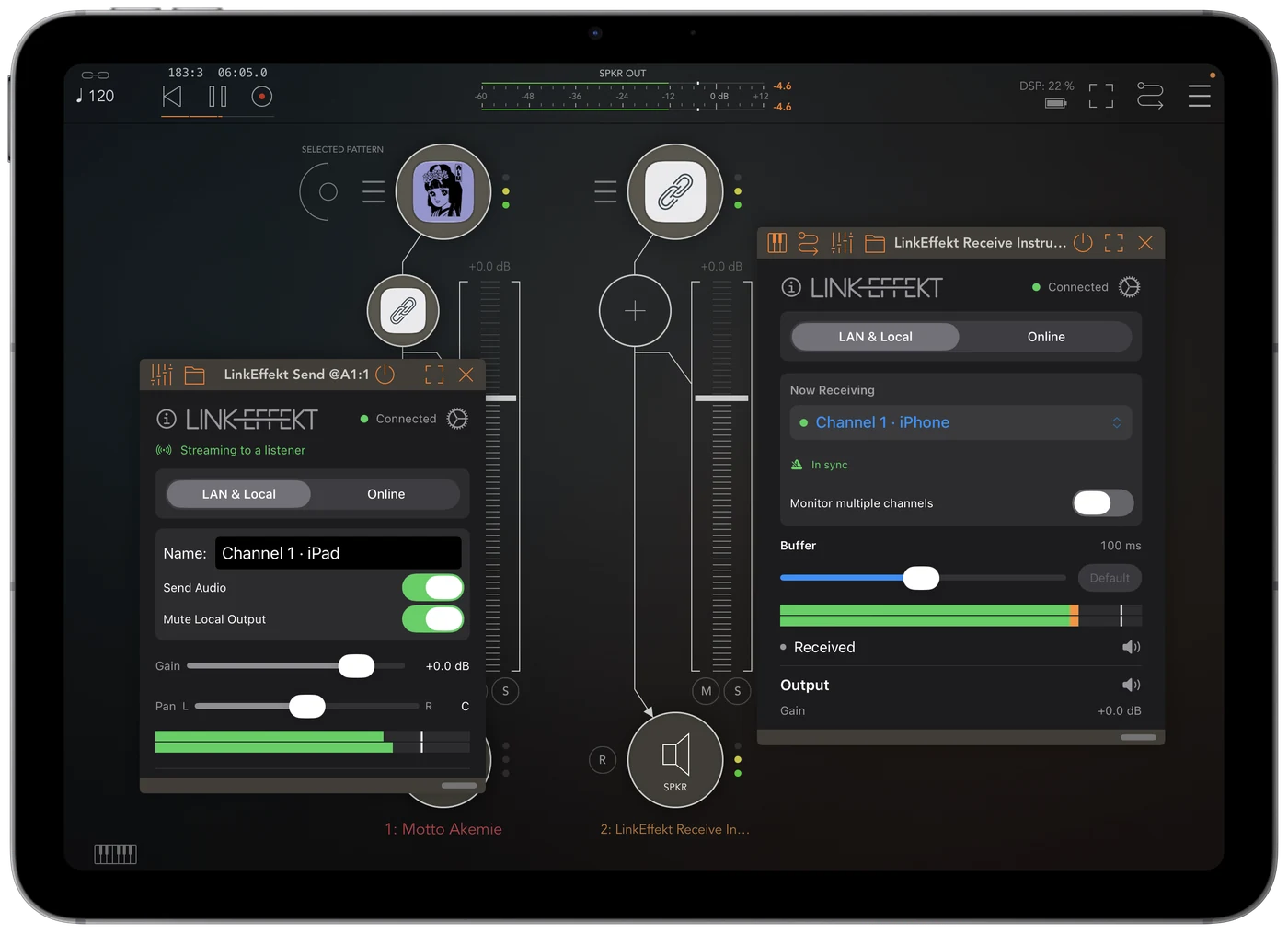
- Host-Native Sync: In advanced hosts like AUM and Logic Pro, LinkEffekt can leverage the host’s own timing engine to ensure that audio arriving from a remote source stays perfectly in time with the local project.
- Bar Sync: For host applications that do not natively support sample-accurate external synchronization, LinkEffekt utilizes a proprietary "Bar Sync" feature. This mechanism aligns the incoming audio or MIDI stream to the next available downbeat of the receiving application, ensuring that loops and sequences remain musically coherent even if there is a slight delay in the initial connection.
Supporting Data and Ecosystem Requirements
The expansion of LinkEffekt into the macOS space is timed with the broader convergence of Apple’s operating systems. With the advent of Apple Silicon (M1, M2, and M3 chips), the architectural divide between the iPad and the Mac has narrowed significantly. LinkEffekt 2.1 requires macOS 14 (Sonoma) or later on Apple Silicon systems to support MIDI routing, a requirement that highlights the application’s reliance on modern Core Audio and Core MIDI frameworks.
According to market data regarding mobile music production, the use of iPads as professional studio tools has grown by an estimated 25% annually over the past three years. This growth is driven by the increasing power of mobile processors and the availability of professional-grade software. LinkEffekt sits at the center of this growth, providing the "glue" that allows these mobile devices to interface with established desktop workflows.
Technical specifications for LinkEffekt 2.1 include:
- Audio Quality: Support for high-resolution audio streaming with minimal compression, preserving the frequency response and dynamic range of professional recordings.
- MIDI Latency: Optimized for sub-10ms latency in local wired configurations, which is the threshold generally accepted by professional keyboardists and percussionists.
- Instance Limits: The free version allows for a single Send and Receive pair, while the "Unlimited" tier removes all instance restrictions, subject only to the host device’s CPU and RAM capacity.
Industry Implications and Professional Response
The professional music community has responded positively to the update, particularly those involved in live electronic music performance. For performers who use an iPad for soft synths or effects processing while running a main set from a MacBook, the ability to share MIDI controllers without re-plugging cables mid-set is a significant logistical advantage.
Industry analysts suggest that tools like LinkEffekt are instrumental in reducing the "barrier to entry" for high-end production. By allowing a user to utilize an older iPhone as an extra effects processor or an iPad as a dedicated MIDI sequencer for a desktop DAW, LinkEffekt extends the lifecycle of hardware and maximizes the utility of the user’s existing Apple ecosystem.
Furthermore, the "Online Mode" is being viewed as a potential disruptor for remote session work. Session musicians can now "plug in" to a producer’s DAW from across the world, providing live takes that are synchronized to the producer’s project tempo. While other services offer similar functionality, LinkEffekt’s integration as an AUv3 plugin makes it uniquely accessible to the mobile-first generation of creators.
Pricing Structure and Accessibility
Alexander Joannou has maintained a tiered pricing model to ensure accessibility while supporting continued development. LinkEffekt is available as a free download on the iOS App Store, providing a "proof of concept" for users to test latency and stability on their specific network setups. This free version includes one Send and one Receive instance, along with MIDI clock support for a single hardware device.
The "LinkEffekt Unlimited" upgrade is offered as a one-time in-app purchase of €14.99. This purchase unlocks the full potential of the system, including:
- Unlimited plugin instances for complex multi-track routing.
- Access to the Online mode for remote collaboration.
- Advanced MIDI routing and controller sharing features.
- Multi-channel receiving capabilities, allowing a single Receive plugin to manage multiple incoming streams.
This pricing strategy eschews the controversial subscription model that has become prevalent in the software industry, a move that has been praised by the user community for its transparency and long-term value.
Conclusion and Future Outlook
LinkEffekt 2.1 represents a sophisticated solution to the complexities of modern, multi-device music production. By prioritizing synchronization and ease of use within the AUv3 framework, Alexander Joannou has provided a tool that is both a problem-solver for current workflows and a catalyst for new methods of collaboration.
As Apple continues to harmonize the capabilities of iPadOS and macOS, the relevance of utilities like LinkEffekt is expected to grow. Future iterations may see even deeper integration with cloud services or the expansion of MIDI 2.0 support, further cementing the application’s role as an essential component of the modern digital studio. For now, version 2.1 stands as a definitive update that transforms the iPhone, iPad, and Mac into a more cohesive and powerful musical instrument.
