

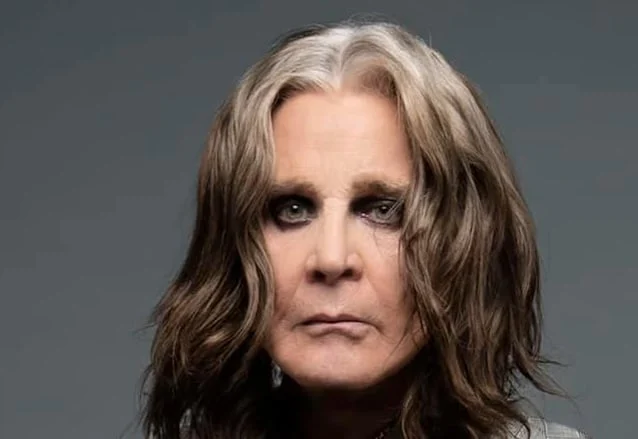
The hallowed grounds of Hellfest, Europe’s colossal metal pilgrimage, are set to receive a monumental tribute to one of heavy music’s most enduring icons. This year’s edition of the esteemed festival, scheduled to electrify Clisson, France, from June 18th to June 21st, will host the grand unveiling of a towering six-meter (approximately 19.7 feet) statue of the legendary Prince of Darkness, Ozzy Osbourne. This significant installation, positioned prominently near the festival’s main entrance, serves as a profound testament to Osbourne’s indelible mark on the global music landscape.
The first public glimpse of this imposing effigy was revealed by Ozzy Osbourne’s devoted widow and longtime manager, Sharon Osbourne, during a distinguished appearance at MIDEM 2026 in Cannes, France, on February 6th. Speaking from the Palais des Festivals, Sharon Osbourne shared a photograph of the colossal artwork, her voice resonating with pride and emotion. "Oh, there he is. Look at him, a rock god," she declared, her sentiment underscoring the profound respect and admiration the statue commands. "That is going to debut at Hellfest, and that is June 18th. And the whole family will be there to see it. And it’s such a great tribute. It’s amazing. So, I can only thank [Hellfest director] Ben [Barbaud]. Just bless you. It’s an amazing piece of art." Her words encapsulate the deep personal significance of this artistic endeavor, a final, larger-than-life recognition for a man who has captivated generations with his raw talent and inimitable persona.
Hellfest, a cornerstone of the European heavy metal calendar, has a well-established tradition of honoring musical titans with significant public art. This upcoming tribute to Ozzy Osbourne follows a similar gesture made in June 2022, when a new, formidable statue of Motörhead’s iconic frontman, Ian Fraser "Lemmy" Kilmister, was inaugurated at the festival. This updated Lemmy statue replaced an earlier sculpture that had reportedly succumbed to the ravages of time and the elements, its plaster composition proving susceptible to crumbling. The 2022 unveiling of the Lemmy statue was a poignant moment, celebrating a figure who, like Osbourne, epitomized the uncompromising spirit of rock and roll. The artistic vision behind the Lemmy statue was credited to Caroline Brisset, a rising French sculptor whose distinctive style, characterized by a fusion of the concrete and the abstract, explores themes of energy, fascination, and fear, all while aiming for a dreamlike aesthetic. The choice of Brisset for the Lemmy tribute may offer a subtle indication of Hellfest’s commitment to commissioning artists who can translate the raw power and complex legacies of their subjects into compelling visual forms.
The Legacy of Ozzy Osbourne: A Farewell and a Celebration
The unveiling of the Ozzy Osbourne statue arrives in the wake of the beloved musician’s passing. Official records confirm that Ozzy Osbourne died on July 22, 2025, succumbing to a heart attack. His death certificate, filed in London, also noted that Osbourne had been managing coronary artery disease and Parkinson’s disease. This information, while somber, provides a factual backdrop to the outpouring of tributes and memorials that have followed.
The private funeral service for Ozzy Osbourne was held on July 31, 2025, at the expansive 250-acre estate the legendary Black Sabbath singer and his wife had purchased in 1993 in Buckinghamshire, England. The intimate ceremony was attended by a select group of 110 close friends and family members, a testament to the Osbournes’ desire for a personal farewell. Notable attendees included his Black Sabbath bandmates, as well as a constellation of rock and metal luminaries such as Robert Trujillo (Metallica), Rob Zombie, Zakk Wylde, Marilyn Manson, and Corey Taylor (Slipknot). This gathering of musical royalty underscored the profound impact Osbourne had not only on his fans but also on his peers within the industry.
Prior to the private funeral, thousands of devoted fans congregated in the streets of Birmingham, Osbourne’s birthplace, to participate in an emotional public tribute. Sharon Osbourne, accompanied by their children Aimée, Kelly, and Jack, stood alongside the grieving masses, sharing in the collective outpouring of love and remembrance for the iconic frontman. This dual approach to mourning – a private family service and a large-scale public commemoration – reflects the dual nature of Osbourne’s life: a deeply private individual who was also a global rock and roll phenomenon.
A Final Performance: The "Back To The Beginning" Charity Concert
A significant event in the final chapter of Ozzy Osbourne’s public life was his reunion with the original lineup of Black Sabbath for the "Back To The Beginning" charity concert. This performance, which took place approximately eight months prior to his death, marked a poignant and powerful farewell. The original quartet – guitarist Tony Iommi, bassist Geezer Butler, and drummer Bill Ward – joined Osbourne on stage in their native Birmingham for what proved to be his last public performance.
The concert was structured into two distinct sets, showcasing both Osbourne’s prolific solo career and the enduring legacy of Black Sabbath. Osbourne first delivered a five-song set with his accomplished solo band, featuring guitarist Zakk Wylde, bassist Mike Inez, keyboardist Adam Wakeman, and drummer Tommy Clufetos. His solo performance drew heavily from his seminal 1980 debut album, "Blizzard of Ozz," featuring iconic tracks like "I Don’t Know," "Mr. Crowley," "Suicide Solution," and the anthemic "Crazy Train." He also included the introspective 1991 ballad "Mama, I’m Coming Home" from the "No More Tears" album, demonstrating the breadth of his solo output.
Following his solo performance, the original Black Sabbath members joined Osbourne on stage to perform four of the band’s most beloved classics: "War Pigs," "Iron Man," "N.I.B.," and "Paranoid." This reunion was a momentous occasion for fans, bringing together the founding members of a band that defined a genre. At 76 years old, Osbourne sang from a black throne, appearing visibly moved by the experience. His heartfelt address to the audience, "You have no idea how I feel. Thank you from the bottom of my heart," resonated deeply, capturing the profound emotional weight of the occasion for both the performer and the adoring crowd. This final performance served as a fitting capstone to a career spanning over five decades, a powerful affirmation of his enduring connection with his music and his fans.
The Artistic Significance of the Hellfest Statue
The decision by Hellfest to erect a six-meter statue of Ozzy Osbourne is more than just a celebratory gesture; it is an act of cultural preservation and artistic acknowledgment. Festivals like Hellfest serve as modern-day cathedrals for heavy music enthusiasts, places where the lineage and influence of artists are not only celebrated but also visually immortalized. By commissioning a statue of such magnitude, Hellfest positions Osbourne alongside other giants of the genre who have been similarly honored, creating a permanent landmark that speaks to the enduring power of his music and persona.
The scale of the statue, standing at an imposing six meters, suggests a deliberate intent to create a focal point that commands attention and inspires awe. This deliberate choice of scale is often employed in monumental sculpture to convey a sense of grandeur and lasting significance. It elevates Osbourne from a mere musician to a larger-than-life figure, a deity within the pantheon of rock and roll. Its placement near the Hellfest entrance ensures that every attendee will encounter this tribute, serving as a constant reminder of the festival’s roots and the artists who have shaped its identity.
The involvement of Sharon Osbourne in the unveiling and her enthusiastic endorsement of the project highlights the personal and familial aspect of this tribute. Her role as manager and lifelong partner suggests a deep understanding of Ozzy’s legacy and a desire to ensure it is honored appropriately. Her public acknowledgment of Hellfest director Ben Barbaud further underscores the collaborative nature of such large-scale artistic projects and the importance of strong relationships between artists, their representatives, and major cultural institutions.
The selection of artists for such commemorative works is also a critical factor. While the specific sculptor for the Ozzy Osbourne statue has not yet been publicly announced, the precedent set by Caroline Brisset’s work on the Lemmy statue suggests a potential inclination towards artists who can imbue their creations with both power and artistic depth, translating the raw energy of heavy music into tangible form. The success of the Lemmy statue, in particular, likely influenced Hellfest’s confidence in commissioning further monumental tributes.
Broader Implications and Analysis
The unveiling of the Ozzy Osbourne statue at Hellfest 2026 carries several broader implications for the music industry and cultural heritage. Firstly, it signifies the continued relevance and enduring appeal of classic heavy metal artists. In an era often dominated by fleeting trends and rapidly evolving digital music landscapes, the dedication of such significant resources to memorializing figures like Osbourne and Lemmy underscores the lasting power of their contributions. It demonstrates that the genre’s foundational artists are not merely historical footnotes but continue to hold immense cultural capital.
Secondly, it highlights the role of large-scale music festivals as cultural hubs that extend beyond mere performance. Hellfest, in this context, is not just a place to experience live music; it is a curated environment that fosters a sense of community, tradition, and historical appreciation. The permanent installation of sculptures transforms the festival grounds into an open-air museum, a place where fans can engage with the legacy of their heroes in a tangible way. This approach can also be seen as a strategy to enhance the festival’s brand and draw, offering unique attractions that distinguish it from competitors.
Thirdly, the timing of the unveiling, occurring after Osbourne’s passing, imbues the monument with a layer of solemn remembrance. It serves as a memorial, a place for fans to pay their respects and reflect on the impact of his music. This makes the statue a focal point for collective grief and celebration, a shared space where the legacy of a beloved artist can be collectively honored. The fact that the entire Osbourne family plans to attend the unveiling further emphasizes this aspect, turning the event into a significant familial and public tribute.
The statue’s existence also raises questions about the future of such artistic tributes. As more legendary artists reach the twilight of their careers or pass away, the demand for public commemorations is likely to grow. Festivals and cities may increasingly look to commission similar large-scale works to honor their musical heroes, potentially leading to a new wave of public art dedicated to the pioneers of various musical genres. The success of these initiatives will depend on the quality of the artwork, the thoughtful selection of artists, and the meaningful integration of these monuments into the cultural landscape.
The financial investment required for such a monumental undertaking is also noteworthy. While specific figures are not public, a six-meter bronze or steel sculpture, especially one requiring intricate design and engineering, represents a substantial commitment. This suggests that organizations like Hellfest are willing to invest significantly in projects that align with their brand identity and contribute to the broader cultural narrative of heavy music.
In conclusion, the forthcoming unveiling of the six-meter Ozzy Osbourne statue at Hellfest 2026 is a momentous occasion that transcends the boundaries of a typical festival event. It is a profound artistic tribute, a poignant memorial, and a powerful statement about the enduring legacy of one of rock and roll’s most iconic figures. As fans gather in Clisson, France, they will not only witness the inauguration of a magnificent piece of art but also participate in a collective act of remembrance and celebration, solidifying Ozzy Osbourne’s place in the annals of heavy music history for generations to come. The statue will stand as a testament to his raw talent, his indomitable spirit, and the profound impact he has had on millions worldwide.
