

Almost a year after the legendary musician Billy Joel was diagnosed with Normal Pressure Hydrocephalus (NPH), his daughter, singer Alexa Ray Joel, has offered an encouraging update on his recovery, highlighting his resilience and commitment to health amidst ongoing physical therapy. The news comes as the music community recently gathered to celebrate Joel’s enduring legacy at a star-studded tribute concert, further underscoring the widespread support for the "Piano Man."
A Journey Towards Recovery: Navigating Normal Pressure Hydrocephalus
Billy Joel, 76, was diagnosed with Normal Pressure Hydrocephalus in May of last year, a neurological condition characterized by an abnormal buildup of cerebrospinal fluid in the brain’s ventricles. This accumulation can exert pressure on brain tissue, leading to a range of symptoms including gait disturbance, cognitive impairment, and problems with bladder control. While the condition often presents in older adults, its symptoms—which can mimic those of Alzheimer’s disease, Parkinson’s disease, or age-related dementia—frequently lead to misdiagnosis. According to the Hydrocephalus Association, NPH is estimated to affect approximately 700,000 Americans, though many cases remain undiagnosed. A key distinguishing factor of NPH is its treatable nature, often through the surgical implantation of a shunt system to drain excess fluid from the brain.
Alexa Ray Joel, speaking to The Hollywood Reporter on the eve of the Carnegie Hall tribute, provided a positive assessment of her father’s progress. "He’s doing physical therapy regularly and he’s doing great. He’s lost weight as he’s on his diet," she affirmed, painting a picture of a proactive and dedicated patient. She lauded his unwavering spirit, stating, "I’m so proud of him. He’s such a trooper, so resilient and committed to being healthy and proactive. He’s a fighter. He’s always been a fighter and talks in his documentary about how life’s like a fight." Her remarks offer a glimpse into the personal fortitude that has defined Joel’s illustrious career and now guides his health journey.
The diagnosis of NPH followed a notable incident last year when Joel experienced a fall after a microphone spin during a performance at Mohegan Sun. The Cleveland Clinic notes that NPH affects "several brain-related abilities, including thinking and concentrating, memory, movement and more," making balance issues a prominent symptom. His daughter recalled his initial downplaying of the incident to spare her anxiety, "He knows I have anxiety and am a neurotic worrier, so he was like, ‘Everything’s fine. It was just a little trip.’ When I saw the footage, I was crying. But then I went with him to the doctors, and we’re on top of everything. I just tell him to stay healthy." This candid insight highlights the familial support system integral to his recovery.
In an interview with Bill Maher last July, Joel himself had addressed his condition publicly, stating, "I feel fine," but candidly admitting that his balance "sucks" and that it feels like "being on a boat." These early acknowledgments underscored the reality of his symptoms while maintaining an optimistic outlook.
A Return to the Stage: Moments of Musical Resurgence
Despite the challenges posed by NPH, Billy Joel has made significant strides in his public appearances, signaling a determined return to the spotlight. His first public performance since the May diagnosis occurred on January 2nd, when he delighted fans in Wellington, Florida. Accompanied by his wife, Alexis Roderick, and their two young daughters, Della and Remy, Joel joined the tribute band Turnstiles at a village amphitheater. After a spontaneous request to "hop on the mic," he performed energetic renditions of "We Didn’t Start the Fire" and "Big Shot," with his daughters dancing joyfully beside him. This intimate mini-set marked a powerful moment of connection with his audience, showcasing his enduring passion for performance.

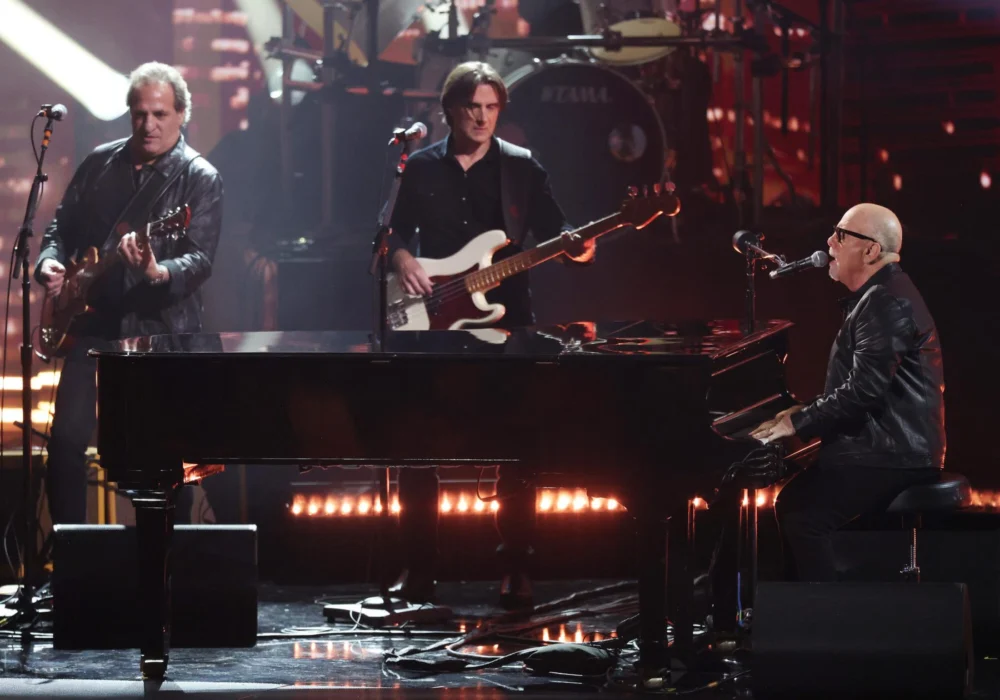
Following this heartwarming return, Joel made another notable public appearance on February 4, 2024, performing onstage at the 66th Annual GRAMMY Awards held at Crypto.com Arena in Los Angeles, California. This performance, captured in the accompanying photograph, further demonstrated his gradual return to the high-profile stage, reassuring fans of his progress and continued involvement in the music industry. These appearances, while not full-length concerts, have served as significant milestones in his recovery, offering glimpses of the iconic performer’s resilience.
Celebrating an Icon: The Carnegie Hall Tribute
A testament to Billy Joel’s profound impact on music and culture, a star-studded tribute fundraiser titled "The Music of Billy Joel" took place at Carnegie Hall on March 12th. The event, held just a day after Alexa Ray Joel’s update, served as a powerful collective homage to the Rock and Roll Hall of Famer’s illustrious career and vast song catalog.
The concert featured an impressive lineup of contemporary artists performing their interpretations of Joel’s classics, including Rob Thomas of Matchbox Twenty, Matt Nathanson, Train’s Pat Monahan, Sammy Rae, Rufus Wainwright, O.A.R.’s Mark Roberge, Jon McLaughlin, and Wyclef Jean, among others. Each artist brought their unique style to Joel’s timeless compositions, highlighting the generational reach and versatility of his songwriting.
The Carnegie Hall event was part of promoter Michael Dorf’s acclaimed Music Of benefit series, an initiative that has significantly contributed to music education. Over the past two decades, this series has successfully raised more than $2 million for various music education programs across New York City, demonstrating a commitment to fostering the next generation of musical talent. The tribute to Billy Joel not only celebrated his artistry but also championed a cause close to the heart of the music community.
Alexa Ray Joel played an active role in encouraging her father’s attendance at the prestigious event. "I said, ‘Dad, you better be there! This is Carnegie Hall. Everyone’s paying tribute to you, and it’s an amazing group of artists,’" she recounted. Joel, known for his meticulous nature, responded, "Let me mark that down." His daughter reflected on the profound significance of the moment, noting, "He was so excited when he first played Carnegie Hall in the ‘70s, so it’s exciting for him to come back decades later and see amazing artists and his daughter pay tribute to him. It’s a full-circle moment." This sentiment captures the emotional weight of the event, both for Joel personally and for the countless fans and artists he has inspired.
The Impact of a Diagnosis: Tour Cancellations and Future Outlook
The diagnosis of Normal Pressure Hydrocephalus has had tangible implications for Billy Joel’s performance schedule. Notably, the condition "forced the cancellation of Joel’s planned 2025 tour dates." This decision underscores the serious nature of NPH and the necessity for Joel to prioritize his health and recovery regimen, including regular physical therapy.
Billy Joel has maintained an extraordinary and historic residency at Madison Square Garden, a testament to his unparalleled connection with New York audiences. This residency, which began in January 2014, saw him perform once a month at "The World’s Most Famous Arena," setting records for most consecutive performances and most performances by any artist at the venue. While the initial news of his diagnosis did not immediately impact his monthly Garden shows, the cancellation of broader 2025 tour dates suggests a more cautious approach to his touring commitments, allowing him to focus on long-term health management.
The indefinite nature of his full return to extensive touring, as well as the long-term prognosis, remains a topic of considerable interest for his global fanbase. However, his recent appearances, particularly the spontaneous performance in Florida and the GRAMMYs stage, offer a hopeful indication that while his schedule may be adjusted, his passion for music and performing remains undimmed. The music industry, accustomed to the rigorous demands of touring, often sees artists scale back their schedules for health reasons. Joel’s proactive approach to his NPH treatment sets a precedent for prioritizing well-being, even for a performer of his legendary status.
Raising Awareness: The Broader Public Health Message
A high-profile diagnosis like Billy Joel’s brings invaluable attention to conditions that might otherwise remain obscure to the general public. Normal Pressure Hydrocephalus, often underdiagnosed due to its subtle and mimicking symptoms, can significantly impact quality of life if left untreated. Joel’s openness about his condition, from his candid remarks on Bill Maher to his daughter’s detailed updates, serves to educate and inform a vast audience.
This increased awareness can lead to earlier recognition of symptoms by individuals and their families, prompting timely medical consultations. Given that NPH is one of the few forms of dementia that can be effectively treated, often with a shunt procedure, early diagnosis is crucial for maximizing recovery and improving patient outcomes. The public discourse surrounding Joel’s health journey could encourage more people experiencing gait problems, cognitive decline, or urinary issues to seek specialized neurological evaluation, potentially uncovering treatable conditions like NPH. This ripple effect of celebrity health disclosures contributes significantly to public health literacy and advocacy for medical research.
A Legacy of Resilience: The Enduring Spirit of the Piano Man
Billy Joel’s career spans over five decades, marked by numerous Grammy Awards, induction into the Rock and Roll Hall of Fame, and an unparalleled discography that includes timeless hits like "Piano Man," "Uptown Girl," "Just the Way You Are," and "Scenes from an Italian Restaurant." His music has resonated with generations, capturing the essence of American life, love, and struggle. The dedication and resilience he now shows in his health recovery mirror the same qualities that have defined his storied career.
His daughter’s description of him as a "trooper" and "fighter" encapsulates the spirit that has enabled him to navigate the highs and lows of the music industry and personal life. The outpouring of support from fellow musicians at Carnegie Hall, the concern from fans worldwide, and the steadfast encouragement from his family highlight the deep affection and respect he commands. As Billy Joel continues his journey of recovery, his story not only underscores the challenges of neurological conditions but also inspires with a message of hope, perseverance, and the enduring power of music. The Piano Man’s legacy, it is clear, continues to be written, not just through his melodies but through his unwavering commitment to life and health.
