

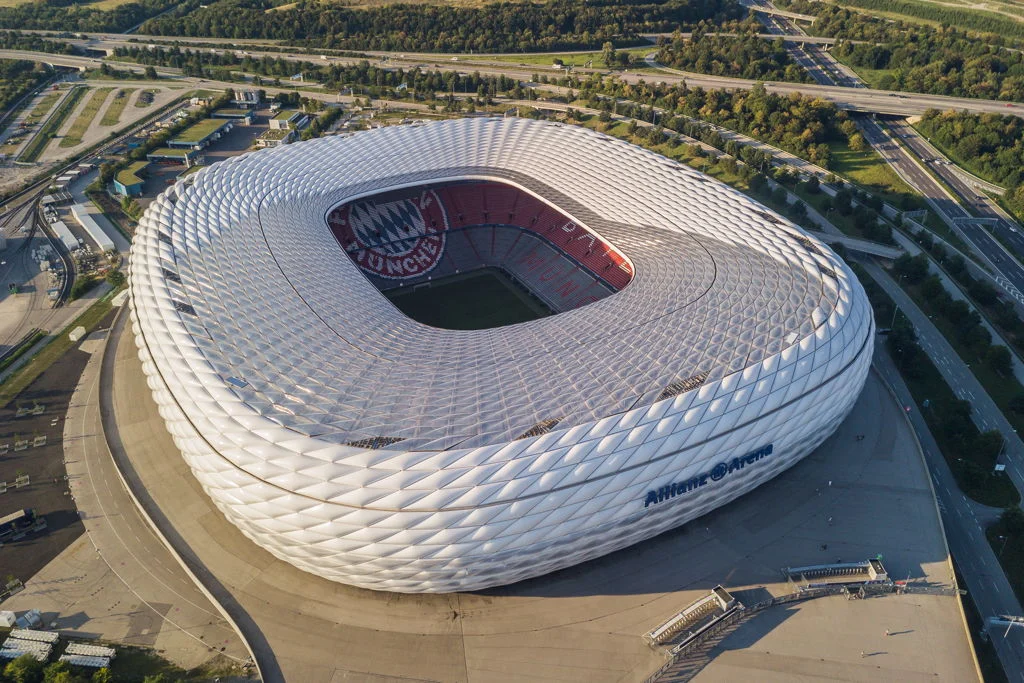
The Allianz Arena, globally recognized as the home of FC Bayern Munich, has officially transitioned into a dual-purpose landmark by launching a dedicated high-performance charging station for electric heavy-duty vehicles. Situated on the bus parking lot directly in front of the stadium, the facility represents a strategic collaboration between the stadium’s management, MAN Truck & Bus, and the charging infrastructure specialist Milence. This initiative marks a significant milestone in the electrification of long-haul freight transport, leveraging the unique infrastructure of one of Europe’s most modern sports venues to support the transition toward zero-emission logistics.
A Strategic Nexus: The Munich North Logistics Corridor
The decision to install heavy-duty charging infrastructure at the Allianz Arena is driven by its exceptional geographical location. Positioned at the Munich North motorway junction, where the A9 and A99 motorways intersect, the site sits at the heart of one of the most heavily trafficked logistics corridors in Europe. According to traffic data, up to 10,000 heavy-duty vehicles pass through this intersection daily. For freight operators, the proximity of the charging hub to the motorway means minimal deviations from planned routes, a critical factor in maintaining the efficiency of tight delivery schedules.
Michael Voll, Head of MAN Transport Solutions, emphasizes that the stadium offers a unique technical advantage: a high-capacity power grid. Modern stadiums are engineered to handle massive electrical surges required for floodlights, massive LED facades, and high-definition broadcasting equipment during matches. However, for the vast majority of the year—approximately 300 days—this electrical capacity remains largely underutilized. By tapping into this existing high-voltage connection, the project bypasses the lengthy and costly process of installing new grid connections, which is currently a primary bottleneck for the expansion of e-truck charging networks across Germany.
Technical Evolution: From High-Performance to Megawatt Charging
The current installation features two high-performance charging stations, which went live in late 2025. These stations are designed to accommodate the current generation of electric trucks, such as the MAN eTGX and eTGS, which require rapid energy replenishment to remain viable for regional and long-distance hauling. However, the project is designed with scalability in mind. The ultimate goal is the integration of the Megawatt Charging System (MCS), a next-generation standard currently being finalized by international bodies.
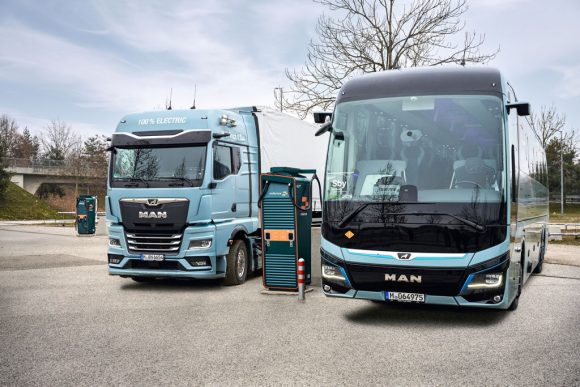
MCS technology is essential for the future of heavy-duty transport, as it allows for charging capacities exceeding 1,000 kilowatts (1 MW). This would enable an electric truck to recharge its battery from 10% to 80% during a driver’s mandatory 45-minute break. Jürgen Muth, Managing Director of the Allianz Arena, confirmed that the stadium’s infrastructure is being prepared to support these massive loads, ensuring the site remains at the cutting edge of transport technology for the next decade.
Operational Synergy and the Role of Milence
While the Allianz Arena owns the physical charging facilities, the operational management is handled by Milence, a joint venture between Volvo Group, Daimler Truck, and the Traton Group (which includes MAN). Milence brings specialized expertise in the heavy-duty sector, focusing on the specific needs of truck drivers, such as wider turning circles, drive-through charging bays, and integrated payment systems compatible with commercial fleet cards.
The partnership creates a synergy where the stadium provides the land and the power, MAN provides the technical consultancy and vehicle integration, and Milence manages the customer-facing operations. This modular approach is intended to serve as a proof-of-concept for how public-private partnerships can accelerate the deployment of green infrastructure without placing the entire financial or operational burden on a single entity.
Balancing Event Logistics and Commercial Charging
One of the primary challenges addressed during the planning phase was the conflict between stadium operations and commercial charging. During match days, the Allianz Arena requires its full electrical capacity to power the venue and the surrounding fan infrastructure. Currently, the truck charging operations are suspended during major events to prioritize the stadium’s core function.
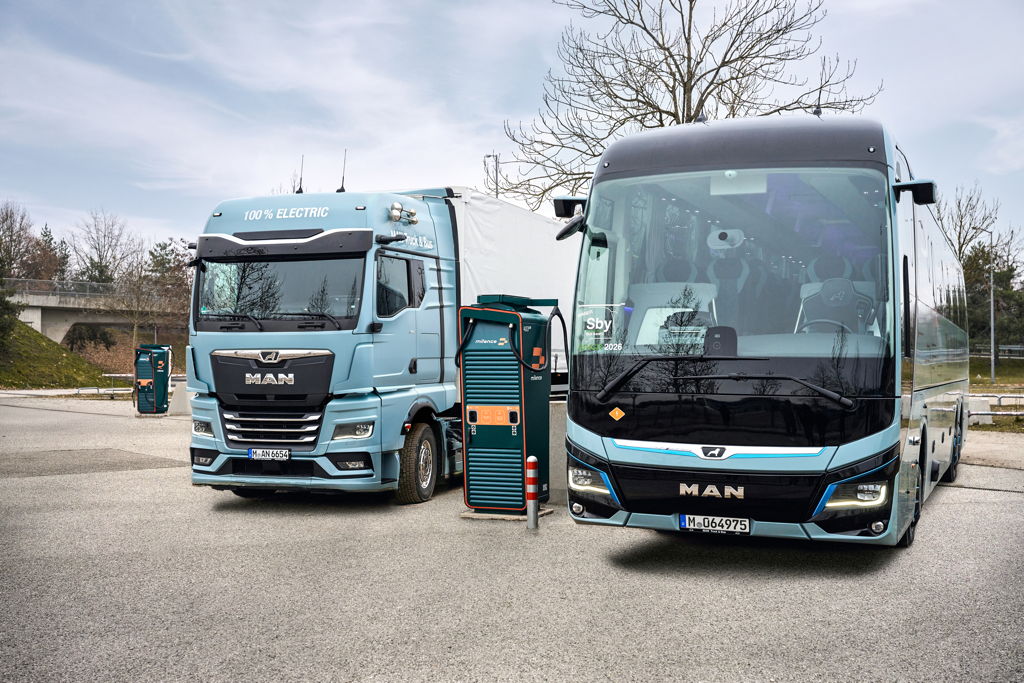
However, the vision for the future is more integrated. Jürgen Muth noted that the stadium is already planning for the electrification of fan transport. Thousands of fan clubs travel to Munich via coach, and as the bus industry shifts toward electric drivetrains, the Arena intends to provide charging points for these vehicles during the game. This would allow a fan bus to arrive, park, and fully recharge while the match is in progress, further reducing the carbon footprint of the event.

Timeline and Implementation Milestones
The development of the Allianz Arena charging hub followed a rigorous three-year timeline, beginning with feasibility studies in 2023.
- Phase 1 (2023–2024): Detailed grid analysis and load modeling conducted by MAN Transport Solutions. This phase involved simulating the energy flows of the stadium to identify "dead zones" in power usage where truck charging could be maximized.
- Phase 2 (Late 2024): Civil engineering works and the installation of high-voltage transformers at the bus parking lot.
- Phase 3 (Late 2025): Initial activation of the first two charging points for heavy-duty vehicles.
- Phase 4 (Planned for 2026–2027): Expansion of the site to include additional charging bays and the first implementation of Megawatt Charging (MCS) technology.
Data-Driven Consulting: The MAN Approach
The success of the project is largely attributed to the data-driven consulting provided by MAN Transport Solutions. Unlike passenger car charging, which is relatively standardized, heavy-duty charging requires a deep understanding of depot structures, route profiles, and energy costs. MAN’s team modeled various application scenarios to ensure the charging hub would be economically viable.
The analysis included "Last Management" strategies to prevent grid overloads and "Traffic Profile" modeling to predict peak demand times based on motorway congestion patterns. By providing this level of technical foresight, MAN ensured that the Allianz Arena’s investment was not just a PR exercise but a technically robust utility that could generate revenue through electricity sales while supporting the transport industry’s decarbonization.
Broader Implications: A Blueprint for European Arenas
The Allianz Arena project is being watched closely by stadium operators and logistics firms across Europe. Michael Voll suggests that this model could be a "blueprint" for other major venues, such as Wembley Stadium in London or the Stade de France in Paris. Most modern stadiums are located on the outskirts of cities with excellent motorway access and massive, underutilized electrical connections.
Transforming these venues into "energy hubs" offers a twofold benefit:
- Revenue Diversification: Stadiums can monetize their infrastructure on non-match days.
- Climate Targets: Municipalities can meet their CO2 reduction targets by facilitating the shift from diesel to electric freight.
As the European Union’s "Green Deal" and the Alternative Fuels Infrastructure Regulation (AFIR) mandate the installation of fast-charging points every 60 to 100 kilometers along major transit corridors, stadiums represent an untapped resource in the race to build a continent-wide e-truck network.
Environmental Impact and Corporate Responsibility
For FC Bayern Munich and the Allianz Arena, this project is a central pillar of their broader sustainability strategy. The stadium has already implemented numerous green initiatives, including a massive photovoltaic system and the use of recycled water for pitch maintenance. By facilitating the electrification of the 10,000 trucks that pass its gates every day, the Arena is extending its environmental influence far beyond its own walls.
The logistics sector is currently responsible for approximately 25% of all road transport CO2 emissions in the EU. Projects like the Allianz Arena charging hub are essential to proving that the technology for a zero-emission supply chain is no longer a future concept but a present-day reality. By demonstrating that high-performance charging can coexist with world-class entertainment venues, Munich is setting a new standard for urban planning and corporate responsibility in the 21st century.
As the facility moves into its next phase of expansion in 2026, the focus will shift toward optimizing the user experience for drivers and integrating renewable energy sources directly into the charging grid. The Allianz Arena has proven that while it may be the home of football, it is also becoming a powerhouse for the future of European transport.
