

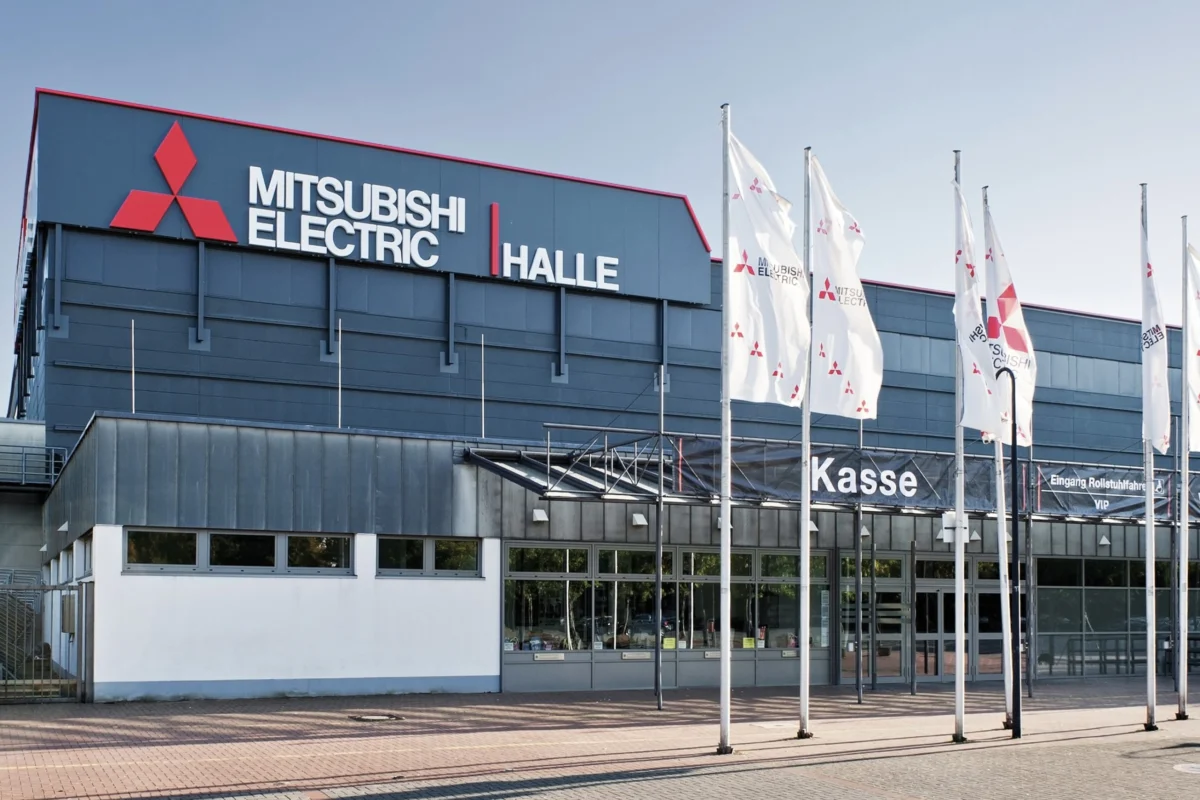
D.LIVE, the municipal subsidiary of the state capital Düsseldorf specializing in live entertainment and sports, has launched a pioneering project at the Mitsubishi Electric Halle to establish a resilient data foundation for visitor flows, occupancy behavior, and operational decision-making. By implementing high-level artificial intelligence (AI) and sophisticated sensor technology, the venue is transitioning from traditional observation-based management to a sophisticated, data-driven "Smart Venue" model. This initiative, developed in partnership with the analytics firm "knw. | the event performance analytics," marks a significant shift in how large-scale event spaces are managed in the digital age, providing a blueprint for the future of the D.LIVE portfolio and the wider European event industry.
The Mitsubishi Electric Halle has long been a cornerstone of Düsseldorf’s cultural and sporting landscape. However, like many established venues, it historically faced the challenge of quantifying the nuances of visitor behavior. While event managers could observe crowds, they lacked the objective metrics required to optimize logistics, security, and the overall guest experience. Questions regarding precise visitor density at specific times, average dwell periods in the foyer, or the exact causes of bottlenecks were previously answered through experience and anecdotal evidence. This project aims to replace these estimations with empirical, real-time data, creating a transparent ecosystem that informs every level of venue operation.
The Technical Foundation: Vision AI and Real-Time Flow Analysis
At the heart of this transformation is the installation of a Vision AI solution by knw., designed to monitor and analyze the movement of people with surgical precision. Unlike traditional CCTV systems, which require manual monitoring and offer limited analytical output, the AI-integrated system processes visual data in real-time to generate actionable insights. The technology is deployed primarily at the entrance and exit points of the Mitsubishi Electric Halle to capture inflow and outflow rates.
By measuring these throughput rates, D.LIVE can now visualize peak load times with unprecedented accuracy. This allows management to understand exactly when the highest pressure is placed on entry systems and how the occupancy of the venue fluctuates throughout the duration of an event. In a modern venue environment, simply knowing the total number of ticket holders is insufficient; the ability to understand the dynamics of their arrival and departure is critical for maintaining safety standards and ensuring a frictionless entry process.
Furthermore, the system is designed to comply with stringent European data protection regulations (GDPR). The Vision AI processes behavioral patterns and movement vectors rather than individual identities, ensuring that visitor privacy is maintained while providing the venue operators with the high-level aggregate data necessary for strategic planning.
The Foyer as a Strategic Analytics Hub
While the entrances provide data on volume, the foyer of the Mitsubishi Electric Halle serves as the primary laboratory for analyzing the "Visitor Journey." As the central hub where guests transition from the exterior to the main arena, the foyer is where most interactions with services—such as catering, merchandising, and ticketing—take place.
Through the combination of various sensor and camera technologies, knw. and D.LIVE are mapping how long visitors stay in specific zones and which pathways are most frequently utilized. This level of detail allows for the identification of "dead zones" or underutilized areas, as well as "hotspots" where congestion may occur. By understanding these patterns, D.LIVE can make informed adjustments to the layout of the foyer, the placement of mobile catering units, and the positioning of staff.
The data gathered in the foyer is instrumental in improving the "Visitor Experience" (VX). For instance, if data shows that long wait times at a specific catering station lead to a drop in dwell time in the merchandising area, management can redistribute staff or adjust signage to balance the load. This holistic view of visitor movement ensures that every square meter of the venue is optimized for both comfort and commercial efficiency.
Chronology of the Smart Venue Transformation
The transition of the Mitsubishi Electric Halle into a data-driven facility has followed a structured timeline designed to ensure technical stability and operational integration:
- Phase I: Infrastructure Audit and Goal Definition (Q1 2026): D.LIVE and knw. identified the specific operational bottlenecks and safety requirements of the Mitsubishi Electric Halle. This phase involved mapping the physical architecture to determine the optimal placement of AI sensors.
- Phase II: Hardware Deployment and Calibration (Q2 2026): The installation of Vision AI cameras and environmental sensors was completed. During this period, the AI models were calibrated to the specific lighting conditions and architectural nuances of the hall to ensure a high degree of accuracy in crowd counting and flow analysis.
- Phase III: Live Pilot Operations (Late Q2 2026): The system was tested during a series of high-profile concerts and sporting events. This allowed the team to compare AI-generated data with manual observations and historical benchmarks, confirming the reliability of the digital insights.
- Phase IV: Full Integration and Data Ecosystem Expansion (July 2026): The project entered its current state, where the data is fully integrated into the venue’s operational dashboard. Plans are now underway to incorporate external data sources, such as local weather patterns and public transport schedules, to predict visitor arrival times even more accurately.
Data-Driven Security and Operational Efficiency
One of the most critical applications of this new technology is in the realm of safety and security. In the event of an emergency or an unexpected surge in crowd density, the AI system provides immediate alerts to the operations center. By identifying unusual movement patterns or stagnant crowds in transit zones, security teams can intervene before a situation escalates.
The objective measurement of visitor dynamics also provides a superior basis for the development of safety concepts required by local authorities. Instead of relying on theoretical models, D.LIVE can present empirical evidence of how the venue performs under maximum load. This transparency fosters a stronger relationship with regulatory bodies and ensures that safety protocols are both effective and proportionate.
From an operational standpoint, the benefits extend to resource management. By forecasting peak loads based on historical AI data, D.LIVE can optimize staffing levels for security, cleaning, and catering. This leads to a more sustainable use of human resources, reducing costs during low-activity periods and ensuring adequate coverage during surges.
Stakeholder Reactions and Strategic Implications
The implementation of AI analytics at the Mitsubishi Electric Halle has garnered positive responses from various stakeholders within the Düsseldorf administrative and entertainment sectors. While official statements emphasize the technological leap, the underlying sentiment is one of increased competitiveness in the European event market.
Representatives from D.LIVE have noted that the project is not merely about technology but about a fundamental change in management culture. By empowering staff with real-time data, the organization can move away from reactive troubleshooting and toward proactive venue orchestration. Industry analysts suggest that this move places Düsseldorf at the forefront of the "Smart Venue" movement, potentially attracting more international tours and high-profile corporate clients who demand high standards of data transparency and visitor safety.
The partnership with knw. is also seen as a strategic investment in innovation. As a specialized firm in event performance analytics, knw. provides the technical expertise to turn raw sensor data into meaningful business intelligence. This collaboration ensures that the Mitsubishi Electric Halle remains a living laboratory for new technologies, including the potential future integration of augmented reality (AR) for visitor navigation or advanced environmental monitoring for carbon footprint reduction.

Expanding the Analysis: The Holistic Ecosystem
A key objective of the project is to move beyond isolated data points and toward a comprehensive "analysis ecosystem." To achieve this, D.LIVE is exploring the integration of existing infrastructure, such as standard security cameras, into the AI analytical framework. By layering AI software over existing hardware, the venue can expand its coverage without the need for extensive new cabling or equipment.
Furthermore, the project looks outward. By analyzing external factors—such as a sudden rainstorm (weather data) or a delay on the Rhine-Ruhr S-Bahn line (traffic data)—the system can adjust its internal predictions. If the AI knows that 2,000 visitors are likely to arrive 15 minutes later than expected due to a train delay, the venue can hold back catering surges or adjust entry gate staffing in real-time.
This level of integration represents the pinnacle of modern venue management. It acknowledges that a concert or a sports match does not exist in a vacuum but is part of a complex urban fabric. By understanding these external influences, D.LIVE can provide a seamless transition for the visitor from the city into the event environment.
Conclusion and Future Outlook
The Mitsubishi Electric Halle serves as a reference project for the entire D.LIVE portfolio, which includes the MERKUR SPIEL-ARENA, the PSD Bank Dome, and CASTELLO Düsseldorf. The insights gained from this AI-driven initiative will inform the digital strategies for these larger venues, potentially scaling the "Smart Venue" concept to accommodate tens of thousands of visitors across multiple locations.
As the project matures, the focus will shift toward the long-term scalability and economic viability of these technologies. The data collected will not only improve the day-to-day operations but will also provide a treasure trove of information for long-term strategic planning. Whether it is deciding on the necessity of architectural renovations or developing new service offerings for VIP guests, every decision will be backed by the most comprehensive visitor data ever collected in the history of the venue.
In an era where the "experience economy" is becoming increasingly competitive, D.LIVE’s commitment to data-driven excellence ensures that Düsseldorf remains a premier destination for live entertainment. The Mitsubishi Electric Halle, with its blend of historic charm and cutting-edge AI, stands as a testament to the power of digital transformation in enhancing the human experience of live events. By bridging the gap between the physical and digital worlds, D.LIVE is not just managing a venue; it is engineering the future of the visitor journey.
