

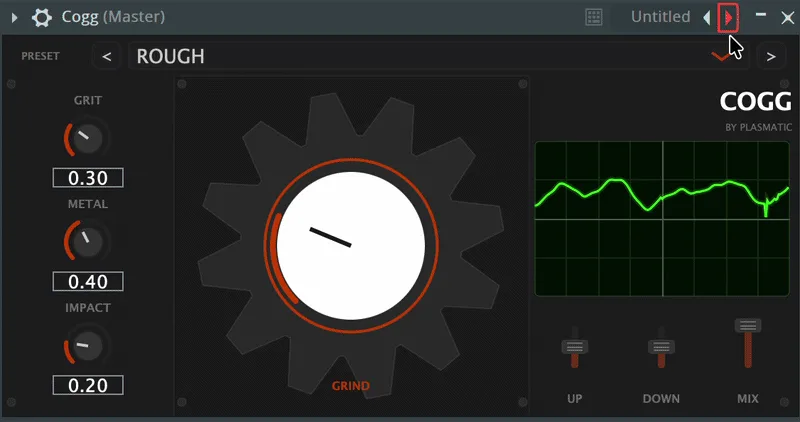
Plasmatic has officially announced the release and subsequent update of COGG, a specialized audio effect plugin designed to introduce industrial textures and metallic resonance to digital audio workstations. Available as a free download for both macOS and Windows platforms, the software aims to provide musicians, sound designers, and producers with a streamlined toolset for aggressive sonic manipulation. The plugin utilizes a multi-stage processing chain that combines granular synthesis, harmonic saturation, and convolution technology to achieve its distinct "metallized" character. This release follows a growing trend in the music production industry where independent developers provide high-quality, niche tools to the public, challenging the traditional dominance of large-scale commercial software suites.
Technical Architecture and Signal Processing
The core functionality of COGG is built upon three distinct pillars of digital signal processing (DSP). By integrating these elements into a single interface, Plasmatic allows users to bypass complex routing typically required to achieve industrial-grade distortion and resonance.
Granular Pitch Layering
At the front end of the signal chain, COGG employs granular pitch layering. Granular synthesis functions by dividing an incoming audio signal into minute fragments, or "grains," which are then manipulated and reassembled. In the context of COGG, these grains are pitch-shifted and layered to create a sense of mechanical density. This process mimics the micro-variations found in physical metallic impacts, where high-frequency overtones often clash and resonate in non-harmonic ways. By layering these pitched fragments, the plugin adds a "shimmer" or "grating" quality to the source material, which serves as the foundation for the industrial aesthetic.
Harmonic Distortion
Following the granular stage, the signal is passed through a harmonic distortion module. Distortion in digital audio is often used to add warmth or aggression by introducing new harmonics that were not present in the original signal. COGG’s distortion algorithm is specifically tuned to emphasize "grit," a term used in audio engineering to describe a combination of saturation and clipping that enhances the presence of a sound within a dense mix. This stage is crucial for "industrializing" the audio, as it provides the saturated, overdriven character associated with heavy machinery and electronic noise music.
Synthetic Metal Plate Convolution
The final stage of the processing chain involves a convolution reverb engine. Unlike algorithmic reverbs, which use mathematical formulas to simulate space, convolution reverb uses Impulse Responses (IRs)—digital "fingerprints" of real or synthetic spaces. COGG utilizes a library of synthetic metal plate impulse responses. These IRs are designed to replicate the acoustic properties of large metal sheets, providing a cold, ringing decay that differs significantly from the natural warmth of a wooden room or a stone hall. This specific use of convolution technology allows COGG to "place" the audio inside a metallic environment, completing the transformation from organic sound to industrial texture.
The Grind Mechanism and User Interface
The user interface (UI) of COGG is designed for both immediate results and granular control. The centerpiece of the plugin is the "Grind" knob, a macro-control that dictates the intensity of the processing chain. As the user increases the Grind value, a visual representation of a cog on the interface spins with increasing velocity, providing haptic-style visual feedback to the user.
While the Grind knob offers a simplified approach to sound design, the plugin also includes a suite of secondary parameters. These controls allow advanced users to fine-tune the granular density, the depth of the harmonic distortion, and the wet/dry mix of the convolution reverb. This dual-layer approach to UI design—combining a "one-knob" simplicity with deeper technical access—reflects modern software design philosophies that prioritize workflow efficiency without sacrificing creative flexibility.
Version 1.1 Enhancements and Presets
The recent transition to Version 1.1 marks a significant update in the plugin’s lifecycle. The primary addition in this version is a collection of eight curated presets. These presets are designed to demonstrate the versatility of the metallic processing engine, ranging from subtle harmonic enhancement to total sonic destruction.
The inclusion of presets is a strategic move for software developers, as it lowers the barrier to entry for new users. In the context of COGG, these presets allow producers to quickly apply "industrial" characteristics to various instruments, such as drums, synthesizers, or vocal tracks, without needing to understand the underlying DSP mechanics. Early feedback suggests that these presets are particularly effective in the genres of industrial techno, dark ambient, and cinematic sound design, where metallic textures are a staple of the sonic palette.
Market Context and the Rise of Independent VST Development
The release of COGG highlights a broader shift in the music technology landscape. Historically, professional-grade audio effects were the province of established companies with significant R&D budgets. However, the democratization of coding tools and the availability of frameworks like JUCE have empowered independent developers—often referred to as "boutique" or "indie" developers—to create competitive software.
Plasmatic has opted to distribute COGG via itch.io, a platform traditionally associated with independent video games but increasingly utilized by software developers for its "pay-what-you-want" model and community-centric distribution. By offering the plugin for free, Plasmatic joins a growing ecosystem of developers who prioritize community building and brand awareness over immediate transactional revenue. This "freemium" or "free-to-play" philosophy in the VST (Virtual Studio Technology) world has led to a surge in creativity, as developers are free to explore niche, experimental sounds that might not be considered commercially viable by larger corporations.
Broader Implications for Sound Design
The "metallization" of sound is a technique that has seen a resurgence in contemporary media. From the gritty, mechanical soundtracks of modern sci-fi cinema to the aggressive, distorted rhythms of underground electronic music, the demand for industrial textures is at an all-time high.
Cinematic Applications
In film scoring and game audio, COGG provides a tool for "world-building." By processing foley sounds—such as footsteps or ambient noise—through COGG’s metallic convolution, sound designers can create an auditory environment that feels cold, futuristic, or dystopian. The ability to "industrialize" organic sounds is essential for creating the "cyberpunk" or "grimdark" aesthetics that currently dominate popular media.
Musical Applications
For music producers, COGG addresses a specific need for "edge" in a mix. In genres like industrial metal or techno, the challenge is often to make digital instruments sound "physical" and "dangerous." The granular pitch layering in COGG introduces micro-tonal inconsistencies that mimic the unpredictability of real-world hardware, while the distortion provides the necessary harmonic weight to cut through a dense arrangement.
Installation, Compatibility, and Availability
COGG is engineered to be compatible with the vast majority of modern production environments. It is available in VST3 and AU (Audio Units) formats, ensuring it can be hosted in popular Digital Audio Workstations (DAWs) such as Ableton Live, FL Studio, Logic Pro, Cubase, and Reaper.
The plugin supports both Windows and macOS operating systems. For Mac users, the provision of the AU format is particularly important, as it ensures native compatibility with Apple’s ecosystem, including optimization for Apple Silicon (M1/M2/M3 chips), which has become a standard requirement for professional audio software in recent years.
The installation process follows the developer’s "download and destroy" philosophy—a simplified workflow intended to get the user from the download page to the creative process with minimal friction. The software is currently hosted on the Plasmatic itch.io page, where it remains accessible to the global community of creators.
Conclusion and Future Outlook
The release of COGG by Plasmatic represents a successful intersection of specialized DSP and accessible user design. By focusing on a specific niche—the industrialization of sound—the plugin provides a clear value proposition in a crowded market. As the software moves forward from Version 1.1, the industry will likely see further refinements in its granular engine and perhaps an expansion of its impulse response library.
For the broader audio industry, the success of such "boutique" plugins underscores the importance of community-driven development. As more producers look for unique sounds to distinguish their work from the polished, "clean" aesthetic of mainstream pop, tools like COGG that offer "grit," "mayhem," and "metallic" textures will continue to play a vital role in the evolution of modern sound design. Plasmatic’s contribution serves as a testament to the power of independent innovation in the digital age, providing professional-grade tools to anyone with a computer and a desire to create.
