

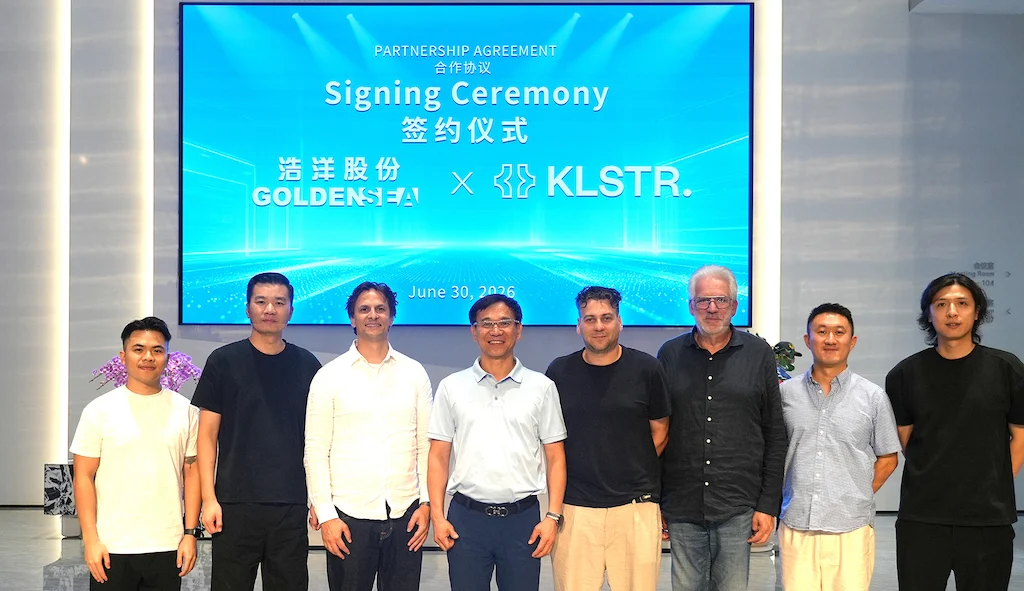
The global entertainment and architectural lighting sectors are on the cusp of a technological transformation following the announcement of a landmark technology cooperation agreement between KLSTR Technologies and Golden Sea. The agreement, signed during an official ceremony at the Golden Sea headquarters in Guangzhou, China, establishes a comprehensive framework for the integration of advanced networking capabilities across one of the world’s most influential portfolios of lighting brands. Golden Sea, the publicly traded parent company of industry leaders such as Ayrton, SGM, Terbly, and GS ARC, intends to leverage KLSTR’s proprietary network platform to transition traditional lighting fixtures into intelligent, self-aware network nodes. This strategic alliance follows a period of successful collaboration between KLSTR and Ayrton, signaling a mandate to standardize smart connectivity across the entire Golden Sea group.
A New Era for Professional Lighting Communication
For decades, the professional lighting industry relied on relatively linear communication protocols to manage complex visual displays. However, as production scales have increased and the demand for real-time data has grown, the limitations of legacy systems have become apparent. The partnership between KLSTR Technologies, based in Belgium, and the Guangzhou-based Golden Sea (Guangzhou Haoyang Electronic Co., Ltd., listed as 300833.SZ on the Shenzhen Stock Exchange) seeks to address these inefficiencies by embedding sophisticated networking hardware and software directly into the fixtures.
KLSTR’s platform is designed to revolutionize how lighting professionals interact with their equipment. By transforming fixtures into "intelligent network devices," the technology enables automatic discovery, remote configuration, and real-time topology mapping. In practical terms, this means that when a technician connects a series of lights to a network, the system can instantly identify each unit, its physical location in the chain, and its operational status without manual intervention. This shift from "dumb" hardware to "smart" participants in a digital ecosystem represents a significant leap forward for the industry, aligning lighting infrastructure with the broader trends of the Internet of Things (IoT) and Industry 4.0.
The Strategic Importance of Golden Sea’s Portfolio
To understand the scale of this agreement, one must look at the market reach of Golden Sea. As a global manufacturing powerhouse, Golden Sea provides lighting solutions for almost every conceivable high-end application, from massive stadium concert tours and television broadcast studios to prestigious theaters and permanent architectural installations.
The brands under the Golden Sea umbrella represent distinct segments of the market. Ayrton is widely regarded as a pioneer in high-performance LED luminaires, often favored by top-tier lighting designers for international tours. SGM is a leader in IP-rated wash lights and outdoor illumination, where reliability in harsh environments is paramount. Terbly focuses on theatrical and studio applications, while GS ARC targets the architectural market. By integrating KLSTR technology across these diverse brands, Golden Sea ensures that the benefits of networked infrastructure are accessible regardless of the specific application.
The agreement signed in Guangzhou is not merely a supply contract but a "technology cooperation" mandate. It creates a structured environment for engineering collaboration, allowing KLSTR’s Belgian developers to work closely with Golden Sea’s R&D teams in China. This cross-continental synergy is expected to accelerate the development cycle of next-generation products that are "network-native" from the design phase onward.
Technological Deep Dive: The KLSTR Network Platform
At the heart of this partnership is KLSTR’s unique hardware and software stack. Unlike traditional Remote Device Management (RDM), which can often be slow and unreliable on large-scale networks, KLSTR’s platform utilizes high-speed data protocols to provide a comprehensive overview of a lighting system.
Key features of the KLSTR integration include:
- Automatic Discovery: The ability for the control system to instantly recognize every fixture added to the network, significantly reducing setup time for touring crews.
- Remote Configuration: Technicians can adjust internal settings, DMX addresses, and mode selections from a central terminal or mobile device, eliminating the need to physically access fixtures hung high in a truss.
- Topology Visualization: A live map of the physical and data connections between devices, which is invaluable for troubleshooting complex signal paths.
- Live Diagnostics and Predictive Monitoring: The system tracks metrics such as temperature, fan speed, and LED life in real-time. By analyzing this data, the platform can predict potential failures before they occur, allowing for "preventative maintenance" that avoids costly downtime during a live performance.
Roel Apers, the founder of KLSTR, emphasized during the ceremony that this technology is about more than just convenience. "We are redefining how luminaires communicate and how they are managed throughout their entire lifecycle," Apers stated. "Intelligent networking is no longer a luxury; it is becoming a fundamental component of the next generation of professional lighting products."
Chronology of the Partnership
The path to this group-wide agreement began with a successful pilot phase involving Ayrton. As one of the more technologically aggressive brands within the Golden Sea group, Ayrton served as the ideal proving ground for KLSTR’s networking concepts. The positive feedback from lighting designers and rental houses who utilized the KLSTR-enabled Ayrton fixtures provided the momentum needed to expand the relationship.
The official signing ceremony in July 2026 marks the beginning of a multi-year roadmap. Following the formalization of the contract, the companies will move into an intensive product evaluation phase. This involves testing the integration of KLSTR modules into existing product lines and designing new internal circuitries for upcoming fixtures. According to Gordon Huang, R&D Director at Golden Sea, the integration is a "natural fit" for a company that has historically prioritized innovation. Huang noted that the collaboration will directly benefit Golden Sea’s global network of partners and end-users by providing more robust and user-friendly tools.
Economic and Operational Implications for the Industry
The shift toward networked lighting has profound economic implications for several stakeholders in the entertainment industry:
For Rental and Production Houses
Rental companies, which own and maintain vast inventories of lighting equipment, stand to gain the most from predictive maintenance. By having a clear digital record of every hour a fixture has operated and its thermal history, these companies can better manage their assets and ensure higher reliability for their clients. Furthermore, the speed of setup enabled by automatic discovery reduces labor costs—a major overhead in the live events sector.
For Lighting Designers and Technicians
Designers can now have greater confidence in the "health" of their rig. In the past, a single faulty cable or a misaddressed fixture could take hours to diagnose in a large stadium setup. With topology visualization, the exact point of failure is identified instantly on a screen. This allows technical crews to focus on the creative aspects of a show rather than technical troubleshooting.

For Manufacturers
For Golden Sea, this partnership provides a competitive edge. As the market becomes increasingly crowded with low-cost alternatives, the ability to offer a sophisticated, integrated software ecosystem becomes a key differentiator. By embedding KLSTR’s technology, Golden Sea is moving from being a hardware manufacturer to a provider of integrated hardware-software solutions.
Market Context and Future Outlook
The global professional lighting market is projected to continue its steady growth, driven by the resurgence of live events and the increasing complexity of architectural projects. Analysts suggest that the "smart lighting" segment of the professional market is growing at a faster rate than the industry average. The agreement between KLSTR and Golden Sea aligns perfectly with these market dynamics.
As the partnership evolves, the industry can expect further announcements regarding specific product integrations. There is also potential for the KLSTR platform to interface with other segments of the production world, such as video servers and motion control systems, creating a unified "smart" backstage environment.
The collaboration also reflects a broader trend of European technology firms partnering with Chinese manufacturing giants. This model combines the agile, software-driven innovation of the European tech sector with the industrial scale and global distribution networks of Chinese leaders like Golden Sea.
Conclusion
The technology cooperation agreement between KLSTR Technologies and Golden Sea represents a milestone in the evolution of the professional lighting industry. By committing to a future of networked, intelligent infrastructure, Golden Sea is not only enhancing its current product offerings but is also setting a new standard for how the industry operates. As fixtures evolve from standalone tools into integrated network participants, the benefits of efficiency, reliability, and data-driven management will likely become the new baseline for professional productions worldwide. The "intelligent networking" era has arrived, and through this partnership, it is being deployed on a truly global scale.
