

Kanye West’s latest album, "Bully," has secured a prominent position on the Billboard 200, debuting at number two. This significant chart placement arrives amidst a turbulent period for the artist, marked by controversy surrounding its release and ongoing debates about its commercial performance. According to Billboard’s official tracking, "Bully" garnered 152,000 equivalent album units in its inaugural week. This figure is a composite of streaming activity and traditional sales, with 96,000 units derived from streaming—translating to approximately 98.43 million on-demand official streams—and 56,000 units from physical and digital sales.
The album’s second-place finish means West was narrowly edged out of the top spot by South Korean supergroup BTS. Their 10th album, "ARIRANG," maintained its stronghold on the number one position for its second week, amassing an impressive 187,000 equivalent units. This follows an extraordinary debut week for BTS, where "ARIRANG" achieved a staggering 641,000 equivalent units, highlighting the immense global reach and dedicated fanbase of the K-Pop phenomenon.
For Kanye West, this chart performance marks a significant departure from his established track record. "Bully" becomes only the second solo studio album of his career to not reach the number one position on the Billboard 200. His debut album, "The College Dropout" from 2004, also peaked at number two. This debut at number two effectively ends West’s remarkable 21-year streak of having solo albums debut at number one on the prestigious chart. This unbroken sequence of chart-topping releases is a testament to West’s consistent commercial appeal and influence in the music industry over two decades.
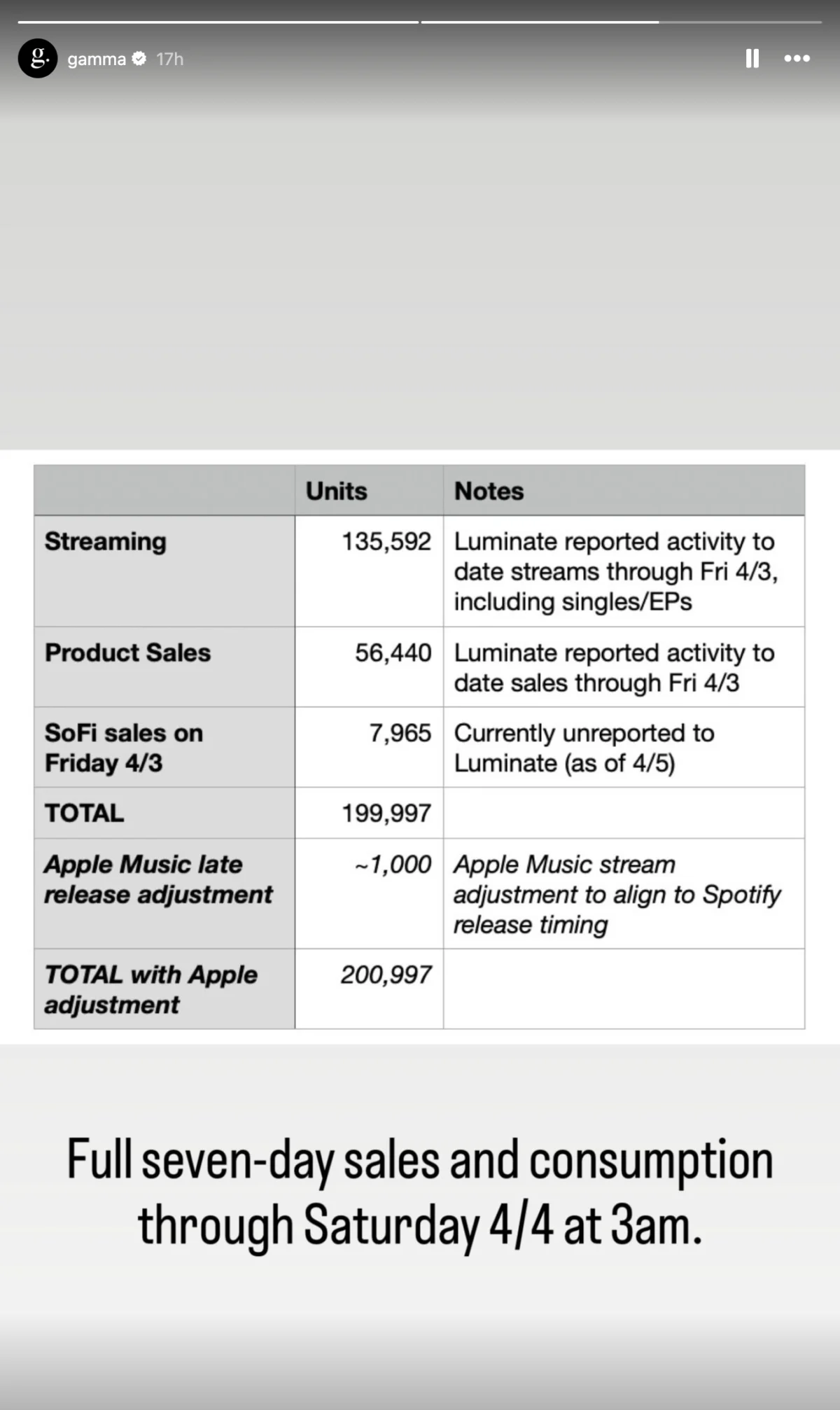
However, the official Billboard numbers are not the only narrative emerging from "Bully’s" first week of release. Gamma., the distribution company founded by former Apple Music executive Larry Jackson, has publicly contested Billboard’s figures. Gamma. has asserted that "Bully" actually surpassed the 200,000 equivalent unit mark, a figure that, if accurate, would have been sufficient to dethrone BTS and secure the coveted number one spot on the Billboard 200.
Gamma.’s Counter-Claims and Billboard’s Silence
Gamma.’s assertion of a higher sales figure was prominently displayed on their Instagram Stories. In a detailed breakdown of "full seven-day sales and consumption," the company claimed that "Bully" generated a total of 200,997 equivalent units. This direct challenge to Billboard’s official data introduces a layer of complexity and potential dispute regarding the album’s true commercial impact. As of the time of reporting, neither Billboard nor Luminate, the official data provider that powers the Billboard charts, have issued a public response to Gamma.’s claims. This silence from the charting authorities leaves the industry and fans to ponder the validity of Gamma.’s data and its implications for future reporting.
The discrepancy raises questions about the methodologies used in calculating album units, particularly in an era where streaming plays a dominant role. While Billboard’s methodology is generally accepted as the industry standard, independent distributors sometimes operate with different tracking systems or reporting timelines, which can lead to perceived differences. The lack of an immediate response from Billboard suggests a potential internal review process or a standard procedure for handling such claims before issuing a definitive statement.
Anticipation for a Deluxe Edition
Despite the debate over its initial chart performance, the narrative around "Bully" is also evolving with the potential for new material. Gamma. has further fueled anticipation by teasing an upcoming expanded edition of the album. In a separate Instagram Story, the distribution company hinted at the imminent release of "Bully deluxe on the way," signaling that the current 18-song tracklist may soon be augmented. Details regarding the release date of this deluxe version or the number of bonus tracks to be included have not yet been disclosed, leaving fans to speculate about what additional content might be offered. The release of deluxe editions is a common strategy in the music industry to re-engage listeners, boost sales, and extend an album’s chart life.
Wireless Festival Controversy and Sponsor Withdrawals
Beyond the chart battle and potential deluxe release, Kanye West’s upcoming performance at London’s Wireless Festival in July has become a focal point of significant controversy. His headlining sets are drawing intense scrutiny due to his history of antisemitic remarks and related public statements. The decision to book West has sparked widespread criticism, leading to a significant backlash from various stakeholders.
In recent days, a number of major sponsors have announced their withdrawal from the Wireless Festival in response to West’s inclusion. High-profile brands such as Pepsi, PayPal, and the global drinks giant Diageo have all pulled their financial support, citing concerns over the artist’s past behavior. This exodus of sponsors underscores the gravity of the controversy and the pressure faced by festival organizers to address public sentiment and ethical considerations.
The opposition to West’s performance extends to the highest levels of British politics. Prime Minister Sir Keir Starmer and London Mayor Sadiq Khan have both publicly voiced their disapproval. Sir Keir Starmer described the booking as "deeply concerning," emphasizing that it is problematic for a rapper with a history of antisemitic remarks and, as reported by some outlets, a celebration of Nazism, to be given a platform at a major public event. Mayor Khan has also expressed his reservations, adding to the chorus of criticism and highlighting the societal implications of platforming artists with such a controversial past.
Broader Implications and Artist’s Recent Activities
The controversy surrounding the Wireless Festival appearance casts a shadow over West’s current promotional activities. He recently concluded two highly successful, sold-out shows at Los Angeles’ SoFi Stadium in support of "Bully," demonstrating his continued ability to draw large crowds and generate significant buzz. These performances showcased his artistic output and provided a platform for his new music.
However, the ongoing discussions about his controversial statements and their impact on public events present a complex challenge for both the artist and the industry. The withdrawal of major sponsors from Wireless Festival serves as a stark reminder of the increasing accountability expected of artists and event organizers regarding their associations and public messaging. This situation highlights the delicate balance between artistic freedom, commercial interests, and social responsibility in the contemporary entertainment landscape. The decisions of major brands to disassociate from the festival signal a growing trend of corporate activism, where public perception and ethical considerations increasingly influence sponsorship and partnership agreements.
The implications of the "Bully" sales discrepancy also extend to how album performance is perceived and reported. If Gamma.’s claims are substantiated, it could prompt a re-evaluation of how streaming and sales data are aggregated and presented by major charting bodies. In an era dominated by digital consumption, the nuances of data collection and interpretation are crucial for understanding an artist’s true reach and impact. The current situation underscores the ongoing evolution of the music industry’s metrics and the potential for differing interpretations of success. The eventual clarification from Billboard or Luminate will be keenly watched by industry insiders and fans alike.
