

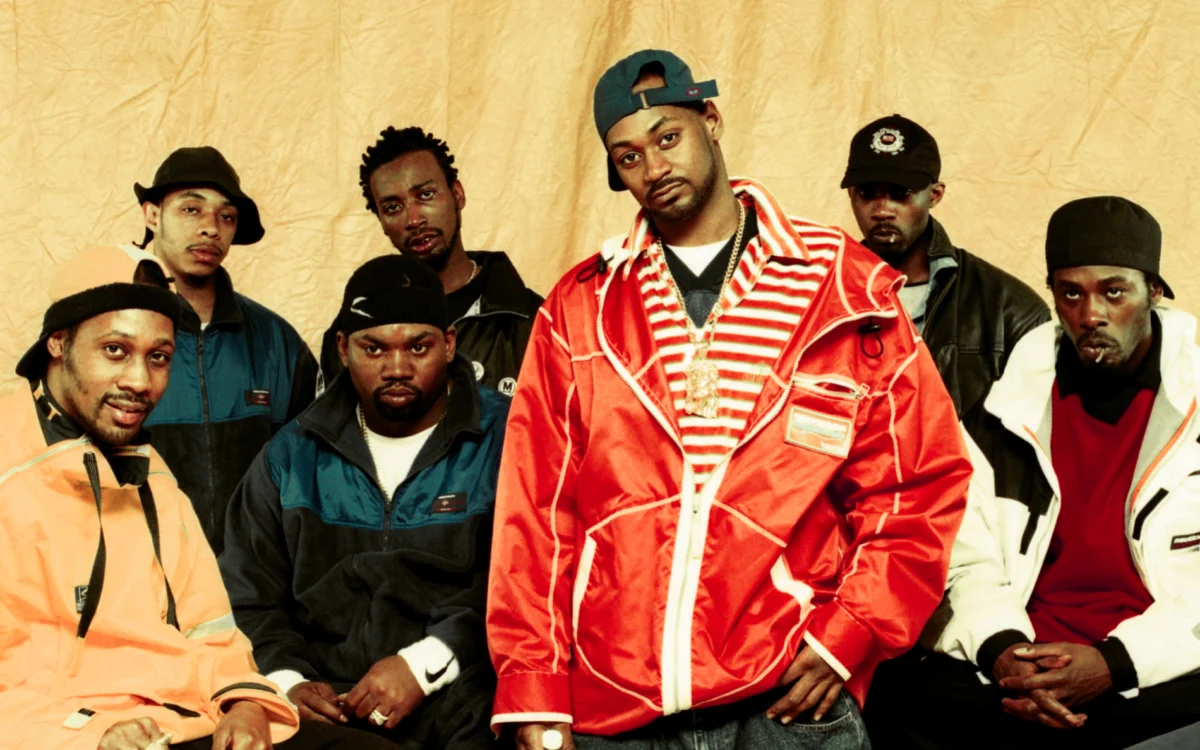
The iconic hip-hop collective Wu-Tang Clan has officially secured their place in the prestigious Rock & Roll Hall of Fame, marking a significant milestone for the genre and its pioneers. The announcement, made on Monday, April 13, revealed the Class of 2026 inductees, a diverse group of artists who have profoundly shaped the landscape of modern music. Alongside Wu-Tang Clan, the Hall of Fame will welcome legendary acts such as Sade, Luther Vandross, Oasis, Iron Maiden, Phil Collins, Billy Idol, and the influential duo Joy Division/New Order.
Adding to the historic recognition for hip-hop, fellow rap luminaries Queen Latifah and MC Lyte will also be honored with the "Early Influence" award. This special designation acknowledges their groundbreaking contributions and their enduring status as cultural innovators who paved the way for future generations of artists. The formal induction ceremony is scheduled to take place on November 14 at the Peacock Theater in Los Angeles, with the proceedings to be broadcast in December on ABC and Disney+.
The news has been met with widespread enthusiasm and pride within the hip-hop community and beyond. RZA, the mastermind behind the Wu-Tang Clan, shared his profound emotions on Instagram, stating, "In all humility. This announcement filled me with joy, proudness, profound achievement, and awe. I’m grateful to all my brothers and those who helped us on the path. Thank you Rock & Roll Hall of Fame. This is a true Triumph – Wutang Forever." His sentiment reflects the collective effort and dedication that has defined the group’s remarkable career.
Raekwon, a pivotal member of the Wu-Tang Clan, echoed this sentiment with characteristic flair, declaring, "History books will know this club! this my grammy. what we talking bout! haaaaaaaaaaa. shout out to all our mothers who birth these men. they won tonite." The comparison to a Grammy underscores the immense significance of this induction for the group and its members, recognizing their artistic merit on par with the highest accolades in music. GZA, another founding member, offered a more reflective perspective, acknowledging the collaborative spirit that fueled their success: "We couldn’t have reached this milestone without our hip hop predecessors, fans, collaborators, friends and family. We thank you."
A Historic Lineage of Hip-Hop in the Hall of Fame
The induction of Wu-Tang Clan, Queen Latifah, and MC Lyte brings the total number of hip-hop acts enshrined in the Rock & Roll Hall of Fame to 18. This growing representation is a testament to the genre’s undeniable impact on popular culture and its evolution from a niche urban art form to a global phenomenon. The journey began in 2007 when Grandmaster Flash and the Furious Five became the first hip-hop artists to be inducted, breaking down a significant barrier.
Subsequent years saw the recognition of other foundational groups and artists who shaped the early sound and ethos of hip-hop. Run-DMC, Beastie Boys, Public Enemy, and N.W.A. followed, each bringing their unique styles and social commentary to the forefront of the music industry. The list of hip-hop inductees further expanded to include titans like JAY-Z, Eminem, 2Pac, The Notorious B.I.G., OutKast, Missy Elliott, and A Tribe Called Quest, solidifying their legacies as artistic pioneers. Additionally, artists such as LL Cool J, Salt-N-Pepa, and DJ Kool Herc have been honored through categories like "Early Influence" or "Musical Excellence," acknowledging their foundational roles in the creation and development of hip-hop.
The Journey of Wu-Tang Clan: From Staten Island to Rock & Roll Immortality
Wu-Tang Clan’s ascent to the Rock & Roll Hall of Fame is the culmination of decades of artistic innovation, cultural influence, and unwavering dedication to their craft. Formed in Staten Island, New York, in the early 1990s, the collective, comprising RZA, GZA, Ol’ Dirty Bastard, Inspectah Deck, Raekwon, U-God, Ghostface Killah, Method Man, and Masta Killa, along with producer DJ Mathematics, revolutionized the hip-hop landscape with their distinctive sound and gritty lyrical narratives.
Their debut album, Enter the Wu-Tang (36 Chambers), released in 1993, is widely regarded as a masterpiece and a landmark in hip-hop history. The album’s raw energy, intricate rhyme schemes, and martial arts-inspired imagery set them apart from their contemporaries. Hits like "C.R.E.A.M." (Cash Rules Everything Around Me) and "Protect Ya Neck" not only dominated the charts but also introduced a new vocabulary and aesthetic to mainstream music.
The group’s unique business model, which allowed individual members to pursue solo careers while remaining part of the larger Wu-Tang entity, proved highly successful. This approach fostered a rich and diverse discography, with each member contributing their distinct voice and perspective. Albums like Raekwon’s Only Built 4 Cuban Linx…, Ghostface Killah’s Ironman, and GZA’s Liquid Swords are considered classics in their own right, further cementing the Wu-Tang Clan’s collective impact.
Beyond their musical achievements, Wu-Tang Clan has been instrumental in shaping hip-hop culture through fashion, film, and entrepreneurship. Their influence extends far beyond the realm of music, making their induction into the Rock & Roll Hall of Fame a recognition of their multifaceted cultural legacy.
A Competitive Field of Nominees
This year’s Rock & Roll Hall of Fame induction class was selected from a diverse pool of nominees that included many other highly influential artists. Notably, Lauryn Hill, Mariah Carey, and Shakira, among others, were nominated but did not receive enough votes from the international voting body, which comprises over 1,200 inductees, music historians, and industry professionals. The selection process is rigorous, reflecting the Hall of Fame’s commitment to honoring artists who have demonstrated originality, inspiration, and significant influence on the development and perpetuation of rock and roll and its related music forms.
The inclusion of Wu-Tang Clan, Queen Latifah, and MC Lyte in this year’s class highlights the evolving definition of "rock and roll" and the increasing recognition of hip-hop’s foundational role in shaping contemporary music. The Rock & Roll Hall of Fame has increasingly acknowledged the genre’s pioneers and influential figures, recognizing that the spirit of innovation, rebellion, and artistic expression that defined early rock and roll is deeply embedded in the DNA of hip-hop.
Broader Implications and Future Recognition
The induction of these hip-hop icons into the Rock & Roll Hall of Fame carries significant implications for the genre and its place in music history. It underscores the undeniable artistic merit and cultural impact of hip-hop, solidifying its status as a legitimate and enduring art form. For aspiring artists and fans, it serves as a powerful validation of the genre’s journey and its profound influence on global culture.
As the Rock & Roll Hall of Fame continues to evolve, the inclusion of artists like Wu-Tang Clan signals a broader acceptance and appreciation of diverse musical genres. This trend is likely to encourage the consideration of even more hip-hop artists and pioneers in future induction cycles, ensuring that the full spectrum of musical innovation is recognized and celebrated. The ongoing conversation about what constitutes "rock and roll" is continually enriched by the inclusion of artists who, while not strictly adhering to traditional rock instrumentation, embody the genre’s core principles of innovation, storytelling, and cultural relevance. The Wu-Tang Clan’s induction is a powerful affirmation of this evolving narrative, celebrating a group that has not only mastered their art form but also profoundly shaped the cultural landscape for generations to come.
