

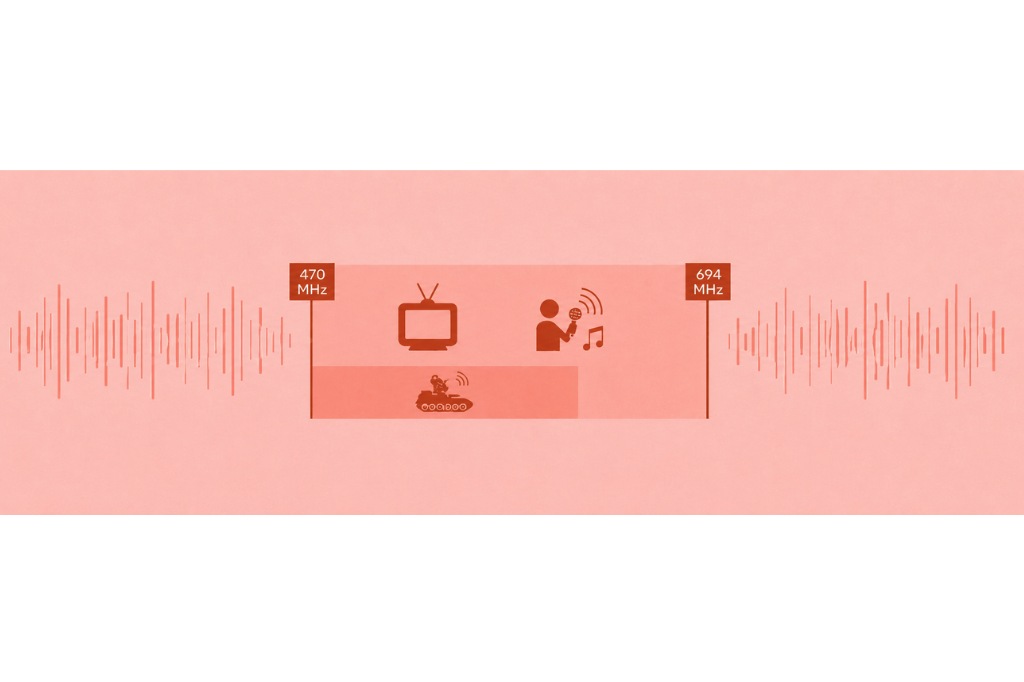
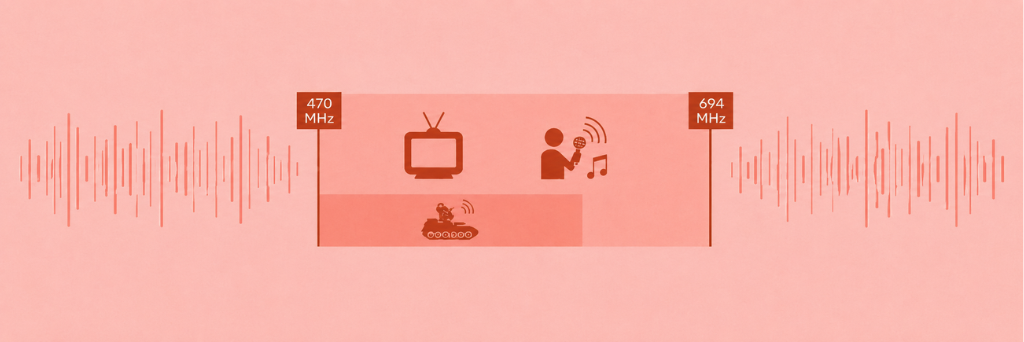
The German cultural and event landscape is currently facing an unprecedented challenge as the federal government’s "Zeitenwende"—a fundamental shift in defense policy—begins to exert significant pressure on the country’s wireless frequency spectrum. For decades, the frequency range between 470 and 694 MHz has served as a reliable backbone for the event industry, facilitating the operation of wireless microphones, in-ear monitoring systems, and complex communication networks essential for theater, film, and live music. Traditionally, this "sub-700 MHz" band was shared harmoniously between cultural applications (technically known as PMSE, or Programme Making and Special Events) and terrestrial television broadcasting (DVB-T2). However, a new regulatory framework introduced in the spring of 2026 has fundamentally altered this balance, signaling a move toward "Military First, Culture Third" in the allocation of national resources.
The New Regulatory Reality: Decree 37/2026
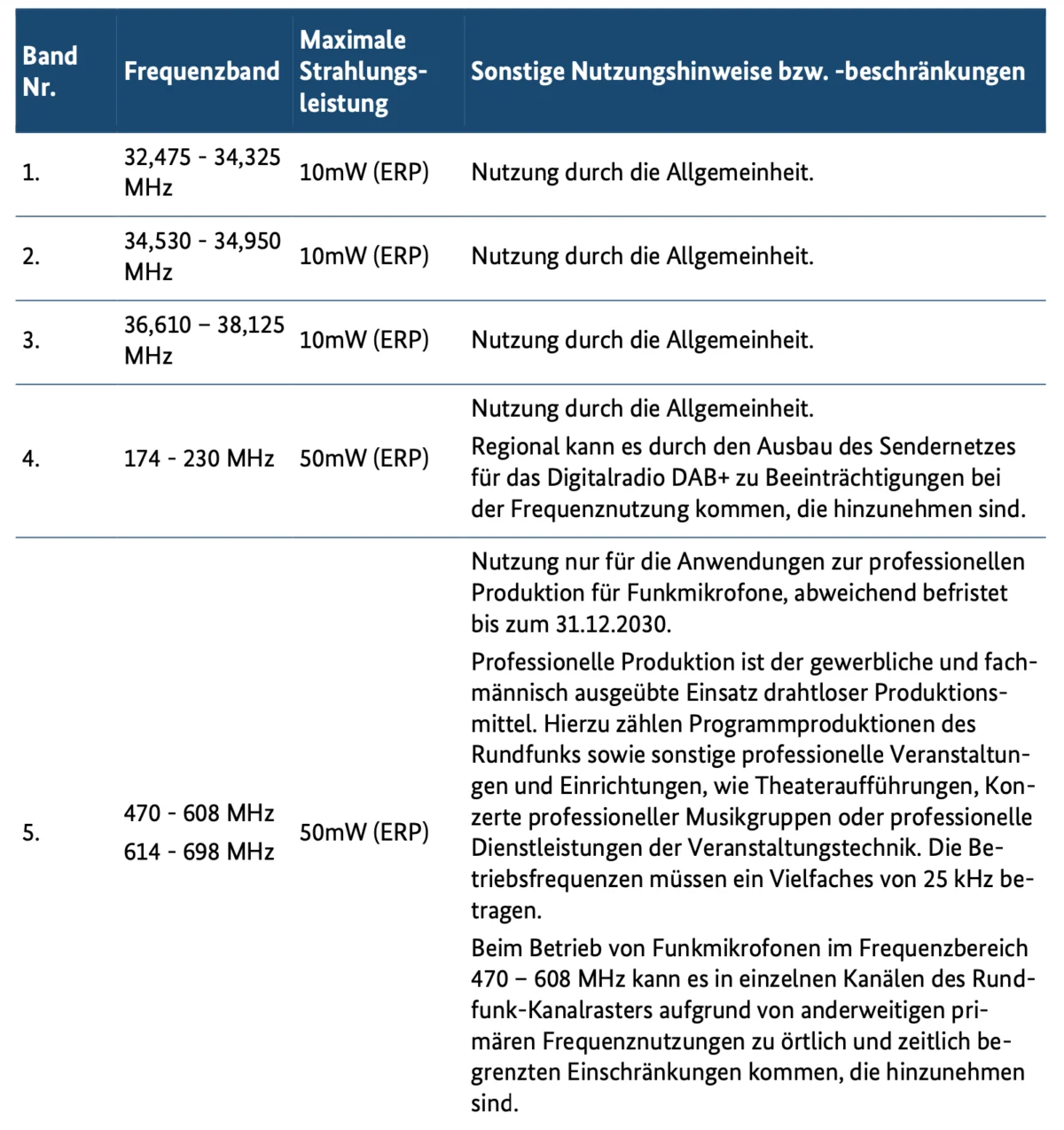
The shift became official on April 15, 2026, with the publication of General Allocation Decree 37/2026 (Vfg. 37/2026) by the Federal Network Agency (Bundesnetzagentur). The document contains a seemingly minor but legally potent clause stating that users of wireless microphones in the 470–608 MHz range must now accept "locally and temporally limited restrictions" due to "other primary frequency uses." When pressed for clarification by industry advocacy groups such as the Association of Professional Wireless Production Technologies (APWPT) and the "SOS – Save Our Spectrum" initiative, the Federal Network Agency declined to specify the nature of these primary users, citing "security reasons."
Despite the official silence, it is widely understood within the industry that these primary users are the German Armed Forces (Bundeswehr) and stationed NATO forces, specifically the United States military. This lack of transparency has created a climate of profound uncertainty for frequency managers and sound engineers. In the world of professional audio, reliability is the primary currency; a single dropout during a live broadcast or a high-stakes theatrical performance can result in significant financial and reputational damage. The new decree effectively removes the guarantee of interference-free operation, transforming professional frequency management into a high-stakes gamble.
A Chronology of Spectrum Erosion
To understand the severity of the current situation, one must view it within the historical context of European spectrum policy. Over the past fifteen years, the event industry has seen its available operating space repeatedly auctioned off to the telecommunications sector.
- Digital Dividend I (2010): The 800 MHz band was cleared of microphones to make way for 4G/LTE mobile services.
- Digital Dividend II (2015): The 700 MHz band followed suit, further compressing PMSE users into the remaining sub-700 MHz space.
- WRC-23 (2023): The World Radiocommunication Conference in Dubai initially suggested a "coexistence" model for the 470–694 MHz band, which the industry hoped would provide stability until at least 2030.
- The 2026 German Warning: While most of Europe maintains a unified approach to the 470–694 MHz band, allowing for seamless international tours, Germany has now diverged by prioritizing military tactical communications within this specific range.
This chronology demonstrates a pattern of "spectrum hunger" where cultural and media needs are consistently sidelined in favor of higher-priority government or commercial interests. The 2026 shift is particularly jarring because it introduces unpredictable, intermittent interference rather than a clean exit from a band.
Technical Implications and the 23-Kilometer Rule
The technical reality of military frequency use is far more disruptive than many policymakers realize. Military hardware, designed for high-power tactical communication, does not adhere to the same low-power constraints as a stage microphone. Field measurements conducted near the General-Fellgiebel-Kaserne in Pöcking, Upper Bavaria, have shown that military signals can cause interference for sensitive audio equipment at distances of up to 23 kilometers.
This "interference radius" means that a military exercise in a rural kazerne can effectively "blind" wireless systems in nearby major metropolitan areas. In the case of the Pöcking facility, the disruption reaches into the suburbs of Munich, including Gauting and Starnberg, and potentially affects large-scale event venues in the city center. Furthermore, the threat is not limited to static locations. The movement of NATO convoys along major highways—often referred to as "march routes"—means that interference could suddenly appear in any venue located near a primary transportation artery, with no prior warning given to the venue operators.
The Economic Impact on Large-Scale Venues
The Friedrichstadt-Palast in Berlin, home to the largest theater stage in the world, serves as a prime example of the stakes involved. Thomas Milde, Head of the Audio Department at the Palast, has voiced grave concerns regarding the new regulations. A typical production at the venue requires dozens of coordinated frequencies to ensure the safety of performers—many of whom perform aerial stunts where clear communication is a safety requirement—and to provide the audience with a flawless acoustic experience.
Milde notes that if the 470–608 MHz band becomes unreliable, it essentially becomes unusable. Professional productions cannot operate on a "hope for the best" basis. If the spectrum is compromised, venues may be forced to scale back the complexity of their shows, reducing their artistic and commercial appeal. This is not merely a technical inconvenience; it is a threat to the economic viability of an industry that contributes billions to the German GDP. The event industry is the sixth-largest economic sector in Germany, and its reliance on "invisible" infrastructure like radio spectrum is absolute.
Legislative Overhaul: The Reform of the TKG
Compounding the regulatory changes from the Federal Network Agency is the federal government’s planned reform of the Telecommunications Act (TKG). The proposed amendments seek to grant the military even broader rights to use frequencies without the traditional requirement of individual allocation or prior notification to the Federal Network Agency.
The ZVEI (Verband der Elektro- und Digitalindustrie) has criticized these proposals, noting that they introduce "unspecified legal terms" such as "in individual cases" or "disproportionate" into the law. This gives military and administrative bodies the power to self-evaluate whether their interference with civilian signals is "proportionate." Without a central, transparent registry of who is using which frequency and when, the existing system of coordination and protection is effectively dismantled. This creates a "legal vacuum" where cultural users have no recourse when their operations are disrupted.
Political and Social Reactions
The political response to the "spectrum crisis" has been polarized. On one hand, the Ministry of Defense, led by the SPD, argues that the "Zeitenwende" necessitates rapid modernization of communication systems to ensure national security and fulfill NATO obligations. They maintain that in a changing geopolitical climate, military readiness must take precedence over commercial or cultural interests.
On the other hand, cultural politicians from various parties have expressed alarm. Peer Mock-Stümer and Roman Simon (CDU) of the Berlin House of Representatives have actively toured major venues to witness the technical complexity of modern shows. Mock-Stümer, who chairs the Committee for Culture, has emphasized that Germany’s status as a premier location for international tours and major events is at risk. Members of the Green Party and Die Linke have also voiced support for the "Save Our Spectrum" initiative, arguing that a vibrant democracy requires a functioning cultural sector and that "security" should not be used as a blanket excuse to ignore the needs of civil society.
A Path Toward Coexistence
Despite the current tension, industry experts believe that a solution is possible if the government is willing to engage in transparent dialogue. The APWPT has proposed a "compromise model" that could protect both military and cultural interests during peacetime:
- Concentration of Military Use: The military could concentrate its tactical communications in the 470–510 MHz range, leaving the remainder of the band for PMSE and DVB-T.
- Advanced Notification: While certain operations must remain classified, a system of "anonymized notification" could be developed. This would allow the Federal Network Agency to inform venue managers that certain channels will be unavailable in a specific area during a specific window, allowing for proactive frequency planning.
- Protection of "Culture Zones": High-density cultural zones, such as theater districts in Berlin, Hamburg, and Munich, could be designated as protected areas where military frequency use is restricted during standard performance hours (e.g., 6:00 PM to 11:00 PM).
- Financial Support for Equipment Migration: If the government insists on a full military takeover of these bands, a fund must be established to help smaller theaters and event service providers upgrade to newer, more spectrum-efficient digital equipment or alternative frequency bands (such as the 1.4 GHz or 1.9 GHz ranges).
The current situation is unique to Germany; no other European nation has issued such a stark warning to its cultural sector regarding the sub-700 MHz band. If Germany continues on this path of unilateral spectrum reallocation, it risks becoming a "black hole" for international productions, which may choose to bypass the country in favor of neighbors with more stable regulatory environments. As the "Zeitenwende" continues to reshape German society, the challenge will be to ensure that the "music on the stage" does not fall silent in the name of a security policy that forgets what it is supposed to be protecting.
