

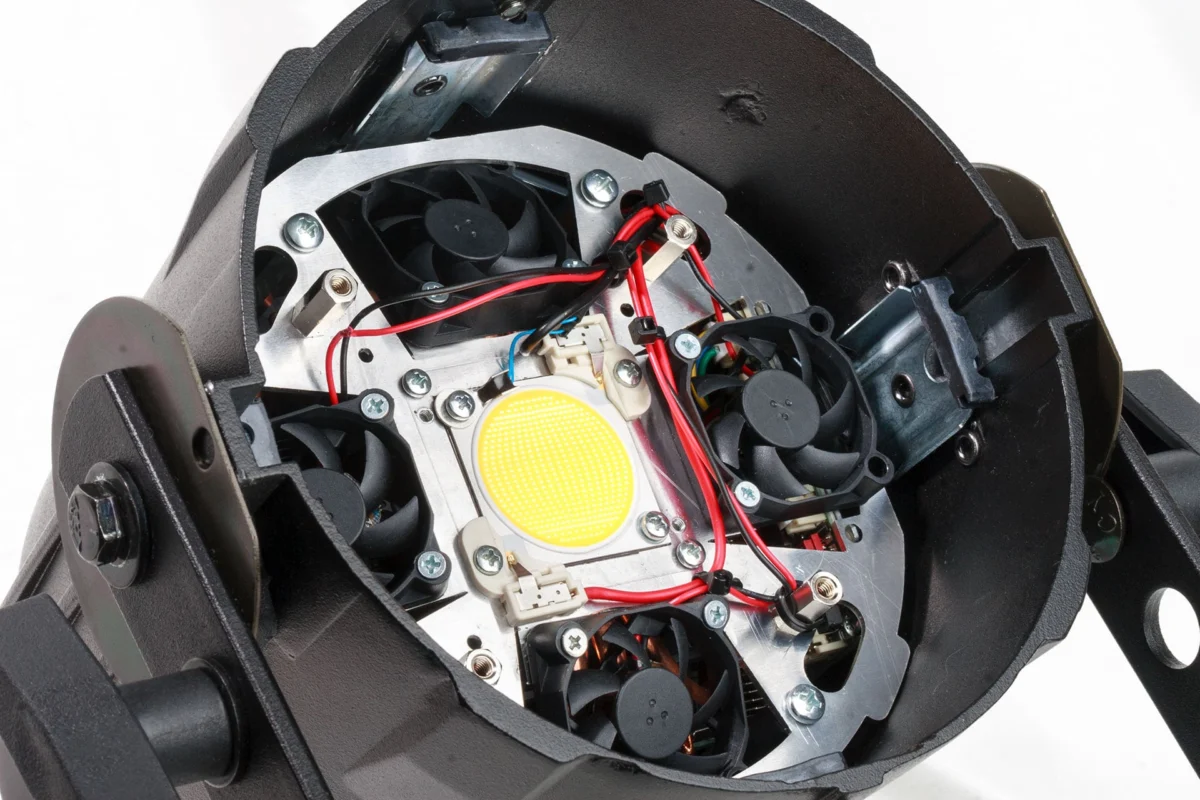
The evolution of professional stage lighting has reached a critical juncture where the primary challenge for manufacturers and technicians is no longer just the quality of light, but the quality of silence. As the industry transitions from the roar of high-powered discharge lamps to the sophisticated electronics of LED technology, a new generation of noise-makers has emerged, ranging from high-frequency power supply whines to the subtle but persistent "photoacoustic effect." While modern moving lights and static fixtures are significantly quieter than their predecessors, the demand for absolute silence in environments such as television studios, theaters, and opera houses has never been higher. This shift necessitates a deeper understanding of how noise is measured, how it is perceived by the human ear, and how it can be mitigated through advanced thermal management and electronic control.
The Evolution of Stage Acoustics: From Turbines to Whispers
The journey toward quieter stage lighting began in earnest over two decades ago. In 1999, technical journals such as Production Partner first began posing the question: "How loud are moving lights?" At that time, the industry was dominated by heavy, heat-intensive discharge lamps that required massive, high-velocity fans to prevent the fixtures from melting. These fans often produced a sound reminiscent of a jet turbine, making the presence of a lighting rig unmistakable even before the first cue was called.

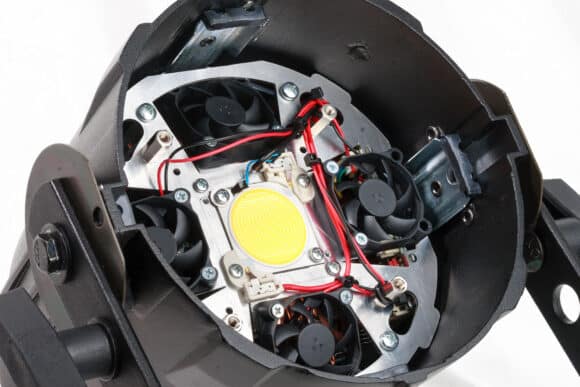
Fast forward to the present day, and the landscape has changed dramatically. Modern fans are designed with aerodynamic blades so efficient that one often has to look directly at the rotor to confirm it is even spinning. However, this progress has created a new dilemma: when the primary source of noise (the fan) is nearly eliminated, secondary noises that were previously masked become audible. This includes the high-pitched "singing" of capacitors, the "pfeifen" (whistling) of switching power supplies, and the physical vibrations caused by Pulse Width Modulation (PWM). As fixtures become quieter, the methodology for comparing them must become more precise, moving beyond simple decibel readings into the realm of psychoacoustics.
Quantifying the Invisible: Sone versus Decibels
In the consumer world, the noise of a washing machine or a computer drive is often measured in Sone, a unit that represents subjective loudness. Unlike the decibel (dB), which measures physical sound pressure, the Sone is a psychoacoustic value that describes how humans actually perceive sound. For technicians in the event industry, this distinction is becoming increasingly relevant. While a 10 dB increase in sound pressure technically represents a doubling of the perceived volume, the frequency of that sound determines how irritating it is. A low-frequency hum of 30 dB might be ignored, whereas a 30 dB whistle at 4 kHz can ruin a delicate theatrical moment.
To put these units into perspective, the rustling of leaves or quiet breathing typically registers at approximately 0.02 Sone (10 dB). A very quiet room or a high-end PC fan operates between 0.15 and 0.4 Sone (26 to 30 dB). In professional lighting, technicians still prefer the decibel for its technical precision, often utilizing third-octave spectrum analysis to identify specific "trouble" frequencies that might interfere with audio recordings or audience immersion.

The Gold Standard: Noise Measurement Under DIN EN ISO 7779
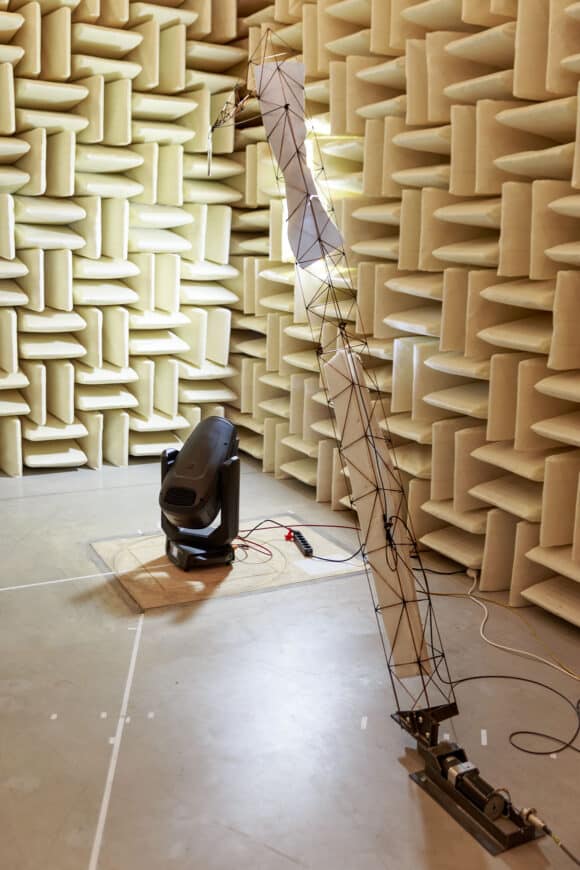
To ensure comparability between different manufacturers, the industry relies on standardized measurement protocols, specifically DIN EN ISO 7779. This standard, originally designed for information technology and telecommunications equipment, uses the A-weighted sound power level as a benchmark. For a comprehensive assessment, fixtures are often tested in hemi-anechoic chambers—rooms designed to absorb all sound reflections, leaving only the direct sound from the source.
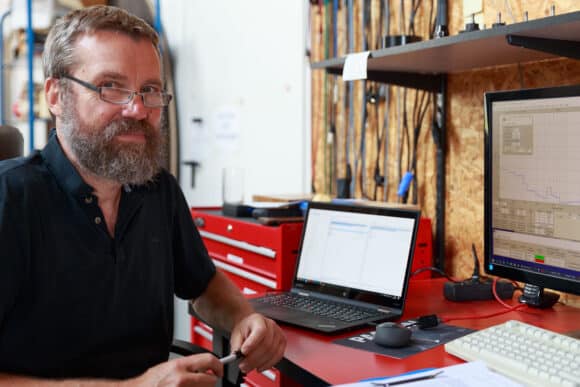
Leading acoustic laboratories, such as the IFAA in Herzogenrath, Germany, under the guidance of experts like Prof. Dr.-Ing. Anselm Goertz, utilize sophisticated setups to map a fixture’s noise profile. The process involves placing the moving light on a turntable and rotating it in 45-degree increments, while a motorized microphone arm moves in 30-degree arcs. This creates a "spherical" map of sound emissions, ensuring that noise coming from the base, the head, or the ventilation exhaust is all accounted for. This level of detail is necessary because a fixture might be silent from the front but emit a distracting whine from the rear power supply.
The New Frontier of Noise: PWM and the Photoacoustic Effect
One of the most fascinating and problematic sources of noise in the LED era is the photoacoustic effect. This occurs when high-intensity light hits a dark surface, such as a color filter or a black stage curtain. Because most LEDs are dimmed using Pulse Width Modulation (PWM)—rapidly turning the light on and off thousands of times per second—the energy hitting the surface is periodic. This energy is converted into heat, causing a microscopic expansion and contraction of the air near the surface, which the human ear perceives as a high-pitched buzz or whistle.
This phenomenon explains why a light might seem "silent" in a warehouse but "noisy" once it is rigged and focused on a dark set piece. To combat this, modern fixtures allow operators to adjust the PWM frequency. By shifting the frequency out of the audible range (above 20 kHz), technicians can eliminate both camera flicker and the photoacoustic buzz. However, changing the PWM frequency can sometimes increase the heat generated by the driver electronics, forcing the internal fans to spin faster—a classic engineering trade-off.
Thermal Management and Operator Control
Modern "Silent Mode" operations are not just about slowing down fans; they involve a complex choreography of power management. When a technician switches a fixture to "Silent" via DMX or RDM, the fixture’s internal logic must decide how to handle the heat. Some manufacturers opt for a "constant speed" approach, ensuring the noise floor never changes, while others use "auto" modes that ramp up cooling only when necessary.
Crucially, in the most extreme silent modes, the fixture may need to "throttle" its brightness. If the fan is forced to remain at 10% speed to maintain silence, the LED engine may reduce its output to 50% to prevent overheating. Professional-grade fixtures now offer stufenlose (stepless) control of fan speeds, allowing operators to find the exact balance between light output and acoustic emission for a specific scene.
Historical Context and Technical Mitigation
The struggle for silence is not entirely new; it has simply shifted mediums. In the era of halogen lamps, the primary noise was "lamp buzz" caused by the physical vibration of the filament. This was a result of the magnetic fields generated by phase-cut dimmers. The solution then was to use higher-quality dimmers with longer "rise times" (measured in microseconds) or to switch to sine-wave dimming.
In the LED world, the challenges are electronic rather than magnetic. The switching power supplies (SMPS) found in the base of moving lights can emit high-frequency squeals if the coils are not properly potted or if the load is inconsistent. Furthermore, the mechanical noise of motors for pan, tilt, zoom, and focus remains a factor. While a fixture might be silent while static, a fast zoom reset can still generate a distracting "zip" sound. Manufacturers are now focusing on "stepper motor noise" by utilizing sophisticated motor drivers that smooth out the electrical pulses, resulting in near-silent movement.
Broader Impact and Industry Implications
The implications of these acoustic advancements extend far beyond the theater. In the world of film and high-end television production, where on-set "clean" audio is paramount, the noise floor of the lighting rig can dictate the entire production schedule. If a light is too noisy, it must be moved further away, requiring a more powerful (and often noisier) unit to achieve the same lux levels.
The data suggests that the industry is entering a "Golden Age" of silent operation. The fixtures available today are incomparable to the 2-kW "Eni-Zooms" or early moving lights of 20 years ago. However, this progress places a higher burden of proof on manufacturers. It is no longer enough to claim a fixture is "silent." Professional users now demand full polar plots of sound emissions, A-weighted decibel ratings at specific distances, and clear documentation on how brightness is affected by various cooling modes.
Conclusion: The Future of Quiet Innovation
As we look toward the future, the trend is moving toward hybrid cooling solutions—combining large, slow-moving fans with heat-pipe technology or even liquid cooling systems similar to those found in high-performance gaming computers. The goal is to maximize the surface area for heat dissipation so that active airflow becomes a secondary, rather than primary, cooling method.
For the lighting designer and the theater technician, the message is clear: silence is a feature that must be managed as actively as color or focus. By understanding the physics of sound—from the logarithmic nature of the decibel to the nuances of the photoacoustic effect—professionals can ensure that the only thing the audience hears is the performance, not the equipment. The "Sound of Light" has finally become a whisper, but maintaining that whisper requires constant vigilance and a deep commitment to acoustic excellence.
