

Kanye West’s latest album, "Bully," has landed at the number two position on the prestigious Billboard 200 chart, accumulating 152,000 equivalent units in its first week of release. This debut, while strong, has been overshadowed by a significant dispute over the album’s actual first-week performance and a growing controversy surrounding West’s upcoming headlining performances at London’s Wireless Festival. The situation highlights the complex interplay of artistic achievement, data interpretation, and public perception in the modern music industry.
Billboard 200 Performance: A Solid Debut with a Caveat
According to official figures released by Billboard, "Bully" secured its second-place ranking through a combination of streaming and traditional sales. Of the 152,000 equivalent units, a substantial 96,000 were generated from streaming, translating to approximately 98.43 million on-demand official streams. The remaining 56,000 units came from traditional sales, encompassing physical albums and digital downloads.
This debut means West was narrowly edged out of the top spot by K-Pop titans BTS. Their tenth album, "ARIRANG," maintained its dominance on the chart for its second week, earning an impressive 187,000 equivalent units. This followed an exceptional opening week for BTS, where they garnered a staggering 641,000 units, marking a significant commercial achievement.
The number two debut for "Bully" also marks a notable break in West’s highly consistent chart history. It ends a remarkable 21-year streak of number-one solo albums on the Billboard 200. This marks only the second time in his solo career that one of his albums has not reached the summit of the chart. The previous instance was his debut album, "The College Dropout," released in 2004, which also peaked at the number two position.
The Gamma. Discrepancy: A Contested First Week
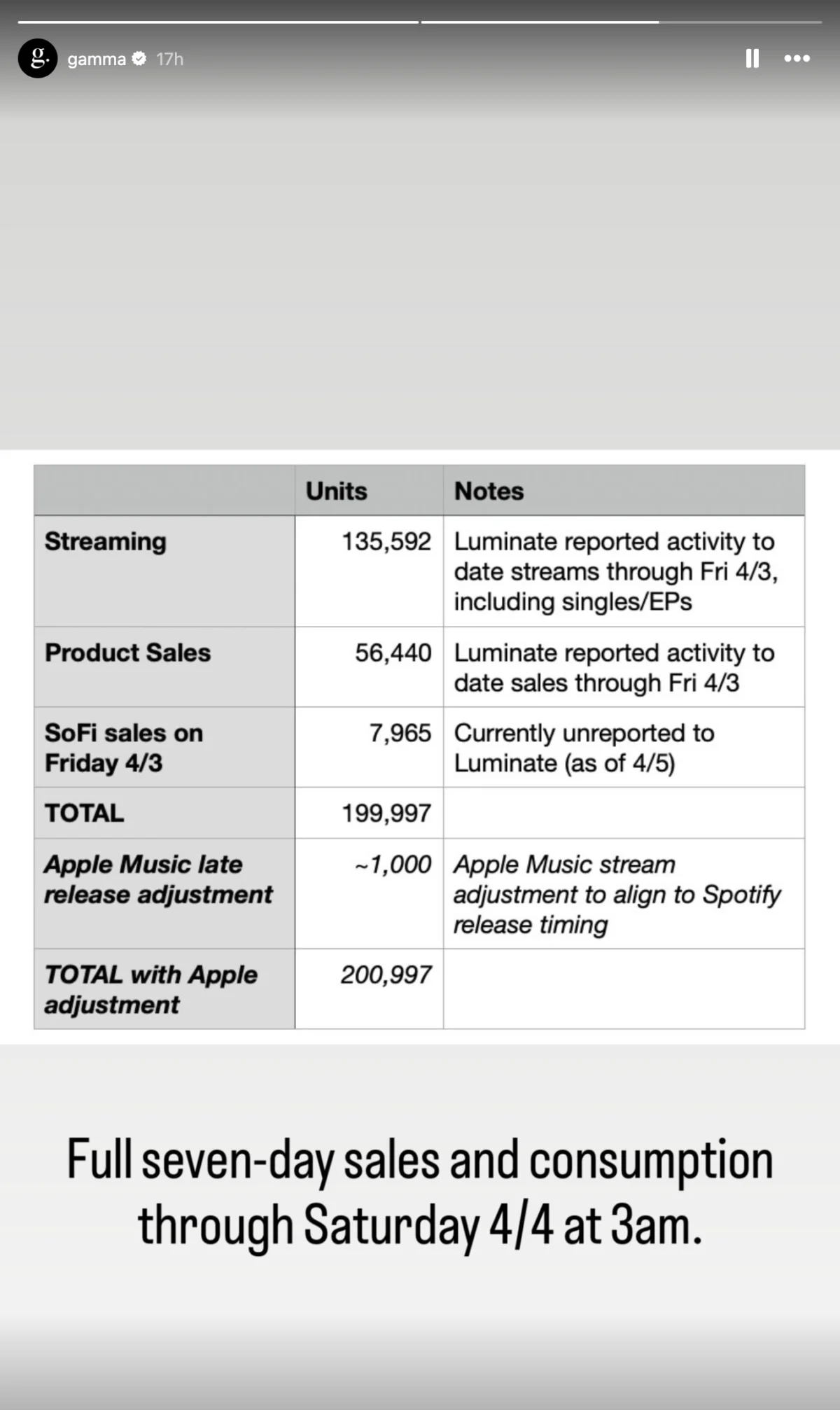
However, the narrative surrounding "Bully’s" chart performance took a dramatic turn with claims from Gamma., the distribution company founded by former Apple Music executive Larry Jackson. Gamma. has publicly challenged the official Billboard figures, asserting that "Bully" actually generated over 200,000 equivalent units in its first week, a number that would have been sufficient to dethrone BTS and claim the number one spot.
Gamma. took to its Instagram Stories to present what it described as a "full seven-day sales and consumption" breakdown. This detailed report claimed that "Bully" accumulated a total of 200,997 units. This direct contradiction of the official chart data has sparked considerable discussion and raises questions about the methodologies and reporting processes involved in music chart compilation.
As of the reporting of this article, neither Billboard nor Luminate, the data company responsible for powering the Billboard charts, have issued a formal response to Gamma.’s claims. This silence further fuels the speculation and leaves the exact sales figures open to interpretation.
Background: The Evolution of Chart Metrics
The Billboard 200 chart, a primary barometer of album popularity in the United States, has evolved significantly over the years to reflect changes in music consumption. Initially, it was based solely on traditional album sales. In the mid-2010s, the methodology was updated to incorporate equivalent album units, which include track-equivalent albums (TEAs) and streaming-equivalent albums (SEAs). A TEA is equivalent to the sale of 10 digital tracks, while an SEA is equivalent to 3,750 premium streams or 12,500 ad-supported streams.
This shift has democratized chart access for artists who may not have massive traditional sales but command a large and engaged streaming audience. For artists like Kanye West, whose career has spanned these significant changes, maintaining chart dominance requires a multifaceted approach, leveraging both album sales and widespread streaming engagement. The current dispute between Gamma. and Billboard underscores the potential for differing interpretations of these complex metrics, particularly when accounting for various promotional strategies and distribution models.
An Expanded Edition on the Horizon
Adding another layer to the "Bully" narrative, Gamma. has also teased an upcoming expanded edition of the album. In a separate Instagram Story, the company announced, "Bully deluxe on the way," signaling that further content from the artist is expected. While specific details regarding the release date or the number of bonus tracks have not yet been disclosed, this announcement suggests a continued push to engage fans and potentially influence future chart performance. The inclusion of additional material could provide a fresh wave of streams and sales, further extending the album’s lifecycle.
Mounting Controversy: Wireless Festival Headlining and Sponsor Withdrawals
Beyond the chart performance, Kanye West’s upcoming headlining performances at London’s Wireless Festival in July have become a focal point of significant controversy. His booking has drawn intense scrutiny due to his history of antisemitic remarks and other offensive statements. This has led to a strong backlash from various stakeholders, including sponsors and public figures.
In recent days, a number of major sponsors have announced their withdrawal from the festival in response to West’s inclusion. These include prominent brands such as Pepsi, PayPal, and the drinks giant Diageo. This exodus of corporate support reflects a growing trend of brands distancing themselves from artists associated with controversial or harmful ideologies.
The public outcry has extended to the highest levels of government. Prime Minister Sir Keir Starmer and London Mayor Sadiq Khan have both publicly expressed their disapproval of West’s booking. Sir Keir Starmer stated that it is "deeply concerning" that the rapper has been scheduled to perform, especially "despite his previous antisemitic remarks and celebration of Nazism." These statements highlight the broader societal implications of artistic platforms and the responsibility that comes with providing them to individuals with a history of espousing hate speech.
Timeline of Events and Broader Implications
The sequence of events surrounding "Bully" and Kanye West’s public profile has been a rapid and complex one.
- Album Release: "Bully" is released, with initial tracking indicating a strong debut on the Billboard 200.
- Official Chart Data: Billboard announces "Bully" has debuted at number two with 152,000 equivalent units, placing it behind BTS’s "ARIRANG."
- Gamma.’s Counter-Claim: Gamma. releases its own data via Instagram Stories, claiming "Bully" achieved over 200,000 units, which would have secured the number one spot.
- Festival Announcement and Backlash: West’s headlining slots at Wireless Festival are announced, triggering immediate criticism and a wave of sponsor withdrawals.
- Political Statements: Prominent political figures, including the Prime Minister and Mayor of London, voice their opposition to West’s performance.
- Deluxe Edition Tease: Gamma. hints at an upcoming deluxe version of "Bully," suggesting ongoing promotional efforts.
The implications of this multi-faceted situation are far-reaching. For Kanye West, the sales discrepancy and the festival controversy raise questions about his current standing in the industry and his ability to navigate public opinion. The sales dispute, if it leads to a formal review or clarification from Billboard and Luminate, could set a precedent for how such disagreements are handled in the future.
The sponsorship withdrawals from Wireless Festival underscore the increasing power of consumer activism and the heightened sensitivity of brands to reputational risk. This trend suggests that artists with a history of controversial statements may face greater challenges in securing mainstream platforms and commercial partnerships. Furthermore, the public condemnation from political figures highlights the intersection of entertainment, public discourse, and political accountability.
West’s recent performances, including two sold-out shows at Los Angeles’ SoFi Stadium in support of "Bully," demonstrate his continued ability to draw significant crowds. However, the ongoing controversies suggest that his future engagements may be met with continued scrutiny and protest. The dual challenges of charting success and managing public perception present a complex landscape for the artist as he continues to release music and plan future performances. The coming weeks will likely see further developments regarding both the chart data dispute and the fallout from his Wireless Festival booking.
