

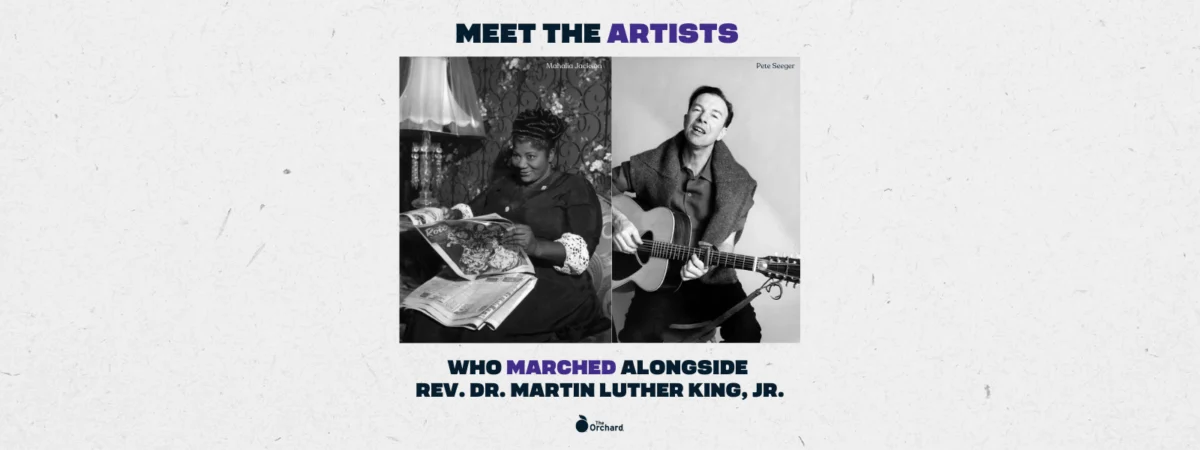
On this Rev. Dr. Martin Luther King, Jr. Day of Service, January 19, 2026, the enduring power of music and art in fueling social change is brought into sharp focus. This commemoration serves as a vital opportunity to remember and honor the contributions of artists who not only lent their voices and talents to the Civil Rights Movement but also marched shoulder-to-shoulder with its pivotal leader, Rev. Dr. Martin Luther King, Jr. Among these seminal figures, the legacies of gospel titan Mahalia Jackson and folk icon Pete Seeger stand out, their music acting as both a spiritual balm and a powerful call to action that resonated deeply within the hearts of activists and the nation. Their on-stage performances and off-stage advocacy provided a guiding light for a movement striving for equality and justice, underscoring the profound connection between artistic expression and the fight for human rights.
The contributions of artists like Jackson and Seeger extended far beyond mere entertainment. They were integral to the fabric of the Civil Rights Movement, offering solace, inspiration, and a shared sense of purpose to those facing immense adversity. Their songs became anthems, their performances rallying points, and their very presence a testament to the moral imperative of the struggle. Exploring their music, much of which is preserved and made accessible through distribution partners like Smithsonian Folkways, offers a tangible connection to the past and a deeper understanding of the sacrifices and triumphs that defined this transformative era in American history.
Mahalia Jackson: The Voice of the Movement
Mahalia Jackson, widely recognized as one of the most influential gospel singers of the 20th century, shared a profound personal and professional relationship with Rev. Dr. Martin Luther King, Jr. Their friendship was a cornerstone of the Civil Rights Movement, with Jackson frequently opening for King’s sermons and performing at critical fundraisers for the Southern Christian Leadership Conference (SCLC). Her powerful contralto voice possessed an unparalleled ability to stir the soul, offering spiritual uplift and unwavering hope in the face of systemic oppression.
A pivotal moment that cemented Jackson’s role in the movement’s narrative occurred during the historic 1963 March on Washington for Jobs and Freedom. As Dr. King delivered his iconic "I Have a Dream" speech on the steps of the Lincoln Memorial, it was Mahalia Jackson, seated on the dais, who famously interjected with a heartfelt plea: "Tell them about the dream, Martin!" This spontaneous encouragement is widely credited with prompting Dr. King to move away from his prepared remarks and launch into the extemporaneous, soul-stirring elaboration that would define the march and resonate through history. This exchange highlights the deep trust and synergy between the two leaders, demonstrating how artistic inspiration could directly shape moments of immense historical significance.
Jackson’s involvement was not limited to this singular moment. She performed at numerous marches, rallies, and demonstrations, her voice a beacon of strength and resilience. Her rendition of "We Shall Overcome," a song that would become the unofficial anthem of the Civil Rights Movement, was particularly impactful, imbuing the lyrics with a profound sense of spiritual conviction. Her unwavering commitment to the cause, even in the face of personal danger and societal prejudice, solidified her status as a true freedom fighter. The impact of her music was immeasurable, providing a soundtrack to the struggle and fostering a sense of unity and determination among activists.
Pete Seeger: The Bard of Social Justice
Pete Seeger, a towering figure in American folk music, was far more than just a singer-songwriter; he was a dedicated social activist whose life’s work was interwoven with the pursuit of justice and equality. By the 1960s, Seeger had become a tireless advocate for a broad spectrum of interconnected causes, including civil rights, workers’ rights, and environmental protection. His music, characterized by its accessible melodies and potent lyrical messages, served as a powerful tool for raising awareness and mobilizing public sentiment.
Seeger’s repertoire includes some of the most enduring protest songs in American history. His iconic labor songs, such as "Solidarity Forever" and "Which Side Are You On?", became rallying cries for workers fighting for fair treatment and safer conditions. He also co-wrote "If I Had a Hammer" with Lee Hays, a song that evolved from a union song into a powerful anthem for peace and brotherhood, resonating with a generation seeking to dismantle prejudice and build a more inclusive society.
Crucially, Seeger played a direct role in popularizing "We Shall Overcome." His version of the song, adapted from earlier folk melodies, was introduced to Rev. Dr. Martin Luther King, Jr. by Zilphia Horton at the Highlander Folk School in Tennessee. This introduction marked Dr. King’s first encounter with the song, which he would later adopt as a central theme in his speeches and a unifying anthem for the movement. The song’s simple yet profound message of hope and perseverance became synonymous with the struggle for civil rights, providing solace and strength to those facing violence and discrimination.
Seeger’s personal commitment to the Civil Rights Movement was further demonstrated when he accepted Dr. King’s invitation to perform at the pivotal 1965 Selma to Montgomery March. This march, a critical event in the fight for voting rights, saw thousands of activists facing brutal opposition from state and local law enforcement. Seeger’s presence and performance offered a vital morale boost to the marchers, a reminder that their cause was not only just but also widely supported. His willingness to stand with the movement, even in the face of potential danger, underscored his deep commitment to the principles of equality and justice. Seeger’s legacy as a musician of the people, whose art was inextricably linked to social activism, continues to inspire activists and musicians alike, a testament to the enduring power of song to effect change.
The Music of Freedom: A Deeper Dive
The music associated with the Civil Rights Movement served a multifaceted purpose. It was a form of protest, a means of communication, a source of spiritual sustenance, and a powerful tool for organizing and unifying disparate groups of people. Mahalia Jackson’s gospel roots provided a direct link to the spiritual traditions that had long sustained African American communities, imbuing her performances with a profound sense of faith and resilience. Her powerful vocals could evoke both deep sorrow for the injustices faced and exultant hope for a brighter future. Songs like "Move On Up a Little Higher" and "Amazing Grace" were not merely performances; they were sermons, prayers, and declarations of unwavering faith in the face of overwhelming odds.
Pete Seeger, on the other hand, brought a secular folk tradition to the movement, focusing on narrative storytelling and direct calls for social action. His ability to craft accessible and memorable tunes made complex political and social issues relatable to a broad audience. Songs like "Turn! Turn! Turn! (To Everything There Is a Season)" offered philosophical reflections on change and societal progress, while "Guantanamera," a Cuban folk song he popularized, became a symbol of international solidarity and anti-colonial struggle, demonstrating the global reach of the fight for human rights. The collaborative nature of folk music, often passed down and adapted, mirrored the collective effort required for social change.
The distribution of this music through channels like Smithsonian Folkways has been instrumental in preserving this rich cultural heritage. Smithsonian Folkways Recordings, a nonprofit arm of the Smithsonian Institution, has dedicated itself to documenting and disseminating music that reflects the diversity of American culture and its social movements. Their extensive catalog includes seminal recordings by both Jackson and Seeger, as well as countless other artists who contributed to the soundtrack of the Civil Rights Era. By making these recordings accessible, they ensure that future generations can learn from and be inspired by the music that fueled a nation’s conscience.
The March on Washington: A Musical and Political Nexus
The 1963 March on Washington for Jobs and Freedom remains one of the most significant events of the Civil Rights Movement, and music played an indispensable role in its success. The sheer scale of the demonstration – an estimated 250,000 participants – required a unifying force, and music provided that essential element. Gospel singers like Mahalia Jackson, Joan Baez, and Bob Dylan, along with folk artists like Odetta and Peter, Paul and Mary, performed throughout the day, their songs weaving a tapestry of hope, defiance, and shared humanity.
The presence of these artists not only entertained but also validated the cause, drawing attention from a national and international audience. Their performances served as a powerful counterpoint to the images of violence and oppression that had characterized earlier protests. Instead, the March on Washington presented a vision of a unified nation, striving for a more just and equitable future, with music as its eloquent voice. The emotional resonance of the music amplified the political demands of the day, making the struggle for civil rights a deeply human and universally understood imperative.
"We Shall Overcome": An Anthem Forged in Struggle
The evolution of "We Shall Overcome" into the definitive anthem of the Civil Rights Movement is a testament to the power of adaptation and collective ownership. While its exact origins are debated, its roots can be traced to traditional spirituals and labor songs. Pete Seeger played a crucial role in adapting and popularizing it, but it was the grassroots adoption and modification by activists across the South that transformed it into a potent symbol of the movement.
During sit-ins, freedom rides, and marches, "We Shall Overcome" became a ritualistic expression of hope and solidarity. Its simple, repetitive structure made it easy to learn and sing, even for those with little musical training. The act of singing it together, in the face of fear and intimidation, fostered a profound sense of community and shared purpose. Dr. King’s repeated quoting of its lyrics, particularly in his final public address in April 1968, underscored its significance. The song transcended its musical form, becoming a prayer, a declaration of faith, and a prophecy of a future where justice would prevail. Its enduring popularity in movements for social justice worldwide speaks to its universal appeal and its power to unite people in the pursuit of a common good.
Broader Implications and Lasting Impact
The artistic contributions to the Civil Rights Movement, exemplified by Mahalia Jackson and Pete Seeger, offer crucial lessons for contemporary social justice efforts. In an era where digital platforms can amplify messages instantly, the foundational power of art and music to connect with people on an emotional and spiritual level remains undiminished. The artists of the Civil Rights era understood that true change requires not only political action but also a transformation of hearts and minds. Their music provided the emotional architecture for this transformation, creating a shared narrative of struggle and a vision of a better future.
Furthermore, the legacy of these artists highlights the importance of supporting cultural institutions and initiatives that preserve and promote music with social significance. Organizations like Smithsonian Folkways are vital in ensuring that the soundtracks of past movements are not forgotten, serving as educational resources and sources of inspiration for future generations. As we observe the Rev. Dr. Martin Luther King, Jr. Day of Service, reflecting on the artistic collaborations that powered the Civil Rights Movement provides a powerful reminder that art, in its myriad forms, remains an indispensable tool in the ongoing struggle for a more just and equitable world. The call to action issued by these artists—to show up, to speak out, and to create a more beloved community—continues to resonate today, urging us to find our own voices and contribute to the ongoing work of social progress.
Additional Resources for Engagement
In the spirit of the Rev. Dr. Martin Luther King, Jr. Day of Service, individuals are encouraged to engage actively in their communities and support organizations dedicated to social justice. The platform YourCause Connect provides a centralized hub for discovering volunteer opportunities and charitable organizations, enabling individuals to make a tangible impact. Exploring the diverse array of non-profits working towards equality and human rights is a crucial step in translating inspiration into action.
Moreover, amplifying the messages of justice and equality through social media is a powerful way to raise awareness and foster dialogue. Following and sharing content from organizations and individuals committed to these principles can help to spread awareness and mobilize support for important causes. The ongoing struggle for justice demands continuous engagement, and these resources offer pathways for individuals to contribute meaningfully to the ongoing pursuit of Dr. King’s dream.
