

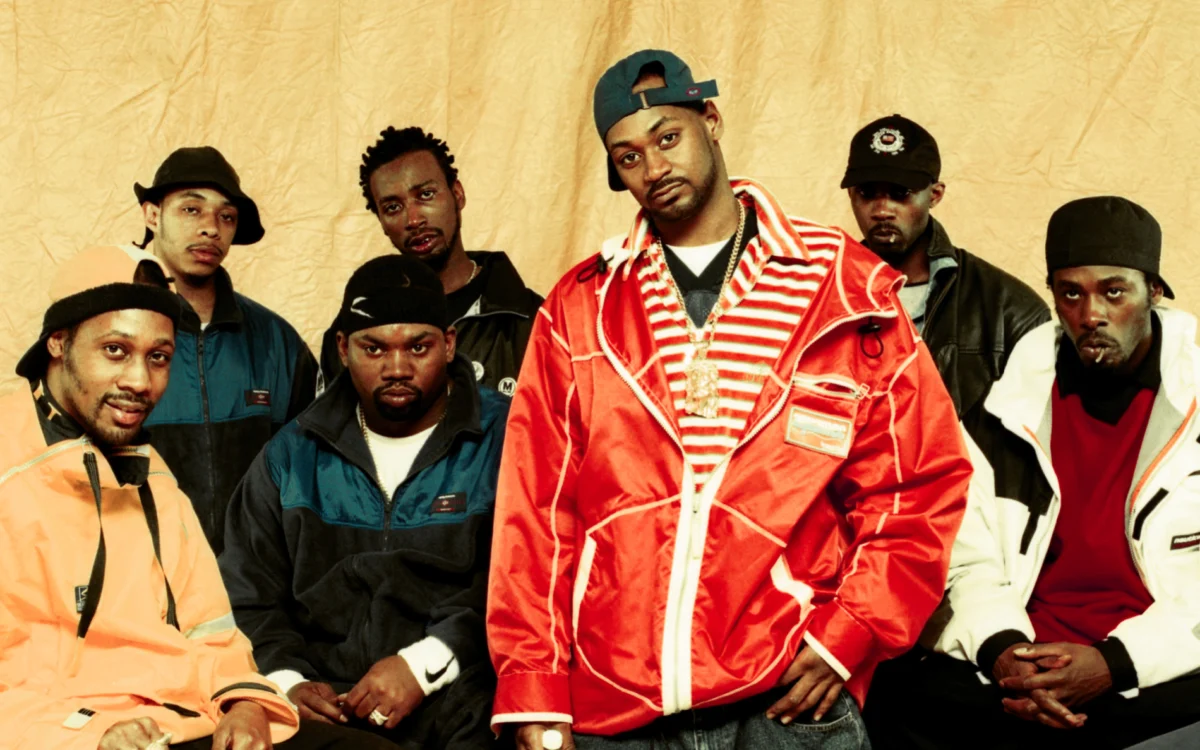
The iconic hip-hop collective Wu-Tang Clan has officially secured their place in music history, being voted into the prestigious Rock & Roll Hall of Fame as part of the Class of 2026. The groundbreaking announcement, made on Monday, April 13, solidifies the Staten Island group’s immense influence and enduring legacy across genres. Alongside Wu-Tang Clan, a diverse array of musical titans were also honored, including legendary vocalist Sade, the soulful Luther Vandross, British rock giants Oasis and Iron Maiden, pop-rock icon Phil Collins, punk-rock pioneer Billy Idol, and the influential post-punk bands Joy Division and New Order.
Further amplifying the recognition of hip-hop’s cultural significance, fellow rap pioneers Queen Latifah and MC Lyte will also be inducted, receiving the esteemed "Early Influence" award. This particular honor acknowledges their foundational roles in shaping not only the genre but also broader music and cultural landscapes. The formal induction ceremony is slated to take place on November 14 at the Peacock Theater in Los Angeles, with the proceedings set to be broadcast in December on ABC and subsequently available on Disney+.
The news was met with profound emotion and gratitude from the Wu-Tang Clan members. RZA, the group’s de facto leader and primary architect, shared his elation on Instagram, stating, "In all Humility. This announcement filled me with joy, proudness, profound achievement, and awe. I’m grateful to all my brothers and those who helped us on the path. Thank you Rock & Roll Hall of Fame. This is a true Triumph – Wutang Forever." His sentiment echoed the collective feeling of accomplishment and the recognition of a journey that began decades ago on the streets of Shaolin.
Raekwon, a pivotal voice within the Clan, expressed his pride with characteristic flair: "History books will know this club! this my grammy. what we talking bout! haaaaaaaaaaa. shout out to all our mothers who birth these men. they won tonite." This sentiment highlights the deep personal significance of the induction, framing it as a recognition equivalent to the highest accolades in the music industry. GZA, another founding member known for his intricate lyricism, reflected on the collaborative effort: "We couldn’t have reached this milestone without our hip hop predecessors, fans, collaborators, friends and family. We thank you." This acknowledgment underscores the interconnectedness of the hip-hop community and the broader support system that contributed to their success.
The Rock & Roll Hall of Fame induction process is a rigorous one, involving nominations from a committee of music historians and experts, followed by a global voting period. An international body comprising over 1,200 inductees, historians, and music industry professionals casts their ballots. This year’s nominees, while extensive, saw certain notable artists like Lauryn Hill, Mariah Carey, and Shakira, among others, not receiving sufficient votes to secure induction in this cycle.
A Legacy Forged in Innovation and Authenticity
Wu-Tang Clan’s induction marks a significant milestone in the ongoing recognition of hip-hop within the Rock & Roll Hall of Fame. With their inclusion, the total number of hip-hop acts enshrined in the Hall now stands at 18. This journey of acknowledgment began in 2007 with the pioneering Grandmaster Flash and the Furious Five. Subsequent years saw other seminal hip-hop groups and artists earn their rightful place, including Run-DMC, Beastie Boys, Public Enemy, and N.W.A. The list of hip-hop inductees is a testament to the genre’s cultural and artistic evolution, featuring luminaries such as JAY-Z, Eminem, 2Pac, The Notorious B.I.G., OutKast, Missy Elliott, and A Tribe Called Quest. Furthermore, artists like LL Cool J, Salt-N-Pepa, and DJ Kool Herc have been recognized through "Early Influence" or "Musical Excellence" awards, further cementing hip-hop’s foundational impact on popular music.
The Wu-Tang Clan’s impact transcends mere musicality; they are cultural architects. Emerging in the early 1990s, a period of intense creativity and diversification within hip-hop, the group distinguished themselves through their raw, unfiltered lyrical prowess, intricate storytelling, and a unique aesthetic that blended martial arts mysticism, street wisdom, and a profound sense of community. Their debut album, "Enter the Wu-Tang (36 Chambers)" released in 1993, is widely considered a masterpiece and a pivotal moment in hip-hop history. It redefined the genre’s sonic landscape and lyrical complexity, introducing a cast of distinct personalities – RZA, GZA, Ol’ Dirty Bastard, Method Man, Raekwon, Ghostface Killah, Inspectah Deck, U-God, and Masta Killa – each with their own compelling narrative and stylistic approach.
The Evolution of Hip-Hop’s Recognition
The inclusion of Wu-Tang Clan, Queen Latifah, and MC Lyte in the Class of 2026 signifies a maturing understanding within the Rock & Roll Hall of Fame of hip-hop’s genre-bending influence and its undeniable contribution to the broader tapestry of rock and roll’s spirit. While the term "rock and roll" traditionally evokes images of electric guitars and blues roots, its modern interpretation encompasses a wider spectrum of music that embodies rebellion, innovation, and cultural impact. Hip-hop, from its inception, has shared these core tenets, challenging norms and forging new artistic paths.
The "Early Influence" award given to Queen Latifah and MC Lyte is particularly significant. Queen Latifah, a multi-talented artist, has been a trailblazer in hip-hop since the late 1980s, known for her empowering messages, smooth flow, and entrepreneurial spirit. Her work has consistently pushed boundaries, advocating for female empowerment and social consciousness within the genre. MC Lyte, a contemporary and equally influential figure, is celebrated for her sharp lyricism, intricate rhyme schemes, and her role as one of the first female rappers to achieve mainstream success and critical acclaim. Their induction in this category acknowledges their foundational contributions to the genre’s development and their enduring impact on subsequent generations of artists, both within and beyond hip-hop.
A Look Back at the Journey
The journey to the Rock & Roll Hall of Fame for Wu-Tang Clan has been a protracted but ultimately triumphant one. Their unique approach to music, characterized by a cohesive yet individualistic artistic vision, allowed each member to cultivate a successful solo career while maintaining the collective’s powerful synergy. This dual trajectory has ensured their continued relevance and influence across decades. The group’s sonic innovation, often driven by RZA’s distinctive production style, which incorporated soulful samples, gritty beats, and a cinematic quality, has been widely emulated and admired.
The expansion of the Rock & Roll Hall of Fame’s scope to embrace hip-hop more fully reflects a broader cultural shift. For years, there was a debate within the music industry and among fans about the criteria for inclusion and whether hip-hop, a genre that emerged from distinct cultural roots, truly belonged in an institution named after "rock and roll." However, as hip-hop has evolved and permeated global popular culture, influencing fashion, language, and social discourse, its artistic merit and historical significance have become undeniable. The Hall of Fame’s decisions in recent years, including the induction of artists like Tupac Shakur, The Notorious B.I.G., and Missy Elliott, demonstrate a growing appreciation for the genre’s multifaceted contributions.
The Broader Implications
The induction of Wu-Tang Clan into the Rock & Roll Hall of Fame is more than just an honor for a single group; it is a validation of hip-hop’s enduring power and its integral role in the evolution of modern music. It serves as an inspiration to aspiring artists from all backgrounds, reinforcing the idea that authenticity, innovation, and a strong artistic vision can lead to the highest levels of recognition. For fans, it represents a collective victory, a moment to celebrate a group that has provided the soundtrack to their lives and shaped their cultural understanding.
The ceremony on November 14 will undoubtedly be a star-studded event, bringing together a diverse group of artists and industry figures. The presence of Wu-Tang Clan, Sade, Iron Maiden, and others will create a unique intergenerational and cross-genre dialogue, highlighting the common threads of artistic passion and influence that bind seemingly disparate musical worlds. The broadcast of the event will offer a wider audience the opportunity to witness this historic occasion and to gain a deeper appreciation for the artists who have shaped the musical landscape.
As the Rock & Roll Hall of Fame continues to evolve, the inclusion of artists like Wu-Tang Clan underscores its commitment to reflecting the entirety of popular music’s rich and dynamic history. Their place among the legends of rock and roll is not just a testament to their individual achievements but also a celebration of hip-hop’s undeniable and lasting legacy. The 36 Chambers have officially entered the pantheon of musical greatness.
