

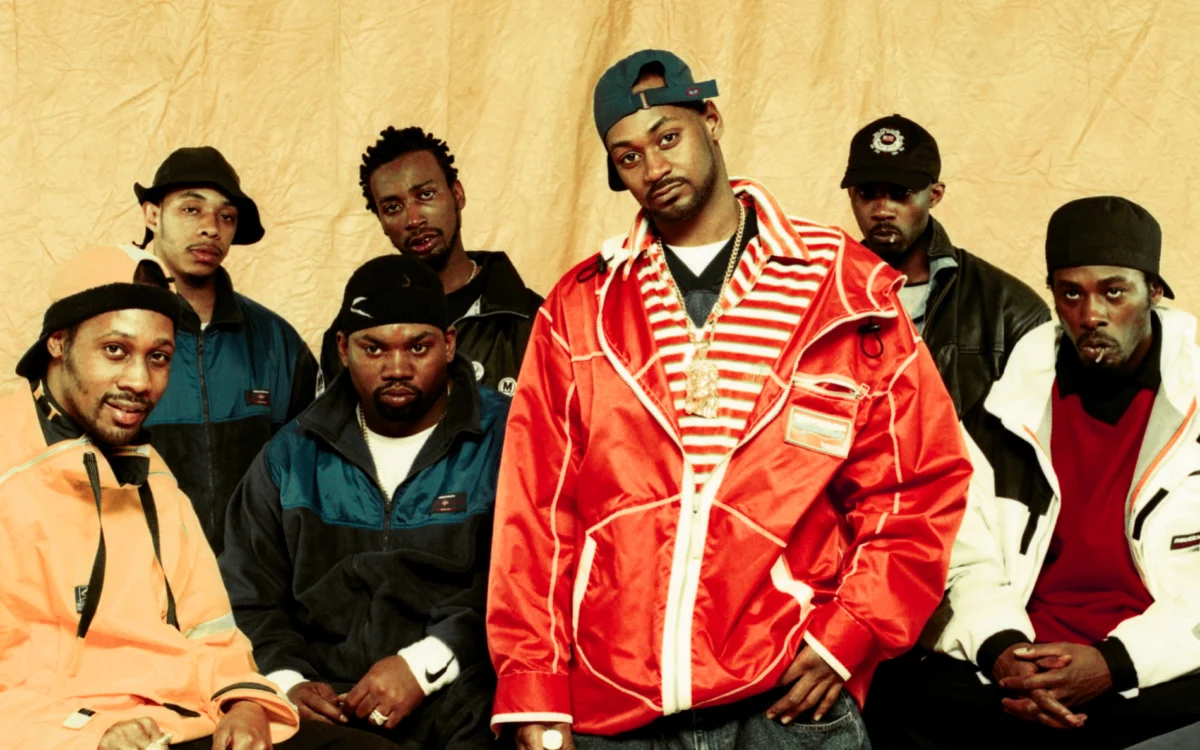
The seminal hip-hop collective Wu-Tang Clan has officially secured its place in the hallowed halls of rock and roll history, being voted into the prestigious Rock & Roll Hall of Fame as part of the Class of 2026. The groundbreaking announcement, made on Monday, April 13, marks a significant milestone for the Staten Island-born group, solidifying their enduring impact on music and popular culture. This induction ceremony, scheduled for November 14 at the Peacock Theater in Los Angeles, will also honor a diverse slate of artists, including the iconic Sade, R&B legend Luther Vandross, British rock titans Oasis and Iron Maiden, and solo artists Phil Collins and Billy Idol. The influential post-punk bands Joy Division and New Order will also be recognized.
Beyond the main categories, the Rock & Roll Hall of Fame is also celebrating the pioneering spirit of hip-hop with the "Early Influence" award, bestowed upon fellow rap royalty Queen Latifah and MC Lyte. This recognition underscores their foundational contributions to the genre and their broader cultural significance, further highlighting the growing acceptance and acknowledgment of hip-hop’s place within the broader narrative of American music. The induction ceremony will be broadcast in December on ABC and made available for streaming on Disney+.
A Legacy Forged in the Streets: The Wu-Tang Saga
The Wu-Tang Clan’s journey to the Rock & Roll Hall of Fame is a testament to their unparalleled artistic vision, raw authenticity, and revolutionary approach to music. Formed in the early 1990s, the group, comprising RZA, GZA, Ol’ Dirty Bastard, Method Man, Raekwon, Ghostface Killah, Inspectah Deck, U-God, Masta Killa, and later, Cappadonna, emerged from the urban landscape of Staten Island with a sound that was both gritty and sophisticated. Their debut album, "Enter the Wu-Tang (36 Chambers)" released in 1993, is widely regarded as a landmark in hip-hop, characterized by its distinctive martial arts-inspired lyrical themes, RZA’s innovative production, and the individualistic styles of its nine members.
The album’s success was immediate, defying conventional industry expectations and establishing a blueprint for independent artist control and a unique group dynamic. The Wu-Tang Clan’s impact extended beyond their music; they cultivated a distinct aesthetic and a powerful mythology that resonated deeply with a generation of music fans. Their innovative business model, which allowed members to pursue successful solo careers while remaining part of the larger collective, further demonstrated their forward-thinking approach. This structure led to a string of critically acclaimed solo projects, including Raekwon’s "Only Built 4 Cuban Linx…", GZA’s "Liquid Swords," and Ghostface Killah’s "Ironman," all of which are considered classics in their own right.
Reactions from the Clan: Joy, Pride, and Gratitude
The news of their induction has been met with overwhelming emotion and pride from the Wu-Tang Clan members. RZA, the group’s architect and primary producer, expressed his profound joy and awe on Instagram. "In all Humility. This announcement filled me with joy, proudness, profound achievement, and awe," he wrote. "I’m grateful to all my brothers and those who helped us on the path. Thank you Rock & Roll Hall of Fame. This is a true Triumph – Wutang Forever." His statement reflects the collective gratitude and recognition of the arduous journey that led to this momentous honor.
Raekwon, known for his vivid storytelling and distinctive flow, echoed the sentiment, highlighting the historical significance of the achievement. "History books will know this club! this my grammy. what we talking bout! haaaaaaaaaaa. shout out to all our mothers who birth these men. they won tonite," he declared, emphasizing that this recognition is akin to the highest accolades in the music industry and a victory for their families and heritage. GZA, the "Genius," offered a more reflective acknowledgement, stating, "We couldn’t have reached this milestone without our hip hop predecessors, fans, collaborators, friends and family. We thank you." This acknowledgment of their predecessors and supporters underscores the collaborative nature of their success and the community that has rallied behind them.
A Growing Hip-Hop Presence in the Rock & Roll Hall of Fame
The induction of the Wu-Tang Clan, Queen Latifah, and MC Lyte brings the total number of hip-hop acts recognized by the Rock & Roll Hall of Fame to eighteen. This growing representation signifies a crucial evolution in how the institution views and acknowledges the diverse genres that have shaped modern music. The conversation around hip-hop’s inclusion has been ongoing for decades, with initial resistance gradually giving way to a more comprehensive understanding of the genre’s artistic merit and cultural influence.
The pioneers of this movement paved the way for future generations. Grandmaster Flash and the Furious Five were the first hip-hop artists to be inducted in 2007, followed by a steady stream of influential acts. Run-DMC, Beastie Boys, Public Enemy, and N.W.A. were inducted in subsequent years, each representing different facets and eras of hip-hop’s development. More recently, luminaries such as JAY-Z, Eminem, 2Pac, The Notorious B.I.G., OutKast, Missy Elliott, and A Tribe Called Quest have also been honored. Furthermore, LL Cool J, Salt-N-Pepa, and DJ Kool Herc have received recognition through the Early Influence or Musical Excellence categories, further solidifying the foundational role of hip-hop in the broader musical landscape.
The Broader Impact: Hip-Hop’s Enduring Legacy
The Rock & Roll Hall of Fame, established in 1983, was initially conceived to honor artists who defined the rock and roll era. However, as the music industry has evolved and diversified, so too has the Hall’s scope. The inclusion of hip-hop artists is not merely a symbolic gesture; it reflects the genre’s profound and undeniable impact on global culture, fashion, language, and artistic expression. Hip-hop has transcended its origins to become a dominant force in the contemporary music scene, influencing countless artists across various genres.
The induction of the Wu-Tang Clan, in particular, is significant because it recognizes a group that has consistently pushed boundaries and maintained an uncompromising artistic integrity. Their impact on the music industry extends to their independent spirit and their ability to build a lasting legacy on their own terms. This recognition by the Rock & Roll Hall of Fame serves as an affirmation of hip-hop’s artistic legitimacy and its enduring power to inspire and provoke. It also opens doors for further dialogue and recognition of other deserving hip-hop artists who have yet to receive this esteemed honor. The Class of 2026 promises to be a memorable celebration of musical innovation and influence, with the Wu-Tang Clan standing at the forefront of this historic moment.
A Competitive Field and the Road to Induction
The path to the Rock & Roll Hall of Fame is a rigorous one, involving nominations by a committee of music experts and historians, followed by a voting process involving over 1,200 international inductees, historians, and music industry professionals. This year’s nomination list was notably competitive, featuring prominent artists such as Lauryn Hill, Mariah Carey, and Shakira, who, despite their significant contributions, did not garner enough votes to be inducted in this cycle. The selection process aims to honor artists who have demonstrated "superior artistry and influence on the development and perpetuation of rock and roll," a criterion that has evolved over the years to encompass a wider spectrum of musical genres that have been profoundly shaped by the spirit of rock and roll.
The Rock & Roll Hall of Fame’s mission is to "collect, preserve, exhibit and interpret the history of rock and roll." While the name itself might suggest a narrow focus, the institution’s definition of "rock and roll" has broadened considerably to acknowledge the interconnectedness of musical genres and the shared spirit of innovation and rebellion that often underpins them. Hip-hop, with its roots in sampling, turntablism, and lyrical storytelling, shares many of these foundational elements with early rock and roll. The inclusion of hip-hop artists acknowledges this lineage and the genre’s role in shaping contemporary music’s sonic and cultural landscape.
The Significance of "Early Influence" and Hip-Hop’s Pioneers
The awarding of the "Early Influence" honor to Queen Latifah and MC Lyte is particularly noteworthy. This award is designed to recognize artists whose work, predating or contemporary with the rock era, had a direct impact on the music that followed. For Queen Latifah and MC Lyte, this recognition is a testament to their role as trailblazers in a male-dominated industry, their lyrical prowess, and their advocacy for social change through their music. They not only broke barriers for women in hip-hop but also laid crucial groundwork for the genre’s lyrical complexity and its potential as a vehicle for empowerment and social commentary. Their inclusion alongside the Wu-Tang Clan further emphasizes the Rock & Roll Hall of Fame’s commitment to recognizing the multifaceted history of popular music and the diverse voices that have contributed to its evolution. The "Early Influence" award has previously honored artists like Sister Rosetta Tharpe, Chuck Berry, and The Ronettes, demonstrating its capacity to acknowledge foundational figures who may not fit neatly into the primary induction categories.
The Rock & Roll Hall of Fame’s acknowledgment of hip-hop’s historical trajectory, from its early pioneers to its contemporary titans, is a crucial step in documenting and celebrating the full spectrum of popular music’s evolution. The Wu-Tang Clan’s induction is not just an honor for the group, but a powerful statement about the enduring legacy and cultural significance of hip-hop on a global scale.
