

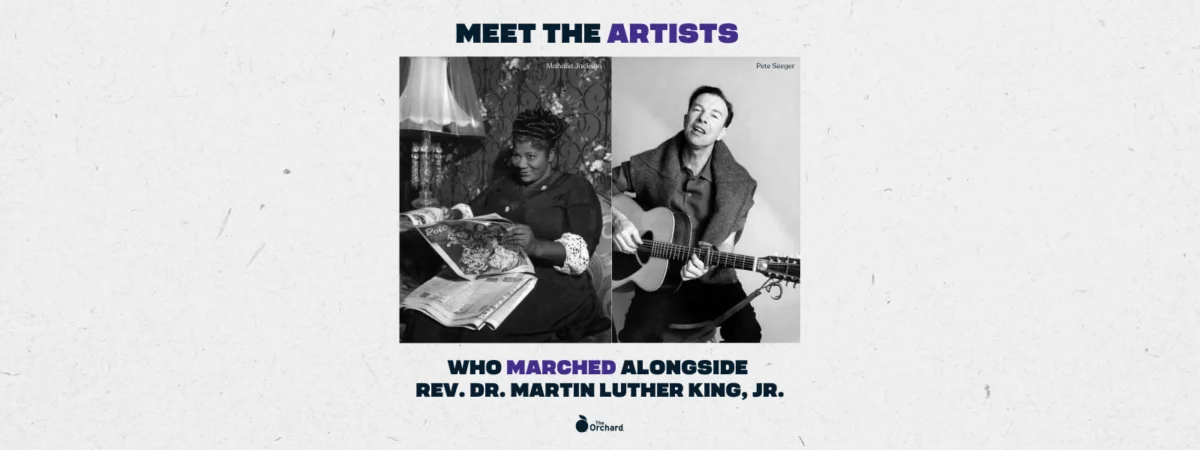
On this Rev. Dr. Martin Luther King, Jr. Day of Service, January 19, 2026, a profound reflection on the indelible contributions of artists who not only marched alongside the iconic civil rights leader but whose music served as the very pulse of the movement is paramount. Mahalia Jackson and Pete Seeger, two towering figures in American music, embodied the spirit of activism through their powerful voices and unwavering dedication to justice. Their influence extended far beyond the concert hall and the recording studio, resonating deeply within the hearts and minds of those striving for equality. This day serves as a crucial reminder to explore the rich tapestry of freedom songs, much of which is preserved and distributed by The Orchard’s partner, Smithsonian Folkways, and to delve deeper into the profound life and work of Rev. Dr. Martin Luther King, Jr.
The Rhythmic Heartbeat of the Struggle: Mahalia Jackson
Mahalia Jackson, widely recognized as the most revered gospel singer of the 20th century, was more than just a close confidante of Rev. Dr. Martin Luther King, Jr.; she was an integral force in the Civil Rights Movement. Her powerful vocals frequently preceded Dr. King’s sermons, setting a spiritual and emotional tone that galvanized audiences and supporters. Jackson’s performances were a cornerstone of Southern Christian Leadership Conference (SCLC) fundraisers, providing not only financial support but also immeasurable moral encouragement to the burgeoning movement.
Her most electrifying contribution, however, occurred during the historic 1963 March on Washington for Jobs and Freedom. As Dr. King delivered his momentous "I Have a Dream" speech, it was Mahalia Jackson, from her seat on the dais, who famously cried out, "Tell them about the dream, Martin!" This interjection, born from the shared passion and urgency of the moment, is widely credited with prompting Dr. King to deviate from his prepared remarks and articulate the dream that would echo through generations. The spontaneous cry from Jackson, a fellow traveler in the fight for civil rights, underscored the deep personal connection and mutual inspiration between these two titans.
Jackson’s impact was not merely confined to singular, pivotal moments. Her entire discography became a soundtrack for the movement, offering solace, strength, and a profound sense of hope amidst immense adversity. Songs like "Move On Up a Little Higher" and "Precious Lord, Take My Hand" were not just spiritual anthems; they were declarations of resilience and unwavering faith in the face of systemic injustice. The sheer emotional power of her voice could unite crowds, quiet the most fervent opposition, and imbue listeners with the courage to persevere. Her performances were often acts of protest in themselves, challenging segregationist policies by demanding equal treatment and access for Black artists and audiences.
The significance of Jackson’s role can be understood within the broader context of music’s power in social movements. Throughout history, song has been a potent tool for organizing, communicating, and sustaining morale. In the Civil Rights Movement, gospel music, with its roots in the spirituals of enslaved Africans, provided a unique and potent vehicle for expressing both the pain of oppression and the yearning for liberation. Mahalia Jackson, as its preeminent exponent, amplified these sentiments with unparalleled artistry and conviction. Her commitment to the cause was also demonstrated through her active participation in marches and protests, often placing herself at considerable personal risk.
The Folk Balladeer of Justice: Pete Seeger
Pete Seeger, an American folk singer, songwriter, and ardent social activist, dedicated a significant portion of his life in the 1960s to championing interconnected causes: civil rights, workers’ rights, and environmental activism. His commitment was not theoretical; it was deeply ingrained in his music and his actions. Seeger’s repertoire was replete with anthems that called for social justice, becoming rallying cries for a generation demanding change.
Among his most enduring contributions are the iconic labor song "Solidarity Forever" and the potent protest song "Which Side Are You On?" These songs, born from the struggles of working people, resonated deeply with the broader fight for equality. However, perhaps his most impactful song in the context of the Civil Rights Movement was "If I Had a Hammer," co-written with Lee Hays. This song, with its hopeful yet urgent plea for love, understanding, and justice, became a universal anthem for peace and equality.
Seeger’s rendition of "We Shall Overcome" holds a particularly poignant place in the narrative of the Civil Rights Movement. It was through Seeger’s performance and popularization of this song, adapted from earlier gospel and folk traditions, that Dr. King first encountered it. The song quickly evolved into the unofficial anthem of the movement, its simple yet profound message of collective perseverance and ultimate victory providing solace and inspiration during the darkest hours. Dr. King himself quoted the song in his final speech in March 1968, a testament to its enduring power and his personal connection to its message.
Seeger’s direct involvement extended to participating in key events. At Dr. King’s personal invitation, Seeger performed at the historic 1965 Selma to Montgomery March. This march, a pivotal moment in the struggle for voting rights, saw thousands of activists face violent opposition from state and local law enforcement. Seeger’s presence and music on the march provided vital morale and a visible symbol of solidarity from the broader American folk music community. His willingness to lend his voice and platform to such dangerous endeavors underscored his deep commitment to the principles of justice and equality.
The legacy of Pete Seeger as a "musician of the people" continues to inspire. His approach to music was inherently democratic; he believed in the power of communal singing to foster unity and collective action. He actively encouraged audiences to participate, turning concerts into participatory experiences that reinforced the shared goals of the movement. His dedication to social and political causes, often at personal cost, including facing blacklisting during the McCarthy era, solidified his reputation as a courageous and principled artist.
Amplifying the Call for Service
The spirit of Rev. Dr. Martin Luther King, Jr. Day of Service calls for active engagement. The music of freedom fighters, meticulously preserved and made accessible by Smithsonian Folkways, offers a rich historical and cultural resource. Exploring these recordings allows individuals to connect with the struggles and triumphs of the past in a tangible way. Beyond listening, the day encourages active participation in community service. Platforms like YourCause Connect offer avenues for individuals to find and support organizations working towards social justice and community betterment.
The broader implications of the artists’ contributions are profound. Mahalia Jackson and Pete Seeger, through their music and activism, demonstrated the potent synergy between artistic expression and social change. They showed that art is not merely entertainment but can be a powerful force for galvanizing public opinion, fostering empathy, and inspiring collective action. Their work laid the groundwork for future generations of artists to engage with social and political issues, establishing a precedent for music as a tool for advocacy and empowerment.
The Civil Rights Movement was a complex and multifaceted struggle, but the role of music and its most prominent exponents cannot be overstated. Mahalia Jackson and Pete Seeger, though their musical styles differed, were united by a shared commitment to justice and equality. Their voices, echoing through history, continue to inspire and remind us that the fight for a more just and equitable society is an ongoing endeavor, one that requires not only reflection but also active participation and service. The melodies of freedom they championed remain a vital part of our collective conscience, urging us to continue their work, to show up, and to use our own voices to advocate for a better world. The enduring harmonies of their legacy serve as a powerful testament to the transformative power of art in the pursuit of human dignity and fundamental rights.
