

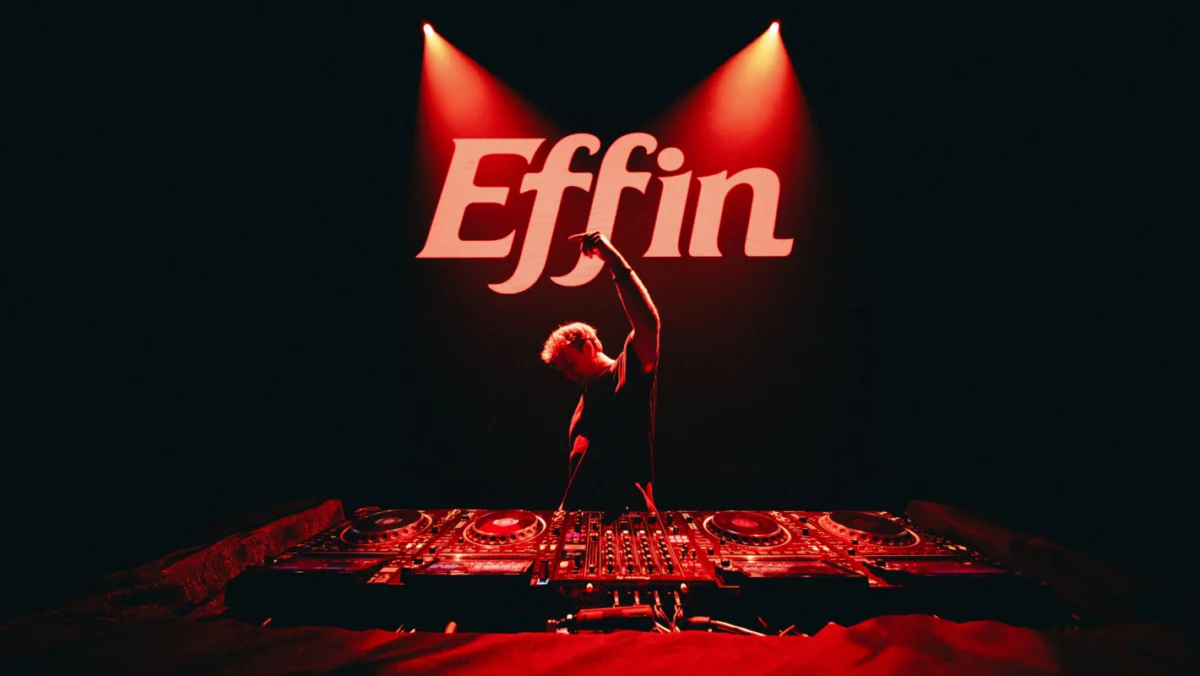
In the ever-evolving landscape of electronic music, producer Effin has carved out a distinctive niche, one where the echoes of past generations resonate powerfully within the framework of contemporary bass music. His creative process, a tapestry woven from unexpected threads, draws inspiration from a diverse array of sources—from the nostalgic hum of an ’80s gym playlist to obscure vocal samples unearthed in the digital ether, and the palpable energy of a city awaiting his performance. This unique ability to distill decades of musical heritage into something fresh and distinctly his own has propelled Effin from his early days of SoundCloud flips to becoming a prominent figure in the genre, now based in the musically hallowed grounds of Nashville.
The Genesis of a Sound: From SoundCloud Scraps to Sonic Identity
Effin’s artistic journey began with a DIY ethos, leveraging platforms like SoundCloud to experiment and share his nascent productions. These early "flips" were not merely remixes but rather intricate deconstructions and reconstructions of existing tracks, showcasing an innate talent for identifying potent melodic and vocal fragments. As he refined his craft, a clear predilection for vintage and retro aesthetics began to emerge, becoming a cornerstone of his musical identity. This intentional embrace of the past, however, is not a mere act of homage; it’s a sophisticated process of recontextualization.
"It’s been a long project in the making, especially if you were here from the early days and the SoundCloud flip days," Effin reflects on his artistic evolution. "I feel like I’ve really kind of found my sound, as cheesy as that is. I’ve figured out this lane that I really enjoy." He elaborates on this newfound clarity, stating, "I always used to tease little bits of vintage and retro elements in some of the older songs I’d worked on, but especially in the past few years, I kind of wear my heart on my sleeve, and it’s all out there. It’s about finding songs that I love and repurposing them into 2026, or whatever you want to call it, and taking my favorite inspirations, riffs, little melodies, and vocals and bringing them 60 or sometimes 70 years into the future and giving them a new life. That’s where I feel like the project exists right now."
This deliberate approach to sampling and reimagining older music is central to Effin’s appeal. His search for inspiration is often serendipitous, a testament to his open-minded approach to sound discovery. "A lot of times I’ll be at the gym and I’ll put on an ‘80s playlist or ‘90s New York hip-hop and hear something and think, ‘That vocal is insane.’ Then I’ll go home and start picking that apart," he shares. The digital realm also plays a significant role, with "going down a Spotify or YouTube rabbit hole" frequently yielding the spark for a new track. The core of his creative process often begins with a single, captivating sound, around which he meticulously constructs an entire sonic world. "I usually start from bar one at the intro and build out the world of the song. I love the idea of world-building," Effin explains. "You usually see that in my songs with just one or two words, honestly. I pull from a lot of different eras and a lot of different worlds and try to make all of those themes fit into one three-and-a-half-minute song."
Nashville’s Echoes: A New Muse for Bass Music
Effin’s recent relocation to Nashville has added another rich layer to his artistic palette. The city, synonymous with country music, boasts a profound and multifaceted musical history that extends far beyond its most famous genre. Its legacy in pop music, particularly its pioneering work in vocal arrangements and studio techniques, has proven to be a fertile ground for Effin’s explorations.
"Nashville is amazing. It has such a rich history—not just with country music, but pop music and especially background vocal work," Effin notes. This historical depth is directly influencing his current projects. He reveals that "a lot of the newer stuff I’m working on draws from ‘50s and ‘60s country artists who worked in Nashville, including people who may have been background singers and then had their own covers or smaller projects." An illustrative example of this inspiration can be found in a forthcoming track that features a vocal reinterpretation drawn from the Anita Kerr Singers, a renowned Nashville-based pop harmony background chorus. "It’s cool to use something from 70 years ago and repurpose it now. It almost feels like a full-circle moment," he adds, highlighting the cyclical nature of musical influence.
The implications of this cross-pollination are significant for the broader bass music scene. By infusing his productions with the nuanced vocal textures and melodic sensibilities of classic Nashville recordings, Effin is not only expanding his own sonic vocabulary but also introducing these historical elements to a new generation of listeners within a genre often perceived as being solely focused on raw energy. This integration suggests a potential trend towards more sophisticated sampling and a deeper appreciation for vocal artistry within contemporary electronic music.
The Art of the Set: Curated Experiences for Every City
Beyond his studio work, Effin’s live performances are a testament to his meticulous approach to curation. His sets are not simply collections of his tracks; they are carefully constructed narratives that often engage directly with the locale of the performance. This bespoke approach elevates his shows from mere concerts to immersive sonic experiences tailored to specific audiences and environments.
"The first thing I try to do, especially if it’s a themed set or a specific moment, is really dive into that theme," Effin explains when discussing his creative process for building a set. He cites an example from the Bonnaroo Music and Arts Festival, where a sunrise set was thematically centered around the sun, beginning with a reimagined version of The Beatles’ "Here Comes the Sun." For a performance in New York City, his thought process immediately turned to iconic New York artists: "Tonight in New York, I was thinking, ‘Okay, I’ve got to throw in an Action Bronson vocal. I’ve got to throw in some Wu-Tang vocals.’ You sometimes hear those influences in my songs. I had to throw in some Beastie Boys, of course."
This deliberate inclusion of local references is a strategic choice designed to foster a deeper connection with the audience. "I love finding little moments that I feel like the crowd will pick up on and think, ‘That’s so unique to this moment.’ On top of playing the songs that people know me for, I sprinkle in edits and new music that I’m working on," he reveals. The analogy of his music as a "collage" extends seamlessly to his live sets. "My music is kind of a collage, and I want my sets to feel like a collage too. Full of all these fun little moments curated toward whatever city or event I’m playing." This approach not only showcases his versatility but also demonstrates a profound respect for the cultural context of his performances, a practice that resonates positively with both fans and critics alike.
Navigating the Bass Music Frontier and the Demands of a Creative Career
Effin’s perspective on the current state of bass music is both analytical and optimistic. He observes the genre’s inherent dynamism, describing it as being in a "crazy place right now, as it probably will continue to be forever." He likens its trajectory to a pendulum swing, oscillating between periods of intense heaviness and more atmospheric, vibey textures, with a constant undercurrent of innovation in production techniques.
"I also think people want to see more songwriting, more themes, and more curated sets where their artistry is on display, and not just a bunch of mashups," he posits, suggesting a growing audience desire for more narrative and conceptual depth within the genre. This aligns with his own artistic philosophy, emphasizing that true innovation lies not just in technical prowess but in the ability to craft cohesive and meaningful musical experiences.
The demands of a burgeoning career in bass music are considerable, and Effin acknowledges the constant challenge of balancing a rigorous touring schedule with the need for creative incubation. "This year has been a lot, but I’ve been so lucky," he states, reflecting on a year that has included approximately 25 festival appearances alongside extensive tour runs and solo shows, all while developing significant new projects. The inherent tension between performance and creation is palpable: "It’s a constant battle because just when you think you’re getting into the swing of things, suddenly it’s, ‘We need to work on the set for this weekend,’ and then I have to leave for the next three days. It’s hard to get the balance perfect."
His strategy for managing this demanding schedule involves a conscious effort to compartmentalize. "I try to keep a balance where the show days are just for the shows, and the music days at home are just for the music. I write when I’m at home, play-test those songs on the weekends, and then go back and revise them." This structured approach allows him to dedicate focused energy to both aspects of his career, ensuring that neither is sacrificed for the other.
Aspirations and the Enduring Legacy
Looking ahead, Effin harbors a clear ambition for iconic venues. Red Rocks Amphitheatre stands out as a particularly significant aspiration. His experience playing the venue for the first time this year, albeit as an opening act, was a pivotal moment that brought the reality of his success into sharp focus for his family. "A dream venue for me has got to be Red Rocks. I got to play it for the first time this year as support, and that was the one where I told my parents and they were like, ‘Oh, this is real.’" He recounts how the venue’s legendary status transcended generational perceptions of electronic music, bridging a gap with his parents and their friends, who previously held a more generalized view of the genre. "That’s the one where they were like, ‘Wow, he’s the real deal.’" The desire to headline Red Rocks one day underscores his long-term vision and his respect for the venue’s hallowed place in music history.
In essence, Effin’s artistic trajectory is defined by a profound respect for musical history, a keen eye for detail, and an unwavering commitment to innovation. By weaving together threads from disparate eras and sonic landscapes, he creates a musical universe that is both deeply personal and universally resonant. His ongoing evolution, marked by thoughtful sampling, inspired relocation, and meticulously crafted live performances, positions him not just as a prominent artist in bass music, but as a significant voice shaping its future. The meticulous attention he pays to the nuances – from vintage vocal samples to city-specific setlist references – ensures that his music and live sets possess a distinct and enduring quality, a world that feels undeniably his own.
