

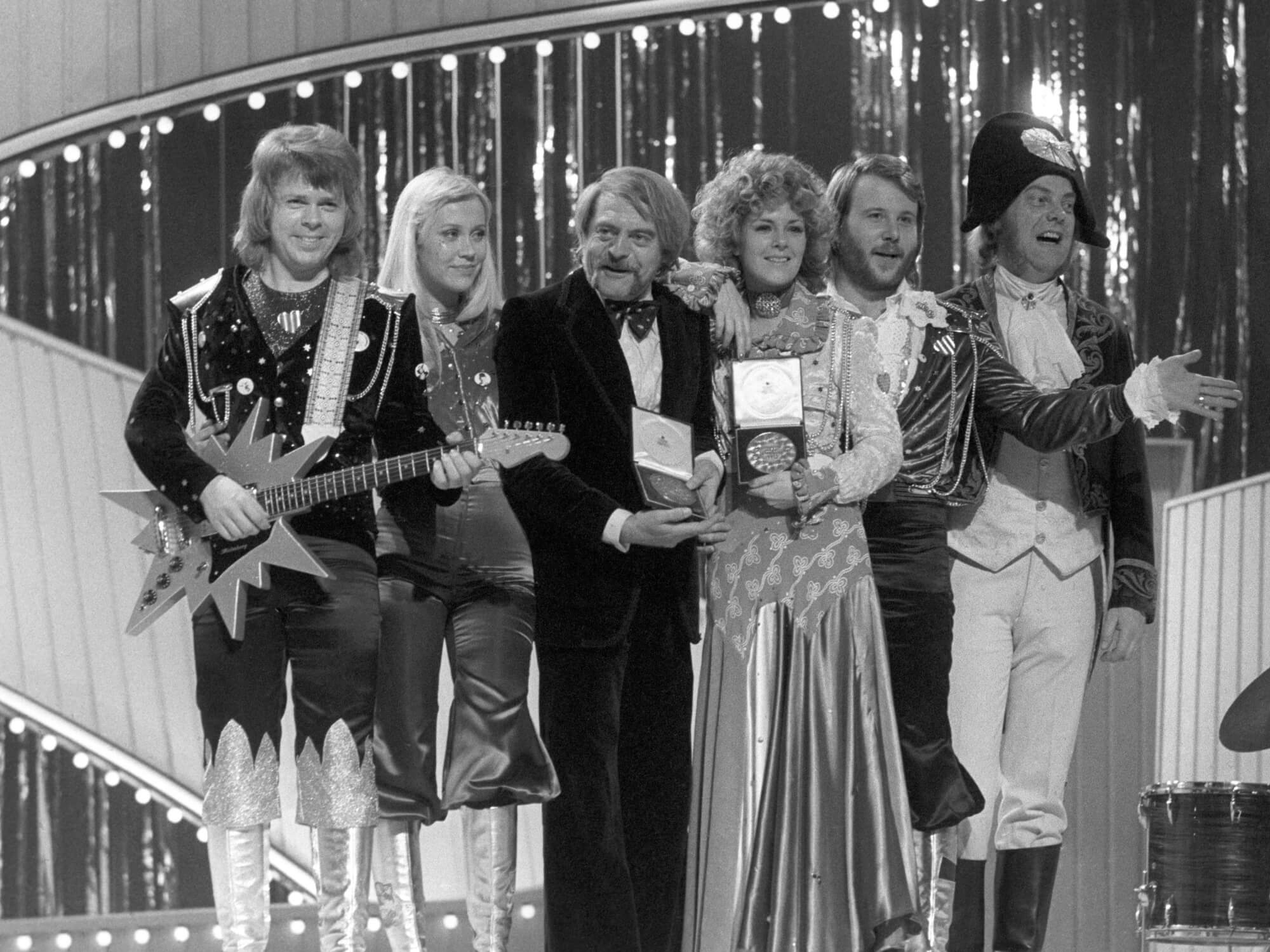
When ABBA stepped onto the stage at the Eurovision Song Contest in Brighton on April 6, 1974, to perform "Waterloo," they did more than just win a competition; they launched a global phenomenon. Central to their visually arresting performance, which fused irresistible pop with flamboyant glam rock aesthetics, was lead guitarist Björn Ulvaeus and his instantly recognizable, 13-pointed silver star guitar. This extraordinary instrument became an immediate pop culture icon, cementing its place in the annals of music history and forever associating itself with ABBA’s breakthrough moment. For decades, the precise origins of this dazzling guitar remained shrouded in speculation, with many assuming it was a custom creation from Hagström, a renowned Swedish guitar manufacturer frequently favored by Ulvaeus. However, recent revelations, detailed in a new interview with Guitar World, have finally brought to light the true craftsman behind this legendary instrument: Stockholm luthier Göran Malmberg. Malmberg’s account provides an unprecedented look into the intense creative process and engineering challenges involved in crafting a guitar that would not only shine under the Eurovision spotlight but also perform flawlessly under pressure.
The Genesis of a Global Phenomenon: ABBA’s Ascent to Eurovision Stardom
To fully appreciate the significance of Ulvaeus’s star guitar, one must understand the context of ABBA’s journey to Eurovision 1974. Formed in 1972, the group – comprising Agnetha Fältskog, Björn Ulvaeus, Benny Andersson, and Anni-Frid Lyngstad – had experienced some initial success but had yet to achieve international breakthrough. Their first attempt at Eurovision in 1973 with "Ring Ring" had fallen short, failing to win the Swedish national selection, Melodifestivalen. This experience, however, only solidified their resolve and sharpened their strategic vision. They recognized Eurovision as an unparalleled platform for pan-European exposure, a contest watched by millions across the continent, offering a direct pathway to international audiences.
The early 1970s were also a vibrant period for music and fashion, heavily influenced by the burgeoning glam rock movement. Artists like David Bowie, T. Rex, Slade, and Gary Glitter were dominating the charts with their flamboyant costumes, theatrical performances, and catchy, often guitar-driven, rock anthems. This era celebrated spectacle and visual impact as much as musical prowess. ABBA, with their innate sense of showmanship and a keen understanding of popular trends, embraced this aesthetic. Their manager, Stig Anderson, along with the band members themselves, understood that a powerful song needed an equally powerful visual presentation to truly captate the diverse Eurovision audience. "Waterloo" itself was a masterclass in pop songwriting, a dynamic and upbeat track with a memorable chorus and an infectious energy that set it apart from many of the more traditional ballads typically found in the contest. Its lyrics, comparing a romantic surrender to Napoleon’s defeat at Waterloo, were both clever and universally relatable. For their 1974 performance, every element was meticulously planned, from their shimmering costumes to their stage presence, and, crucially, the distinct instruments they would wield. It was within this context of high stakes, intense competition, and a prevailing glam rock ethos that the idea for Björn’s star guitar was born.
The Urgent Commission: Six Weeks to Stardom
Göran Malmberg’s detailed recollection offers a fascinating glimpse into the hurried yet meticulous creation of the star guitar. According to Malmberg, he received the commission from Björn Ulvaeus with an incredibly tight deadline: just six weeks remaining until the Eurovision Song Contest in Brighton. This compressed timeline underscores the pressure on Malmberg to deliver a custom instrument that was not merely aesthetically striking but also perfectly functional.
The brief Ulvaeus presented was straightforward yet challenging: the guitar needed to be "shiny and sparkling" and visually arresting enough to complement ABBA’s already extravagant glam aesthetic. This wasn’t just about crafting a musical instrument; it was about designing a key prop that would contribute significantly to the band’s stage image and, by extension, their overall brand identity. "Björn and I met and discussed what it could look like," Malmberg recounted in his Guitar World interview. "It had to be shiny and sparkling, so a star shape was suggested. We decided I would draw some drafts of the guitar and then show them to him. Björn approved one of them, but there was only six weeks left until Eurovision!" This collaborative design process, involving iterative drafts and Ulvaeus’s final approval, ensured that the instrument would perfectly align with the band’s vision for their pivotal performance. Malmberg, a seasoned luthier known for his craftsmanship, was the ideal choice for such a bespoke and challenging project. His expertise would be crucial in translating a bold visual concept into a playable and durable instrument under immense time constraints.
Engineering the Icon: A Luthier’s Masterclass in Form and Function
Crafting a guitar with such a radical, multi-pointed body shape presented significant engineering challenges that went far beyond mere aesthetics. Malmberg had to ensure the instrument was not only visually spectacular but also ergonomically sound and robust enough to withstand the rigors of a live performance. One of the primary concerns was the instrument’s weight balance. Extreme guitar shapes often suffer from poor balance, leading to neck dive (where the headstock dips downwards) or instability on a strap, which can be highly distracting for a performer.
"The body had to have the correct weight balance so that the guitar would remain in position, even if Björn released his grip on the neck," Malmberg meticulously explained. This attention to detail was paramount for Ulvaeus, who needed to move freely on stage and interact with the audience without constantly adjusting his instrument. Furthermore, the 13 points of the star shape posed a potential hazard to playability. Malmberg had to ensure "the tips of the star shape could not be in the way when he was using it," preventing any interference with Ulvaeus’s strumming, picking, or fretboard access.
To address the durability concerns, particularly for the sharp, vulnerable points, Malmberg opted for a multi-layered construction. The body was built from several layers of plywood glued together, a technique that enhances strength and stability. Crucially, the outermost layers were made from 1mm birch plywood, often referred to as "airplane plywood" due to its lightweight yet incredibly strong and flexible properties. This choice was deliberate, specifically aimed at minimizing surface cracking in the finish, a common issue with extreme shapes and thin finishes. The layered construction also provided a robust core that could better withstand impact compared to a solid, single piece of wood, which might be more prone to splitting at the points.
Beyond the body’s construction, Malmberg incorporated clever design elements to ensure optimal balance. "The extra-long horn provided the balance for the attachment of the shoulder strap, and there were two horns on each side of the guitar’s body," he noted. This strategic extension shifted the center of gravity, counteracting the potentially uneven weight distribution of the star shape. The precise placement of the control knobs and the cutaway horns also played a role in fine-tuning the guitar’s balance, demonstrating Malmberg’s holistic approach to instrument design. Every element, from material choice to component placement, was carefully considered to create a stable, playable, and visually striking instrument.
The Sonic Profile: Tailored for Rhythm
While the visual aspect was paramount, the guitar also had to sound good. Malmberg’s choice of electronics reflected Ulvaeus’s role as a rhythm guitarist in ABBA. He "mounted the humbuckers, especially the treble pickup, further from the bridge to get a slightly darker sound, suitable for rhythm guitar playing." Humbuckers are known for their thicker, warmer tone and noise-canceling properties, making them ideal for a rich rhythm sound that sits well in a pop mix. By positioning the treble (bridge) pickup further from the bridge, Malmberg subtly altered its tonal characteristics, moving it away from the sharper, more trebly sound typically associated with a bridge pickup and towards a warmer, more full-bodied tone that would complement Ulvaeus’s rhythm work without being overly piercing. This thoughtful consideration for the guitar’s sonic contribution ensured it was not just a prop but a genuinely capable musical instrument.
The "Shiny and Sparkling" Finish: A Show-Stopping Spectacle
The final, crucial step in bringing Ulvaeus’s vision to life was the finish. The requirement for the guitar to be "shiny and sparkling" was central to its visual impact. Malmberg achieved this dazzling effect through a meticulous lacquering process. "The guitar was lacquered with metal stain on a silver base, and 20 layers of clear lacquer were used," he revealed. The silver metallic stain provided the initial reflective sheen, while the application of twenty layers of clear lacquer created an incredible depth, gloss, and durability. This multi-layered finish not only protected the delicate birch plywood but, more importantly, created an intensely reflective surface that would catch and refract every stage light at Eurovision. Under the bright lights of the Brighton Dome, the guitar would have shimmered and glittered, ensuring it was an undeniable focal point of ABBA’s performance, perfectly embodying the glam rock ethos they sought to project. This elaborate finishing process was a testament to Malmberg’s commitment to fulfilling the artistic brief, transforming a functional instrument into a glittering stage spectacle.
The Glitter Band Connection: A Point of Contention and Influence
While Malmberg meticulously detailed the construction of the star guitar, the precise inspiration behind the star shape itself has been a subject of some debate and speculation. One prominent theory points to the influence of British glam-rockers The Glitter Band. This group, formed from the backing band of Gary Glitter, was known for their distinctive sound and equally distinctive visual style, which included star-shaped instruments.
Bassist John Springate of The Glitter Band previously recounted a telling encounter: "The Glitter Band did a tour of Sweden, and this band came to see us play; they told us they really liked our music and that it was really good. Then, three weeks later, we saw them on Eurovision, dressed like us, with a star guitar, and that was ABBA!" Springate’s statement suggests a direct influence, implying that ABBA observed The Glitter Band’s aesthetic and subsequently adopted similar elements for their Eurovision appearance.
It is plausible that The Glitter Band’s tour in Sweden, coinciding with ABBA’s preparations for Eurovision, could have provided visual inspiration. The early 1970s glam rock scene was characterized by a shared visual vocabulary of glitter, platforms, and bold shapes. Whether it was a direct imitation or simply an absorption of prevalent glam aesthetics into ABBA’s own unique style remains a point of interpretation. ABBA themselves have largely remained silent on this specific claim, though it is widely acknowledged that they, like many artists of the era, drew inspiration from contemporary fashion and music trends. The similarity in aesthetics, particularly the star guitar, highlights the interconnectedness of the glam rock movement and how visual cues traveled and evolved across different acts and countries. Regardless of the extent of direct influence, the incident underscores the strategic importance of visual identity during this period, where a distinctive look could be as impactful as a memorable melody.
The Enduring Legacy of an Iconic Instrument
The star guitar, born out of an urgent commission and a luthier’s ingenuity, transcended its role as a mere instrument to become a powerful symbol of ABBA’s breakthrough. After "Waterloo" secured ABBA’s victory at Eurovision 1974 – scoring 24 points to Italy’s 18 – the band’s career exploded. The star guitar, prominently featured in photographs, album art, and early promotional materials, became synonymous with their vibrant, glamorous image during their formative years of global superstardom. It represented their daring departure from traditional pop aesthetics and their embrace of a more flamboyant, visually driven approach to music.
While Ulvaeus likely used other guitars as ABBA’s career progressed and their sound evolved, the star guitar’s moment in the spotlight at Eurovision cemented its place in pop culture iconography. It demonstrated the profound impact a well-conceived visual element can have on an artist’s identity and legacy. Today, the star guitar is not merely a piece of musical equipment; it is a historical artifact, a tangible link to one of the most pivotal moments in pop music history. Its creation story, now fully revealed by Göran Malmberg, adds another layer of depth to the ABBA legend, highlighting the unsung craftsmanship that often underpins iconic musical performances. The guitar stands as a testament to the power of collaboration between artist and artisan, proving that sometimes, the most outrageous and ambitious ideas can lead to the most enduring symbols of success. Its shimmering form continues to evoke the excitement and groundbreaking spirit of that unforgettable night in Brighton, when four Swedes and a sparkling star guitar conquered Europe and, ultimately, the world.