

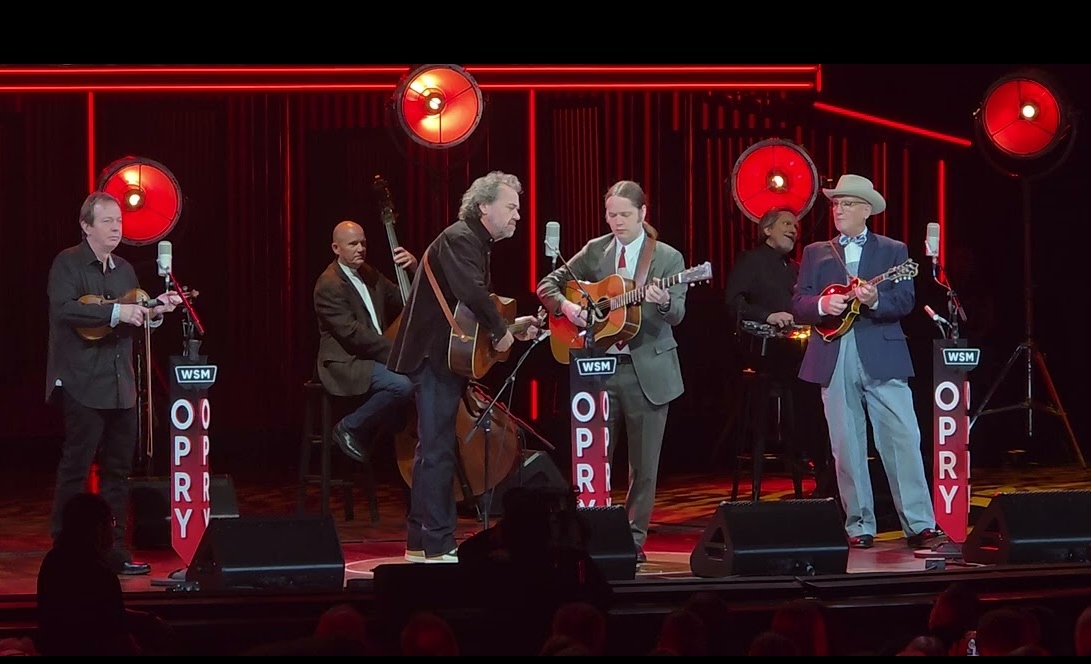
Nashville’s revered Grand Ole Opry recently played host to a momentous concert, gathering an constellation of musical talent to commemorate the 25th anniversary of the Coen Brothers’ critically acclaimed Southern dramedy, O Brother, Where Art Thou?, and its equally iconic, Grammy-winning soundtrack. The landmark event, held on a recent Saturday night, specifically February 28, 2026, saw original contributors alongside contemporary bluegrass and roots music luminaries converge to recreate the magic that revitalized traditional American music for a new generation. The film, released in 2000, had its quarter-century milestone last year, with this concert serving as a powerful, albeit slightly delayed, testament to its enduring cultural and musical impact.
The Genesis of a Cultural Phenomenon: O Brother, Where Art Thou? and Its Soundtrack
The year 2000 marked the release of O Brother, Where Art Thou?, a cinematic masterpiece from filmmaking siblings Joel and Ethan Coen. Loosely based on Homer’s ancient Greek epic, The Odyssey, the film transported audiences to Depression-era Mississippi, following the misadventures of three escaped convicts – Ulysses Everett McGill (George Clooney), Pete Hogwallop (John Turturro), and Delmar O’Donnell (Tim Blake Nelson) – as they journeyed across the rural South in search of hidden treasure, encountering a kaleidoscopic array of characters and situations along the way. While celebrated for its distinctive visual style, darkly comedic tone, and stellar performances, it was the film’s accompanying soundtrack that truly carved a unique niche in popular culture, sparking an unprecedented resurgence of interest in bluegrass, folk, gospel, and old-time country music.
Produced by the visionary T-Bone Burnett, the soundtrack for O Brother, Where Art Thou? was not merely a collection of background music but an integral narrative component, meticulously curated to transport listeners to the film’s 1930s setting. Burnett’s genius lay in his ability to blend archival recordings from legendary figures like Harry McClintock and the Stanley Brothers with contemporary performances by artists deeply rooted in traditional sounds. The album, officially titled O Brother, Where Art Thou? Soundtrack, quickly transcended its cinematic origins, achieving massive commercial success and critical acclaim. It sold over eight million copies in the United States alone, reaching certified 8x Platinum status, a remarkable feat for a collection of traditional American folk music in an era dominated by pop and hip-hop. Its triumph culminated in a highly prestigious Album Of The Year Grammy Award in 2002, alongside four other Grammy wins, including Best Compilation Soundtrack Album for a Motion Picture, Television or Other Visual Media, and Best Country Collaboration with Vocals for "I Am a Man of Constant Sorrow." This recognition cemented its status as a pivotal moment in music history, proving the commercial viability and enduring appeal of American roots music.
A Night of Reverence and Revival at the Grand Ole Opry
The Grand Ole Opry, a venerable institution synonymous with country and bluegrass music for nearly a century, provided the perfect backdrop for this commemorative concert. Its hallowed stage has witnessed countless legends and played a crucial role in preserving the very musical traditions celebrated by O Brother, Where Art Thou?. The event served as both a tribute to the film and its music and a powerful demonstration of the continued vitality of these genres.
Among the evening’s most anticipated performances was the collaboration between bluegrass sensation Billy Strings and veteran musician Dan Tyminski on the haunting track "O Death." Tyminski, a cornerstone of the soundtrack, famously provided George Clooney’s singing voice for the fictional Soggy Bottom Boys in the film, captivating audiences with his authentic, soulful renditions. While Billy Strings, born in 1993, was merely eight years old at the time of the film’s release and thus not an original soundtrack contributor, his presence on stage alongside Tyminski symbolized the generational bridge the O Brother soundtrack forged. Strings, a Grammy-winning artist himself, represents the new guard of bluegrass, bringing incredible technical prowess and a modern edge to traditional forms. Their rendition of "O Death" was a poignant nod to the late Ralph Stanley, whose a cappella performance of the track on the original soundtrack earned him a Grammy Award for Best Male Country Vocal Performance in 2002. Stanley’s rendition was widely praised for its raw, primal power, a testament to his deep connection to Appalachian musical heritage, and the passing of this torch to Strings and Tyminski was deeply symbolic.
Dan Tyminski’s contributions extended beyond "O Death." As the unmistakable voice behind the Soggy Bottom Boys, he led a rousing rendition of "I Am A Man Of Constant Sorrow," arguably the soundtrack’s most recognizable anthem. This track, a traditional folk song arranged by T-Bone Burnett and the Coen Brothers, became synonymous with the film, its catchy melody and poignant lyrics resonating deeply with audiences. Tyminski, alongside Harley Allen and Pat Enright, famously won the Grammy for Best Country Collaboration With Vocals for their performance of the song. The Opry crowd’s enthusiastic response to this performance underscored the song’s enduring appeal and its central role in the O Brother legacy.
The concert also featured other luminaries who graced the original soundtrack. Emmylou Harris and Alison Krauss, two giants of American roots music, reprised their ethereal performance of "Didn’t Leave Nobody But The Baby." For this special occasion, critically acclaimed singer-songwriter and guitarist Molly Tuttle stepped in, filling the role originally performed by Gillian Welch in the film. Tuttle’s inclusion highlighted the continuing evolution of the genre, showcasing a contemporary artist deeply influenced by the traditional sounds that O Brother helped popularize. Alison Krauss, a multi-Grammy winner whose contributions to the soundtrack were immense, also delivered a moving performance of "Down To The River To Pray," a traditional spiritual hymn that features prominently in a memorable baptism scene in the film. Her angelic voice, a hallmark of her illustrious career, once again brought a profound sense of grace and solemnity to the Opry stage.
Adding a unique cinematic dimension to the evening, actor Tim Blake Nelson, who played Delmar O’Donnell in the film, stepped out of his acting role and onto the stage to perform "In the Jailhouse Now." Nelson’s participation was particularly special, offering a direct link back to the film’s narrative and characters, and delighting fans with his musical talent, which he also showcased in the film. His performance brought an authentic, rustic charm that perfectly captured the spirit of the movie.
Timeline of a Legacy
- December 22, 2000: O Brother, Where Art Thou? film is released in the United States, garnering critical acclaim for its direction, performances, and distinct visual style.
- December 5, 2000: O Brother, Where Art Thou? Soundtrack is released, produced by T-Bone Burnett. Initially a slow burner, it steadily gains momentum through word-of-mouth and critical praise.
- Early 2001: The soundtrack begins to climb the charts, fueled by the film’s success and a growing appreciation for its traditional sound. Its impact is noted as it revitalizes interest in bluegrass and folk music.
- February 27, 2002: At the 44th Annual Grammy Awards, the O Brother, Where Art Thou? Soundtrack wins five awards, including the coveted Album Of The Year, marking a historic moment for traditional American music. Individual artists like Ralph Stanley and Dan Tyminski also receive Grammys for their contributions.
- Throughout the 2000s: The soundtrack continues to sell millions of copies, becoming one of the best-selling soundtrack albums of all time and achieving 8x Platinum certification in the U.S. Its influence is cited by numerous artists and critics as a catalyst for the modern folk and Americana movements.
- 2025: The Coen Brothers’ O Brother, Where Art Thou? officially marks its 25th anniversary, prompting reflection on its enduring legacy.
- February 28, 2026: A star-studded commemorative concert is held at the Grand Ole Opry in Nashville, celebrating a quarter-century of the film and its groundbreaking soundtrack, bringing together original performers and new generations of roots musicians.
Broader Impact and Implications
The success of O Brother, Where Art Thou? and its soundtrack transcended mere commercial triumph; it initiated a profound cultural shift. Prior to its release, traditional American roots music, particularly bluegrass and old-time country, had largely been relegated to niche audiences or perceived as archaic. The film, through its masterful integration of these musical forms, brought them into the mainstream spotlight, captivating a diverse audience that might never have otherwise encountered them. This phenomenon is often referred to as the "O Brother effect" or the "bluegrass revival."
The implications were far-reaching:
- Commercial Resurgence: The album’s sales demonstrated a significant market for traditional sounds, encouraging record labels to invest in roots artists.
- New Audiences: It introduced bluegrass and folk to younger listeners, sparking new interest in learning traditional instruments and forms.
- Artistic Validation: The Grammy wins and critical acclaim lent immense credibility to genres that had often been overlooked by mainstream music awards.
- Influence on Contemporary Artists: Many contemporary Americana, folk, and country artists cite O Brother, Where Art Thou? as a major influence, inspiring them to explore the rich history of American music. The presence of artists like Billy Strings and Molly Tuttle at the Opry concert underscores this generational impact.
- Cultural Preservation: The soundtrack served as a powerful tool for cultural preservation, ensuring that traditional songs and styles continued to be heard and appreciated.
The Grand Ole Opry concert was more than just a nostalgic look back; it was a vibrant affirmation of the enduring power and relevance of the music featured in O Brother, Where Art Thou?. The enthusiastic reception from the audience, visible in the numerous clips shared from the event, signaled that the film and its soundtrack continue to resonate deeply with people across generations. It underscored the timeless nature of American roots music and its capacity to tell universal stories of hardship, hope, and the human spirit.
The convergence of original artists with new talents on the Opry stage symbolized a beautiful continuum. It demonstrated that the seeds planted by the Coen Brothers and T-Bone Burnett 25 years ago have blossomed into a thriving musical landscape, ensuring that the "Man of Constant Sorrow" will continue to be heard, and the rivers prayed to, for many years to come. The celebration was a powerful reminder that truly great art, whether cinematic or musical, possesses an enduring quality that defies the passage of time, continually inspiring and connecting people through shared cultural experiences.