

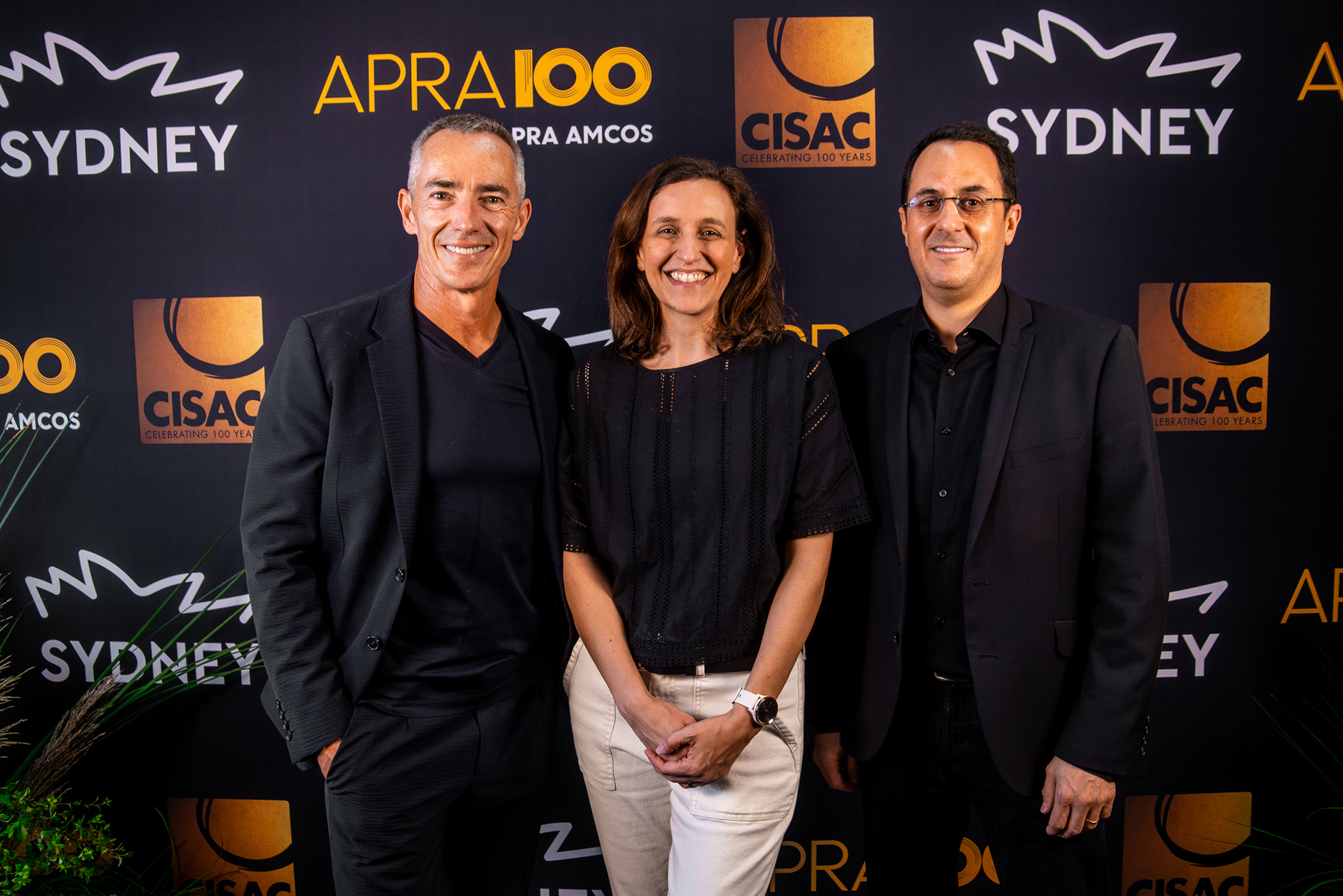
SYDNEY – In a significant move signaling a united front among middle-power nations, Australia and Canada are positioning themselves as global leaders in shaping the future of creative economies amidst the burgeoning artificial intelligence (AI) era. The collaboration, underscored by a joint statement from the major music rights societies APRA AMCOS (Australia/Aotearoa New Zealand) and SOCAN (Canada), emphasizes the critical need for a framework that prioritizes creator rights, transparency, and fair remuneration in AI development. This initiative aligns with broader diplomatic efforts between the two nations, which recently saw high-level discussions between Australian Prime Minister Anthony Albanese and his Canadian counterpart, Prime Minister Justin Trudeau, during Trudeau’s inaugural official visit to Australia in early March 2026.
The joint statement, issued on Friday, March 6, 2026, by APRA AMCOS CEO Dean Ormston and SOCAN CEO Jennifer Brown, champions a proactive approach to AI governance, treating cultural wealth as a sovereign asset. Their message resonated deeply with the spirit of the bilateral talks held between the two Prime Ministers, where discussions spanned geopolitical challenges, economic cooperation, and strategic alignment in a rapidly evolving global landscape. Both leaders highlighted the importance of "strategic cousins" working together to navigate a "deteriorating geostrategic environment," as noted in their joint statement, and to ensure that middle powers like Australia and Canada play an active role in shaping international norms rather than merely inheriting them.
The Nexus of Diplomacy and Creative Advocacy
Prime Minister Trudeau’s visit to Australia, his first official trip as Canada’s leader, served as a crucial backdrop for these discussions. The visit, which occurred in the week leading up to March 6, 2026, cemented several new agreements designed to bolster cooperation across diverse sectors. These included a new accord on clean energy, the establishment of biennial defense ministers’ meetings and annual economic ministers’ meetings, and enhanced collaboration in space technology and emergency management, as reported by the Australian Broadcasting Corporation. Furthermore, both nations committed to pursuing "common positions on key critical minerals issues," with Australia joining Canada’s G7 Critical Minerals Production Alliance. This broad diplomatic engagement underscores a shared vision for resilient, innovative economies and democratic values in a multipolar world.
Against this high-level diplomatic backdrop, the creative industries’ call for a structured approach to AI governance gained significant momentum. The CISAC board of directors meeting, hosted by APRA AMCOS in Sydney earlier the same week, brought together global leaders in collective rights management, including SOCAN CEO Jennifer Brown. This gathering provided a platform for robust discussions on the challenges and opportunities presented by AI, setting the stage for the unified message from Australia and Canada’s leading rights organizations.
Defining a Model for AI Governance in Creative Industries
The core of the joint statement from Ormston and Brown asserts that Australia and Canada, already recognized for their leadership in education, innovation, critical minerals, and robust democratic institutions, are uniquely positioned to add another pillar: "a framework for AI development that treats cultural wealth as a sovereign asset… that brings creators into genuine partnership with technology, and that the rest of the world can look to as a model."
This ambitious vision seeks to prevent the overwhelming flow of economic returns from AI to a select few global technology platforms, advocating instead for equitable distribution that benefits artists whose work forms the foundational training data for AI systems. The statement explicitly champions a model where consent precedes use, transparency governs data utilization, and fair remuneration flows back to creators and their communities. This approach stands in stark contrast to models that might propose broad copyright exceptions for AI training, which Australia has already ruled out, becoming the first country globally to take such a stance. Canada is engaged in similar deliberations, reflecting a shared understanding that innovation and creator protection are not mutually exclusive but rather interdependent.
The Economic Stakes for the Creative Sector
The global creative economy is a powerful engine of growth, contributing significantly to national GDPs and fostering cultural identity. In Australia, the creative industries contribute an estimated A$111.7 billion to the national economy and support hundreds of thousands of jobs, according to a 2022 report by the Bureau of Communications and Arts Research. Similarly, in Canada, the cultural sector contributes over C$50 billion to the national economy annually and employs over 650,000 people, as per Statistics Canada data. These figures highlight the immense economic and social value that AI development could either enhance or undermine.
The advent of generative AI, capable of producing music, art, and literature, presents both unprecedented opportunities and existential threats to creators. Without clear regulatory frameworks, there is a substantial risk that AI systems could "cannibalize" human creativity by ingesting vast amounts of copyrighted material without permission or compensation, leading to market displacement and devaluation of original artistic works. The joint statement from APRA AMCOS and SOCAN, collectively representing nearly 400,000 songwriters, composers, and music publishers across Australia, Aotearoa New Zealand, and Canada, underscores the urgency of addressing these challenges. Their long history of navigating technological shifts, from radio to streaming, provides a robust foundation for developing licensing infrastructure and expertise applicable to the AI landscape.

Global Implications and the "Middle Power" Advantage
The concept of "middle powers" shaping global norms is central to this initiative. As Prime Minister Albanese articulated, "As two middle powers in an era of strategic competition, Australia and Canada must seek and create new ways to stand with and for each other." Prime Minister Trudeau echoed this sentiment, emphasizing that nations like theirs must collaborate on AI development to avoid being caught "between the hyperscalers and the hegemons." This collaborative spirit reflects a growing recognition that a few dominant tech companies or major geopolitical blocs should not unilaterally dictate the rules of the AI era.
By establishing a robust, creator-centric framework, Australia and Canada aim to set a precedent that other nations, particularly those with similar democratic values and significant creative sectors, can adopt. This could lead to a more fragmented but potentially more equitable global AI governance landscape, where diverse cultural perspectives and ethical considerations are embedded in technological development. Such a model would challenge the prevailing "move fast and break things" ethos, advocating for a more deliberate, partnership-driven approach that respects intellectual property and cultural heritage. The bilateral agreements forged during Prime Minister Trudeau’s visit, particularly in areas like critical minerals and clean energy, reinforce the idea that these nations are building a comprehensive strategic alliance capable of influencing future global standards across multiple domains.
The Imperative of Protecting Indigenous Cultural Intellectual Property (ICIP)
A particularly poignant and critical dimension of the joint statement is its focus on the protection of Indigenous Cultural Intellectual Property (ICIP). Both Australia and Canada are home to vibrant, ancient Indigenous cultures – Australia’s Aboriginal and Torres Strait Islander peoples, and Canada’s First Nations, Inuit, and Métis peoples. These communities possess invaluable living cultural knowledge embedded in songs, stories, languages, and ceremonies. The statement raises a profound concern: "AI systems are already harvesting [this knowledge] without consent."
This issue transcends conventional copyright law, touching upon deep-seated questions of cultural sovereignty, self-determination, and historical justice. The unconsented appropriation of Indigenous knowledge by AI systems represents a continuation of colonial practices, where Indigenous cultural assets are exploited without recognition or benefit to their traditional custodians. The call for AI governance to reflect respect for First Nations cultures and peoples is not merely a "niche concern" but a fundamental test of the values both governments have affirmed. Crafting a framework that specifically addresses ICIP – ensuring consent, control, and benefit-sharing for Indigenous communities – would not only be groundbreaking but also set a global standard for ethical AI development that truly respects cultural diversity and human rights. This aspect of the joint statement adds significant moral weight and innovative legal challenge to the broader AI governance debate.
A Path Forward for Global AI Governance
The joint initiative by APRA AMCOS and SOCAN, strongly supported by the parallel diplomatic efforts of their respective governments, outlines a clear path forward. It emphasizes that the licensing infrastructure and expertise needed to manage creative works in the AI era already exist within established collective management organizations. The key lies in adapting and applying these mechanisms to the unique challenges of AI.
The collaboration signals a proactive engagement with technology, rather than a defensive stance. By advocating for a "genuine partnership between the technology sector and the people who create the content," Australia and Canada are seeking to foster an environment where AI enhances human creativity and cultural diversity, rather than diminishing it. This includes developing practical licensing frameworks that ensure fair compensation and transparency.
As middle powers, Australia and Canada are demonstrating that collective action and shared values can drive significant policy innovation on the global stage. Their joint endeavor in the creative economy, particularly in the context of AI, aims to build a foundation where culture is not a mere afterthought but a core pillar of a just and prosperous future. The world will be watching to see if this alliance can indeed forge a model for AI development that is equitable, sustainable, and respectful of human creativity and cultural heritage. The success of this collaboration could very well determine whether the AI era empowers creators or entrenches existing power imbalances.
Dean Ormston
Chief Executive Officer, APRA AMCOS
Jennifer Brown
Chief Executive Officer, SOCAN