

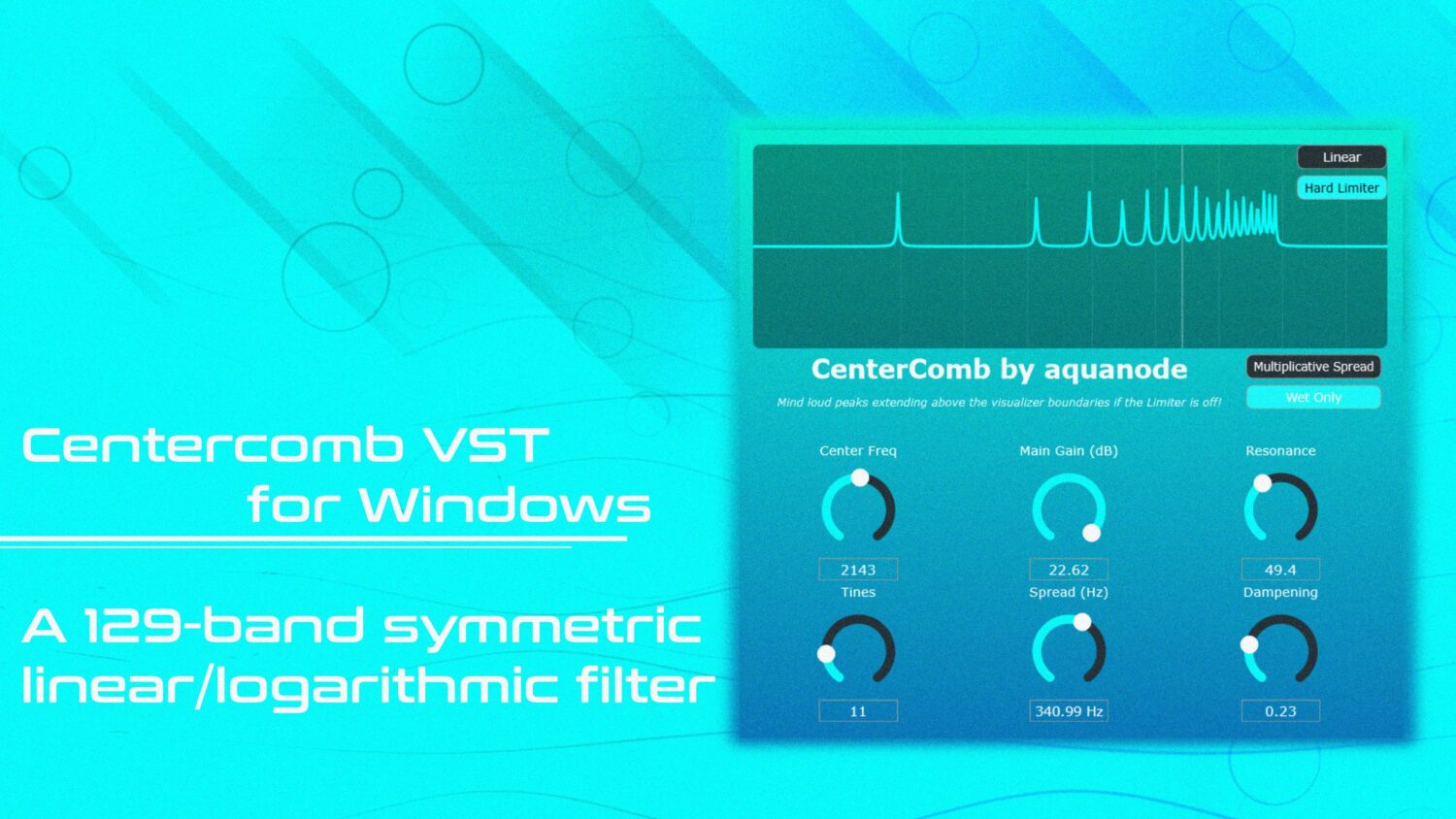
The digital audio workstation (DAW) ecosystem has witnessed a significant expansion with the release of a comprehensive plugin suite by developer Aqua Node. This new offering, which comprises 20 individual Virtual Studio Technology (VST) plugins alongside a dedicated environment for creative sound design, has been made available to the public free of charge. By utilizing an open-source distribution model, Aqua Node has positioned this release as a foundational resource for independent producers, sound designers, and software developers alike. While the current iteration is compiled specifically for the Windows operating system, the availability of the source code provides a pathway for community-driven ports to macOS and Linux architectures.
The release arrives at a time when the barrier to entry for high-quality audio production continues to lower, driven by independent developers who prioritize community access over traditional licensing fees. Aqua Node’s suite is not merely a collection of rudimentary tools but a curated set of processors and synthesizers designed to facilitate complex sound manipulation. This move follows a growing trend in the music technology industry where "freemium" or entirely free open-source software (FOSS) competes directly with established commercial entities by offering comparable utility and sonic flexibility.
Overview of the Aqua Node Plugin Suite
The Aqua Node collection is categorized into three primary functional areas: signal generation, signal processing, and utility management. By providing 20 distinct tools, the developer addresses the various stages of the signal chain, from the initial creation of a waveform to the final spectral analysis of a mix.
Among the 20 plugins are several synthesizers that focus on "Creative Sound Design," a term that suggests a departure from traditional subtractive synthesis in favor of more experimental modulation techniques. These instruments are designed to generate textures, pads, and rhythmic sequences that are often required in modern cinematic scoring and electronic music production. Complementing the generators is an array of audio effects. This includes standard spatial processors such as reverbs and delays, as well as more aggressive distortion units and modulation effects like phasers and flangers.
The utility portion of the suite includes essential tools for the modern studio environment. These range from visualizers—such as oscilloscopes and spectrum analyzers—to gain staging tools and signal routers. By including these utilities, Aqua Node ensures that users can manage their internal signal flow within a DAW without needing to rely on third-party stock plugins, which may vary in quality across different host applications.
The Strategic Importance of Open Source Development
Perhaps the most significant aspect of the Aqua Node release is its open-source nature. In the realm of professional audio software, proprietary code is the industry standard. Companies like Waves, FabFilter, and Universal Audio maintain strict control over their intellectual property to protect revenue streams. However, the open-source model adopted by Aqua Node aligns with a different philosophy: the democratization of technology.
By releasing the source code, Aqua Node invites a collaborative approach to software maintenance. This transparency allows other developers to inspect the code for optimization, fix bugs, and, most importantly, port the plugins to other operating systems. Currently, the lack of native macOS and Linux support is a limitation for a segment of the production community. However, within the open-source framework, it is common for community members to adapt Windows-based VSTs for the Apple Silicon (M1/M2/M3) architecture or for Linux-based distributions like Ubuntu Studio.
Furthermore, open-source plugins serve as an educational resource. Aspiring audio engineers and software developers can study the algorithms used in Aqua Node’s distortions or filters to understand the mathematics behind digital signal processing (DSP). This "white-box" approach contrasts with the "black-box" nature of commercial plugins, where the internal processing logic remains hidden from the user.
Technical Specifications and Compatibility
The Aqua Node suite is built on the VST standard, which remains the most widely used plugin format globally. For Windows users, the plugins are compatible with any DAW that supports VST2 or VST3 hosting, including Ableton Live, FL Studio, Reaper, Cubase, and Bitwig Studio. The developer has indicated that the plugins are optimized for modern 64-bit environments, ensuring they can leverage contemporary CPU architectures for low-latency performance.
While the suite is marketed as "20 plugins and a DAW," it is important to clarify the nature of the included DAW environment. Rather than a full-scale replacement for industry giants like Pro Tools, the Aqua Node environment acts as a specialized host or "sandbox" designed specifically for routing these 20 plugins in creative ways. This allows sound designers to create complex "chains" of effects and instruments that can then be sampled or recorded for use in larger projects.
Chronology of Independent Plugin Bundles
The emergence of the Aqua Node suite is part of a broader historical timeline of independent developers disrupting the audio industry. In the early 2000s, the "freeware" scene was dominated by individual developers releasing single plugins on platforms like KVR Audio. Over time, these developers began bundling their tools to provide more value.
- The Early Era (2000–2010): Developers like Variety of Sound and Antress Modern Plugins gained cult status by offering high-quality analog-modeled effects for free, though they remained closed-source.
- The Open Source Shift (2010–2020): Projects like the Surge synthesizer transitioned from commercial products to open-source, sparking a renewed interest in community-led development.
- The Modern Bundle Era (2020–Present): Companies like Kilohearts and MeldaProduction began offering "starter" bundles with dozens of free plugins to entice users into their ecosystems. Aqua Node’s release represents the latest evolution of this trend—offering a massive, 20-piece suite that is both free and open-source from day one.
Market Impact and Industry Reaction
The release of 20 free plugins has immediate implications for the entry-level segment of the music production market. For students and hobbyists, the cost of software can be a significant barrier. A single commercial synthesizer can cost upwards of $200, and a professional bundle of effects can exceed $1,000. By providing a "full suite" for free, Aqua Node effectively provides a "studio-in-a-box" experience that requires zero financial investment.
Industry analysts suggest that such releases force commercial developers to innovate more rapidly. When high-quality tools are available for free, paid software must justify its cost through superior user interfaces, better customer support, or unique features that cannot be easily replicated in the open-source domain.
While major commercial developers have not issued official statements regarding Aqua Node specifically, the general reaction within the developer community has been positive. On forums such as Reddit’s r/Logic_Studio and various VST enthusiast groups, users have praised the "no-strings-attached" nature of the Gumroad distribution. There are no subscription models, no mandatory "manager" software to install, and no intrusive copy protection (iDRM), which are common points of frustration for professional users.
Analysis of Creative Sound Design Implications
The focus on "Creative Sound Design" suggests that Aqua Node is targeting a specific niche within the music industry. Traditional mixing plugins are designed to be transparent—to fix problems in a recording without being noticed. In contrast, creative sound design tools are meant to be transformative.
The inclusion of these tools in a single suite allows for a cohesive workflow. For instance, a user can generate a raw waveform in an Aqua Node synth, pass it through an Aqua Node spectral distorter, and then use an Aqua Node utility to monitor the phase correlation. Because these plugins were developed by the same entity, they likely share a consistent internal logic and aesthetic, which can lead to a more streamlined creative process compared to mixing and matching plugins from twenty different developers.
Future Outlook and Sustainability
The long-term success of the Aqua Node suite will depend on the activity of the open-source community. For the project to evolve, it will require a repository of contributors who can maintain the code as Windows and other operating systems update their requirements.
There is also the potential for the "Aqua Node DAW" to grow. If the developer or the community expands this hosting environment to support third-party VSTs or adds advanced sequencing capabilities, it could become a viable lightweight alternative for live performance or mobile sound design setups.
In conclusion, the Aqua Node suite represents a significant contribution to the digital audio landscape. By offering 20 VST plugins and a specialized design environment under an open-source license, the developer has provided a versatile toolkit for the modern creator. The move highlights the ongoing shift toward transparency and accessibility in music technology, ensuring that high-level sound design remains an achievable goal for producers regardless of their financial resources. As the community begins to interact with the source code, the industry may soon see these tools appearing on a wider variety of platforms, further cementing Aqua Node’s place in the history of freeware audio development.