

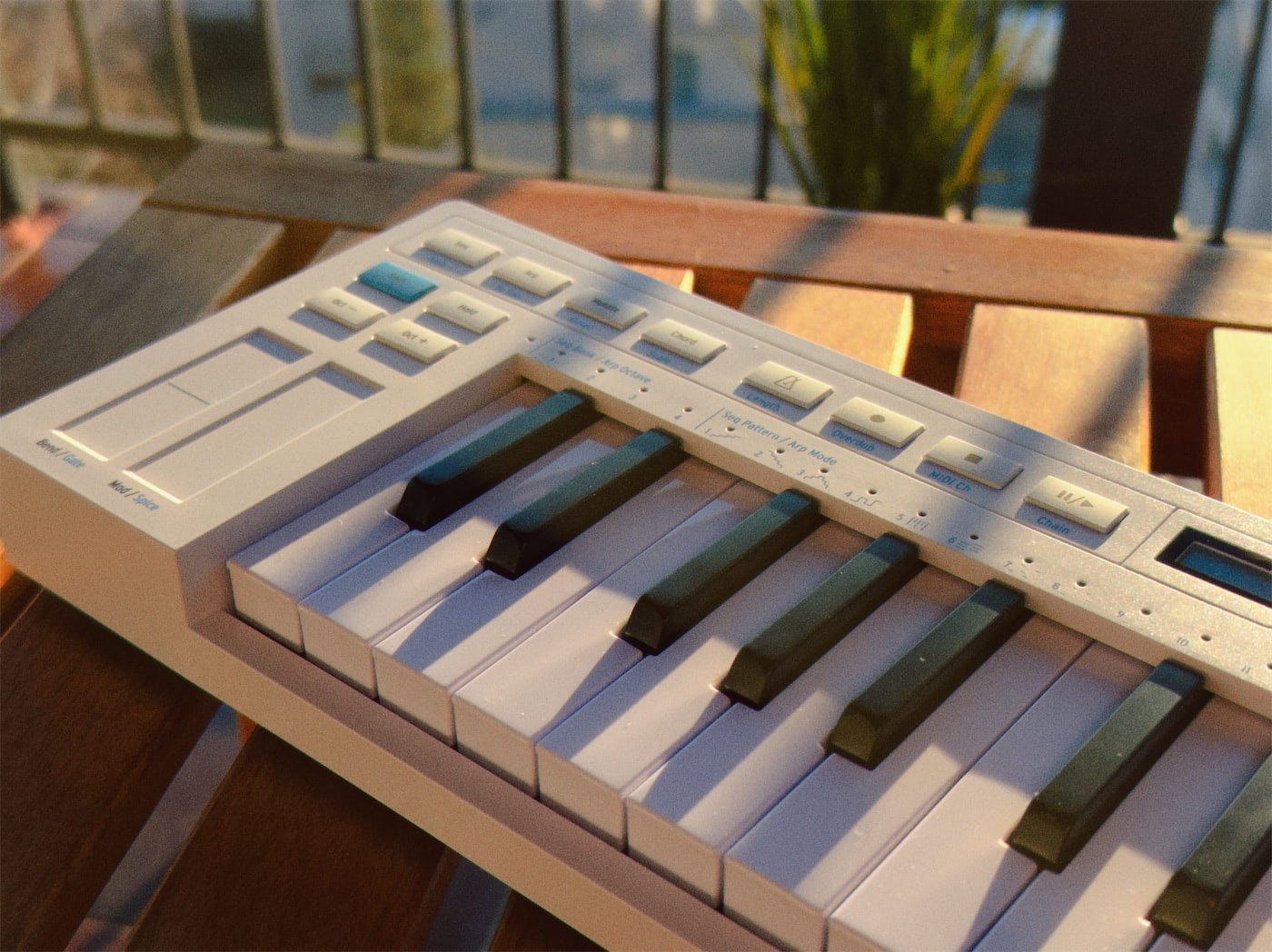
The latest iteration in Arturia’s acclaimed KeyStep series, the KeyStep 37 mk2, marks a significant evolution for the compact controller market, delivering an impressive array of features and expanded connectivity within its signature portable footprint. Building on a legacy of innovative and highly functional music hardware, Arturia has once again pushed the boundaries of what musicians can expect from a device designed for both studio and live performance environments. This release is poised to further solidify Arturia’s position as a leader in hybrid synthesis and controller technology, catering to the growing demand for versatile tools that bridge the gap between software and hardware ecosystems.
A Legacy of Innovation: The KeyStep Lineage
Arturia, a French company renowned for its meticulously crafted hardware synthesizers, software instruments, and MIDI controllers, first introduced the KeyStep in 2016. This original model quickly gained widespread acclaim for its unique blend of a compact keyboard, powerful sequencer, and extensive connectivity options, including MIDI, USB, and CV/Gate. It addressed a critical need for musicians integrating modular synths, vintage gear, and modern DAWs, all within a portable form factor. The KeyStep Pro, launched subsequently, expanded on this concept with more tracks, larger sequencing capabilities, and a deeper feature set, targeting more advanced studio setups and live performance rigs. The KeyStep 32, while not explicitly named as such in the original text, represented the previous generation, establishing the compact size and core functionality that the new KeyStep 37 mk2 now evolves from. The KeyStep philosophy has consistently revolved around packing an exceptional density of features and connectivity into a compact design, often exceeding conventional expectations for its size class. This commitment to innovation and user-centric design is evident in the latest KeyStep 37 mk2, which refines and expands upon these foundational principles.
Key Enhancements and Ergonomic Refinements
The most immediately apparent upgrade in the KeyStep 37 mk2 is the expansion from 32 to 37 slimkey keys. This seemingly minor increase in key count yields substantial ergonomic and musical benefits. While retaining the device’s "backpack-ready" portability, the additional five keys provide a more comfortable playing range, significantly reducing the need for constant octave switching that often characterizes work on 25 or 32-key controllers. This expanded range allows for more fluid melodic sketching and chord voicing, enhancing the expressiveness and immediacy of musical idea generation.
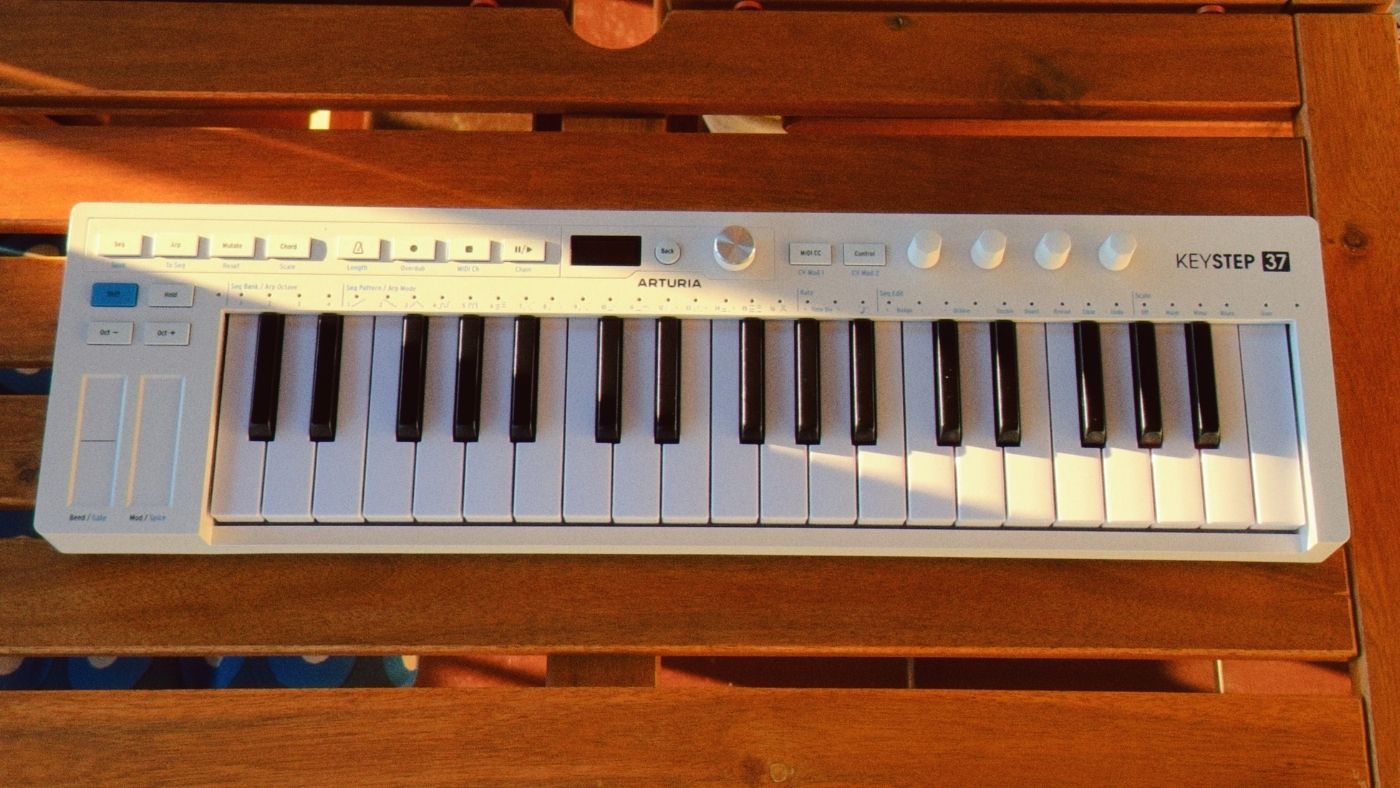
Beyond the keyboard, Arturia has integrated a dedicated OLED display, accompanied by a clickable encoder for intuitive menu navigation. This new visual feedback mechanism is a crucial workflow enhancement, providing clear information on current patterns, arpeggio modes, edit values, and parameter names. It also functions as a real-time display during sequence recording, offering a visual count-in and confirming value adjustments, thereby streamlining the creative process. Complementing the display are four additional encoders and two extra buttons strategically placed along the right side of the unit. These context-sensitive controls dynamically adjust their function based on the active mode—be it Sequencer, Arpeggiator, Mutate, Chord Mode, or Step Recording. This direct, hands-on control over parameters that previously required menu diving significantly accelerates interaction with the device, allowing musicians to remain immersed in their creative flow.
Furthermore, the KeyStep 37 mk2 introduces a new Mod 2 CV output, expanding its already robust connectivity suite. This addition is particularly beneficial for modular synthesis enthusiasts, offering greater flexibility in routing modulation sources to external modules. The Mod outputs can be assigned to various sources, including aftertouch, velocity, the modulation strip, random per-step, or pulse per-step, opening up a wider palette of expressive control over analog and modular systems.
Unleashing Creative Potential: Enhanced Sequencer and Generative Tools
The KeyStep 37 mk2’s sequencer is an 8-voice polyphonic powerhouse, offering four banks of 16 patterns, totaling 64 patterns. Each pattern can extend up to 64 steps with support for up to 8 notes per step, and patterns can be chained for longer compositions or evolving live arrangements. A pivotal advancement in this iteration is the introduction of unquantized real-time recording. This feature allows users to capture the natural timing and nuanced feel of a performance, moving beyond the rigid confines of a fixed grid. For musicians seeking to inject organic groove and human imperfections into their sequences, this is a game-changer, fostering more natural-sounding and expressive musical phrases.
Visual feedback is further enhanced by 39 LEDs that track note activity in real time. These LEDs illuminate corresponding keys played by the keyboard, sequencer, or arpeggiator. In Scale mode, notes within the active scale are highlighted in white, while corrected (transposed) notes appear in green. This intuitive visual guide provides immediate confirmation of musical input and output, making it easier to work with complex patterns and generative processes.
The arpeggiator boasts 16 modes, including six classic direction-based patterns (up, down, and variations). However, modes 7 through 15 introduce a realm of generative phrase arpeggios. These modes utilize held notes to construct evolving sequences rather than simple cyclical patterns, each possessing a distinct density and rhythmic character. Arpeggios can be built up to 64 notes by holding keys across different octave positions, providing a rich canvas for dynamic melodic exploration.
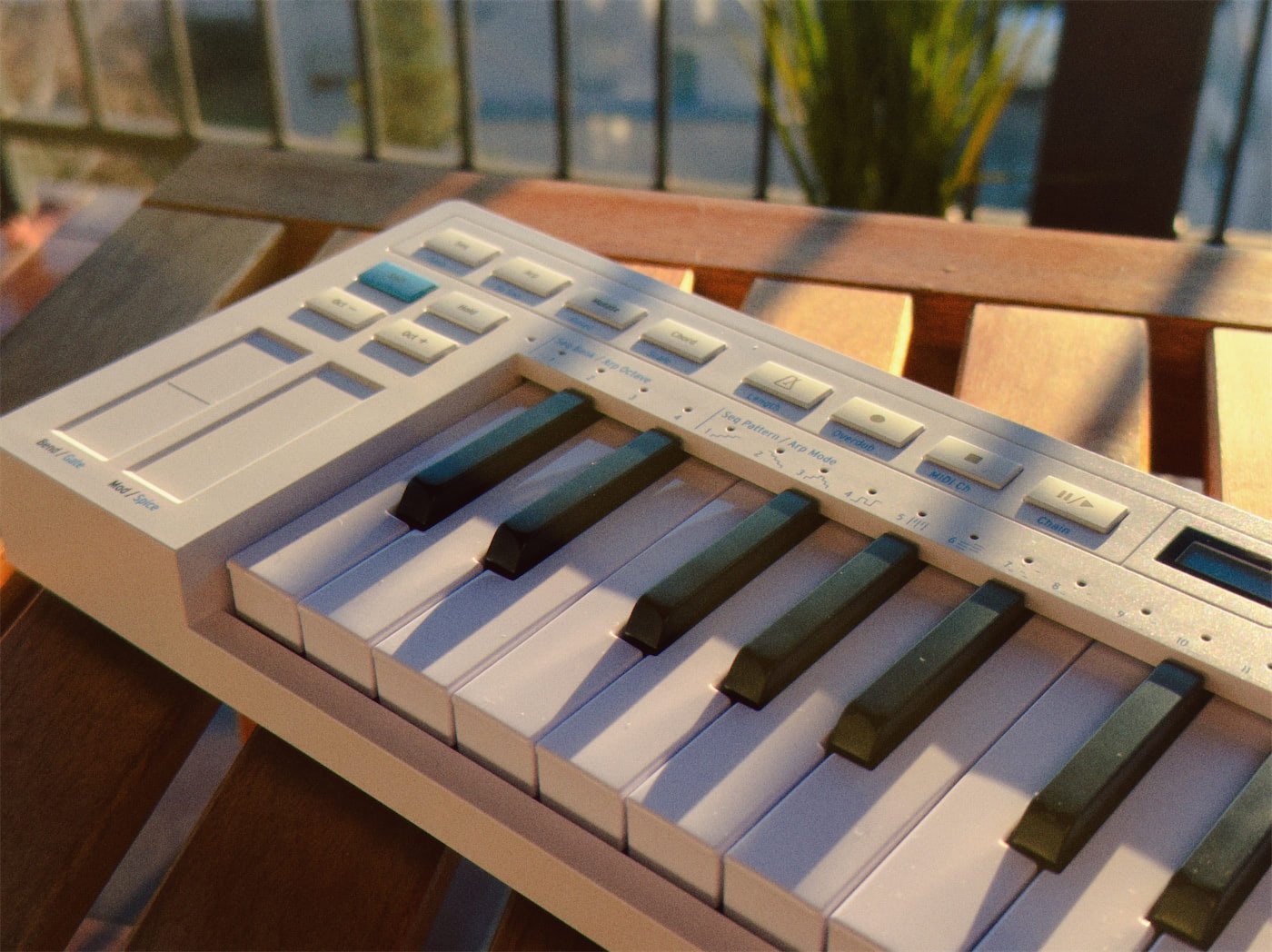
Perhaps the most exciting additions are the generative tools: Mutate and Spice. Mutate applies on-the-fly random variations to sequences or arpeggios, with the four new encoders offering direct control over probability, randomness, polyphony, and density. This feature transforms static patterns into evolving musical landscapes, offering endless possibilities for spontaneous composition and performance. Its inherent playfulness has been widely praised, encouraging prolonged creative engagement. Complementing Mutate, Spice introduces targeted randomness into gate length and ratchet via the modulation strip. This allows rhythms to subtly shift and repeat in unconventional ways, moving beyond the predictability of basic sequencing. Together, Mutate, Spice, and the phrase arpeggio modes foster an exploratory workflow, encouraging users to morph and discover new musical ideas, making the KeyStep 37 mk2 an ideal companion for jam-oriented setups and creative discovery with hardware synthesizers.
Further expanding its utility, the Scale mode quantizes the keyboard to a selected key and mode. With 15 preset scales, including major, minor, blues, pentatonic variations, and several world scales, plus a user-defined option, musicians have a broad palette. Scale settings can be applied globally to the keyboard, sequencer, and arpeggiator, or assigned individually to specific sequencer patterns for complex musical arrangements. Chord mode allows users to construct custom voicings by holding the Chord button and pressing desired notes, which can then be triggered by a single key. Control over spread, strum timing, strum type, and voicing offers nuanced expressive capabilities for harmonic exploration.
Comprehensive Connectivity for Diverse Setups
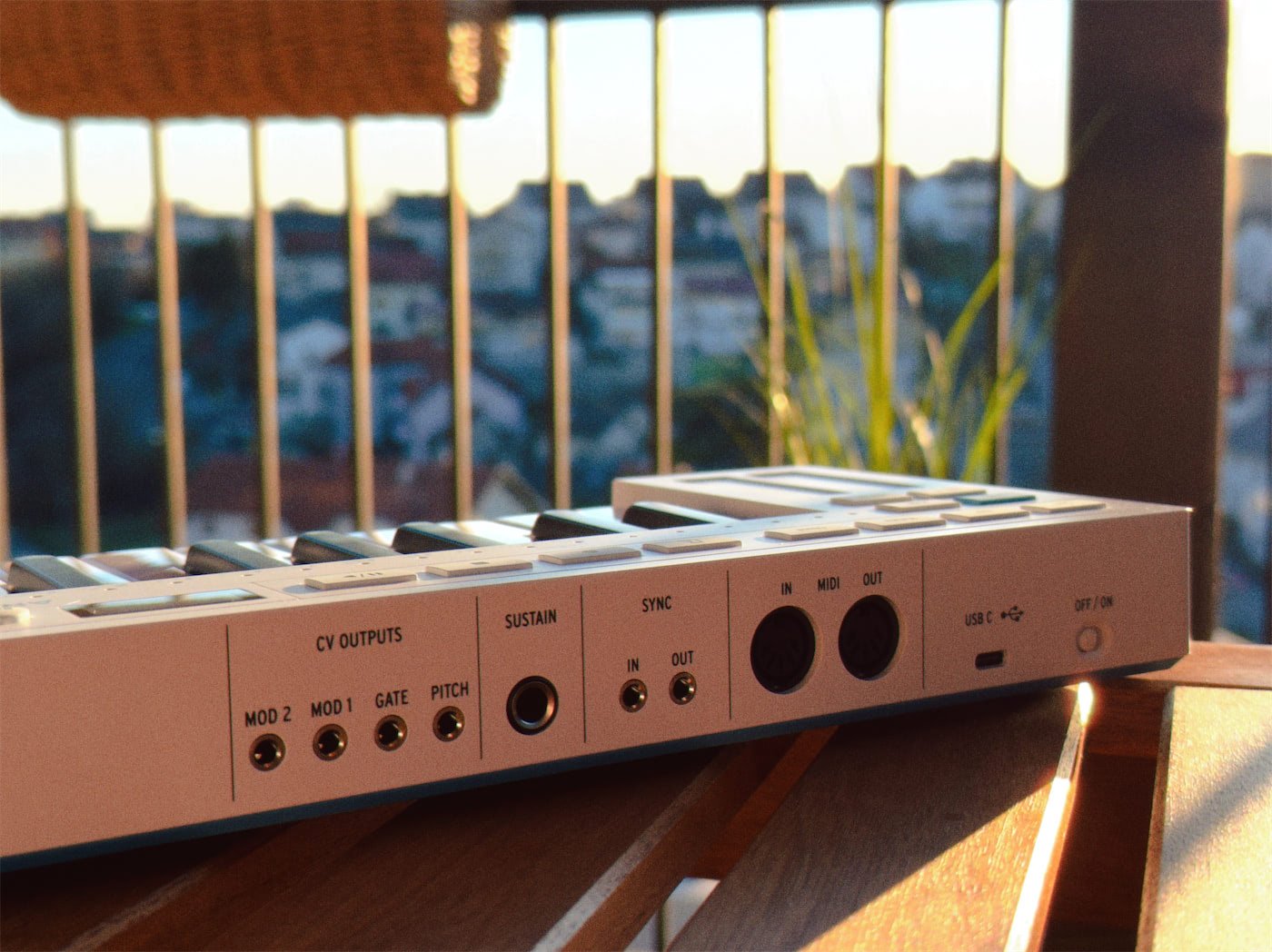
Arturia’s long-standing commitment to comprehensive connectivity is fully realized in the KeyStep 37 mk2. The rear panel is meticulously designed to serve as a central hub for virtually any studio or live setup. On the CV side, four outputs are provided: Pitch, Gate, Mod 1, and the newly added Mod 2. As previously noted, the Mod outputs are highly assignable, allowing for intricate control over connected modular synthesizers.
Standard 5-pin DIN MIDI In and Out connectors ensure compatibility with a vast range of MIDI-enabled hardware, from vintage synthesizers to modern sound modules. A dedicated Sync I/O allows for seamless integration with pre-MIDI gear that relies on analog clock pulses or MIDI sync, further broadening its compatibility. The pedal input accommodates either a sustain footswitch for traditional piano-style sustain or an expression pedal for continuous control over assignable parameters. Power and data transfer are handled by a modern USB-C connector, offering robust and reliable connectivity to computers and other USB-C enabled devices. A dedicated power switch enhances usability, allowing for easy power management without disconnecting cables.
This extensive suite of connections—USB-C, MIDI DIN, and multiple CV/Gate outputs—positions the KeyStep 37 mk2 as a truly versatile controller, equally at home in a software-centric DAW environment, a hardware-focused studio, or a complex modular synthesis rig. It embodies Arturia’s "connectivity-first" design philosophy, providing musicians with the tools to integrate their creative ecosystem seamlessly.

Robust Build Quality and Thoughtful Ergonomics
The build quality of the KeyStep 37 mk2 reflects Arturia’s reputation for durable and reliable hardware. The slimkey keyboard maintains the responsive and tactile feel characteristic of Arturia’s compact controllers. The keys offer just enough spring to feel satisfyingly responsive, while the velocity and aftertouch tracking are precise, allowing for expressive performances often unexpected in a controller of this size. The inclusion of aftertouch, a feature not always found in compact keyboards, is a significant bonus for dynamic playing.
All buttons across the panel provide a satisfying tactile click, distinguishing them from the softer, rubberized buttons found on some other controllers. This tactile feedback is crucial for confidently toggling modes or engaging transport controls during live performances or rapid workflow adjustments. The rotary encoders, while perhaps basic in appearance, operate smoothly across their range, providing reliable control over parameters. While some users might prefer eight dedicated knobs, the four context-sensitive encoders represent a pragmatic solution for a controller in this size category.
The pitch and modulation controls utilize touch strips rather than traditional wheels, a design choice consistent with Arturia’s other compact controllers. While individual preferences may vary, these strips offer a distinct advantage: the ability to jump directly to a specific pitch or modulation value by simply pressing the strip at that point. This functionality enables unique performance effects and rapid parameter changes that are not possible with standard wheels, highlighting Arturia’s innovative approach to design.
Market Impact and Implications
The release of the KeyStep 37 mk2 is a strategic move by Arturia to reinforce its dominance in the highly competitive compact MIDI controller market. By integrating advanced generative capabilities, enhanced ergonomics, and an even more robust connectivity suite, Arturia is targeting a broad spectrum of musicians, from bedroom producers to seasoned modular enthusiasts. The product directly competes with offerings from brands like Novation (e.g., Launchkey Mini) and Akai (e.g., MPK Mini), distinguishing itself through its unique blend of a powerful sequencer, extensive CV/Gate integration, and performance-oriented generative features.
Industry analysts suggest that the KeyStep 37 mk2 positions itself as a central control hub for hybrid setups, a rapidly growing segment of the music production landscape. The emphasis on unquantized recording, creative arpeggiation, and mutation tools aligns with a broader trend towards more organic, spontaneous, and less grid-locked music creation. This caters not only to electronic music producers but also to musicians exploring ambient, experimental, and sound design genres. Arturia’s inferred objective is to provide a single, portable solution that can seamlessly integrate with a musician’s entire arsenal, whether it’s a DAW, a collection of hardware synths, or a sprawling modular rack. The addition of USB-C and the second Mod CV output underscores Arturia’s forward-thinking approach, ensuring compatibility with current and future technological standards. This product is not merely an update; it represents Arturia’s continued investment in tools that empower creative exploration and streamline complex studio workflows.
Conclusion
The Arturia KeyStep 37 mk2 represents a significant leap forward for compact MIDI controllers. Its enhanced playability, driven by the increased key count and intuitive OLED display, combined with a profoundly hands-on workflow facilitated by the new encoders, makes it a highly engaging instrument. The powerful 8-voice polyphonic sequencer, now featuring unquantized real-time recording, offers unprecedented expressive freedom for a device of its size. However, it is the integration of innovative generative tools like Mutate and Spice, alongside advanced phrase arpeggios, that truly sets the KeyStep 37 mk2 apart, transforming it from a mere controller into a powerful idea-generation machine. Coupled with its comprehensive connectivity options—USB-C, MIDI DIN, and four CV outputs—the KeyStep 37 mk2 emerges as an exceptionally versatile and compelling option for any musician seeking a portable yet potent solution for MIDI control, pattern sequencing, generative arpeggiation, and CV routing. It is a testament to Arturia’s enduring commitment to innovation, offering a tool that not only controls but actively inspires creativity.