

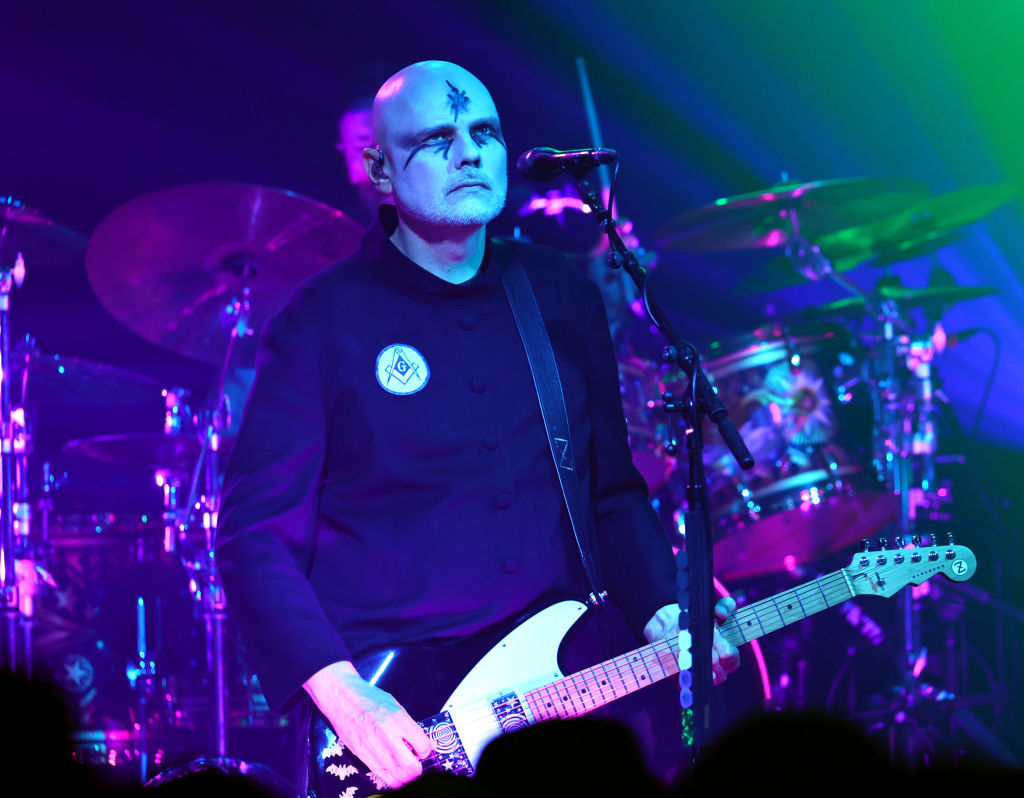
Smashing Pumpkins frontman Billy Corgan has once again stirred significant discussion within the music industry and cultural commentary circles, positing theories ranging from governmental interference in music trends to a purposeful sidelining of rock’s cultural impact. His recent remarks, made across two episodes of his podcast The Magnificent Others, featuring occult historian Conrad Flynn, have sparked a wider conversation about the trajectory of popular music, the role of media, and the underlying forces that shape cultural discourse. These claims have drawn immediate responses from prominent figures like music video director Joseph Kahn and veteran journalist Kurt Loder, adding layers to an already complex debate about genre dominance and artistic freedom.
The Genesis of the Debate: Corgan’s Initial Claims
The initial catalyst for this renewed discussion emerged last December during an episode of The Magnificent Others. In a conversation with Conrad Flynn, who gained viral notoriety for referencing experimental music collective Nurse With Wound on The Tucker Carlson Show months prior, Corgan delved into the opaque inner workings of the music industry. During this segment, the prolific musician made a striking claim: that the George W. Bush White House had attempted to enlist him in an influence campaign. While specific details of this alleged approach remained sparse, Corgan’s assertion immediately suggested a link between political power structures and the music world, hinting at an overarching conspiracy to diminish rock music’s voice in contemporary culture.
The December episode also touched upon esoteric themes, with Corgan and Flynn discussing "shapeshifters" within the music community, a concept often associated with esoteric beliefs about individuals holding hidden power or influence. Following this, Corgan articulated his initial theory on rock music’s decline from mainstream ubiquity. "Rock was the greatest single social-changing force of the 20th century," Corgan stated, reflecting on the genre’s historical impact from the civil rights movement to anti-war protests. He then questioned its current status: "And here we are 25 years into the 21st century and rock couldn’t be any less of an influence on the social political order. Does anybody think that that’s kind of strange that somebody decided to push a button somewhere and make sure that people like myself don’t say certain things anymore?" This rhetorical question laid the groundwork for his more expansive claims about deliberate manipulation.
Deepening the Conspiracy: The Second Podcast Episode
Corgan and Flynn reconvened for a follow-up episode of The Magnificent Others last week, where they further elaborated on these provocative theories. In this subsequent discussion, Corgan offered an even more controversial perspective, suggesting that "pop had more connectivity to Satanism than rock music," a statement that immediately drew attention for its provocative nature and implied historical context within certain subcultures.
The core of Corgan’s expanded theory, however, focused on the perceived intentional "dialing down" of rock’s cultural presence, specifically pinpointing the late 1990s as a critical juncture. He cited the release of The Smashing Pumpkins’ album Adore in 1998 as a personal reference point for this shift. Corgan recounted his observations from within the industry at the time: "I think rock has been purposefully dialed down in the culture [since the late ’90s]… I saw the gravity shift. If you were at MTV or around MTV, 1997, ’98, suddenly they decided rock was out when rock was still very, very high up in the thing."
He elaborated on MTV’s alleged role in this transformation, describing a rapid and overt change in programming and standards. "And it was replaced by rap. They immediately changed — their standards and practices immediately shifted. So now the things that weren’t allowed were suddenly allowed. People were waving guns. OK?" Corgan then introduced a more speculative element, noting, "So some people assert that the CIA was involved into that — again, above my pay grade. But I saw it happen. I did witness it happen." While acknowledging the emergence of "great music" and "qualitative things and great artists" from the shift, Corgan maintained that an "overt shift" occurred, one that he believes was orchestrated.
Corgan further highlighted the contemporary paradox where rock remains a dominant force in live music ticket sales globally, yet its cultural representation is disproportionately low compared to pop music. "Rock is probably the most dominant ticket-selling thing in the western world, and yet there’s almost no representation of rock in culture. So why do we have that schism? I think they purposefully dialed down the ability of rock stars to have a voice in the culture. Or, those who exist within the ecosystem are basically, you know, they’ll color between the lines so they don’t have to worry about that." This assertion suggests a deliberate suppression of rock artists’ socio-political commentary, fostering an environment where only compliant voices are amplified.
Industry Perspectives and Counter-Theories: Kahn’s "Sex" Hypothesis
Corgan’s bold claims did not go unchallenged. Joseph Kahn, a highly acclaimed music video director known for his work with some of the biggest names in mainstream pop and hip-hop, offered a starkly different perspective. Kahn, who has never worked with The Smashing Pumpkins but boasts a resume including Grammy-winning videos for Taylor Swift’s "Bad Blood" and Eminem’s "Without Me," responded to Corgan’s podcast comments via a post on X (formerly Twitter).
Kahn’s theory directly countered Corgan’s, attributing rock’s decline to an internal shift within the genre itself, specifically its perceived separation from overt sexuality and a move towards "political correctness." "Rock died when it separated itself from sex," Kahn asserted. He recounted an experience directing a video for an unnamed "huge rock band" where internal disagreements arose over "the male gaze." Kahn concluded, "PC and rock is death. Everyone would rather be Rolling Stone Magazine than the Rolling Stones. Music is ultimately driven by horny teenagers and they fled to rap." This statement posits that rock’s abandonment of raw, visceral, and often sexually charged imagery and themes, in favor of what Kahn perceives as an overly sanitized or politically correct aesthetic, alienated its core demographic of young, sexually awakening listeners who then migrated to genres like hip-hop that continued to embrace such themes. The video Kahn referenced remains a topic of speculation, with The All-American Rejects’ "Sandbox" and the Jonas Brothers’ "What A Man Gotta Do" being the only videos for bands he’s directed in the past eight years.
Adding another voice to the burgeoning discussion, veteran music journalist Kurt Loder, who extensively covered The Smashing Pumpkins during their 1990s heyday, also chimed in, though his specific comments were not detailed in the initial report, implying an ongoing dialogue among those who witnessed rock’s ascent and perceived decline.
Historical Context: Rock’s Cultural Zenith and Shifting Tides
To fully contextualize Corgan’s claims, it’s essential to recall rock music’s undeniable dominance throughout the 20th century. From Elvis Presley’s groundbreaking performances challenging societal norms in the 1950s, through the counter-cultural movements fueled by Bob Dylan and The Beatles in the 1960s, to the punk and new wave explosions of the 1970s and the grunge phenomenon of the 1990s, rock served as a primary soundtrack for social change and youthful rebellion. It was a powerful vehicle for anti-establishment sentiment, political protest, and personal expression, often challenging the status quo and pushing boundaries in fashion, lifestyle, and lyrical content.
The advent of MTV in 1981 further cemented rock’s mainstream power. For nearly two decades, the music television channel was a kingmaker, its programming heavily favoring rock, pop-rock, and later, alternative rock. Bands like Nirvana, Pearl Jam, and Corgan’s own Smashing Pumpkins achieved global superstardom largely through MTV’s omnipresent video rotation. This era, peaking in the early to mid-1990s, saw rock acts routinely topping charts, selling out arenas, and dominating cultural conversations.
However, as Corgan noted, a significant shift did occur in the late 1990s. MTV, seeking to broaden its audience and capitalize on emerging trends, began to pivot its programming strategy. The rise of hip-hop and R&B, which had been steadily gaining traction throughout the 80s and 90s, accelerated dramatically. Shows like TRL (Total Request Live), which debuted in 1998, began to feature a more diverse array of genres, with pop and hip-hop increasingly dominating the countdowns. This was not merely a stylistic preference but also a reflection of evolving demographics and market forces. Data from the Recording Industry Association of America (RIAA) shows a dramatic increase in hip-hop/R&B album sales and market share from the late 90s into the 2000s, often at the expense of rock, which saw its market share gradually erode from its peak.
The Role of Media and Technology in Shaping Tastes
The transformation of media platforms played a crucial role in these shifts. MTV’s decision to diversify its content was a response to, and simultaneously an accelerator of, changing youth tastes. As the 21st century progressed, the internet further fragmented media consumption. Napster, iTunes, and eventually streaming services like Spotify and Apple Music democratized access to music, breaking down traditional gatekeepers like radio and television. This allowed for niche genres to thrive, but also meant that no single genre held the monolithic cultural power that rock once enjoyed.
Today, algorithms often dictate discovery, and social media platforms like TikTok have become powerful launchpads for artists and songs, often favoring short, catchy, and visually engaging content that aligns well with pop and hip-hop aesthetics. While rock still boasts a fervent fanbase and impressive touring revenues, its presence in these new digital cultural ecosystems is often less pronounced than that of pop, hip-hop, and electronic music. This disparity between live performance popularity and mainstream media representation is precisely the "schism" Corgan identifies.
Economic Realities and Genre Evolution
Beyond alleged conspiracies, economic realities undeniably shape the music industry. Record labels, driven by profit motives, naturally invest in and promote genres and artists that demonstrate commercial viability and appeal to the broadest possible audience. As youth demographics shifted their listening habits towards hip-hop and pop in the late 90s and early 2000s, industry resources followed suit. This is a perpetual cycle in popular music: genres rise, dominate, and then often yield to new sounds that resonate with the next generation.
Streaming data from recent years consistently shows pop and hip-hop/R&B as the most consumed genres globally, reflecting the culmination of these trends. While rock maintains a significant share, particularly in album sales and concert attendance, its daily streaming numbers and chart dominance are often outpaced by contemporary pop and rap. The industry’s focus on digital singles, viral moments, and cross-genre collaborations also inherently favors genres with broader, more immediate appeal.
Analyzing the "Influence Campaign" Hypothesis
Corgan’s claim of a George W. Bush White House attempt to enlist him in an influence campaign, and the broader hint of CIA involvement in genre shifts, evokes historical precedents of government interest in cultural output. During the Cold War, for instance, the U.S. government actively promoted jazz and other art forms as soft power tools. Similarly, during the "War on Terror," there was an intensified focus on public diplomacy and shaping narratives, particularly among younger demographics, to counter extremist ideologies. While direct government orchestration of genre shifts to "dial down" specific artistic voices remains largely unproven in public record, the idea of governments or powerful entities seeking to influence cultural figures or trends is not entirely without historical context.
The notion that rock music, with its history of protest and dissent, might be seen as a potential counter-narrative by political establishments is plausible. However, attributing specific genre shifts to such covert operations rather than organic cultural evolution, demographic changes, and market forces is a significant leap that requires substantial evidence. Industry analysts often attribute such shifts to complex interplay of consumer taste, technological innovation, marketing strategies, and socio-economic factors rather than singular, top-down conspiracies.
The "Sex vs. PC" Argument: A Cultural Lens
Joseph Kahn’s counter-theory, positing that rock’s decline is due to its "separation from sex" and embrace of "PC," taps into a broader cultural debate about artistic freedom, censorship, and evolving social norms. The 1990s and early 2000s saw increased scrutiny of music lyrics and imagery, particularly concerning violence and sexual content, leading to "parental advisory" labels and public debates. Simultaneously, discussions around gender representation, objectification, and the "male gaze" gained prominence.
Kahn’s argument suggests that rock, perhaps in an attempt to be more palatable or responsible, became less edgy and less appealing to the "horny teenagers" who traditionally drive music consumption. Hip-hop, in contrast, often continued to push boundaries in its lyrical and visual content, embracing explicit themes of sex, power, and materialism, which arguably resonated more with a youth demographic seeking rebellion and unfiltered expression. This perspective suggests that cultural self-censorship or an overemphasis on "political correctness" can inadvertently dilute the raw, rebellious energy that historically defined rock music, leading to a loss of its core audience.
Implications for the Music Landscape
Billy Corgan’s claims and the subsequent reactions underscore a profound tension within the music industry: the struggle between artistic integrity, cultural impact, and commercial viability. His theories, while controversial, highlight legitimate questions about the forces that shape popular culture. Is it purely organic evolution, or are there unseen hands guiding the narrative?
The debate serves as a crucial reminder of rock music’s enduring legacy and the passionate defense of its cultural significance by its proponents. While rock may no longer dominate the mainstream charts as it once did, its influence is undeniable, and its presence in live music remains robust. The discussions initiated by Corgan also invite broader reflection on the responsibilities of artists as cultural commentators, the power of media platforms, and the dynamic interplay between art, politics, and society. As the music landscape continues to evolve at a rapid pace, shaped by new technologies and shifting demographics, the questions Corgan raises about control, influence, and the future of genre dominance will likely persist, fueling further debate and analysis among artists, critics, and audiences alike.