

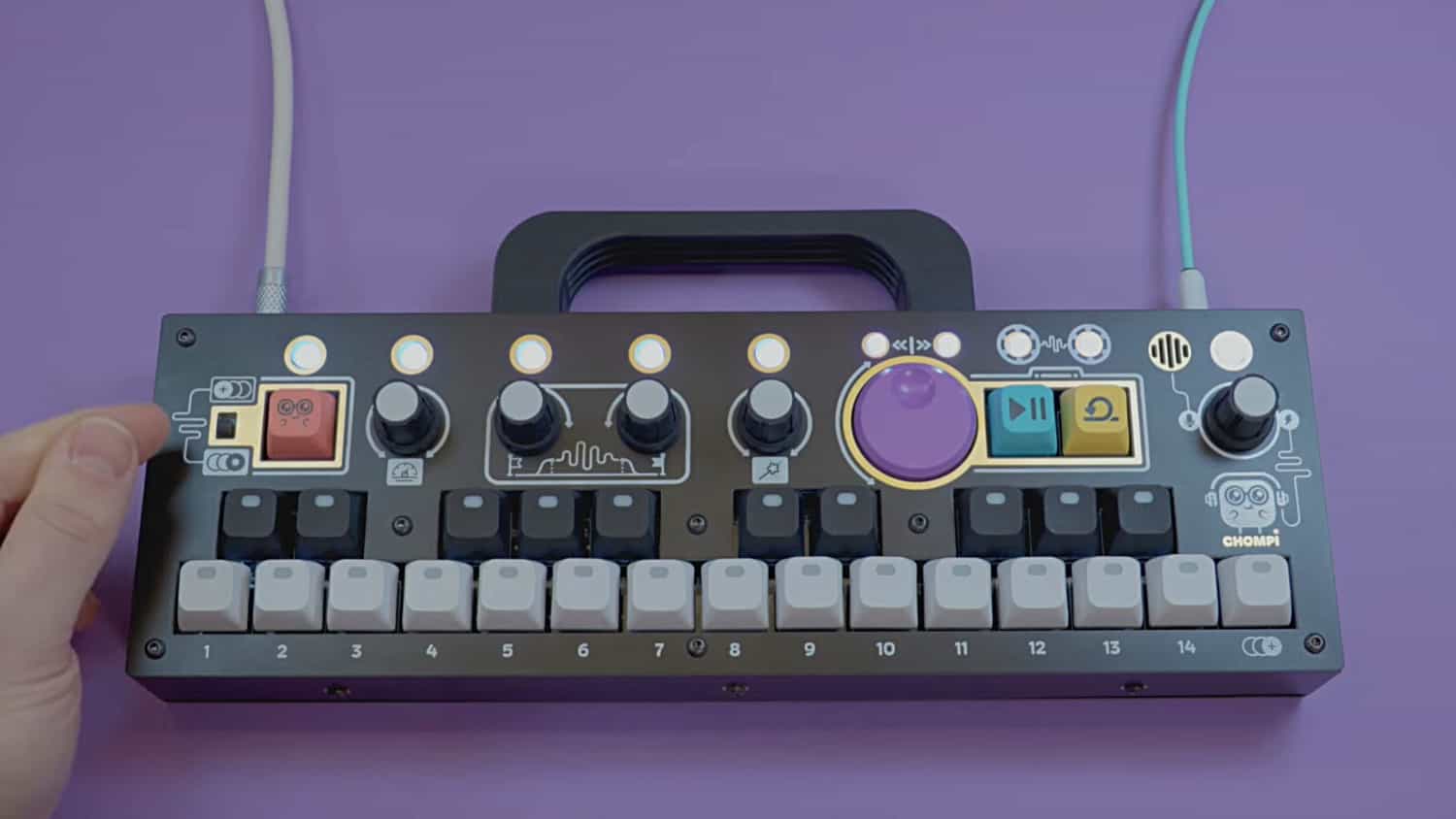
The landscape of portable music production has undergone a significant shift with the introduction of TEMPO, a comprehensive and free alternate firmware for the CHOMPI sampler, developed in collaboration with the renowned boutique electronics manufacturer Chase Bliss. This software update represents a fundamental reimagining of the CHOMPI hardware, transitioning it from its original identity as a whimsical, tactile looper and sampler into a streamlined, syncable groovebox. By providing a pattern-based workflow that emphasizes real-time performance and rhythmic synchronization, the TEMPO firmware addresses a specific demand within the electronic music community for portable devices that can integrate seamlessly into larger studio environments or live performance rigs.
The Technical Evolution of CHOMPI via TEMPO Firmware
The CHOMPI sampler, which initially gained prominence through a highly successful crowdfunding campaign, was designed with a focus on "sound play" and immediate tactile feedback. Its hardware architecture, centered around the Daisy Seed platform—an open-source embedded high-fidelity audio engine—provided the necessary flexibility for deep software modifications. The release of TEMPO leverages this flexibility to introduce a "syncable pattern-maker" functionality. Unlike the original firmware, which focused on organic, often asynchronous looping and granular manipulation, TEMPO introduces a structured rhythmic framework.
This alternate firmware allows users to create sequences that are locked to a specific tempo, facilitating the creation of percussive loops and melodic patterns that can stay in time with external hardware. The implementation of MIDI synchronization is a cornerstone of this update, allowing the CHOMPI to act as either a leader or a follower within a MIDI clock ecosystem. For a device that features high-quality stereo I/O and a built-in microphone, the addition of a pattern-based sequencer expands its utility from a standalone "sketchpad" to a viable component of a professional production workflow.
Chronology of Development and Release
The journey toward the TEMPO firmware began shortly after the commercial release of the CHOMPI hardware. CHOMPI Club, the entity behind the sampler, sought to expand the device’s capabilities beyond its initial scope. In 2023, the CHOMPI sampler launched on Kickstarter, where it surpassed its initial funding goals within hours, eventually raising over $1.1 million from more than 2,000 backers. This overwhelming support signaled a strong market appetite for boutique, aesthetically unique music hardware.
Following the fulfillment of the initial backer rewards in late 2023 and early 2024, the development team began exploring "alternate personalities" for the hardware. The collaboration with Chase Bliss—a company synonymous with high-end digital signal processing and innovative guitar pedals—provided the technical expertise required to refine the device’s internal logic. The development phase focused on maintaining the "hands-on" ethos of the original design while introducing the precision required for a groovebox. The TEMPO firmware was officially announced and released as a free download in late 2024, marking a pivotal moment in the product’s lifecycle.
Hardware Specifications and the Daisy Seed Integration
To understand the impact of the TEMPO firmware, one must consider the robust hardware foundation of the CHOMPI. The device is characterized by its use of mechanical Cherry MX switches for its keyboard, providing a level of tactile durability rarely seen in portable samplers. Internally, the Daisy Seed micro-controller offers 24-bit/96kHz audio fidelity, 64MB of SDRAM, and an ARM Cortex-M7 processor.
The TEMPO firmware utilizes these resources to manage complex sequencing tasks that were not present in the original firmware. By reallocating the processing power of the Daisy Seed, the developers were able to implement a pattern-based architecture without sacrificing the high-quality effects and granular engines that users expected. The hardware features a microSD card slot for sample storage, 3.5mm MIDI In/Out, and a USB-C port for both power and data, all of which are utilized by the new firmware to ensure the device remains a versatile hub for modern music production.
Strategic Impact of the Chase Bliss Collaboration
The involvement of Chase Bliss in the development of TEMPO is a significant detail for industry analysts. Chase Bliss, led by founder Joel Korte, has traditionally focused on the guitar pedal market, though their products often blur the lines between traditional effects and synthesizers. Their reputation for "happy accidents" and deep, menu-less control schemes aligns perfectly with the CHOMPI design philosophy.
By lending their branding and technical insight to the TEMPO firmware, Chase Bliss has effectively validated the CHOMPI as a serious tool for sound designers. This partnership suggests a growing trend of "cross-pollination" in the boutique music gear industry, where hardware manufacturers and software developers collaborate to extend the longevity of existing products. For Chase Bliss, this collaboration serves as an entry point into the sampler and sequencer market, while for CHOMPI Club, it provides the pedigree of an established industry leader.
Market Context and Competitive Analysis
The $599 USD price point of the CHOMPI places it in a competitive segment of the market, contending with established products such as the Teenage Engineering OP-1 Field, the Sonicware SmplTrek, and the Polyend Tracker Mini. However, the CHOMPI’s unique selling point has always been its physical interface and its "open-source" spirit.
The introduction of TEMPO changes the competitive calculus. While the original CHOMPI was often viewed as a niche device for ambient musicians and "lo-fi" enthusiasts, the TEMPO firmware positions it as a direct competitor to more traditional grooveboxes. The ability to switch between different "personalities" via firmware updates gives the hardware a degree of versatility that fixed-function devices lack. In a market where consumers are increasingly wary of planned obsolescence, the provision of a free, transformative update is a powerful tool for brand loyalty and long-term value retention.
Official Statements and Industry Reaction
In official communications, the developers described TEMPO as an "alternate imagining" of the hardware. The emphasis was placed on the "hands-on and intuitive" nature of the pattern-maker, ensuring that the learning curve remained accessible despite the increased complexity of the features. "The new TEMPO firmware will change your CHOMPI into an entirely new instrument," the announcement stated, highlighting the radical nature of the software shift.
Initial reactions from the user community have been largely positive, particularly regarding the price of the update. In an era where "subscription-based features" and paid "expansion packs" are becoming more common in music technology, the decision to offer TEMPO as a free download has been praised as a pro-consumer move. Beta testers noted that the synchronization capabilities significantly improved the device’s ability to "play well with others" in a studio setting, solving one of the primary criticisms of the original launch firmware.
Broader Implications for Boutique Hardware
The release of TEMPO illustrates a broader shift in the synthesizer industry toward modular software ecosystems. As more manufacturers adopt standardized hardware platforms like the Daisy Seed or Teensy, the distinction between different instruments becomes increasingly defined by software rather than physical components. This allows for a sustainable model where a single piece of hardware can evolve over several years.
Furthermore, this release highlights the importance of community-driven development. By providing the tools for users to transform their devices, manufacturers are fostering an ecosystem where the "end-of-life" for a product is determined by the limits of code rather than the availability of parts. The CHOMPI, with the TEMPO firmware, serves as a case study in how boutique companies can compete with industry giants by offering unique, transformable user experiences that prioritize creativity and tactile engagement.
Future Outlook for the CHOMPI Ecosystem
Looking forward, the success of the TEMPO firmware may pave the way for additional "alternate personalities" for the CHOMPI hardware. Given the flexibility of the Daisy Seed engine, it is theoretically possible for the device to be transformed into a dedicated FM synthesizer, a wavetable oscillator, or a sophisticated MIDI controller in future iterations.
The $599 investment for the hardware now yields two distinct instruments: a granular looper (the original firmware) and a rhythmic groovebox (TEMPO). This dual-path approach not only increases the resale value of the device but also ensures its relevance across different musical genres. As the electronic music community continues to move toward portable and "daw-less" setups, the CHOMPI, empowered by the TEMPO update, stands as a versatile and formidable contender in the modern musician’s toolkit. The collaboration between Chase Bliss and CHOMPI Club has successfully demonstrated that even in a crowded market, innovation through software can provide a second life to hardware, redefining what it means to be a "portable sampler" in the 21st century.