

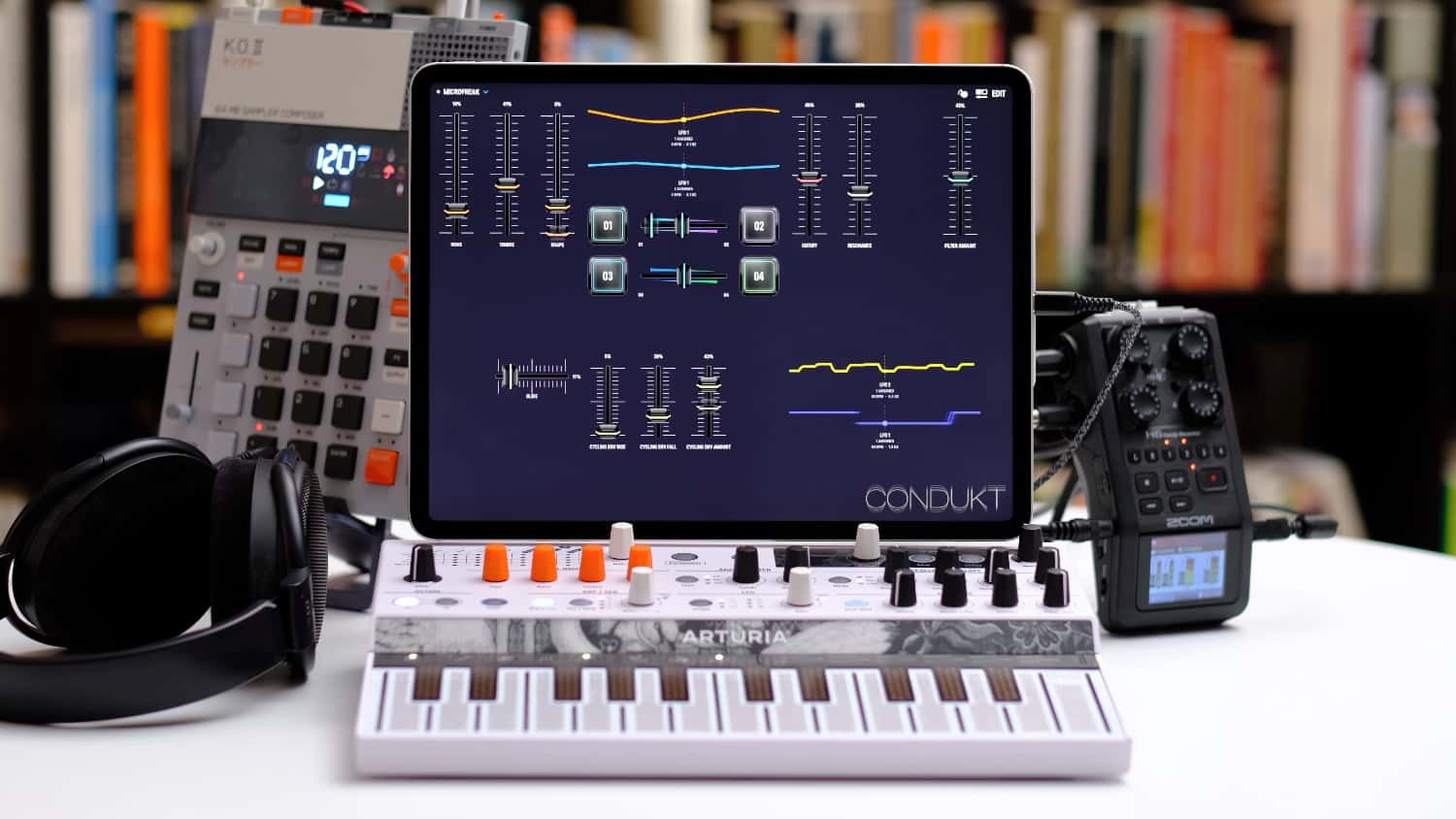
The release of Condukt 1.0 marks a significant milestone in the intersection of mobile computing and analog hardware integration, offering a comprehensive digital bridge for music producers and synthesis enthusiasts. Developed as a "Universal MIDI controller," the application is now available across the Apple ecosystem, including iOS, iPadOS, and macOS, specifically designed to transform touchscreens and desktops into sophisticated command centers for external hardware. By addressing the long-standing challenge of "menu-diving"—the tedious process of navigating small screens and limited physical buttons on hardware synths—Condukt provides a tactile, visual, and highly customizable interface that unlocks the full potential of a musician’s existing gear collection.
Technical Architecture and Core Functionality
At its core, Condukt operates as a sophisticated MIDI mapping and modulation hub. The application’s primary value proposition lies in its extensive internal database, which currently supports over 200 unique synthesizers, samplers, and drum machines from the industry’s most prominent manufacturers. This database eliminates the need for users to manually map MIDI Continuous Controller (CC) messages, a process that has historically been a barrier to entry for many hardware users. By selecting a device from the library, users are presented with a bespoke layout of knobs, faders, and buttons that correspond directly to the parameters of their specific hardware.
Beyond simple parameter control, Condukt introduces advanced modulation capabilities that many legacy or entry-level hardware units lack natively. The software includes several types of sequencers—including standard step sequencers and more complex algorithmic variations—allowing users to drive their hardware with patterns that go beyond the limitations of built-in oscillators. Furthermore, the app adds digital "layers" of modulation, such as LFOs (Low-Frequency Oscillators) and envelope generators, which can be assigned to hardware parameters via MIDI CC. This effectively "upgrades" older hardware by providing it with modern modulation routings and complex sequencing options usually reserved for high-end digital workstations.
A Chronological Evolution of MIDI Control Systems
The emergence of Condukt is the latest chapter in a four-decade-old story of musical instrument interoperability. To understand the impact of this release, one must look at the timeline of MIDI (Musical Instrument Digital Interface) development:
- 1983: The Birth of MIDI: Sequential Circuits and Roland pioneered the MIDI 1.0 specification, allowing instruments from different manufacturers to communicate for the first time.
- The 1990s: Hardware Workstations: The rise of massive hardware workstations meant that MIDI was primarily used to sync clocks and trigger notes, while parameter editing remained physical.
- The 2000s: The DAW Revolution: As Digital Audio Workstations (DAWs) took over, hardware synthesis saw a temporary decline. Software "editors" were often clunky, platform-specific, and prone to obsolescence.
- 2010–2020: The Analog Renaissance and iPad Integration: A resurgence in analog hardware coincided with the release of the iPad. Early apps like Lemur and TouchOSC allowed users to build their own interfaces, but required significant technical knowledge to map parameters correctly.
- 2024: The Era of Universal Accessibility: Condukt 1.0 represents the shift toward "plug-and-play" hardware control. By pre-mapping 200+ devices, it removes the technical friction of the previous decade, making hardware integration accessible to a broader demographic of producers.
Market Context and Supporting Data
The music production software market has seen consistent growth, with a particular surge in the "mobile music-making" segment. According to industry reports, the global market for music production software is projected to grow at a CAGR of over 7% through 2030. Within this growth, the demand for hybrid workflows—combining the tactile sound of analog hardware with the convenience of digital control—has become a dominant trend.
Data from independent user surveys in the electronic music community suggests that "workflow efficiency" is the number one concern for 64% of hardware owners. The primary complaint cited is the inability to quickly access parameters buried in sub-menus. By providing a unified interface for over 200 devices, Condukt directly addresses this market pain point. The $9.99 USD price point is also strategically positioned; it is significantly lower than dedicated hardware MIDI controllers (which can range from $200 to $1,000) and offers more flexibility than single-device software editors that often cost $20 or more per synth.
Device Compatibility and Ecosystem Integration
The database within Condukt covers a wide spectrum of the synthesizer market, ranging from modern classics to boutique modules. Supported brands include industry giants such as:
- Korg: Coverage for the Volca series, Minilogue, and Monologue.
- Roland: Support for the Boutique series (JU-06A, SH-01A) and the AIRA line.
- Moog: Integration for the Mother-32, DFAM, and Sub Phatty.
- Elektron: Templates for the Digitakt, Digitone, and Model series.
- Sequential/Dave Smith Instruments: Control for the Prophet and Rev2 series.
Connectivity is handled through standard iOS and macOS protocols. The app supports MIDI over USB, traditional 5-pin MIDI (via an interface), and Bluetooth LE MIDI. This flexibility allows it to fit into various studio configurations, whether it is a minimalist iPad-only setup or a complex desktop studio where the iPad serves as a secondary control surface.
Industry Implications and Professional Response
While official statements from hardware manufacturers regarding third-party controllers are often neutral, the "prosumer" community has reacted with high interest. Professional sound designers have noted that tools like Condukt are essential for the "DAWless" movement—producers who prefer to perform without a computer but still require the visual feedback and complex sequencing that a screen provides.
Industry analysts suggest that the release of Condukt 1.0 may put pressure on hardware manufacturers to standardize their MIDI implementation charts or release their own dedicated mobile apps. Currently, many manufacturers rely on the community to build editors. Condukt’s centralized approach offers a more stable and professional alternative to fragmented, user-made Max for Live devices or abandoned legacy software.
The application’s ability to function on macOS as well as iOS suggests a move toward "Universal Purchase" ecosystems, where a user pays once and can use the tool across their entire mobile and desktop workflow. This cross-platform availability is increasingly becoming the standard for professional audio utilities.
Broader Impact on Music Production Workflows
The implications of Condukt extend beyond simple convenience; it fundamentally changes the creative process. By adding "seven types of sequencers" to hardware that may only have a basic internal sequencer, Condukt allows for generative music techniques that were previously difficult to achieve without a full computer setup. For example, applying a Euclidean sequencer from the app to a 1980s-era rackmount synth can breathe new life into legacy gear, making it relevant for modern rhythmic styles.
Furthermore, the "hands-on" nature of the app’s faders and knobs encourages experimentation. In a traditional hardware setup, a producer might hesitate to tweak a parameter if it requires three button presses to reach. With Condukt, every parameter is "surface-level." This leads to more dynamic performances and more intricate sound design.
Future Outlook: MIDI 2.0 and Beyond
As the music industry begins to adopt the MIDI 2.0 standard, which allows for bi-directional communication and "property exchange," apps like Condukt are positioned to become even more powerful. While the current 1.0 version focuses on the established MIDI 1.0 protocol, the infrastructure of a universal database allows for future updates that could potentially "interrogate" a synth to find its settings automatically.
The current availability of Condukt for $9.99 USD on the App Store represents a high-value proposition for the modern studio. By consolidating the control of hundreds of devices into a single, portable interface, it reduces the physical clutter of a studio while expanding the sonic capabilities of the hardware. As music production continues to move toward a "hybrid" model—blending the best of analog sound with the best of digital control—tools like Condukt are likely to become staples in the toolkit of the contemporary musician.
The developer’s commitment to showcasing the app’s versatility is evident in their public demonstrations, which feature the software interacting with a diverse range of hardware. This transparency provides potential users with a clear understanding of the app’s low-latency performance and ergonomic design. As the database of supported instruments continues to grow, Condukt is poised to remain a central figure in the evolving landscape of digital music control.