

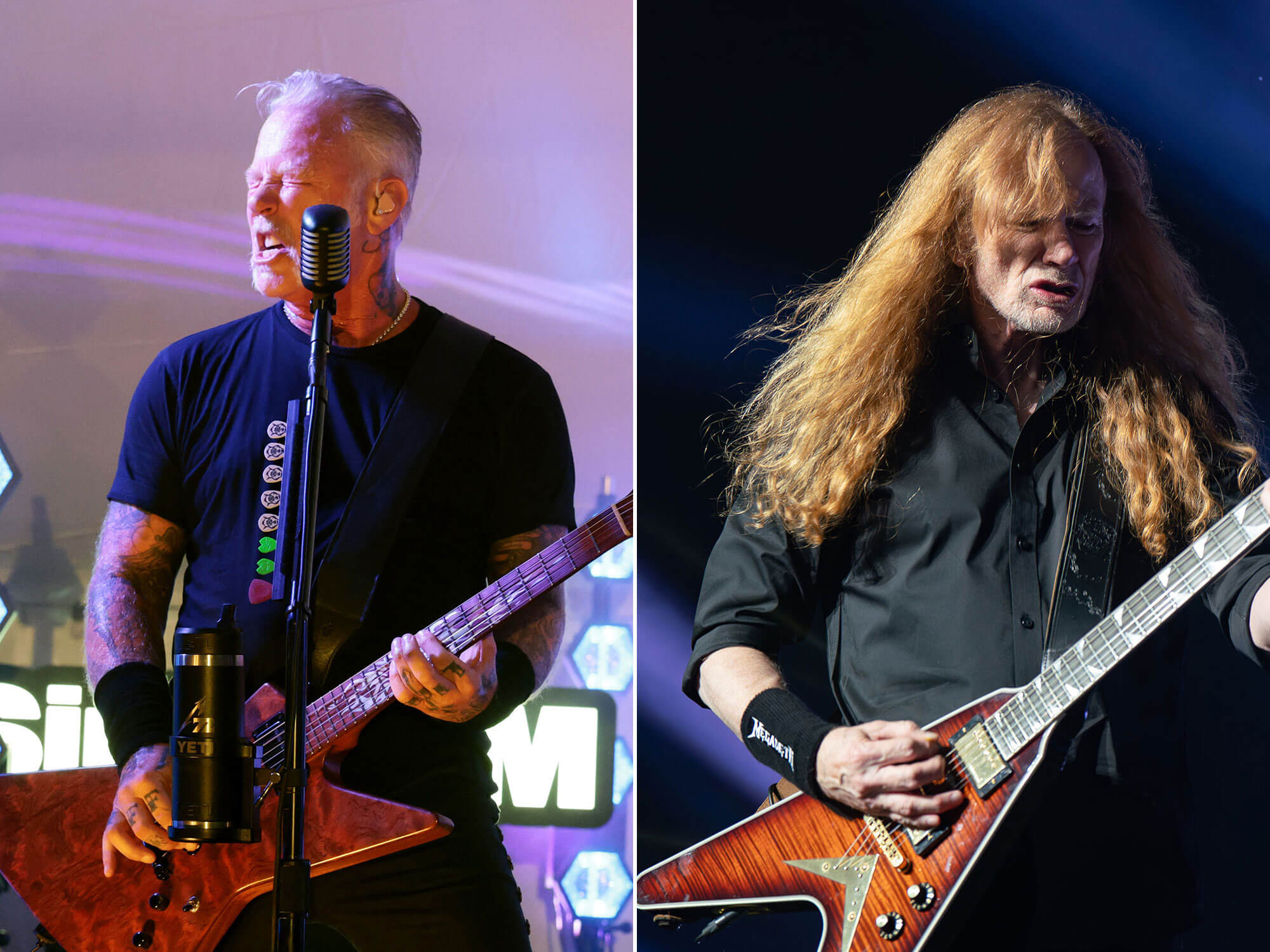
In a candid reflection on a career spanning over four decades, Dave Mustaine, the visionary frontman and guitarist of Megadeth, has once again underscored the profound impact of his tumultuous past with Metallica on his subsequent drive to achieve global acclaim. Speaking recently to the LA Times in 2026, Mustaine articulated a perspective that positions the perceived efforts of his former bandmates to "hold him back" as an indispensable catalyst for Megadeth’s enduring success. This statement, arriving amidst the anticipation of Megadeth’s self-titled final album, which controversially includes a cover of Metallica’s Ride the Lightning, reignites discussions about one of heavy metal’s most storied and complex rivalries.
Historical Roots: Mustaine’s Metallica Tenure and Departure
The narrative of Dave Mustaine and Metallica is deeply interwoven with the very genesis of thrash metal. Mustaine joined Metallica in late 1981, becoming their lead guitarist and a pivotal creative force during the band’s formative years. His contributions were instrumental in shaping the raw, aggressive sound that would define their early material. Mustaine co-wrote several tracks that would appear on Metallica’s seminal 1983 debut, Kill ‘Em All, including foundational riffs for songs like "The Four Horsemen" (originally titled "The Mechanix," a version of which later appeared on Megadeth’s debut) and "Jump in the Fire." His influence extended even to material for their sophomore album, Ride the Lightning (1984), where his co-writing credits are recognized on the title track and "Phantom Lord," among others.
However, Mustaine’s tenure with Metallica was notoriously short-lived and fraught with personal conflicts. Known for his volatile personality, heavy drinking, and drug use, coupled with aggressive behavior towards his bandmates, Mustaine’s presence became increasingly disruptive. In April 1983, just weeks before Metallica was set to record Kill ‘Em All, he was unceremoniously dismissed from the band during a bus trip from New York to California. James Hetfield, Lars Ulrich, and Cliff Burton informed him of their decision, reportedly giving him a bus ticket back to Los Angeles. This abrupt expulsion, a moment often recounted with palpable bitterness by Mustaine, would serve as the foundational trauma and ultimate motivational spark for his subsequent career.
The Genesis of Megadeth and the Rivalry’s Incubation
The immediate aftermath of his firing was a period of intense personal turmoil for Mustaine, yet it also quickly catalyzed his ambition. Driven by a potent cocktail of anger, resentment, and an unshakeable belief in his own musical vision, he founded Megadeth in Los Angeles later in 1983. The explicit goal was to create a band that was faster, heavier, and more technically proficient than Metallica – a direct challenge to his former colleagues. This competitive spirit became the bedrock of Megadeth’s identity and a defining characteristic of their early sound.
Megadeth’s 1985 debut, Killing Is My Business… and Business Is Good!, was a raw, aggressive statement of intent. It featured Mustaine’s re-recorded version of "The Mechanix" and showcased his intricate, technically demanding guitar work and biting lyrical themes. While it didn’t achieve the immediate commercial success of Kill ‘Em All, it quickly established Megadeth as a formidable force in the burgeoning thrash metal scene, setting the stage for a rivalry that would come to define an entire genre.
A Creative Catalyst: How Competition Forged Legends
Mustaine’s recent comments in the LA Times underscore a long-held belief: that the competitive dynamic with Metallica was not merely a side-effect of his past, but a central, driving force. "Think of it," Mustaine mused. "Where would I be right now if I didn’t have one of the biggest bands in the world spending their time trying to hold me back? They don’t do it anymore, but most of the time when they did, it just made me shake my head." This sentiment suggests that the perceived opposition, whether real or imagined, fueled a relentless pursuit of excellence within Megadeth.
This intense rivalry fostered a period of unparalleled creativity and innovation within thrash metal. Throughout the late 1980s and early 1990s, both Metallica and Megadeth released a series of groundbreaking albums that pushed the boundaries of the genre. Metallica solidified their dominance with albums like Master of Puppets (1986) and …And Justice for All (1988), which showcased increasing complexity and lyrical depth. Megadeth, in turn, released critically acclaimed works such as Peace Sells… But Who’s Buying? (1986), So Far, So Good… So What! (1988), and the universally lauded Rust in Peace (1990), which many metal aficionados consider a pinnacle of technical thrash. Rust in Peace achieved Platinum status in the US, demonstrating Megadeth’s significant commercial reach and critical acceptance.
The "arms race" between these two titans arguably elevated the entire genre. Each band’s pursuit of speed, technicality, and lyrical sophistication seemed to spur the other to greater heights, benefiting not just themselves but the broader landscape of heavy music.
Milestones of a Thorny Relationship: A Chronology
The relationship between Mustaine and Metallica has been a roller coaster of public feuds, periods of reconciliation, and enduring mutual respect intertwined with persistent underlying tension.
- 1981-1983: Mustaine’s tenure as lead guitarist and co-songwriter in Metallica.
- April 1983: Mustaine’s expulsion from Metallica.
- 1983: Mustaine forms Megadeth, explicitly aiming to outdo Metallica.
- 1985-Early 1990s: The peak of the rivalry, with both bands releasing seminal thrash albums and Mustaine frequently expressing his bitterness over his past.
- 2001: Mustaine participates in the documentary Metallica: Some Kind of Monster, engaging in a poignant therapy session with Lars Ulrich, where he openly discusses the pain of his dismissal. This marked a significant, albeit temporary, thawing of relations.
- 2004: Mustaine publicly criticizes Metallica over writing credits on re-releases, reigniting old wounds.
- 2010-2011: The historic "Big Four" concerts, featuring Metallica, Slayer, Megadeth, and Anthrax, marked an unprecedented period of détente. Mustaine shared stages with his former bandmates, and there were moments of camaraderie, including joint performances of Diamond Head’s "Am I Evil?".
- Post-Big Four: While the immediate hostility subsided, Mustaine continued to occasionally voice grievances or comparisons in interviews, maintaining the competitive undercurrent.
- 2020s: Mustaine’s health challenges (throat cancer) and subsequent recovery, leading to a period of renewed focus on his legacy and creative output, culminating in Megadeth’s "final album."
- 2026: Release of Megadeth’s final album, featuring the Ride the Lightning cover, and Mustaine’s recent LA Times interview, bringing the rivalry back into sharp focus.
Commercial Success and Critical Acclaim: Data-Driven Impact

The commercial trajectories of Metallica and Megadeth, while distinct, both illustrate the profound impact they’ve had on music. Metallica achieved unparalleled global success, with their 1991 self-titled "Black Album" selling over 16 million copies in the US alone (certified 16x Platinum by the RIAA) and becoming one of the best-selling albums of all time. They boast numerous multi-platinum albums and multiple Grammy Awards, including eight wins from twenty nominations, solidifying their status as one of the biggest bands in the world. Their influence extends far beyond metal, making them a mainstream cultural phenomenon.
Megadeth, while not reaching the stratospheric sales figures of Metallica’s peak, has nonetheless carved out an incredibly successful and critically lauded career. They have sold over 38 million records worldwide, with seven consecutive albums achieving Platinum or multi-Platinum status in the US between 1986 and 1997. Albums like Countdown to Extinction (1992) debuted at No. 2 on the Billboard 200, achieving double-Platinum status, and Youthanasia (1994) also reached No. 4. Megadeth has earned twelve Grammy nominations for Best Metal Performance, finally winning the award in 2017 for their album Dystopia. This sustained success, often achieved in the shadow of their larger rival, speaks volumes about the quality and appeal of Mustaine’s vision, proving that the competitive spirit translated into tangible achievement.
The Swan Song: Megadeth’s Final Album and the ‘Ride the Lightning’ Cover
The announcement of Megadeth’s self-titled "final album" in 2026, intended as a landmark swansong, carries significant weight for fans and the metal community. The inclusion of a cover of Metallica’s "Ride the Lightning," the title track from their 1984 sophomore effort, is a particularly poignant and provocative choice. It’s a song to which Mustaine holds a co-writing credit, linking it directly to his past with Metallica.
Mustaine clarified his intentions behind the cover: "There may not be a chance to ever say hello to James [Hetfield] or Lars [Ulrich] again. I knew some people would have a hard time with me doing the song, but that’s okay because I wanted to pay tribute and show my respect." This statement reveals a layer of reconciliation and perhaps a desire for a final, public acknowledgment of their shared history, even as it reopens old wounds for some observers. It’s a complex gesture – a tribute, a reclaiming of his contribution, and a final word from a rivalry that has defined much of his artistic life.
Mustaine’s Reflection: The ‘Me Against the World’ Mentality
Mustaine’s latest interview reaffirms his "me against the world" philosophy, which has been a recurring theme throughout his career. "And it wasn’t just Metallica, it was everybody," he asserted. "For a long time, it very much was me against the world. It was like, okay, if you’re not with me, you’re against me." This mindset, born from the perceived betrayal and isolation of his early career, appears to have been a powerful, if sometimes isolating, motivational engine.
While Metallica’s official stance on Mustaine’s comments has historically been guarded, particularly in recent years, their past reactions often reflected a desire to move forward while acknowledging the shared history. Lars Ulrich, in particular, has spoken about the complex nature of their relationship, often emphasizing the positive aspects of Mustaine’s early contributions and the camaraderie experienced during the "Big Four" shows. However, the consistent nature of Mustaine’s narrative suggests that for him, the emotional impact of the original split and the subsequent rivalry remains a potent and defining force. Fan reactions to the Ride the Lightning cover have been mixed, ranging from excitement at the historical significance to skepticism about its true intent, highlighting the enduring passion and divisions within the metal community regarding this long-standing saga.
Implications and Legacy: A Drive to Define Thrash
The implications of Mustaine’s perspective are far-reaching. It posits that adversity, particularly from a formidable rival, can be an unparalleled force for creative and commercial success. Without the burning desire to prove himself against Metallica, it is plausible that Megadeth might not have achieved the same level of intensity, technical prowess, or sustained output. The rivalry didn’t just fuel Mustaine; it helped define a subgenre, pushing the boundaries of what metal could be.
This narrative also sheds light on the psychological underpinnings of artistic ambition. For Mustaine, the act of creation and performance became intrinsically linked to overcoming perceived obstacles and demonstrating his worth. This relentless drive not only shaped Megadeth’s sound but also cultivated a fiercely loyal fanbase who resonated with his uncompromising vision and underdog spirit.
Looking Ahead: The Future Without Active Rivalry
With Megadeth’s final album now released, and Mustaine seemingly at peace with his decision to conclude the band’s recording career, the dynamic between him and Metallica may enter a new phase. The "active rivalry" in terms of competing album cycles and chart battles will cease. What will remain is a shared legacy, an undeniable intertwining of two of metal’s most important bands. The Ride the Lightning cover could be interpreted as a final act of closure, a peace offering, or even a subtle reassertion of his indelible mark on Metallica’s history.
Ultimately, Dave Mustaine’s claim that Megadeth would have been less successful without Metallica’s perceived attempts to "hold him back" offers a profound insight into the mind of a legendary artist. It speaks to the power of adversity, the enduring sting of past grievances, and how these forces can be transmuted into an unstoppable drive for creative and commercial triumph. The complex, often volatile, relationship between Mustaine and Metallica has undeniably enriched the landscape of heavy metal, leaving behind a legacy of iconic music forged in the fires of both collaboration and fierce competition.