

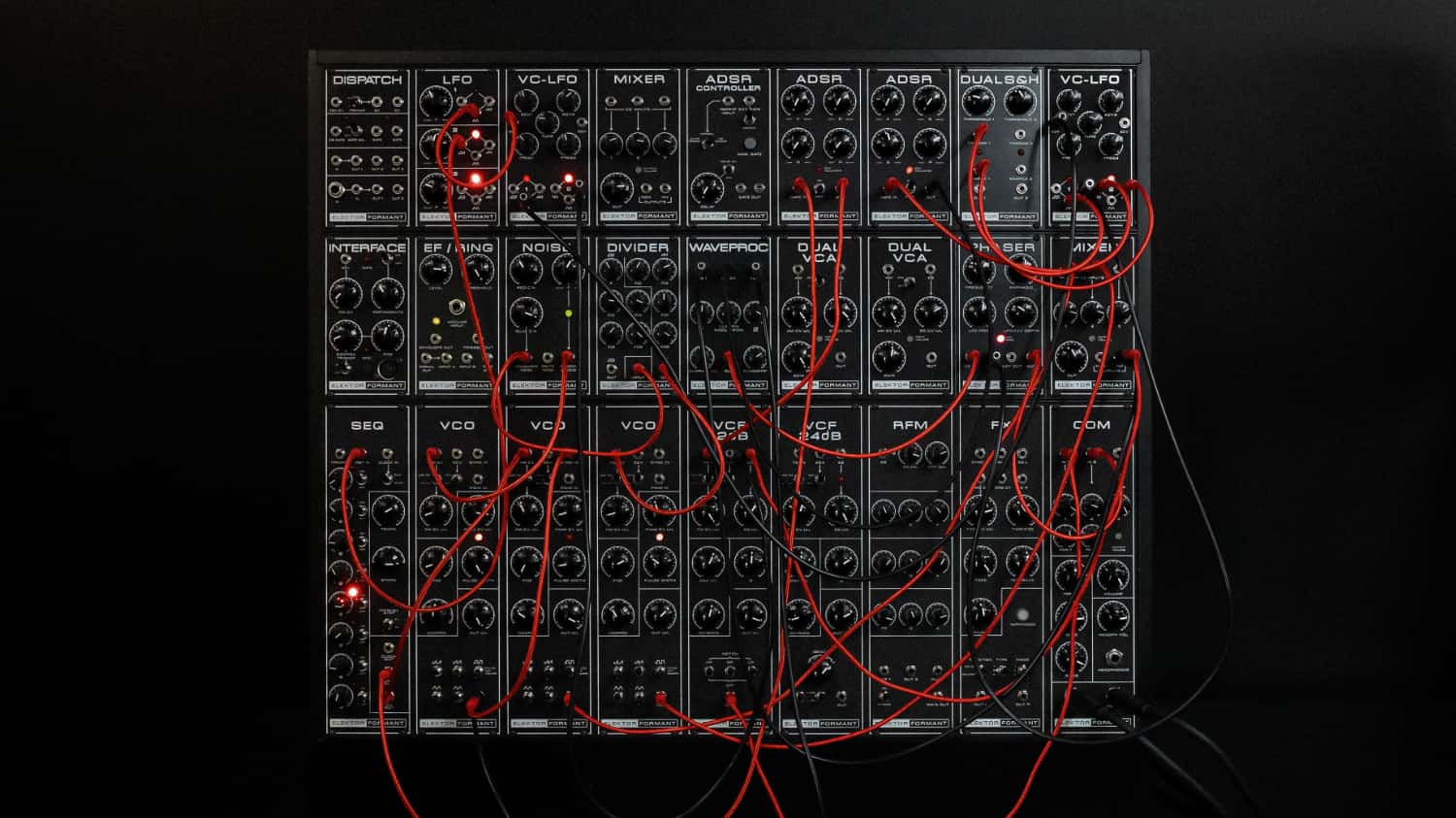
The landscape of modular synthesis has witnessed a significant convergence of historical preservation and modern engineering with the official release of the Erica Synths Elektor Formant. This project represents a comprehensive reissue of one of the most influential DIY synthesizer designs of the 20th century, originally conceptualized by C. Chapman and popularized through a series of technical articles in Elektor magazine starting in May 1977. By offering 27 distinct module kits, Erica Synths has transitioned a legacy project from the realm of rare schematics into a contemporary hardware ecosystem, allowing musicians and engineers to reconstruct a piece of electronic music history with modern reliability.
The Genesis of the Elektor Formant: 1977–1982
To understand the significance of the Erica Synths reissue, one must examine the socio-economic state of the music technology industry in the mid-1970s. During this era, modular synthesizers produced by industry leaders such as Moog Music, ARP Instruments, and Buchla & Associates were prohibitively expensive, often costing as much as a small house or a luxury automobile. These systems were primarily found in prestigious university laboratories, high-end recording studios, or the stage rigs of progressive rock icons.
In May 1977, Elektor magazine—a European publication dedicated to electronics hobbyists—sought to democratize this technology. They commissioned C. Chapman to design the "Formant," a modular synthesizer that could be built at home by anyone with sufficient soldering skills and access to electronic components. The design was revolutionary not just for its sound, but for its accessibility. It utilized standard, off-the-shelf components rather than the proprietary or highly selected transistors often found in American designs.
The original Formant series ran for several years, with subsequent books and articles expanding the system. It became a rite of passage for a generation of European engineers and musicians, fostering a DIY culture that would eventually pave the way for the modern Eurorack explosion.
Modern Re-Engineering: The Erica Synths Collaboration
The transition from a 1970s magazine project to a 2025 commercial product line required a meticulous balance of historical accuracy and technical modernization. Erica Synths, a manufacturer based in Riga, Latvia, known for its high-end Eurorack modules and vacuum tube-based synthesis, undertook the task of updating the Formant.
The reissue project, which was first previewed in mid-2024 and fully realized in early 2025, addresses several of the original system’s limitations. While the original Formant relied on specific power supply requirements and mechanical mounting standards that are now obsolete, the Erica Synths version provides a standardized framework. The company has released 27 different module kits, covering the full spectrum of the original Chapman designs.
These kits include essential components such as:
- Voltage Controlled Oscillators (VCOs): Providing the foundational waveforms (Sawtooth, Square, Triangle).
- Voltage Controlled Filters (VCFs): Replicating the specific slopes and resonant characteristics that defined the "Formant" sound.
- The RFM (Resonant Filter Matrix): A signature element of the Formant system that allows for vocal-like timbres and complex spectral shaping.
- Envelope Generators (ADSR): For controlling the temporal evolution of volume and timbre.
- Noise Sources and Random Voltages: Essential for percussion and experimental soundscapes.
By providing these as kits, Erica Synths maintains the spirit of the original 1977 project, requiring the user to engage with the assembly process, thereby fostering a deeper understanding of the instrument’s internal architecture.
Technical Analysis and Comparative Perspectives
Recent evaluations by industry experts, including synthesist Starsky Carr and music historian Alex Ball, have provided a detailed look at how the reissue compares to the vintage hardware. Starsky Carr’s comprehensive overview highlights the system’s modularity, noting that while many modern synthesizers aim for compact efficiency, the Formant embraces a "massive" footprint that encourages tactile interaction and complex patching.
Alex Ball’s exploration of a vintage 1970s Formant unit provides a crucial baseline for these comparisons. His analysis, which includes an interview with "Bruce," a long-term owner and builder of a vintage system, emphasizes the "Elektor" sound—often described as clinical yet powerful, capable of both precise laboratory tones and aggressive, overdriven textures.
A key differentiator in the Formant’s design is its approach to "Formant synthesis"—the use of multiple resonant filters to mimic the human vocal tract. While many synthesizers of the 1970s focused on the "East Coast" subtractive method (Oscillator -> Filter -> Amplifier), the Formant offered expanded routing possibilities that allowed for more sophisticated additive and spectral techniques.
Chronology of the Reissue and Market Availability
The timeline for the return of the Formant reflects a growing trend in the music industry toward "New-Old Stock" (NOS) aesthetics and the revival of classic circuits.
- May 1977: The first Elektor Formant article is published, detailing the power supply and basic oscillator.
- 1978–1981: Expansion of the system through supplemental articles and the publication of the "Formant Pro" designs.
- August 2024: Erica Synths provides a "sneak preview" of the reissue, generating significant interest within the DIY modular community.
- Early 2025: Official launch of the 27-module kit series.
- August 2025: Widespread availability of the kits and the release of high-profile demonstrations by Carr and Ball, marking the system’s integration into the modern market.
The decision to release 27 modules simultaneously is an ambitious move, ensuring that builders can create a complete, self-contained ecosystem without having to source disparate parts from third-party vendors.
Industry Implications and the Resurgence of DIY
The release of the Erica Synths Elektor Formant occurs at a time when the synthesizer market is bifurcating. On one side, there is a move toward high-integration digital workstations and software plugins. On the other, there is a burgeoning demand for "boutique" analog hardware and DIY kits.
The Formant reissue addresses a specific niche: the "educational-industrial" segment. For many users, building the Formant is as much about the process of learning electronics as it is about the final musical output. This aligns with a broader cultural shift toward "Maker" culture, where consumers seek to reclaim the means of production for their tools.
Furthermore, the project validates the longevity of the Elektor magazine legacy. In an era where digital media is often ephemeral, the fact that a 48-year-old electronics project can be successfully commercialized speaks to the robustness of C. Chapman’s original engineering. It also highlights the role of Erica Synths as a bridge between the historical avant-garde and contemporary performance.
Broader Impact on the Modular Ecosystem
The reintroduction of the Formant into the 2025 market is expected to influence the Eurorack community, despite the Formant’s distinct mechanical format. Many hobbyists are likely to adapt these circuits for Eurorack use, or conversely, the availability of a full Formant system may encourage a move back toward larger-format modular systems.
From a sound design perspective, the Formant offers a palette that is distinct from the saturated "Moog-style" ladder filter sound or the "acid" sound of the Roland TB-303. Its focus on resonant filter matrices and stability makes it particularly suited for cinematic soundscapes, drone music, and experimental synthesis where precision is paramount.
The collaboration between Erica Synths and the legacy of Elektor serves as a case study in how intellectual property from the hobbyist era can be revitalized. It ensures that the technical innovations of the 1970s are not lost to time or component decay but are instead preserved in a format that meets modern safety and performance standards.
Conclusion
The Erica Synths Elektor Formant modular synthesizer stands as a testament to the enduring appeal of analog synthesis and the DIY spirit. By translating the complex schematics of 1977 into a cohesive set of 27 modern kits, the project honors the work of C. Chapman and Elektor magazine while providing contemporary musicians with a powerful, versatile instrument. As demonstrated by the detailed analyses from Starsky Carr and Alex Ball, the Formant remains a unique voice in the world of synthesis—one that bridges the gap between the experimental laboratories of the past and the creative studios of the future. The availability of these kits marks a significant milestone in the preservation of electronic music history, ensuring that the "Formant sound" will continue to evolve for decades to come.