

The intersection of creative expression and human mortality has long provided a somber backdrop for some of the most enduring works in the rock canon. In many instances, songwriters have penned lyrics that, in retrospect, appear to have anticipated their own departures, transforming standard compositions into haunting final testaments. This phenomenon, often referred to as "lyrical prescience," is exemplified by the works of Bradley Nowell, Freddie Mercury, Warren Zevon, and Karen Carpenter. While the circumstances of their deaths varied—ranging from sudden tragedy to prolonged illness—their artistic output during their final years or months remains a focal point for musicologists and fans seeking to understand the psychological state of artists on the precipice of the end.
The Tragic Foresight of Bradley Nowell and Sublimes Badfish
In 1991, the Long Beach, California-based band Sublime released "Badfish" as part of their debut album, 40 Oz. to Freedom. At the time, the track was viewed as a standout example of the band’s signature blend of ska, punk, and reggae. However, the lyrics delivered by frontman Bradley Nowell have since taken on a much darker resonance. Nowell sang, "Ain’t got no quarrels with God / Ain’t got no time to grow old," a line that became a grim reality when he died of a heroin overdose on May 25, 1996, at the age of 28.
Nowell’s struggle with substance abuse was not a secret within his inner circle, but "Badfish" serves as a lyrical documentation of the internal conflict associated with addiction. The metaphor of the "Badfish"—a term often used in surf culture but here representing a user caught in the current of dependency—is reinforced by the lines, "Lord knows I’m weak / Won’t somebody get me off of this reef?"
According to historical accounts from Nowell’s father, Jim Nowell, the singer’s descent into heavy drug use was a calculated, albeit misguided, attempt to embody the "larger-than-life" persona he associated with rock stardom. This transition occurred as Sublime’s regional popularity began to surge. The chronology of Nowell’s life shows a rapid acceleration of both fame and self-destruction; within five years of writing "Badfish," he was gone, just months before Sublime’s self-titled major-label debut would go on to sell over five million copies in the United States. The posthumous success of the album cemented Nowell’s legacy, but "Badfish" remains the definitive evidence of his early awareness of the path he was on.
Freddie Mercury and the Defiant Finality of The Show Must Go On
While Bradley Nowell’s lyrics hinted at a self-imposed fate, Freddie Mercury’s final contributions to Queen were a deliberate confrontation with a terminal diagnosis. "The Show Must Go On," released in October 1991, served as the closing track on the album Innuendo. By the time of the recording sessions in 1990, Mercury was severely weakened by complications from HIV/AIDS, a condition he had not yet disclosed to the general public.
The song was primarily written by lead guitarist Brian May, who intended it to be a tribute to Mercury’s resilience. May has frequently recounted the recording session, noting his concern that Mercury might be physically unable to reach the demanding high notes of the power ballad. Mercury’s response has become a part of rock lore: "I’ll f***ing do it, darling," he reportedly told May, before consuming a measure of vodka and delivering a vocal performance that remains one of the most technically impressive of his career.
The lyrics—"Inside my heart is breaking / My make-up may be flaking / But my smile still stays on"—directly mirrored Mercury’s reality. He was a man who spent his final months in seclusion at his London home, Garden Lodge, while the media speculated wildly about his health. Mercury officially announced his diagnosis on November 23, 1991; he passed away less than 24 hours later. "The Show Must Go On" stands as a testament to the "theatricality of the self," where the performer prioritizes the art over the physical decline of the body. Its legacy is one of immortality through performance, a sentiment echoed by the song’s global chart resurgence following Mercury’s death.
Warren Zevons Final Request Keep Me In Your Heart
Warren Zevon’s approach to his mortality was perhaps the most direct in rock history. In August 2002, Zevon was diagnosed with pleural mesothelioma, a terminal form of lung cancer. Given only months to live, Zevon chose to spend his remaining time in the studio, documenting his farewell in the album The Wind. The final track on that album, "Keep Me In Your Heart," was the last song he ever recorded.
The recording process for the song was an arduous task. Zevon’s physical strength had deteriorated to the point where he could no longer travel to a traditional studio. His longtime friend and collaborator, Jorge Calderón, set up a recording space in Zevon’s home. Calderón later described propping Zevon up on a couch so he could muster the breath to sing the opening lines: "Shadows are fallin’ and I’m runnin’ out of breath / Keep me in your heart for a while."
Unlike the metaphors used by Nowell or the grandiosity of Mercury, Zevon’s lyrics were stark and domestic. He requested that his audience "hold me in your thoughts" and "let me funny dreams be your consolation." Zevon passed away on September 7, 2003, just two weeks after The Wind was released. The album subsequently earned five Grammy nominations, winning two posthumously for Best Contemporary Folk Album and Best Rock Vocal Performance (for the track "Disorder in the House"). Zevon’s final public appearance on Late Night with David Letterman, where he famously advised viewers to "enjoy every sandwich," provided a philosophical coda to a career defined by acerbic wit and, ultimately, a profound acceptance of the inevitable.
Karen Carpenter and the Melancholy of Goodbye to Love
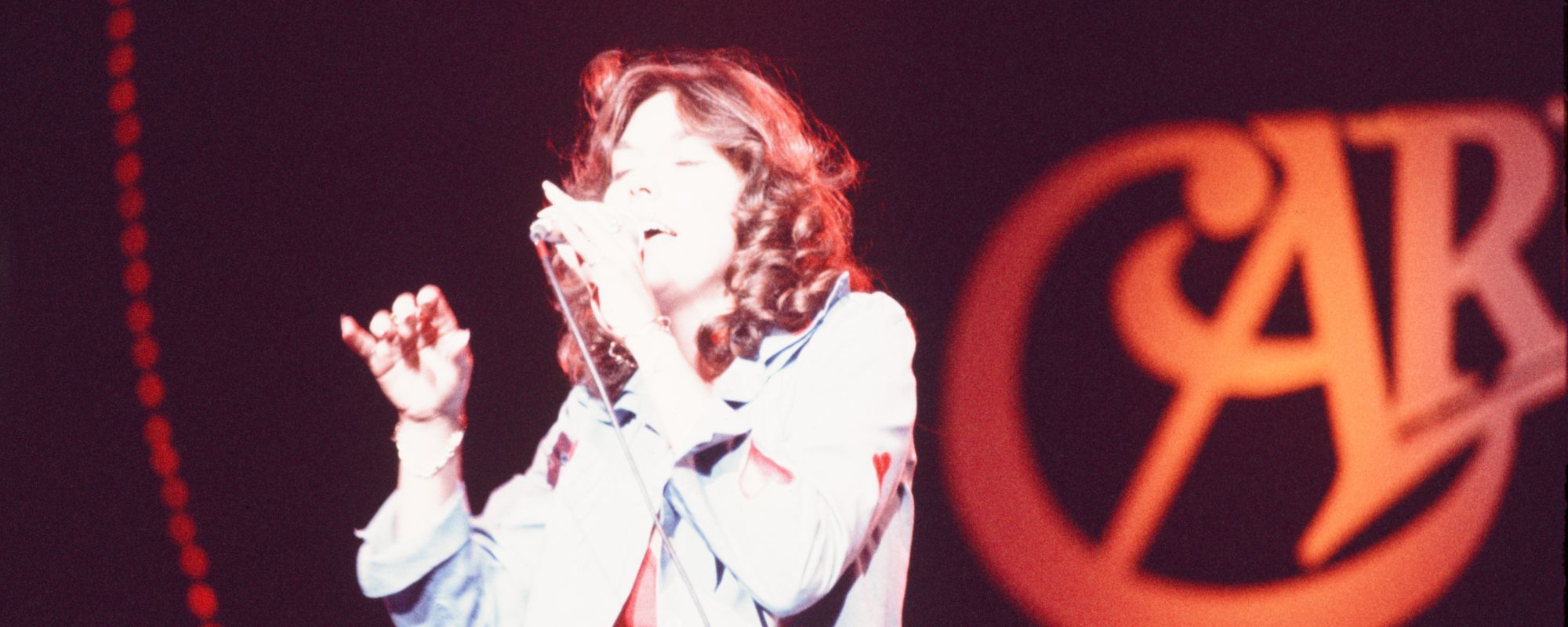
The 1972 release of "Goodbye to Love" by The Carpenters preceded Karen Carpenter’s death by more than a decade, yet it is often cited by biographers as a window into the internal isolation that characterized her life. Written by Richard Carpenter and John Bettis, the song was a departure for the duo, featuring a distorted guitar solo by Tony Peluso that initially alienated some of their "easy listening" fanbase. However, it was Karen’s vocal delivery of the lyrics—"All the years of useless search / Have finally reached an end / Loneliness and empty days will be my only friend"—that would later be viewed as prophetic.
Karen Carpenter died on February 4, 1983, at the age of 32, from heart failure caused by complications of anorexia nervosa. At the time of "Goodbye to Love," the clinical understanding of eating disorders was in its infancy, and the public was largely unaware of the pressures Karen faced regarding her image and her place within the music industry. The song’s narrative of renouncing romantic love in favor of a solitary existence mirrored the singer’s own struggles with self-worth and personal agency.
The broader impact of Karen Carpenter’s death was a significant shift in public awareness regarding eating disorders. Her passing forced a mainstream conversation about mental health and the physical toll of psychological distress. In the context of her discography, "Goodbye to Love" remains a pivotal moment where the polished, wholesome image of The Carpenters cracked to reveal a deep-seated melancholy. The song’s longevity on adult contemporary radio serves as a reminder of the "loneliness" she sang about long before the world understood the depth of her struggle.
Broader Impact and Musicological Implications
The study of these songs reveals a recurring theme in the history of popular music: the "Swan Song" as a bridge between the private suffering of the artist and the collective experience of the audience. From a musicological perspective, these tracks are often characterized by a heightened emotional frequency and a departure from the artist’s typical stylistic constraints. Mercury opted for operatic intensity; Zevon chose a stripped-back, folk-inspired vulnerability; Nowell leaned into a raw, unpolished punk aesthetic; and Carpenter embraced a mournful, power-ballad structure.
The enduring popularity of these specific tracks suggests that audiences find a unique form of catharsis in the "prescient farewell." These songs function as a form of "living memory," allowing the artist to dictate the terms of their own legacy before they are no longer able to speak. In the cases of Nowell, Mercury, Zevon, and Carpenter, the music did more than just speak when words failed; it provided a permanent record of their transition from life to legend, ensuring that while the performers were mortal, their final messages remained indestructible.
Data from streaming platforms and archival charts indicates that these songs often see a significant spike in engagement during the anniversaries of the artists’ passing, reinforcing their status not just as hits, but as cultural artifacts. They serve as a reminder that for the iconic figures of rock history, the final note is often the one that resonates the longest.