

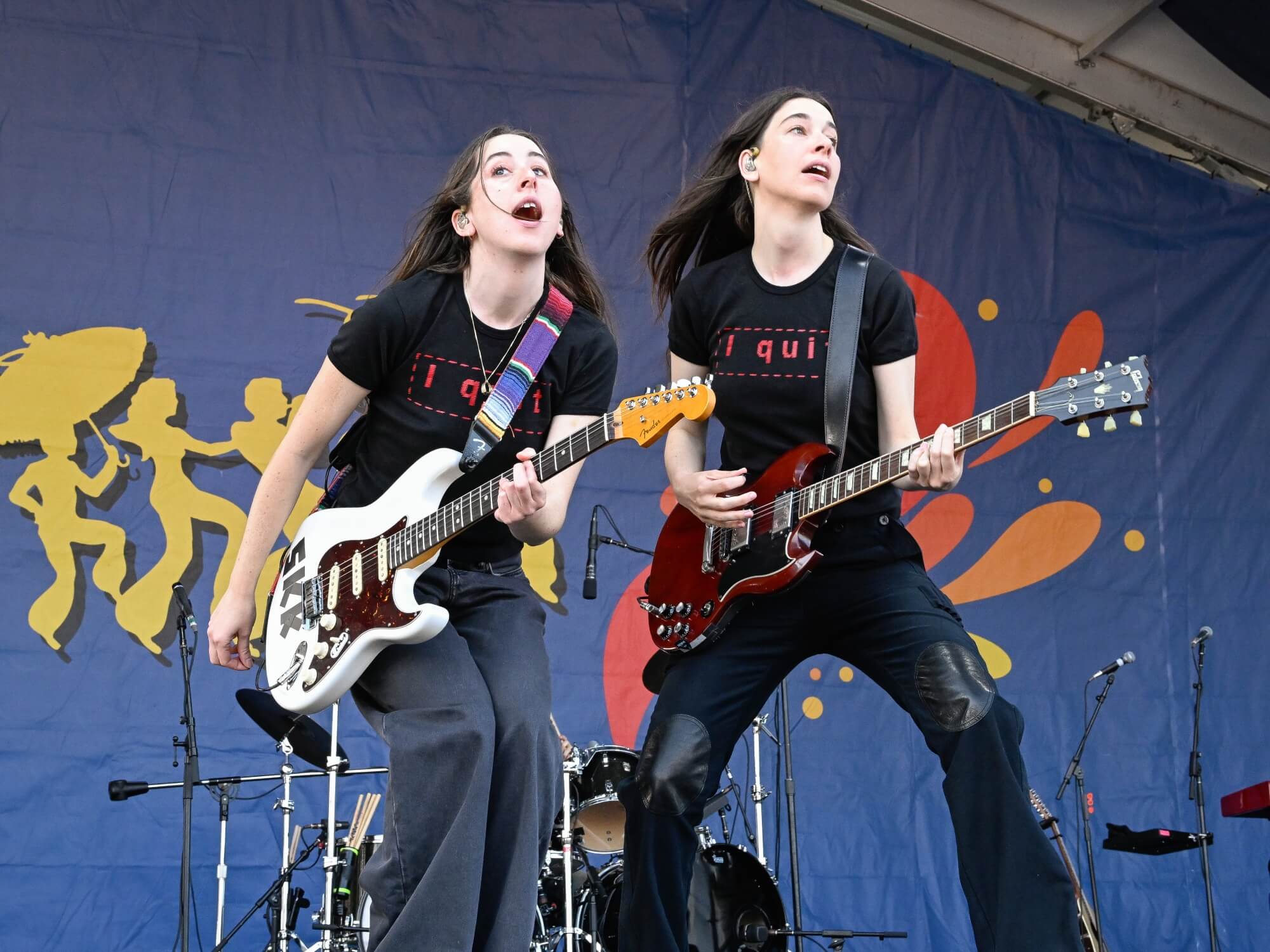
The critically acclaimed sister trio Haim continues to solidify their position as trailblazers in contemporary music, particularly within the rock genre. Building on their historic 2021 achievement as the first all-female rock band to earn a Grammy nomination for Album of the Year, the group once again finds itself recognized in the Best Rock Album category, further underscoring their profound impact on challenging traditional industry narratives and championing female representation in a historically male-dominated space. This consistent recognition highlights not only the band’s artistic merit but also their significant cultural role in inspiring a new generation of female musicians.
A Legacy of Firsts: Haim’s Grammy Journey
Haim, comprising sisters Este (bass, vocals), Danielle (lead vocals, guitar), and Alana Haim (guitars, keyboards, vocals), first emerged on the global music scene in the early 2010s, captivating audiences with their unique blend of classic rock sensibilities, R&B grooves, and sun-soaked pop hooks. Their debut album, Days Are Gone, released in 2013, was met with widespread critical acclaim, establishing them as a formidable new voice. This early success translated into their first Grammy nomination in 2015 for Best New Artist, signaling the Recording Academy’s early acknowledgment of their burgeoning talent and distinctive sound.
However, it was their third studio album, Women in Music Pt. III, released in 2020, that marked a pivotal moment in their career and in Grammy history. The album, lauded for its lyrical depth, experimental production, and raw emotional honesty, garnered two significant nominations at the 63rd Annual Grammy Awards in 2021. Firstly, it received a nomination for Album of the Year, a coveted general field award. This was an unprecedented achievement, marking the first time an all-female rock band had ever been nominated in this prestigious category. This nomination alone resonated deeply within the music community, drawing attention to the underrepresentation of women, particularly in band formats, at the highest echelons of industry recognition. Concurrently, Women in Music Pt. III also secured a nomination for Best Rock Album, solidifying their standing within the genre while simultaneously transcending its traditional boundaries. This dual recognition underscored Haim’s ability to craft music that appealed across genre lines while remaining firmly rooted in rock aesthetics.
The consistent presence of Haim in major Grammy categories, especially those traditionally dominated by male artists and bands, serves as a powerful statement. Each nomination, particularly in the rock sphere, acts as a beacon, illuminating pathways for other female musicians and reinforcing the message that talent and authenticity know no gender.
Breaking Barriers: Women in Rock and the Music Industry
The music industry, and specifically the rock genre, has historically presented significant barriers to entry and recognition for women. While pioneering female artists and bands have always existed, their contributions have often been marginalized, overlooked, or tokenized compared to their male counterparts. This imbalance is not merely anecdotal; it is substantiated by numerous studies on gender representation. For instance, reports from the USC Annenberg Inclusion Initiative consistently highlight a severe disparity in the number of female artists, songwriters, and producers across the music industry. Their 2023 report, examining 1,100 popular songs from 2012 to 2022, found that only 21.3% of artists were women, and the numbers for female songwriters (12.7%) and producers (2.8%) were even starker. While these figures encompass the broader music landscape, the rock genre has historically shown even greater resistance to female inclusion in instrumental and leadership roles.
Historically, women in rock have had to fight for legitimacy, often facing skepticism regarding their musical prowess or being confined to specific archetypes. From the raw power of Suzi Quatro and Joan Jett in the 1970s and 80s, to the riot grrrl movement of the 90s with bands like Bikini Kill and Sleater-Kinney, and the enduring influence of groups like Heart, The Go-Go’s, and The Bangles, female musicians have consistently pushed boundaries. However, mainstream recognition, particularly in categories like "Best Rock Album," has remained disproportionately skewed. Haim’s emergence and sustained success offer a contemporary counter-narrative, proving that an all-female rock band can achieve critical acclaim, commercial success, and significant industry accolades without compromising their artistic vision. Their visibility as instrumentalists – Danielle as lead guitarist, Este on bass, and Alana on various instruments – directly challenges the outdated notion that women are primarily vocalists in bands rather than core instrumental architects of a group’s sound.
Danielle Haim: On Inspiration, Authenticity, and the Craft of Guitar
Central to Haim’s narrative of breaking barriers is the perspective of lead guitarist and vocalist, Danielle Haim. In a recent interview with Guitar World, she articulated the profound significance of their Grammy recognition, particularly within the rock category. "We’re so honoured to be nominated in the rock category," she stated, emphasizing the validation such an acknowledgment brings. For Danielle, this achievement is not just a personal triumph but a testament to a lineage of powerful female artists who shaped her own musical journey. She cited legendary figures such as Stevie Nicks, The Pretenders (fronted by Chrissie Hynde), Heart (sisters Ann and Nancy Wilson), The Go-Go’s, and The Bangles – all iconic women or female-led bands who carved out their own spaces in rock music. "All these incredible women who were in rock bands – those are the artists I looked up to," she affirmed. This lineage underscores Haim’s connection to a rich history of women in rock, while simultaneously highlighting their role in extending this legacy into the present.
The band’s overarching mission, as articulated by Danielle, is clear and impactful: "All we want is to inspire women to pick up guitars and drums." This statement transcends mere aspiration; it is a call to action, reflecting a desire to dismantle the perceived barriers that might discourage young girls and women from pursuing instrumental music. By seeing Haim perform, especially with Danielle’s prominent guitar work, aspiring musicians gain tangible proof that such paths are not only viable but can lead to the highest levels of success and recognition.
A key aspect of Haim’s artistic integrity, as Danielle elaborated, has been their steadfast refusal to be "boxed-in" by genre classifications. "Part of the reason I love what we do is that people have had a hard time putting us in a box; maybe there was confusion about what box we fit into," she explained. This genre fluidity, which seamlessly blends pop melodies with rock riffs and R&B rhythms, has been a defining characteristic of their sound and a source of their broad appeal. Their authenticity, derived from consistently "doing what we’ve always done," has ultimately paid off, leading to this special recognition. This sentiment likely resonates with Este and Alana as well, who, as co-creators, have consistently contributed to the band’s distinctive sound and ethos. Their collective dedication to artistic freedom has allowed them to forge a unique identity that defies easy categorization, proving that genuine artistry often thrives outside rigid boundaries.
The Evolving Sound: Danielle Haim’s Instrumental Arsenal
Danielle Haim’s journey as a guitarist is an integral part of Haim’s evolving sound. Her instrumental choices reflect both her personal progression and the band’s sonic development. She began her musical voyage on a Gibson Melody Maker, a foundational instrument for many aspiring guitarists. The Melody Maker, known for its stripped-down design and affordability, often serves as an excellent starting point for learning the ropes of electric guitar.
As her skills and preferences matured, Danielle transitioned to a Gibson SG. The SG is an iconic rock guitar, favored by legends such as Angus Young and Tony Iommi, celebrated for its lightweight body, powerful humbucker pickups, and distinctive double-cutaway design, offering excellent upper-fret access. Danielle’s choice was practical: "I picked the SG because it was so light," she noted, highlighting a common reason for its appeal among performers. Its comfortable playability combined with its robust tone made it her "favorite guitar" for an extended period, contributing to the classic rock crunch and vibrant energy that characterized much of Haim’s early work. The SG’s sustain and midrange punch are often associated with classic rock sounds, which have always been a touchstone for the band.
More recently, however, Danielle’s sonic palette has expanded, influenced by a new acquisition: a vintage Fender Stratocaster from the Fifties. This shift was partly inspired by Rostam Batmanglij, a renowned producer and ex-Vampire Weekend member who has frequently collaborated with Haim on their albums. "Rostam [Batmanglij] bought a really nice Strat from the Fifties, and it’s the most fun guitar to play," Danielle revealed. The Stratocaster, another legendary guitar model, offers a distinctly different tonal landscape compared to the SG. With its single-coil pickups, it’s known for its brighter, chimier, and more articulate sound, often associated with funk, blues, and surf rock, as well as a wide range of pop and rock genres. The versatility of the Strat, with its three pickups and tremolo system, allows for a broader spectrum of tones, from sparkling cleans to biting leads. This instrumental evolution has directly impacted Haim’s recent albums, including Women in Music Pt. III, where Danielle found herself "meld[ing] into more of a Strat player." This change in primary instrument suggests a deliberate exploration of new textures and timbres, contributing to the album’s critically acclaimed sonic adventurousness and its ability to blend diverse influences. The vintage nature of the Strat likely adds a unique character and warmth, infusing their contemporary sound with a touch of classic resonance.
Broader Implications: Shaping the Future of Music
Haim’s continued success and Grammy recognition carry significant implications for the broader music landscape. As visible and articulate role models, they are directly impacting the aspirations of countless young women globally. Their journey demystifies the path to becoming a professional musician, particularly an instrumentalist, and demonstrates that authenticity and perseverance can lead to groundbreaking achievements. This ripple effect extends to music education, potentially encouraging more girls to enroll in guitar or drum lessons, and challenging the gender stereotypes often associated with specific instruments.
Furthermore, Haim’s consistent presence in prestigious awards categories can influence the industry itself. It sends a clear message to record labels, producers, and promoters about the commercial and critical viability of investing in and promoting female rock bands and artists. It may encourage a more equitable distribution of resources and opportunities, fostering a more diverse and inclusive music ecosystem. The Recording Academy’s repeated acknowledgment of Haim’s work, especially in categories like Album of the Year and Best Rock Album, plays a crucial role in shaping perceptions and setting benchmarks for excellence that transcend gender.
In an era where genre lines are increasingly blurred, Haim’s ability to seamlessly weave together disparate musical elements while maintaining a distinct identity serves as a blueprint for contemporary artists. Their commitment to their artistic vision, coupled with their willingness to evolve their sound, underscores the enduring power of creativity and integrity in a constantly shifting industry. Haim is not merely making music; they are actively shaping the future of it, ensuring that the stage is set for an even more diverse and representative array of voices to be heard.
In conclusion, Haim’s sustained Grammy recognition, particularly in the rock categories, transcends mere accolades. It represents a powerful cultural statement, affirming the talent and impact of women in music. Through their artistry, their inspiring message, and their consistent breaking of historical barriers, Este, Danielle, and Alana Haim are not just defining their own legacy; they are actively paving the way for a more inclusive and equitable future for rock music and the industry as a whole.