

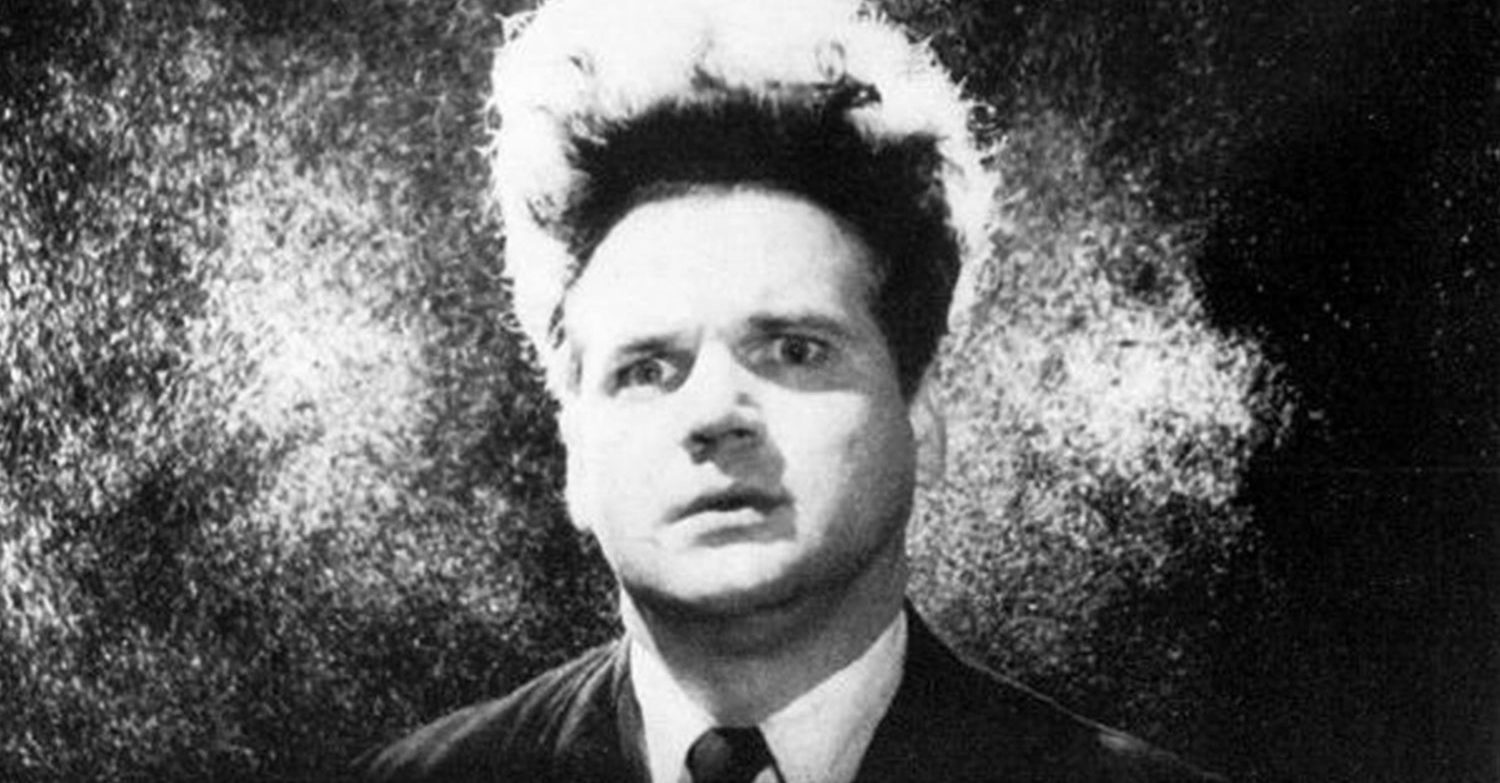
The cinematic landscape of 1977 is often defined by the blockbuster emergence of Star Wars, a film that revolutionized visual effects and franchise filmmaking. However, in the same year, a much smaller, monochromatic, and deeply disturbing film began a slow-burn ascent from the midnight movie circuit to the annals of film history. David Lynch’s Eraserhead did not just introduce the world to the director’s singular surrealist vision; it fundamentally altered the role of sound in motion pictures. A new documentary essay produced by the YouTube channel Auteur Cinema explores this sonic legacy, detailing how Lynch and sound designer Alan Splet engineered an industrial auditory nightmare that continues to resonate across cinema, music, and digital media decades later.
The Genesis of a Sonic Revolution
David Lynch’s feature-length debut, Eraserhead, was produced over a grueling five-year period beginning in 1971 at the American Film Institute (AFI) Conservatory in Los Angeles. While the film’s haunting black-and-white cinematography and grotesque practical effects—most notably the "baby"—often garner the most immediate attention, the Auteur Cinema essay argues that the film’s true innovation lies in its soundtrack. Lynch, a painter by training, approached film as a "moving painting," but he quickly realized that sound was the element that would give his images their physical weight and psychological depth.
To achieve his vision, Lynch collaborated with Alan Splet, a sound editor whose meticulous nature matched Lynch’s own obsessive attention to detail. At the time, sound in Hollywood was largely functional, used to clarify dialogue or provide literal accompaniment to on-screen actions. Lynch and Splet disregarded these conventions, treating sound as an equal partner to the visual frame. They spent a year and a half working exclusively on the sound design, often experimenting with textures and frequencies in a way that had rarely been seen—or heard—in narrative cinema.
The Collaboration of Lynch and Splet
The partnership between David Lynch and Alan Splet is one of the most significant in the history of post-production. Splet, who would go on to win an Academy Award for his work on The Black Stallion and collaborate with Lynch on The Elephant Man, Blue Velvet, and Dune, possessed a unique ability to translate Lynch’s abstract descriptions into tangible audio.
The Auteur Cinema video breaks down the specific chapters of this collaboration, starting with "Wind." In the world of Eraserhead, wind is not a natural occurrence but a low-frequency, oppressive force. Lynch and Splet did not rely on standard sound libraries; instead, they created "room tones" and atmospheric drones by recording organic sounds and manipulating them through speed changes, reversals, and heavy equalization. This process birthed the "industrial soundscape," a term now synonymous with Lynch’s early work.
The documentary highlights how the duo faced immense technical difficulties. Working with a limited budget and rudimentary equipment, they had to invent ways to layer sounds. They used multiple reel-to-reel tape recorders to blend hissing steam, humming radiators, and distant mechanical clatter into a seamless, 360-degree environment. This wasn’t just background noise; it was an active participant in the narrative, reflecting the internal torment of the protagonist, Henry Spencer.
The Industrial Soundscape and Technical Innovation
Central to the influence of Eraserhead is its use of the "industrial" aesthetic. The film is set in a decaying, nameless urban wasteland where the sound of machinery is omnipresent. The Auteur Cinema essay notes that Lynch and Splet’s work predated the "Industrial Music" movement, yet it shared its DNA. The sounds of grinding metal, rhythmic thumping, and electrical interference were used to create a sense of perpetual anxiety.
Data regarding the film’s technical construction reveals that Lynch and Splet utilized "foley" in a transformative way. Rather than just recreating footsteps, they created a sonic "soup" that never allowed for true silence. In modern sound design, this is known as "worldizing"—the process of making a sound feel as though it exists within the physical space of the film. By re-recording sounds played back in actual industrial environments or through specific speakers, they achieved a gritty, tactile quality that clean studio recordings lacked.
Chronology of Production and Reception
The timeline of Eraserhead’s production is a testament to the dedication required for its sonic achievements:
- 1971: Production begins at the AFI with a small grant. Lynch lives on the set to save money.
- 1972–1974: Filming proceeds sporadically due to budget shortfalls. During gaps in filming, Lynch and Splet begin experimenting with sound textures.
- 1975–1976: The bulk of the sound design is completed. Lynch describes the process as "sculpting with air."
- 1977: The film premieres at Filmex in Los Angeles. Initial reviews are lukewarm, and the film is nearly forgotten.
- 1978–1980: Distributed by Libra Films, Eraserhead becomes a staple of the "Midnight Movie" scene at the Elgin Theater in New York, largely due to its immersive and hypnotic atmosphere.
- 1980–Present: The film is recognized as a masterpiece of sound design, eventually being added to the National Film Registry by the Library of Congress in 2004.
Broader Industry Impact and Reactions
The implications of Eraserhead’s sound design were felt almost immediately within the film industry, even if the general public was slow to catch on. Stanley Kubrick famously cited Eraserhead as his favorite film during the production of The Shining, reportedly screening it for his cast and crew to convey the specific mood he wanted to achieve. The influence is evident in the oppressive, low-frequency drones that permeate the Overlook Hotel.
Beyond cinema, the Auteur Cinema essay traces the film’s influence into the realms of music and game design. Musicians such as Trent Reznor of Nine Inch Nails and various dark ambient artists have cited the film’s soundtrack as a foundational text. Reznor has frequently mentioned how Lynch’s use of "non-musical" sounds influenced his approach to layering noise and melody.
In the world of video games, the "industrial horror" aesthetic of Eraserhead is a primary inspiration for the Silent Hill series. Sound designer Akira Yamaoka utilized similar techniques—mechanical clangs, distorted radio static, and heavy atmospheric hums—to create a sense of dread. The "PT" (Playable Teaser) for the cancelled Silent Hills project also drew heavily from the domestic horror and sonic claustrophobia pioneered by Lynch and Splet.
Official Responses and Academic Analysis
Film historians and sound engineers have long studied Eraserhead as the moment sound design became a recognized art form. Before Lynch, the "Sound Editor" was often a technician. After Eraserhead, and concurrent with the work of Ben Burtt on Star Wars and Walter Murch on Apocalypse Now, the title "Sound Designer" began to carry the weight of a creative director.
In various interviews featured in the documentary, Lynch remains humble about the technical breakthroughs, often stating that he was simply trying to find the "right feel" for the scenes. However, academic analysis suggests a more profound shift. By making sound equal to cinematography, Lynch proved that the audience’s subconscious could be manipulated more effectively through the ears than through the eyes. The "unseen" threats in Eraserhead—the sounds behind the radiator or the distant thunder of the factory—are far more terrifying than any visual manifestation could be.
Implications for Modern Media
The Auteur Cinema video concludes by examining how modern creators continue to draw from the Lynch-Splet well. In an era of digital clarity and high-definition audio, the "lo-fi," textured, and distorted sounds of Eraserhead offer a template for authenticity. Modern horror directors like Robert Eggers (The Lighthouse) and David Fincher (Seven) utilize dense, atmospheric soundscapes that owe a direct debt to the 1977 film.
The legacy of Eraserhead is not just in its weirdness, but in its technical bravery. It challenged the industry to stop thinking of sound as a secondary support system and start viewing it as the very soul of the cinematic experience. As the documentary essay aptly demonstrates, every time a modern film uses a low-frequency rumble to signal dread or a textured "room tone" to build tension, the ghost of Alan Splet and David Lynch’s five-year experiment is present in the theater.
Ultimately, How Eraserhead Changed Sound Forever serves as a reminder that innovation often comes from the fringes. A film that was once dismissed as a "student project" or a "freak show" ended up providing the blueprint for the auditory language of modern psychological thrillers and avant-garde art. The industrial hum of Henry Spencer’s world continues to vibrate through every corner of contemporary media, proving that while images may fade, a truly haunting sound can last forever.