

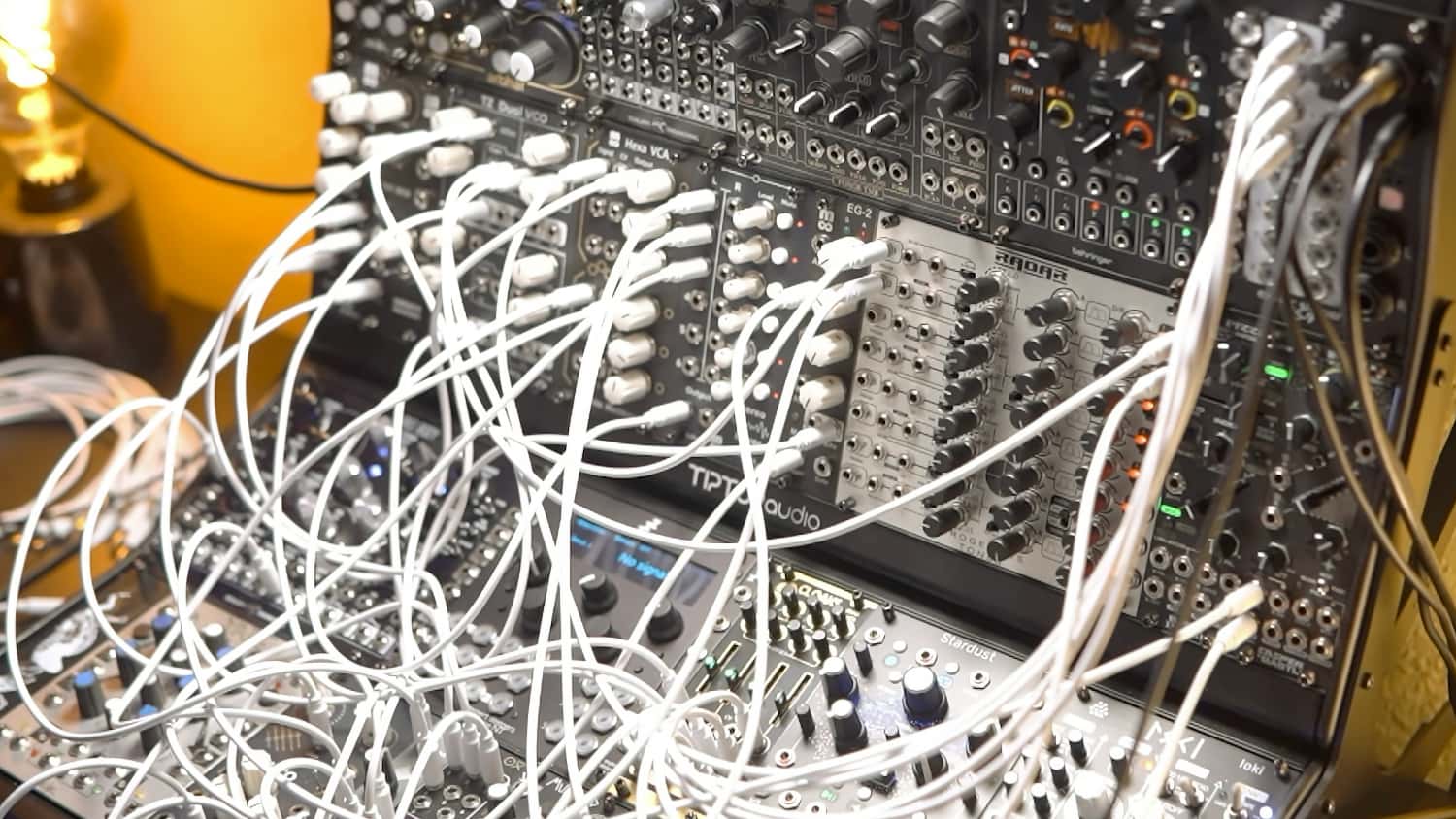
The landscape of modular synthesis has undergone a radical transformation over the last decade, transitioning from a niche pursuit of experimentalists to a cornerstone of modern electronic music production. Within this burgeoning ecosystem, the Eurorack format has emerged as the dominant standard, characterized by a staggering array of manufacturers ranging from global corporations to boutique "garage" operations. A recent comprehensive review by the influential modular synthesis channel S1gns Of L1fe Modular has cast a spotlight on Infinite Machinery, a manufacturer often described as a "sleeper brand" due to its high-performance output relative to its understated market presence. This analysis delves into the technical capabilities, market positioning, and musical utility of Infinite Machinery’s offerings, exploring why these modules are gaining traction among professional synthesists seeking stability and workflow efficiency.
The Evolution of the Eurorack Ecosystem
To understand the significance of Infinite Machinery’s emergence, one must first consider the historical trajectory of the Eurorack standard. Established by Dieter Doepfer in the mid-1990s with the A-100 system, the format was designed to offer a compact, standardized method for interconnecting voltage-controlled modules. For nearly twenty years, the market grew at a steady but modest pace. However, between 2010 and 2024, the industry saw an exponential surge in interest. According to market research data, the global synthesizer market has maintained a compound annual growth rate (CAGR) of approximately 4.5%, with modular components representing one of the fastest-growing sub-sectors.
As the market became saturated with "glitch" modules and chaotic noise generators, a counter-movement began to take shape. Musicians increasingly demanded modules that offered "musicality"—a term often used to describe components that maintain tuning stability, offer predictable responses to control voltages, and integrate seamlessly into traditional melodic and harmonic structures. This is the specific niche that Infinite Machinery has moved to occupy.
Technical Analysis of Infinite Machinery Modules
The Infinite Machinery product line is built upon a philosophy of precision engineering and utility-driven design. The brand offers a hybrid business model, providing both pre-built units for professional studios and DIY kits for the burgeoning community of "synth-diy" enthusiasts. This dual approach has allowed the brand to build a loyal following among those who value the internal architecture of their instruments as much as the external sound.
Stable Frequency Modulation (FM) and Oscillator Precision
One of the primary challenges in analog modular synthesis is maintaining pitch stability, particularly when employing complex Frequency Modulation. FM synthesis requires oscillators to track accurately over several octaves; even a minor drift in voltage can render a harmonic patch dissonant. Infinite Machinery’s Voltage Controlled Oscillators (VCOs) are noted for their thermal stability and precise tracking. By utilizing high-quality components and refined circuit topologies, these modules allow performers to engage in deep FM synthesis—where one oscillator modulates the frequency of another—without the loss of tonal integrity that often plagues lower-tier analog hardware.
Expressive Filtering and Tonal Character
Beyond raw sound generation, the brand’s approach to Voltage Controlled Filters (VCFs) emphasizes "expressive" control. In a musical context, this refers to the filter’s ability to respond dynamically to the performer’s touch or to complex modulation sources like envelopes and Low-Frequency Oscillators (LFOs). The review by S1gns Of L1fe highlights the brand’s filters as being capable of both subtle tonal shaping and aggressive resonance without overpowering the fundamental frequency of the signal. This balance is critical for musicians working in genres such as ambient, techno, and cinematic scoring, where the "weight" of a sound must be maintained even as its timbre is altered.
Patch-Efficient Utilities
Perhaps the most overlooked yet vital component of any modular system is the utility section. Infinite Machinery has focused heavily on "patch-efficient" utilities—modules that perform multiple functions within a small physical footprint (measured in Rack Units or "HP"). These include precision adders, attenuverters, and signal mixers. In a modular system, these utilities act as the "connective tissue," allowing a musician to route and scale signals with accuracy. The efficiency of these modules supports a "creative flow," reducing the time spent troubleshooting signal levels and increasing the time spent on actual composition.
The Role of Content Creators in Brand Discovery
The designation of Infinite Machinery as a "sleeper brand" is significant. In the digital age, the success of boutique hardware is often tied to the endorsements of respected community figures. S1gns Of L1fe Modular, a channel known for its focus on ambient textures and educational deep-dives, serves as a critical bridge between manufacturers and consumers.
The video exploration of Infinite Machinery focuses not on theoretical specifications, but on "real musical context." This shift from technical demonstration to musical application is a growing trend in the industry. It reflects a maturing user base that is less interested in "gear for the sake of gear" and more focused on "gear as a tool for art." The endorsement of such a brand by a prominent creator suggests that Infinite Machinery has reached a level of reliability that rivals established industry giants like Make Noise, Mutable Instruments (now discontinued), or Intellijel.
The DIY Component and Market Accessibility
A key factor in Infinite Machinery’s growth is its support for the DIY community. By offering parts and kits, the company taps into a segment of the market that values cost-effectiveness and the educational aspect of building their own instruments. This "open-door" policy toward synth DIYers has several implications:
- Lower Barrier to Entry: DIY kits are typically 30% to 50% cheaper than pre-assembled modules, making high-end analog circuitry accessible to a broader demographic.
- Sustainability: Users who build their own modules are more likely to be able to repair them, extending the lifecycle of the hardware.
- Community Innovation: The DIY community often shares "mods" or alterations to original designs, which can provide manufacturers with valuable feedback for future product iterations.
Comparative Market Analysis
When compared to other "boutique" manufacturers, Infinite Machinery distinguishes itself through a lack of "fluff." While many brands rely on cryptic panel graphics or eccentric naming conventions to attract attention, Infinite Machinery utilizes a utilitarian aesthetic. This "form follows function" approach is increasingly popular among professional users who require clear labeling and ergonomic layouts during live performances in low-light environments.
Data from modular retailers indicates that while "character" modules (those that add specific distortions or unique digital effects) often have high initial sales, "utility and core" modules (like those produced by Infinite Machinery) have longer sales tails. These are the "bread and butter" components that remain in a musician’s rack even as other, flashier modules are swapped out.
Broader Implications for the Music Technology Industry
The rise of brands like Infinite Machinery signals a broader shift in the electronic music hardware industry. We are seeing a move away from "all-in-one" solutions toward highly specialized, high-quality components. This modularity allows for a level of customization that was previously impossible, enabling musicians to build "personal instruments" tailored to their specific sonic signatures.
Furthermore, the emphasis on "dependable, musical results" mentioned in the video summary highlights a growing demand for reliability. As modular systems move from the studio to the stage, the tolerance for "finicky" hardware has decreased. Infinite Machinery’s focus on stability and efficiency addresses this professional requirement directly.
Conclusion and Future Outlook
Infinite Machinery represents a specific trend in the 2024 music technology market: the professionalization of the boutique module. By focusing on the fundamental pillars of synthesis—stable oscillators, expressive filters, and intelligent utilities—the brand has moved from an obscure name to a recommended choice for serious practitioners.
The chronology of the brand’s development suggests a slow and steady ascent, prioritized by engineering quality rather than aggressive marketing. As more musicians seek to move beyond the "chaos" of early modular experimentation and toward structured, melodic composition, the demand for "sleeper brands" that offer high-end performance at a reasonable price point is expected to rise.
In summary, the Infinite Machinery Eurorack line demonstrates that in the crowded and often noisy world of modular synthesis, there is still significant room for brands that prioritize musicality, stability, and the creative flow of the artist. As the industry continues to evolve, the success of such brands will likely depend on their ability to maintain this balance between technical precision and artistic utility, ensuring that the "machinery" remains a servant to the "music."